Letters

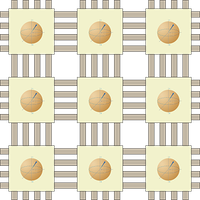
Symmetry-induced failures of tomographic locality: Constructing foil theories by twirling

Daniel Centeno, Marco Erba, Thomas D. Galley, David Schmid, John H. Selby, Robert W. Spekkens, Sina Soltani, Jacopo Surace, Alex Wilce, and Yìlè Yīng

Phys. Rev. A 112, L030202 (2025) - Published 22 September, 2025

The paper constructs a class of theories by starting from some operational theory (classical, quantum, or post-quantum) and imposing a symmetry. This yields many examples of theories that violate a principle known as tomographic locality, and in turn sheds light on the meaning of this principle.

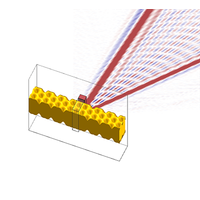
Robust exceptional point chains and chirality switch in a vast optical parameter space

Chang-Hwan Yi, Jung-Wan Ryu, Tom Simon Rodemund, and Martina Hentschel

Phys. Rev. A 112, L031501 (2025) - Published 22 September, 2025

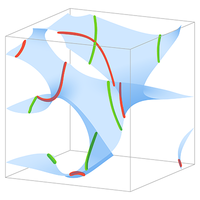
The authors show the emergence of exceptional-point chains in coupled, deformed microcavity systems that extend to intercavity distances of several wavelengths relevant for applications. In addition, the mode chirality switches abruptly at a specific refractive index determined by the properties of the single cavity.

Metastability-induced solid-state quantum batteries for powering microwave quantum electronics

Yuanjin Wang, Hao Wu, and Qing Zhao

Phys. Rev. A 112, L030201 (2025) - Published 15 September, 2025

This study demonstrates a solid-state quantum battery in which metastable states enable stable and long-lived energy storage. The authors further show that the stored energy can be controllably extracted for coherent microwave emission at room temperature.

Quantum assemblage tomography

Luis Villegas-Aguilar, Yuanlong Wang, Alex Pepper, Travis J. Baker, Dominick J. Joch, Sven Rogge, Geoff J. Pryde, Sergei Slussarenko, Nora Tischler, and Howard M. Wiseman

Phys. Rev. A 112, L030402 (2025) - Published 15 September, 2025

The authors investigate tools for accurately reconstructing quantum state assemblages in the Einstein-Podolsky-Rosen steering scenario. They introduce a robust methodology focused on accounting for typical, yet commonly overlooked, experimental conditions, including provisions for lossy measurements and detection bias.

Generation of entanglement and nonstationary states via competing coherent and incoherent bosonic hopping

Parvinder Solanki, Albert Cabot, Matteo Brunelli, Federico Carollo, Christoph Bruder, and Igor Lesanovsky

Phys. Rev. A 112, L030601 (2025) - Published 11 September, 2025

This study shows how incoherent hopping in a Bose–Hubbarddimer enables control of quantum correlations and gives rise tostationary and multiple time-crystal phases. Driven by parity–timesymmetry, the model exhibits both first- and second-order phasetransitions, unveiling a rich landscape of quantum many-body dynamics.

Precision comagnetometry for T-violation searches in crystals

Bassam Nima, Mingyu Fan, Aleksandar Radak, Andrew M. Jayich, and Amar Vutha

Phys. Rev. A 112, L030801 (2025) - Published 11 September, 2025

The authors perform precision spectroscopy in a solid-state comagnetometer. They use crystal symmetries to reject undesirable magnetic field noise, to improve searches for physics beyond the standard model.

Recovering optimal precision in quantum sensing with time domain imperfections

Zi-Shen Li, Xinyue Long, Xiaodong Yang, Dawei Lu, and Yuxiang Yang

Phys. Rev. A 112, L030401 (2025) - Published 5 September, 2025

Device imperfections can significantly hinder the application of quantum metrology, inevitably introducing bias in estimation. This work demonstrates, both theoretically and experimentally, that properly engineered quantum control, albeit imperfect, can unlock the ultimate precision of practical quantum metrology.

Multimode feedback cooling of the collective modes of a Bose-Einstein condensate

Ryan J. Thomas, Jordan A. McMahon, Zain Mehdi, Stuart S. Szigeti, Simon A. Haine, Samuel Legge, John D. Close, and Joseph J. Hope

Phys. Rev. A 112, L031302 (2025) - Published 5 September, 2025

The authors experimentally demonstrate simultaneous feedback control and cooling of multiple low-lying collective modes in a Bose-Einstein condensate. The results demonstrate that ground-state cooling of the center-of-mass modes can be achieved even without a cavity to enhance the signal-to-noise.

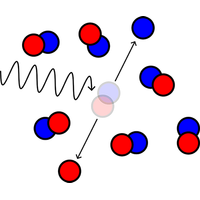
Modeling the dissociative sequential triple ionization of nitrogen molecules by ultrashort intense infrared laser pulses

Yan-Wen Jia, Hui-Hui Wang, C. H. Yuen, C. D. Lin, and Song-Feng Zhao

Phys. Rev. A 112, L031101 (2025) - Published 4 September, 2025

The authors developed a density-matrix approach to study the dissociative sequential triple ionization of nitrogen molecules by short, intense infrared laser pulses. Their theory fully incorporates the experimental conditions and successfully reproduces the observed kinetic-energy-release spectrum of the dissociated ions.

Observation of self-oscillating supersonic flow across an acoustic horizon in two dimensions

Hikaru Tamura, Sergei Khlebnikov, Cheng-An Chen, and Chen-Lung Hung

Phys. Rev. A 112, L031301 (2025) - Published 2 September, 2025

The authors create a spatially bounded supersonic region in a two-dimensional atomic superfluid, forming an acoustic analogue of a black-hole horizon. The observed superflow appears to be modulated by quasi-periodic bursts of superluminal signals. By measuring their frequencies, the authors find agreement with numerical simulations of soliton oscillation frequencies within the black-hole horizon, where solitons are emitted due to the Landau instability.

Effective non-Hermitian formulation of the Lindblad equation for interacting quantized fields at finite temperature

L. Hernández-Sánchez, I. A. Bocanegra-Garay, I. Ramos-Prieto, F. Soto-Eguibar, and H. M. Moya-Cessa

Phys. Rev. A 112, L021702 (2025) - Published 29 August, 2025

This Letter develops an effective non-Hermitian description of the Lindblad equation for interacting quantized fields at finite temperature, providing a compact framework to analyze open-cavity dynamics.

Thermal resonance-enhanced transparency in room-temperature Rydberg gases

Jinlian Hu, Yuechun Jiao, Yuwen Yin, Cheng Lu, Jingxu Bai, Suotang Jia, Weibin Li, Zhengyang Bai, and Jianming Zhao

Phys. Rev. A 112, L020801 (2025) - Published 28 August, 2025

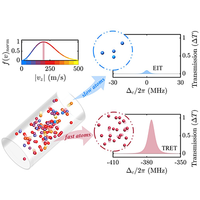
The authors report a thermal-resonance-enhanced transmission in the coherent, off-resonant excitation of Rydberg atom gases at room temperature via a two-photon process. Utilizing this effect, they enhance the sensitivity of a Rydberg microwave receiver, enabling excitation of multiple atomic velocities for quantum sensing.

Measuring the Chern-Simons invariant in quantum gases

Chang-Rui Yi, Jinlong Yu, Huan Yuan, Xin Chen, Jia-Yu Guo, Jinyi Zhang, Shuai Chen, and Jian-Wei Pan

Phys. Rev. A 112, L021304 (2025) - Published 28 August, 2025

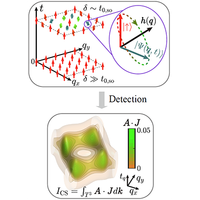
The authors experimentally measure the Chern-Simons invariant by quenching a two-dimensional optical Raman lattice with 1/2 spin in ultracold atoms, using Bloch state tomography to extract the Berry curvature and Berry connection. By integrating their product, they obtain Chern-Simons invariants near ±1 and 0, matching theoretical predictions.

Electromagnetic symmetry dislocations

Alex J. Vernon, Sebastian Golat, and Francisco J. Rodríguez-Fortuño

Phys. Rev. A 112, L021504 (2025) - Published 27 August, 2025

The authors argue that well-known polarization singularities of electric and magnetic fields cannot be fundamental in monochromatic light. They reveal new kinds of optical singularities combining electric and magnetic fields that correspond to local parity, duality, and time-reversal symmetries of the electromagnetic field.

Exact steady state of the quantum van der Pol oscillator: Critical phenomena and enhanced metrology

Yaohua Li, Xuanchen Zhang, and Yong-Chun Liu

Phys. Rev. A 112, L021701 (2025) - Published 27 August, 2025

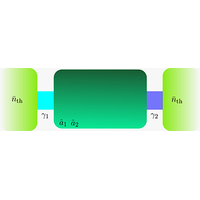
The authors obtain the exact steady state of the quantum van der Pol model with the emergence of dissipative quantum criticality. The exact steady state enables them to analytically discuss the criticality-enhanced metrology in open quantum systems.

Optimized noise-resilient surface code teleportation interfaces

Mohamed A. Shalby, Renyu Wang, Denis Sedov, and Leonid P. Pryadko

Phys. Rev. A 112, L020403 (2025) - Published 22 August, 2025

The authors demonstrate reliable methods to connect quantum computing modules (“surface-code patches”) into larger systems, preserving error-correction despite significant interface noise.

Anomalous dispersion of shear waves in dipolar supersolids

P. Senarath Yapa and T. Bland

Phys. Rev. A 112, L021303 (2025) - Published 22 August, 2025

The authors reveal the elastic properties of dipolar supersolids by studying their shear wave dynamics. Their results show anomalous dispersion in the honeycomb supersolid, with shear wave speeds exceeding the transverse sound velocity.

Quantum contextuality of spin-1 massive particles

M. Fabbrichesi, R. Floreanini, E. Gabrielli, and L. Marzola

Phys. Rev. A 112, L020402 (2025) - Published 20 August, 2025

The authors take a close look at how spin‑1 particles, like W bosons and certain mesons, behave in high-energy collisions and find clear signs of quantum contextuality in their polarizations. Using real collider data, they show that these uniquely quantum effects can be seen in practical experimental setups.

Cooling a strongly interacting quantum gas by interaction modulation

D. Eberz, A. Kell, M. Breyer, and M. Köhl

Phys. Rev. A 112, L021302 (2025) - Published 19 August, 2025

A strongly interacting gas of composite dimers is cooled using interaction modulation by dissociating them. High cooling efficiencies are observed in the unitarity and the BEC regimes, in particular, with strong coupling leading to increased efficiency.

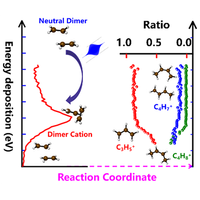
Manipulating intracluster ion-molecule reactions in the ethylene dimer via femtosecond-laser intensity

Chenyu Tao, Chen Liang, Shuncheng Yan, Jianting Lei, Xuan Yu, Tao Yang, Dongmei Zhao, Ziqi Zhang, Shaofeng Zhang, and Xinwen Ma

Phys. Rev. A 112, L021101 (2025) - Published 14 August, 2025

This study reveals laser-intensity control of intracluster ion-molecule reactions in ethylene dimers through vibrational state reconstruction. Potential energy surfaces clarify a two-step reaction mechanism mediated by vibrational excitation.

Sign In to Your Journals Account

Filter

Category
Section

Filter

Article Lookup

Enter a citation