Recent Articles

High-Rate Scalable Entanglement Swapping Between Remote Entanglement Sources on Deployed New York City Fibers

Alexander N. Craddock, Tyler Cowan, Niccolò Bigagli, Suresh Yekasiri, Dylan Robinson, Gabriel Bello Portmann, Aditya Verma, Ziyu Guo, Michael Kilzer, Jiapeng Zhao, Mael Flament, Javad Shabani, Reza Nejabati, and Mehdi Namazi

PRX Quantum 7, 043028 (2026) - Published 10 November, 2026

Performing high-rate entanglement swapping between independent sources over 17.6 km of deployed commercial fiber establishes a scalable architecture for metropolitan quantum networks.

Rapid Multi-Mode Trapped-Ion Laser Cooling in a Phase-Stable Standing Wave

Zhenzhong Xing, Hamim Mahmud Rivy, Vighnesh Natarajan, Aditya Milind Kolhatkar, Gillenhaal Beck, and Karan K. Mehta

PRX Quantum 7, 043027 (2026) - Published 9 November, 2026

Integrated optical delivery of standing waves is shown to enable fast, multi-mode laser cooling of trapped ions to the quantum ground state, offering simultaneous advantages in cooling rate, bandwidth, and final phonon number.

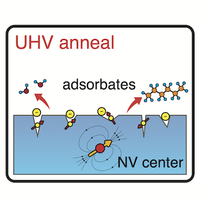
Surface Adsorbates Suppress Low-Frequency Noise for Shallow Nitrogen-Vacancy Centers

Zhiyang Yuan, David A. Fehr, Kalliope Zervas, Sorawis Sangtawesin, Lila V. H. Rodgers, Patryk Gumann, Michael E. Flatté, and Nathalie P. de Leon

PRX Quantum 7, 043026 (2026) - Published 6 November, 2026

Surface adsorbates, long blamed for decoherence in diamond quantum sensors, can actually suppress low-frequency noise and extend spin coherence.

Quantum Gibbs Sampling Through the Detectability Lemma

Di Fang, Jianfeng Lu, Yu Tong, and Chu Zhao

PRX Quantum 7, 043025 (2026) - Published 5 November, 2026

A new approach for quantum algorithm design and analysis that bypasses Lindbladian simulation overhead yields improved scaling with system size and a quadratic improvement in spectral-gap dependence for quantum Gibbs sampling algorithms.

Temporal Entanglement Transition in Chaotic Quantum Many-Body Dynamics

Ilya Vilkoviskiy, Michael Sonner, Qi Camm Huang, Wen Wei Ho, Alessio Lerose, and Dmitry A. Abanin

PRX Quantum 7, 043024 (2026) - Published 4 November, 2026

Applying temporal coarse graining to the influence matrix of chaotic quantum baths reveals an entanglement transition, reconciling global non-Markovian memory with local thermalization.

Second Law of Thermodynamics in Closed Quantum Many-Body Systems

Yuuya Chiba, Yasushi Yoneta, Ryusuke Hamazaki, and Akira Shimizu

PRX Quantum 7, 043023 (2026) - Published 3 November, 2026

A new theoretical framework reconciles the second law of thermodynamics with quantum mechanics, resolving a long-standing paradox by demonstrating how macroscopic thermodynamic principles emerge even from pure quantum states.

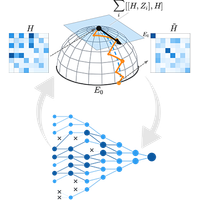
Pauli Propagation Enables Fast Classical Simulation of Strongly Correlated Quantum Systems

Chinmay Shrikhande, Arnab Bachhar, José Aarón Rodríguez-Jiménez, Edward F. Valeev, and Nicholas J. Mayhall

PRX Quantum 7, 043022 (2026) - Published 2 November, 2026

A variational double bracket flow algorithm leveraging Pauli propagation efficiently estimates ground-state energies in strongly correlated systems.

Constructing Arbitrary Coherent Rearrangements in Optical Lattices

Alexander Roth, Liyang Qiu, Timon Hilker, Titus Franz, and Philipp M. Preiss

PRX Quantum 7, 043021 (2026) - Published 30 October, 2026

Inspired by programmable optical interferometer networks, global control over tunneling and site-dependent phase shifts are shown to provide arbitrary control over atom motion in an optical lattice and in efficient rearrangement schemes.

Modeling Logical Gates and Readout of Superconducting Gottesman-Kitaev-Preskill Qubits

Mackenzie H. Shaw, Andrew C. Doherty, and Arne L. Grimsmo

PRX Quantum 7, 043020 (2026) - Published 29 October, 2026

Analyzing loss, dephasing, error-spreading, and homodyne measurement inefficiencies in Gottesman-Kitaev-Preskill (GKP) qubits yields a highly-improved understanding of GKP qubits in practice and new strategies for improving performance.

Fast Single-Atom Preparation in Optical Tweezers via Rydberg Blockade

Yiyi Li, Vernon M. Hughes, Michael Peper, Yicheng Bao, Chenyuan Li, Sanzhar Bissenali, and Jeff D. Thompson

PRX Quantum 7, 043019 (2026) - Published 28 October, 2026

Atoms are removed one by one from optical tweezers through repeated Rydberg excitation and autoionization until only one remains in each trap, speeding preparation of tweezer arrays.

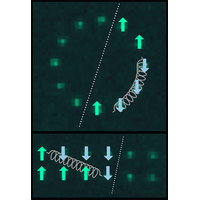
Meson Spectroscopy of Exotic Symmetries of Ising Criticality in Rydberg Atom Arrays

Joseph Vovrosh, Julius de Hond, Sergi Julià-Farré, Johannes Knolle, and Alexandre Dauphin

PRX Quantum 7, 043018 (2026) - Published 27 October, 2026

A programmable array of atoms reveals how symmetry of the quantum Ising chain transforms when chains are coupled together, providing experimental signatures of a new excitation spectrum.

Free Mutual Information and Higher-Point Out-of-Time-Ordered Correlators

Shreya Vardhan and Jinzhao Wang

PRX Quantum 7, 043017 (2026) - Published 26 October, 2026

Researchers introduce a new entropic measure of quantum chaos, providing a physical interpretation to higher-point out-of-time-ordered correlation functions.

Algorithmic Construction of Gapped Boundaries for Topological Stabilizer Codes: A Route to Low-Overhead Planar qLDPC Codes

Zijian Liang (梁子健), Bowen Yang (杨博闻), Joseph T. Iosue, and Yu-An Chen (陳昱安)

PRX Quantum 7, 043016 (2026) - Published 23 October, 2026

An algorithmic framework for constructing gapped boundaries in two-dimensional topological Pauli stabilizer codes enables low-overhead planar qLDPC architectures and fault-tolerant logical operations.

Efficiently Learning Global Quantum Channels with Local Tomography

Zidu Liu and Dominik S. Wild

PRX Quantum 7, 043015 (2026) - Published 22 October, 2026

Exponential decay of correlations enables scalable reconstruction of many-qubit processes and their global properties from local measurements.

Intrinsic Hamiltonian of Mean Force and Strong-Coupling Quantum Thermodynamics

Ignacio González, Sagnik Chakraborty, and Ángel Rivas

PRX Quantum 7, 043014 (2026) - Published 21 October, 2026

A unified theoretical framework allows one to measure thermodynamic quantities in strongly coupled quantum systems using only local information, offering a practical foundation for designing next-generation quantum thermal devices.

Enabling Deterministic Passive Quantum State Transfer with Giant Atoms

Oliver Diekmann, Enrico Di Benedetto, Nicolas Jungwirth, Daniele De Bernardis, Zeyu Kuang, Francesco Ciccarello, Stefan Rotter, Peter Rabl, Alejandro González-Tudela, and Carlos Gonzalez-Ballestero

PRX Quantum 7, 043013 (2026) - Published 20 October, 2026

Tailored coupling between giant atoms and a waveguide enables deterministic quantum state transfer at above 99% fidelity, without any time-dependent control.

High-Dimensional Quantum Key Distribution via Full Core-Mode Encoding over Deployed Multicore Fibers

G. H. dos Santos, K. B. Sawada, N. Villalba, C. Jara, N. Guerrero, C. Melo, M. H. Magiotto, D. Martinez, G. B. Xavier, J. Cariñe, G. Saavedra, E. S. Gómez, S. P. Walborn, and G. Lima

PRX Quantum 7, 043012 (2026) - Published 19 October, 2026

A four-dimensional quantum key distribution protocol utilizing full core-mode encoding over deployed multicore fibers is demonstrated, establishing a viable architecture for high-rate quantum-secure communications.

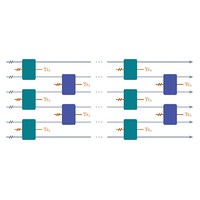
Heisenberg-Limited Hamiltonian Learning Without Short-Time Control

Myeongjin Shin, Junseo Lee, and Changhun Oh

PRX Quantum 7, 043011 (2026) - Published 16 October, 2026

A new approach for learning Hamiltonians achieves the Heisenberg limit even when experiments cannot access short evolution times, easing a demanding control requirement.

Λ-Enhanced Gray-Molasses Loading and EIT Cooling of Neutral Atoms in Nanophotonic Traps

Lucas Pache, Antoine Glicenstein, Philipp Schneeweiss, Jürgen Volz, Arno Rauschenbeutel, and Riccardo Pennetta

PRX Quantum 7, 043010 (2026) - Published 15 October, 2026

Λ-enhanced gray molasses and electromagnetically induced transparency cooling enable efficient loading and longer storage times, improving the practicality of nanophotonic interfaces for neutral atoms.

Predicting Magic from Very Few Measurements

J. M. Varela, L. L. Keller, A. de Oliveira Junior, D. A. Moreira, R. Chaves, and R. A. Macêdo

PRX Quantum 7, 043009 (2026) - Published 14 October, 2026

A near-optimal method quantifies nonstabilizerness—the resource that enables universal quantum computation—from a small number of Pauli measurements, extending its estimation to system sizes beyond the reach of standard techniques.

Sign In to Your Journals Account

Filter

Recent Issues

Vol. 7, Iss. 4
October - December 2026
Vol. 7, Iss. 3
July - September 2026
Vol. 7, Iss. 2
April - June 2026
Vol. 7, Iss. 1
January - March 2026
Category
Article Type

Filter

Article Lookup

Enter a citation