Recent Articles

Universal Sample Complexity Bounds in Quantum Learning Theory via Fisher Information Matrix

Hyukgun Kwon, Seok Hyung Lie, and Liang Jiang

PRX Quantum 7, 033063 (2026) - Published 22 September, 2026

A framework shows that the sample complexity of general quantum learning is governed by the inverse Fisher information matrix.

Improved Error Correction with Leakage Reduction Units Built into Qubit Measurement in a Superconducting Quantum Processor

Yuejie Xin, Sean L. M. van der Meer, Marc Serra-Peralta, Tim H. F. Vroomans, Matvey Finkel, Hendrik M. Veen, Marc W. Beekman, and Leonardo DiCarlo

PRX Quantum 7, 033062 (2026) - Published 21 September, 2026

Application of simultaneous microwave pulses to a transmon and readout resonator can return the transmon to the computational subspace and provide simultaneous readout to improve quantum error correction.

Theory of Trotter Errors for Time-Dependent Product and Multi-product Formulas

Kaoru Mizuta, Tatsuhiko N. Ikeda, and Keisuke Fujii

PRX Quantum 7, 033061 (2026) - Published 21 September, 2026

A Floquet-based analysis derives commutator-scaling error bounds for time-dependent product and multiproduct formulas, sharpening gate-count estimates for quantum simulation of driven dynamics and adiabatic state preparation.

End-to-End Quantum Algorithm for Nonlinear Fluid Dynamics with Bounded Quantum Advantage

David Jennings, Kamil Korzekwa, Matteo Lostaglio, Richard Ashworth, Emanuele Marsili, and Stephen Rolston

PRX Quantum 7, 033060 (2026) - Published 18 September, 2026

A detailed resource analysis identifies the fundamental bottlenecks and achievable speedups for nonlinear fluid simulations on a fault-tolerant quantum computer.

Readout-Induced Degradation of Transmon Lifetimes: Interplay of TLSs and Qubit Spectral Reshaping

Ziwen Huang, Jimmy Shih-Chun Hung, Mouktik Raha, Ming-Han Chou, Harry Levine, Alex Retzker, Connor T. Hann, David Hover, Fernando G. S. L. Brandão, Aashish A. Clerk, Arbel Haim, and Oskar Painter

PRX Quantum 7, 033059 (2026) - Published 17 September, 2026

Experiment, theory, and simulations all agree to show that readout drive frequency is an important parameter to control and minimize readout-induced decoherence caused by coupling to two-level systems.

Unitary Synthesis with Fewer T Gates

Xinyu Tan

PRX Quantum 7, 033058 (2026) - Published 16 September, 2026

A new compilation algorithm asymptotically reduces the number of T gates needed to implement an arbitrary unitary quantum operation.

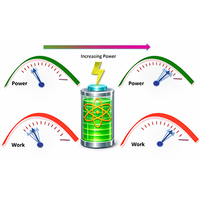
Fundamental Limitations on the Reliabilities of Power and Work in Quantum Batteries

Brij Mohan, Tanmoy Pandit, Maciej Lewenstein, and Manabendra Nath Bera

PRX Quantum 7, 033057 (2026) - Published 15 September, 2026

A fundamental quantum uncertainty relation reveals an unavoidable trade-off between the reliabilities of the charging power and the work deposited during the charging and discharging of quantum batteries, establishing essential design limits for future quantum energy storage.

Ultra-Slow Orbital and Spin Dynamics in an Electrically Tunable Quantum Dot Molecule

Christopher Thalacker, Michelle Lienhart, Markus Stöcker, Nadeem Akhlaq, Irina Ivanova, Nikolai Bart, Arne Ludwig, Johannes Schall, Stephan Reitzenstein, Dirk Reuter, Steffen Wilksen, Christopher Gies, Krzysztof Gawarecki, Paweł Machnikowski, Kai Müller, and Jonathan Finley

PRX Quantum 7, 033056 (2026) - Published 14 September, 2026

A new study demonstrates the optical charging of spins in a quantum dot molecule, while keeping the tunability of its parameter, which can become an important building block for multidimensional photonic cluster state generation.

In Situ Benchmarking of Fault-Tolerant Quantum Circuits: Clifford Circuits

Xiao Xiao, Dominik Hangleiter, Dolev Bluvstein, Mikhail D. Lukin, and Michael J. Gullans

PRX Quantum 7, 033055 (2026) - Published 14 September, 2026

Using only existing error syndrome data and no additional calibration circuits, it is possible to efficiently benchmark quantum hardware and verify encoded computations.

Modeling the Impact of Device Imperfections on Electron Shuttling in SiMOS devices

Jack J. Turner, Christian W. Binder, Guido Burkard, and Andrew J. Fisher

PRX Quantum 7, 033054 (2026) - Published 11 September, 2026

Three-dimensional simulations of electron shuttling in realistic SiMOS devices are presented, identifying operating regimes resilient to common device imperfections and charge defects.

Logical Accreditation: A Framework for Efficient Certification of Fault-Tolerant Computations

James Mills, Adithya Sireesh, Dominik Leichtle, Joschka Roffe, and Elham Kashefi

PRX Quantum 7, 033053 (2026) - Published 11 September, 2026

Verification of encoded quantum systems is made possible with a scalable tool that assesses computational accuracy under general device noise.

Circuit-Based Characterization of Finite-Temperature Quantum Phases and Self-Correcting Quantum Memory

Ruochen Ma, Vedika Khemani, and Shengqi Sang

PRX Quantum 7, 033052 (2026) - Published 10 September, 2026

A circuit-based framework characterizing thermal quantum phases via a correlation-decay condition is presented, establishing self-correction as a universal property of finite-temperature quantum memories.

Finite-Size Quantum Key Distribution Rates from Rényi Entropies Using Conic Optimization

Mariana Navarro, Andrés González Lorente, Pablo V. Parellada, Carlos Pascual-García, and Mateus Araújo

PRX Quantum 7, 033051 (2026) - Published 10 September, 2026

A conic optimization method addressing a critical challenge in key rate estimation for quantum key distribution is presented, providing tighter security bounds and fast numerical convergence.

Moments of Quantum Channel Ensembles

Matthew Duschenes, Diego García-Martín, Zoë Holmes, and M. Cerezo

PRX Quantum 7, 033050 (2026) - Published 9 September, 2026

A general framework for the study of statistical moments of quantum channel ensembles is introduced, providing new insights into noisy quantum circuits and variational quantum algorithms.

Complexity of Quantum Trajectories

Luca Lumia, Emanuele Tirrito, Mario Collura, Fabian H. L. Essler, and Rosario Fazio

PRX Quantum 7, 033049 (2026) - Published 9 September, 2026

An unsupervised, data-driven framework based on the intrinsic dimension of quantum trajectories provides a robust probe for detecting integrability and ergodicity breaking in open quantum systems beyond the transient regime, while new results on autonomous chaos are discussed.

A Heuristic for Matrix Product State Simulation of Out-of-Equilibrium Dynamics of Two-Dimensional Quantum Spin Systems

Salvatore Mandrà, Brayden Ware, Nikita Astrakhantsev, Sergei Isakov, Benjamin Villalonga, Tom Westerhout, and Kostyantyn Kechedzhi

PRX Quantum 7, 033048 (2026) - Published 8 September, 2026

A new heuristic approach accelerates the convergence of classical simulation of two-dimensional quantum dynamics, enabling the verification of quantum simulation experiments in previously inaccessible regimes.

Quantum State Designs from Minimally Random Quantum Circuits

Jonathon Riddell, Katja Klobas, and Bruno Bertini

PRX Quantum 7, 033047 (2026) - Published 8 September, 2026

For quantum circuits that generate complex dynamics, a single, one-site operation is sufficient to produce randomness, showcasing a trade-off between dynamical chaos and randomness.

Exponentially Accurate Open Quantum Simulation via Randomized Dissipation with Minimal Ancilla

Jumpei Kato, Kaito Wada, Kosuke Ito, and Naoki Yamamoto

PRX Quantum 7, 033046 (2026) - Published 4 September, 2026

Exponentially accurate simulation of open quantum systems is made viable for early fault-tolerant devices via a random compilation method requiring a minimal number of ancilla qubits.

Disambiguating Pauli Noise in Quantum Computers

Edward H. Chen, Senrui Chen, Laurin E. Fischer, Andrew Eddins, Luke C. G. Govia, Brad Mitchell, Andre He, Youngseok Kim, Liang Jiang, and Alireza Seif

PRX Quantum 7, 033045 (2026) - Published 3 September, 2026

The unavoidable “gauge” ambiguity in learning a quantum computer’s noise does not hinder error mitigation, and this remaining degree of freedom can even be optimized to make mitigation dramatically more efficient.

Efficient Entanglement Purification Circuit Design for Dual-Species Atom Arrays

Bikun Li, Daniel Dilley, Alvin Gonzales, Thomas A. Hahn, Ryan White, Rotem Arnon, Hannes Bernien, Zain Saleem, and Liang Jiang

PRX Quantum 7, 033044 (2026) - Published 2 September, 2026

A dual-species atomic array reduces technical overhead (no local addressing needed and nondestructive midcircuit measurements) and enables efficient entanglement purification for applications in quantum networking and distributed computation.

Sign In to Your Journals Account

Filter

Recent Issues

Vol. 7, Iss. 4
October - December 2026
Vol. 7, Iss. 3
July - September 2026
Vol. 7, Iss. 2
April - June 2026
Vol. 7, Iss. 1
January - March 2026
Category
Article Type

Filter

Article Lookup

Enter a citation