Recent Articles

Nematic Energy Scale and the Missing Electron Pocket in FeSe

M. Yi, H. Pfau, Y. Zhang, Y. He, H. Wu, T. Chen, Z. R. Ye, M. Hashimoto, R. Yu, Q. Si, D.-H. Lee, Pengcheng Dai, Z.-X. Shen, D. H. Lu, and R. J. Birgeneau

Phys. Rev. X 9, 041049 (2019) - Published 6 December, 2019

Experiments reveal changes in the electronic state of the iron-based superconductor FeSe during the emergence of nematicity, a fourfold rotational symmetry breaking that arises close to the onset of superconductivity.

High Efficiency Dark-to-Bright Exciton Conversion in Carbon Nanotubes

A. Ishii, H. Machiya, and Y. K. Kato

Phys. Rev. X 9, 041048 (2019) - Published 5 December, 2019

Dark excitons, electron-hole pairs with forbidden optical transitions, emit a significant amount of light in carbon nanotubes and can be controlled via surface interactions, effects that could be leveraged for novel optoelectronic devices.

Publisher’s Note: Dynamical Birefringence: Electron-Hole Recollisions as Probes of Berry Curvature [Phys. Rev. X 7, 041042 (2017)]

Hunter B. Banks, Qile Wu, Darren C. Valovcin, Shawn Mack, Arthur C. Gossard, Loren Pfeiffer, Ren-Bao Liu, and Mark S. Sherwin

Phys. Rev. X 9, 049902 (2019) - Published 4 December, 2019

Hydrodynamics of Active Defects: From Order to Chaos to Defect Ordering

Suraj Shankar and M. Cristina Marchetti

Phys. Rev. X 9, 041047 (2019) - Published 4 December, 2019

A new theoretical framework for active nematic fluids describes how topological defects move about within the material, predicting that under certain conditions the defects will organize themselves into a flock.

Structural Invertibility and Optimal Sensor Node Placement for Error and Input Reconstruction in Dynamic Systems

Dominik Kahl, Philipp Wendland, Matthias Neidhardt, Andreas Weber, and Maik Kschischo

Phys. Rev. X 9, 041046 (2019) - Published 3 December, 2019

The state of complex systems such as power grids often masks external influences, a new analysis shows, but optimal sensor placement can reveal those inputs, leading to more robust system design.

Temperature Activates Contact Aging in Silica Nanocontacts

Matthias Vorholzer, J. G. Vilhena, Ruben Perez, Enrico Gnecco, Dirk Dietzel, and André Schirmeisen

Phys. Rev. X 9, 041045 (2019) - Published 2 December, 2019

Temperature-dependent atomic bond formation plays a dominant role in the generation of friction between nanoscale silica structures and an adjacent wafer, according to new experiments and simulations.

Vacancy-Driven Noncubic Local Structure and Magnetic Anisotropy Tailoring in FexO−Fe3−δO4 Nanocrystals

Alexandros Lappas, George Antonaropoulos, Konstantinos Brintakis, Marianna Vasilakaki, Kalliopi N. Trohidou, Vincenzo Iannotti, Giovanni Ausanio, Athanasia Kostopoulou, Milinda Abeykoon, Ian K. Robinson, and Emil S. Bozin

Phys. Rev. X 9, 041044 (2019) - Published 27 November, 2019

Magnetically heated nanoparticles can offer targeted tumor therapy. A new analysis explores how defects in iron-oxide nanocrystals can be used to tailor their relevant magnetic properties.

Emergence of Cracklike Behavior of Frictional Rupture: The Origin of Stress Drops

Fabian Barras, Michael Aldam, Thibault Roch, Efim A. Brener, Eran Bouchbinder, and Jean-François Molinari

Phys. Rev. X 9, 041043 (2019) - Published 26 November, 2019

The stress left behind in a system after a frictional rupture depends not only on the physics of the interface between interacting bodies but also, as a new theory shows, on the deformation of those bodies.

Overcoming Noise in Entanglement Distribution

Sebastian Ecker, Frédéric Bouchard, Lukas Bulla, Florian Brandt, Oskar Kohout, Fabian Steinlechner, Robert Fickler, Mehul Malik, Yelena Guryanova, Rupert Ursin, and Marcus Huber

Phys. Rev. X 9, 041042 (2019) - Published 26 November, 2019

Photons entangled in high dimensions are more resilient to noise, making them ideal for quantum communication applications.

High-Coherence Fluxonium Qubit

Long B. Nguyen, Yen-Hsiang Lin, Aaron Somoroff, Raymond Mencia, Nicholas Grabon, and Vladimir E. Manucharyan

Phys. Rev. X 9, 041041 (2019) - Published 25 November, 2019

A decade-old alternative to the leading superconducting qubit exhibits the coherence times needed for applications.

Erratum: Localization in Fractonic Random Circuits [Phys. Rev. X 9, 021003 (2019)]

Shriya Pai, Michael Pretko, and Rahul M. Nandkishore

Phys. Rev. X 9, 049901 (2019) - Published 22 November, 2019

Topological Electronic Structure and Its Temperature Evolution in Antiferromagnetic Topological Insulator MnBi2Te4

Y. J. Chen, L. X. Xu, J. H. Li, Y. W. Li, H. Y. Wang, C. F. Zhang, H. Li, Y. Wu, A. J. Liang, C. Chen, S. W. Jung, C. Cacho, Y. H. Mao, S. Liu, M. X. Wang, Y. F. Guo, Y. Xu, Z. K. Liu, L. X. Yang, and Y. L. Chen

Phys. Rev. X 9, 041040 (2019) - Published 21 November, 2019

New experiments confirm the topological nature of MnBi2Te4, the first proposed intrinsic magnetic topological insulator.

Dirac Surface States in Intrinsic Magnetic Topological Insulators EuSn2As2 and MnBi2nTe3n+1

Hang Li et al.

Phys. Rev. X 9, 041039 (2019) - Published 21 November, 2019

Investigations of two magnetic topological insulators reveal details about what causes their novel surface insulating behavior.

Gapless Surface Dirac Cone in Antiferromagnetic Topological Insulator MnBi2Te4

Yu-Jie Hao, Pengfei Liu, Yue Feng, Xiao-Ming Ma, Eike F. Schwier, Masashi Arita, Shiv Kumar, Chaowei Hu, Rui’e Lu, Meng Zeng, Yuan Wang, Zhanyang Hao, Hong-Yi Sun, Ke Zhang, Jiawei Mei, Ni Ni, Liusuo Wu, Kenya Shimada, Chaoyu Chen, Qihang Liu, and Chang Liu

Phys. Rev. X 9, 041038 (2019) - Published 21 November, 2019

A topological insulator with magnetic elements shows surprising conductive behavior on its surface, presenting either a hurdle to realizing exotic quantum phenomena or a boon to devices with new charge transport mechanisms.

Signatures of a Deconfined Phase Transition on the Shastry-Sutherland Lattice: Applications to Quantum Critical SrCu2(BO3)2

Jong Yeon Lee, Yi-Zhuang You, Subir Sachdev, and Ashvin Vishwanath

Phys. Rev. X 9, 041037 (2019) - Published 20 November, 2019

A realistic model of a 2D quantum magnet may exhibit a deconfined quantum critical point—a long-sought type of phase transition—that could present itself as a unique signature in phonon and magnon spectra.

Nutation Spectroscopy of a Nanomagnet Driven into Deeply Nonlinear Ferromagnetic Resonance

Y. Li, V. V. Naletov, O. Klein, J. L. Prieto, M. Muñoz, V. Cros, P. Bortolotti, A. Anane, C. Serpico, and G. de Loubens

Phys. Rev. X 9, 041036 (2019) - Published 19 November, 2019

Magnetization precession in ferromagnetic media remains coherent at remarkably high precession angles, an important insight for reliable control of nanomagnetic devices.

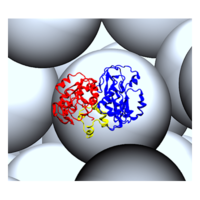
Critical Phenomena in the Temperature-Pressure-Crowding Phase Diagram of a Protein

Andrei G. Gasic, Mayank M. Boob, Maxim B. Prigozhin, Dirar Homouz, Caleb M. Daugherty, Martin Gruebele, and Margaret S. Cheung

Phys. Rev. X 9, 041035 (2019) - Published 18 November, 2019

Proteins balance contradictory demands of folding tightly yet remaining flexible by tuning where they operate in a temperature-pressure-crowding phase diagram.

Heating in Nanophotonic Traps for Cold Atoms

Daniel Hümmer, Philipp Schneeweiss, Arno Rauschenbeutel, and Oriol Romero-Isart

Phys. Rev. X 9, 041034 (2019) - Published 15 November, 2019

A theoretical analysis identifies mechanical waveguide modes most responsible for heating atoms in nanophotonic cold-atom traps, which could lead to vastly improved atomic control in the next generation of devices.

Long-Distance Entanglement between a Multiplexed Quantum Memory and a Telecom Photon

W. Chang, C. Li, Y.-K. Wu, N. Jiang, S. Zhang, Y.-F. Pu, X.-Y. Chang, and L.-M. Duan

Phys. Rev. X 9, 041033 (2019) - Published 14 November, 2019

An experimental realization of long-distance quantum entanglement between an atomic memory and a telecom photon provides a key step toward practical quantum communication.

Autonomous Engines Driven by Active Matter: Energetics and Design Principles

Patrick Pietzonka, Étienne Fodor, Christoph Lohrmann, Michael E. Cates, and Udo Seifert

Phys. Rev. X 9, 041032 (2019) - Published 13 November, 2019

Asymmetric obstacles in active matter can act as novel type of engine. A new analysis reveals the optimal obstacle shape for such devices and benchmarks for the extraction of useful work from these systems.

Sign In to Your Journals Account

Filter

Recent Issues

Vol. 16, Iss. 4
October - December 2026
Vol. 16, Iss. 3
July - September 2026
Vol. 16, Iss. 2
April - June 2026
Vol. 16, Iss. 1
January - March 2026
Category
Article Type

Filter

Article Lookup

Enter a citation