Recent Articles

Interference Measurements of Non-Abelian e/4 & Abelian e/2 Quasiparticle Braiding

R. L. Willett, K. Shtengel, C. Nayak, L. N. Pfeiffer, Y. J. Chung, M. L. Peabody, K. W. Baldwin, and K. W. West

Phys. Rev. X 13, 011028 (2023) - Published 1 March, 2023

A novel GaAs interferometer provides experimental evidence that strengthens the case for non-Abelian anyons, hypothetical quasiparticles highly sought for use in topologically protected quantum computing.

Transverse Peierls Transition

Kaifa Luo and Xi Dai

Phys. Rev. X 13, 011027 (2023) - Published 28 February, 2023

When electrons couple to transverse phonons in topological semimetals, two novel spontaneous symmetry-breaking quantum phases can emerge.

Multilayered Atomic Relaxation in van der Waals Heterostructures

Dorri Halbertal, Lennart Klebl, Valerie Hsieh, Jacob Cook, Stephen Carr, Guang Bian, Cory R. Dean, Dante M. Kennes, and D. N. Basov

Phys. Rev. X 13, 011026 (2023) - Published 27 February, 2023

In stacked van der Waals materials, atomic relaxation in the 2D layers can propagate throughout the stack, altering even the electronic properties of the entire heterostructure.

Salt Polygons and Porous Media Convection

Jana Lasser, Joanna M. Nield, Marcel Ernst, Volker Karius, Giles F. S. Wiggs, Matthew R. Threadgold, Cédric Beaume, and Lucas Goehring

Phys. Rev. X 13, 011025 (2023) - Published 24 February, 2023

The geometric patterns on dry, salty lake beds are generated by convection of high- and low-salinity water underground, according to simulations and observations.

Capillary-Stress Controlled Rheometer Reveals the Dual Rheology of Shear-Thickening Suspensions

Bruno Etcheverry, Yoël Forterre, and Bloen Metzger

Phys. Rev. X 13, 011024 (2023) - Published 24 February, 2023

The “capillarytron” lets researchers access mechanical properties of very dense suspensions.

Fast High-Fidelity Single-Shot Readout of Spins in Silicon Using a Single-Electron Box

G. A. Oakes, V. N. Ciriano-Tejel, D. F. Wise, M. A. Fogarty, T. Lundberg, C. Lainé, S. Schaal, F. Martins, D. J. Ibberson, L. Hutin, B. Bertrand, N. Stelmashenko, J. W. A. Robinson, L. Ibberson, A. Hashim, I. Siddiqi, A. Lee, M. Vinet, C. G. Smith, J. J. L. Morton, and M. F. Gonzalez-Zalba

Phys. Rev. X 13, 011023 (2023) - Published 23 February, 2023

A newly developed compact charge sensor quickly reads the state of electron spin qubits with high fidelity, demonstrating a performance suitable for robust, spin-based quantum processors.

Field-Induced Tuning of the Pairing State in a Superconductor

A. Rosuel, C. Marcenat, G. Knebel, T. Klein, A. Pourret, N. Marquardt, Q. Niu, S. Rousseau, A. Demuer, G. Seyfarth, G. Lapertot, D. Aoki, D. Braithwaite, J. Flouquet, and J. P. Brison

Phys. Rev. X 13, 011022 (2023) - Published 22 February, 2023

A magnetic field tunes UTe2 between two superconducting pairing mechanisms, possibly driving a change from a spin-triplet state to a spin-singlet state. This enables explorations of how exotic spin-triplet superconductivity emerges. 

Electronic Character of Charge Order in Square-Planar Low-Valence Nickelates

Y. Shen, J. Sears, G. Fabbris, J. Li, J. Pelliciari, M. Mitrano, W. He, Junjie Zhang, J. F. Mitchell, V. Bisogni, M. R. Norman, S. Johnston, and M. P. M. Dean

Phys. Rev. X 13, 011021 (2023) - Published 21 February, 2023

Resonant inelastic x-ray scattering reveals the presence and character of charge order in a low-valence nickelate, a step toward understanding this newly found family of superconductors.

Strong Electronic Winds Blowing under Liquid Flows on Carbon Surfaces

Mathieu Lizée, Alice Marcotte, Baptiste Coquinot, Nikita Kavokine, Karen Sobnath, Clément Barraud, Ankit Bhardwaj, Boya Radha, Antoine Niguès, Lydéric Bocquet, and Alessandro Siria

Phys. Rev. X 13, 011020 (2023) - Published 17 February, 2023

Vibrations are the main drivers of a mysterious process in which a liquid flow generates an electric current in the solid below it.

Quantum Feedback at the Solid-Liquid Interface: Flow-Induced Electronic Current and Its Negative Contribution to Friction

Baptiste Coquinot, Lydéric Bocquet, and Nikita Kavokine

Phys. Rev. X 13, 011019 (2023) - Published 17 February, 2023

A new quantum-mechanical theory predicts that a neutral liquid can generate an electric current in the solid wall along which it flows. The current in turn reduces the friction at the liquid-solid interface.

Nanoscale Torsional Dissipation Dilution for Quantum Experiments and Precision Measurement

J. R. Pratt, A. R. Agrawal, C. A. Condos, C. M. Pluchar, S. Schlamminger, and D. J. Wilson

Phys. Rev. X 13, 011018 (2023) - Published 15 February, 2023

Experiments show that the torsion modes of nanostructures can experience dissipation dilution, yielding a new class of ultrahigh-Q resonators with broad applications to quantum experiments and precision measurement.

Two-Photon Interface of Nuclear Spins Based on the Optonuclear Quadrupolar Effect

Haowei Xu, Changhao Li, Guoqing Wang, Hua Wang, Hao Tang, Ariel Rebekah Barr, Paola Cappellaro, and Ju Li

Phys. Rev. X 13, 011017 (2023) - Published 14 February, 2023

A proposed mechanism for efficiently coupling optical photons and nuclear spins opens the door to hybridizing these two building blocks of quantum technology and to a number of novel device applications.

Autonomous Quantum Devices: When Are They Realizable without Additional Thermodynamic Costs?

Mischa P. Woods and Michał Horodecki

Phys. Rev. X 13, 011016 (2023) - Published 13 February, 2023

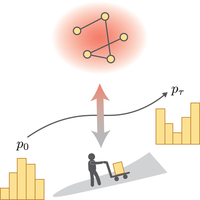
Unaccounted for thermodynamic costs in controlling quantum systems can be made arbitrarily small, as long as the control is not implemented too quickly.

King-Plot Analysis of Isotope Shifts in Simple Diatomic Molecules

Michail Athanasakis-Kaklamanakis, Shane G. Wilkins, Alexander A. Breier, and Gerda Neyens

Phys. Rev. X 13, 011015 (2023) - Published 9 February, 2023

The known linear relationship between nuclear radius, nuclear mass, and isotope shift also holds for diatomic molecules, insight that can help measure the radii of short-lived nuclei that are not currently accessible in single atoms.

Fragmentation and Entanglement Limit Vimentin Intermediate Filament Assembly

Quang D. Tran, Valerio Sorichetti, Gerard Pehau-Arnaudet, Martin Lenz, and Cécile Leduc

Phys. Rev. X 13, 011014 (2023) - Published 6 February, 2023

Experiments and theoretical modeling show that disassembly of vimentin intermediate filaments—a key process in many biological cell functions—proceeds via filament breakage without the assistance of other proteins.

Thermodynamic Unification of Optimal Transport: Thermodynamic Uncertainty Relation, Minimum Dissipation, and Thermodynamic Speed Limits

Tan Van Vu and Keiji Saito

Phys. Rev. X 13, 011013 (2023) - Published 3 February, 2023

A new, unified thermodynamic theory reveals an intimate relationship between optimal transport distances and stochastic and quantum thermodynamics in discrete-state systems.

Single- and Multimagnon Dynamics in Antiferromagnetic α−Fe2O3 Thin Films

Jiemin Li, Yanhong Gu, Yoshihiro Takahashi, Keisuke Higashi, Taehun Kim, Yang Cheng, Fengyuan Yang, Jan Kuneš, Jonathan Pelliciari, Atsushi Hariki, and Valentina Bisogni

Phys. Rev. X 13, 011012 (2023) - Published 1 February, 2023

Resonant inelastic x-ray scattering reveals the fundamental magnetic modes in hematite thin films, which are relevant for the development of fast, low-power antiferromagnetic spintronics–based devices.

Laser-Driven Neutron Generation Realizing Single-Shot Resonance Spectroscopy

A. Yogo, Z. Lan, Y. Arikawa, Y. Abe, S. R. Mirfayzi, T. Wei, T. Mori, D. Golovin, T. Hayakawa, N. Iwata, S. Fujioka, M. Nakai, Y. Sentoku, K. Mima, M. Murakami, M. Koizumi, F. Ito, J. Lee, T. Takahashi, K. Hironaka, S. Kar, H. Nishimura, and R. Kodama

Phys. Rev. X 13, 011011 (2023) - Published 31 January, 2023

Experiments identify the mechanism that accelerates ions in a laser-driven neutron source (LDNS) as well as a scaling law for the neutron yield, key insights that move LDNS closer to practical neutron generation.

Bipolaronic High-Temperature Superconductivity

C. Zhang, J. Sous, D. R. Reichman, M. Berciu, A. J. Millis, N. V. Prokof’ev, and B. V. Svistunov

Phys. Rev. X 13, 011010 (2023) - Published 30 January, 2023

A proposed route to high-temperature superconductivity by increasing the binding between electron pairs without unduly increasing the pair mass suggests superconductivity at temperatures higher than previously thought possible.

Forgetting Leads to Chaos in Attractor Networks

Ulises Pereira-Obilinovic, Johnatan Aljadeff, and Nicolas Brunel

Phys. Rev. X 13, 011009 (2023) - Published 27 January, 2023

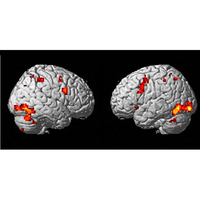
A model for information storage in the brain reveals how memories decay with age.

Sign In to Your Journals Account

Filter

Recent Issues

Vol. 16, Iss. 4
October - December 2026
Vol. 16, Iss. 3
July - September 2026
Vol. 16, Iss. 2
April - June 2026
Vol. 16, Iss. 1
January - March 2026
Category
Article Type

Filter

Article Lookup

Enter a citation