Recent Articles

Quantum Boltzmann Machine

Mohammad H. Amin, Evgeny Andriyash, Jason Rolfe, Bohdan Kulchytskyy, and Roger Melko

Phys. Rev. X 8, 021050 (2018) - Published 23 May, 2018

A new machine-learning algorithm demonstrates the performance of a quantum Boltzmann machine, a quantum extension of a popular classical neural network, paving the way for quantum approaches to machine learning.

Magnetotransport in a Model of a Disordered Strange Metal

Aavishkar A. Patel, John McGreevy, Daniel P. Arovas, and Subir Sachdev

Phys. Rev. X 8, 021049 (2018) - Published 22 May, 2018

A new theoretical model for the “strange metal” state of high-temperature superconductors reproduces unexplained dependencies of resistance on both temperature and applied magnetic field.

Pseudogap and Fermi-Surface Topology in the Two-Dimensional Hubbard Model

Wei Wu, Mathias S. Scheurer, Shubhayu Chatterjee, Subir Sachdev, Antoine Georges, and Michel Ferrero

Phys. Rev. X 8, 021048 (2018) - Published 22 May, 2018

Recent experiments on the normal state of high-temperature superconductors have found a surprising link between the existence of a pseudogap and changes in the topology of the Fermi surface. A new theoretical and computational analysis explores this connection.

Disjointness of Stabilizer Codes and Limitations on Fault-Tolerant Logical Gates

Tomas Jochym-O’Connor, Aleksander Kubica, and Theodore J. Yoder

Phys. Rev. X 8, 021047 (2018) - Published 21 May, 2018

A new analysis quantifies computational limitations on stabilizer codes (codes that correct errors in quantum information) for practical operations and provides insight into how to design stabilizer codes for useful and interesting applications.

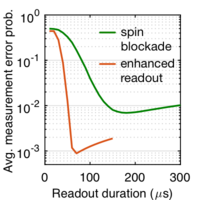
High-Fidelity Single-Shot Readout for a Spin Qubit via an Enhanced Latching Mechanism

Patrick Harvey-Collard, Benjamin D’Anjou, Martin Rudolph, N. Tobias Jacobson, Jason Dominguez, Gregory A. Ten Eyck, Joel R. Wendt, Tammy Pluym, Michael P. Lilly, William A. Coish, Michel Pioro-Ladrière, and Malcolm S. Carroll

Phys. Rev. X 8, 021046 (2018) - Published 21 May, 2018

A new approach to reading spin-based qubits achieves readout fidelities higher than 99.86%, the lowest error rate to date. The technique combines speed and accuracy and could be used in many types of spin-based quantum computers.

Grain-Boundary Roughening in Colloidal Crystals

Maijia Liao, Xiao Xiao, Siu Tat Chui, and Yilong Han

Phys. Rev. X 8, 021045 (2018) - Published 16 May, 2018

New experiments directly measure the rarely observed roughening of grain boundaries in a thin-film colloidal crystal and offer new insights into how polycrystals behave at high temperatures.

Multiscale Molecular Dynamics Model for Heterogeneous Charged Systems

L. G. Stanton, J. N. Glosli, and M. S. Murillo

Phys. Rev. X 8, 021044 (2018) - Published 16 May, 2018

A new approach to calculating atomic-level forces in fusion-energy simulations breaks through computational bottlenecks seen in other approaches and reveals new behavior arising at the ablator-fuel interface.

Applying the Coupled-Cluster Ansatz to Solids and Surfaces in the Thermodynamic Limit

Thomas Gruber, Ke Liao, Theodoros Tsatsoulis, Felix Hummel, and Andreas Grüneis

Phys. Rev. X 8, 021043 (2018) - Published 14 May, 2018

Proposed improvements to coupled-cluster theory—a method for describing many-body systems—could allow researchers to calculate properties of solids and surfaces with increased computational efficiency.

Magnetic and Electric Transverse Spin Density of Spatially Confined Light

Martin Neugebauer, Jörg S. Eismann, Thomas Bauer, and Peter Banzer

Phys. Rev. X 8, 021042 (2018) - Published 14 May, 2018

A new experiment reveals differences between the electric and magnetic components of the transverse spin density in tightly confined beams of light, providing a new route to controlling spin in optical information applications.

Non-Gaussian Correlations between Reflected and Transmitted Intensity Patterns Emerging from Opaque Disordered Media

I. Starshynov, A. M. Paniagua-Diaz, N. Fayard, A. Goetschy, R. Pierrat, R. Carminati, and J. Bertolotti

Phys. Rev. X 8, 021041 (2018) - Published 11 May, 2018

New experiments show previously unseen correlations among the speckle patterns of light transmitted through and reflected off a nonhomogenous medium, showing that information about one path of light can be deduced by measuring the other.

Glass Forming Ability in Systems with Competing Orderings

John Russo, Flavio Romano, and Hajime Tanaka

Phys. Rev. X 8, 021040 (2018) - Published 11 May, 2018

Numerical simulations reveal that glass-forming ability in some liquids is determined by how different the liquid structure is from a crystalline structure, a finding that could pave the way for a general physical understanding of the emergence of glassy behavior.

Transverse Space-Charge Field-Induced Plasma Dynamics for Ultraintense Electron-Beam Characterization

R. Tarkeshian, J. L. Vay, R. Lehe, C. B. Schroeder, E. H. Esarey, T. Feurer, and W. P. Leemans

Phys. Rev. X 8, 021039 (2018) - Published 10 May, 2018

A new method for measuring the charge density in a narrow beam of relativistic electrons promises a minimally invasive technique for characterizing and controlling beams in next-generation particle accelerators.

Metal-Insulator Transition in Copper Oxides Induced by Apex Displacements

Swagata Acharya, Cédric Weber, Evgeny Plekhanov, Dimitar Pashov, A. Taraphder, and Mark Van Schilfgaarde

Phys. Rev. X 8, 021038 (2018) - Published 10 May, 2018

A new theoretical analysis of copper-oxide compounds reveals how displacements of the apical oxygen atom trigger a transition from insulator to metal, shedding light on what determines the critical temperature in copper-based high-temperature superconductors.

Flowing Active Liquids in a Pipe: Hysteretic Response of Polar Flocks to External Fields

Alexandre Morin and Denis Bartolo

Phys. Rev. X 8, 021037 (2018) - Published 10 May, 2018

New experiments investigate the response of active fluids—liquids that flow under their own power—to external fields, finding bistable behavior and the emergence of autonomous behaviors not dictated by driving forces.

Frequency Measurements of Superradiance from the Strontium Clock Transition

Matthew A. Norcia, Julia R. K. Cline, Juan A. Muniz, John M. Robinson, Ross B. Hutson, Akihisa Goban, G. Edward Marti, Jun Ye, and James K. Thompson

Phys. Rev. X 8, 021036 (2018) - Published 9 May, 2018

The frequency stability of superradiant light emitted from an optical clock transition in cold strontium atoms surpasses that of active microwave atomic clocks, paving the way for a next generation of high-precision optical frequency references to be used outside the laboratory environment.

Inheritance of Cell-Cycle Duration in the Presence of Periodic Forcing

Noga Mosheiff, Bruno M. C. Martins, Sivan Pearl-Mizrahi, Alexander Grünberger, Stefan Helfrich, Irina Mihalcescu, Dietrich Kohlheyer, James C. W. Locke, Leon Glass, and Nathalie Q. Balaban

Phys. Rev. X 8, 021035 (2018) - Published 9 May, 2018

A new data-validated mathematical framework describes how variability in cell-cycle durations is influenced by periodic forcing such as a circadian clock. The results show how to identify couplings between cells and external influences without knowledge of the underlying biological details.

Importance of Electronic Correlations and Unusual Excitonic Effects in Formamidinium Lead Halide Perovskites

T. J. Whitcher, J.-X. Zhu, X. Chi, H. Hu, Daming Zhao, T. C. Asmara, X. Yu, M. B. H. Breese, A. H. Castro Neto, Y. M. Lam, A. T. S. Wee, Elbert E. M. Chia, and A. Rusydi

Phys. Rev. X 8, 021034 (2018) - Published 8 May, 2018

Perovskite compounds show promise for charge generation in solar cells because of their high density of excitons when exposed to light. New experiments reveal the origin of this behavior, which could point the way to more efficient optoelectronic devices.

Resource Theory of Quantum Memories and Their Faithful Verification with Minimal Assumptions

Denis Rosset, Francesco Buscemi, and Yeong-Cherng Liang

Phys. Rev. X 8, 021033 (2018) - Published 8 May, 2018

For quantum technologies to reach their full potential, there needs to be a way to benchmark quantum-based memory devices. A new proposal lays out a way to compare and test quantum memories.

Coupling Thermal Atomic Vapor to Slot Waveguides

Ralf Ritter, Nico Gruhler, Helge Dobbertin, Harald Kübler, Stefan Scheel, Wolfram Pernice, Tilman Pfau, and Robert Löw

Phys. Rev. X 8, 021032 (2018) - Published 4 May, 2018

New experiments investigate the interaction between light and rubidium atoms in a slot waveguide, which could pave the way for more efficient coupling between light and atoms in on-chip atomic vapor cell applications.

Metastability at the Yield-Stress Transition in Soft Glasses

Matteo Lulli, Roberto Benzi, and Mauro Sbragaglia

Phys. Rev. X 8, 021031 (2018) - Published 4 May, 2018

Numerical simulations reveal possible recurrent transitions between “fluid” and “solid” states in soft glasses at the yield-stress threshold and suggest how to observe this behavior in experiments, thus revealing the nonstationary nature of yielding for nonhomogeneous stress.

Sign In to Your Journals Account

Filter

Recent Issues

Vol. 16, Iss. 4
October - December 2026
Vol. 16, Iss. 3
July - September 2026
Vol. 16, Iss. 2
April - June 2026
Vol. 16, Iss. 1
January - March 2026
Category
Article Type

Filter

Article Lookup

Enter a citation