Recent Articles

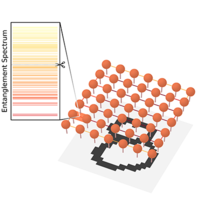
Unsupervised Generative Modeling Using Matrix Product States

Zhao-Yu Han, Jun Wang, Heng Fan, Lei Wang, and Pan Zhang

Phys. Rev. X 8, 031012 (2018) - Published 17 July, 2018

Modeling the probability distribution of complex data using insights from quantum physics is a fresh approach to generative modeling in machine learning, and shows great potential compared to conventional neural network approaches.

Immersive Wave Propagation Experimentation: Physical Implementation and One-Dimensional Acoustic Results

Theodor S. Becker, Dirk-Jan van Manen, Carly M. Donahue, Christoph Bärlocher, Nele Börsing, Filippo Broggini, Thomas Haag, Johan O. A. Robertsson, Darren R. Schmidt, Stewart A. Greenhalgh, and Thomas E. Blum

Phys. Rev. X 8, 031011 (2018) - Published 16 July, 2018

A new approach to laboratory acoustic experiments could remove unwanted effects caused by the reflections of acoustic waves from the boundaries of the experimental setup.

Observation of Quantum Spin Noise in a 1D Light-Atoms Quantum Interface

J.-B. Béguin, J. H. Müller, J. Appel, and E. S. Polzik

Phys. Rev. X 8, 031010 (2018) - Published 12 July, 2018

A thinned nanowire provides a means for tightly confining 1000 ultracold cesium atoms, allowing for precise measurements of collective quantum fluctuations necessary for future quantum communication networks.

Realistic Area-Law Bound on Entanglement from Exponentially Decaying Correlations

Jaeyoon Cho

Phys. Rev. X 8, 031009 (2018) - Published 11 July, 2018

A new mathematical proof shows how the area law for quantum entanglement in one dimension relates to how information is shared by disparate regions in the system, paving the way for proofs of the area law at higher dimensions and tractable studies of interacting many-body quantum systems.

Resetting Uncontrolled Quantum Systems

Miguel Navascués

Phys. Rev. X 8, 031008 (2018) - Published 11 July, 2018

A quantum information protocol offers the possibility of resetting the state of a quantum system to some earlier state, paving the way for an experimental realization of a “time warp.”

Coupling a Superconducting Quantum Circuit to a Phononic Crystal Defect Cavity

Patricio Arrangoiz-Arriola, E. Alex Wollack, Marek Pechal, Jeremy D. Witmer, Jeff T. Hill, and Amir H. Safavi-Naeini

Phys. Rev. X 8, 031007 (2018) - Published 10 July, 2018

The first successful demonstration of a phononic crystal cavity strongly coupled to a tunable superconducting quantum circuit could open new avenues for storing, processing, and transmitting quantum information.

Uncovering Instabilities in the Spatiotemporal Dynamics of a Shear-Thickening Cornstarch Suspension

Brice Saint-Michel, Thomas Gibaud, and Sébastien Manneville

Phys. Rev. X 8, 031006 (2018) - Published 9 July, 2018

New experiments reveal that instabilities in shear-thickening materials (such as cornstarch suspended in water) arise from localized bands that travel perpendicularly to the shear direction.

Of Local Operations and Physical Wires

Dario Egloff, Juan M. Matera, Thomas Theurer, and Martin B. Plenio

Phys. Rev. X 8, 031005 (2018) - Published 6 July, 2018

Unifying different perspectives on what separates quantum states from classical states provides for a new framework for understanding the quantum-classical divide, paving the way for a better understanding of quantum computing platforms and biological systems.

Experimental Signatures of the Quantum Nature of Radiation Reaction in the Field of an Ultraintense Laser

K. Poder, M. Tamburini, G. Sarri, A. Di Piazza, S. Kuschel, C. D. Baird, K. Behm, S. Bohlen, J. M. Cole, D. J. Corvan, M. Duff, E. Gerstmayr, C. H. Keitel, K. Krushelnick, S. P. D. Mangles, P. McKenna, C. D. Murphy, Z. Najmudin, C. P. Ridgers, G. M. Samarin, D. R. Symes, A. G. R. Thomas, J. Warwick, and M. Zepf

Phys. Rev. X 8, 031004 (2018) - Published 5 July, 2018

Substantial energy loss in an electron beam passing through a high-intensity laser provides clear evidence of the radiation reaction, shedding light on how electrons interact with extreme electromagnetic fields.

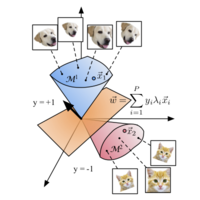
Classification and Geometry of General Perceptual Manifolds

SueYeon Chung, Daniel D. Lee, and Haim Sompolinsky

Phys. Rev. X 8, 031003 (2018) - Published 5 July, 2018

A new theory describes how neural networks, both biological and artificial, are able to accurately identify objects in their field of vision despite enormous sensory variability.

Experimental Tests of the Chiral Anomaly Magnetoresistance in the Dirac-Weyl Semimetals Na3Bi and GdPtBi

Sihang Liang, Jingjing Lin, Satya Kushwaha, Jie Xing, Ni Ni, R. J. Cava, and N. P. Ong

Phys. Rev. X 8, 031002 (2018) - Published 3 July, 2018

A new experimental test confirms evidence for a chiral anomaly in two Dirac-Weyl semimetals, excluding possible confusion with a classical effect known as current jetting.

Hierarchy of Exchange Interactions in the Triangular-Lattice Spin Liquid YbMgGaO4

Xinshu Zhang, Fahad Mahmood, Marcus Daum, Zhiling Dun, Joseph A. M. Paddison, Nicholas J. Laurita, Tao Hong, Haidong Zhou, N. P. Armitage, and Martin Mourigal

Phys. Rev. X 8, 031001 (2018) - Published 2 July, 2018

A newly synthesized compound, YbMgGaO4, appears to have the proper interactions among neighboring spins to create a quantum spin-liquid state, an exotic phase that could be useful for some approaches to quantum computing.

Controllable Photonic Time-Bin Qubits from a Quantum Dot

J. P. Lee, L. M. Wells, B. Villa, S. Kalliakos, R. M. Stevenson, D. J. P. Ellis, I. Farrer, D. A. Ritchie, A. J. Bennett, and A. J. Shields

Phys. Rev. X 8, 021078 (2018) - Published 27 June, 2018

A new technique for encoding information in a single photon reduces the amount of loss and packs more information into a single photon compared to other methods, and it does so with fewer components.

Paradoxical Onset of Arrhythmic Waves from Depolarized Areas in Cardiac Tissue Due to Curvature-Dependent Instability

Alexander S. Teplenin, Hans Dierckx, Antoine A. F. de Vries, Daniël A. Pijnappels, and Alexander V. Panfilov

Phys. Rev. X 8, 021077 (2018) - Published 26 June, 2018

New research combining experiments and analytical approaches from quantum mechanics shows that cardiac arrhythmias may originate in sharp corners of damaged heart tissue. This suggests that some arrhythmias might be prevented by making such corners electrically inactive in patients who are at risk.

Tuning Nuclear Quadrupole Resonance: A Novel Approach for the Design of Frequency-Selective MRI Contrast Agents

Christian Gösweiner, Perttu Lantto, Roland Fischer, Carina Sampl, Evrim Umut, Per-Olof Westlund, Danuta Kruk, Markus Bödenler, Stefan Spirk, Andreas Petrovič, and Hermann Scharfetter

Phys. Rev. X 8, 021076 (2018) - Published 25 June, 2018

Magnetic resonance imaging is a powerful diagnostic tool used in modern medicine. A new type of patient-administered contrast agent based on quadrupole relaxation enhancement could provide a new and flexible way to improve tissue contrast.

Geometry and Elasticity of a Knitted Fabric

Samuel Poincloux, Mokhtar Adda-Bedia, and Frédéric Lechenault

Phys. Rev. X 8, 021075 (2018) - Published 22 June, 2018

A new model predicts how each stitch in a knitted fabric will respond to a stretching force.

Classification of (3+1)D Bosonic Topological Orders: The Case When Pointlike Excitations Are All Bosons

Tian Lan, Liang Kong, and Xiao-Gang Wen

Phys. Rev. X 8, 021074 (2018) - Published 22 June, 2018

A new mathematical analysis provides a complete classification of topological orders for three-dimensional materials in which all pointlike excitations behave like bosons.

Programmable Interference between Two Microwave Quantum Memories

Yvonne Y. Gao, Brian J. Lester, Yaxing Zhang, Chen Wang, Serge Rosenblum, Luigi Frunzio, Liang Jiang, S. M. Girvin, and Robert J. Schoelkopf

Phys. Rev. X 8, 021073 (2018) - Published 21 June, 2018

New experiments demonstrate on-demand interference between stationary modes stored in separated superconducting microwave cavities, enabling future studies of complex quantum interference phenomena critical to fundamental science and quantum information applications.

Entanglement Structure: Entanglement Partitioning in Multipartite Systems and Its Experimental Detection Using Optimizable Witnesses

He Lu, Qi Zhao, Zheng-Da Li, Xu-Fei Yin, Xiao Yuan, Jui-Chen Hung, Luo-Kan Chen, Li Li, Nai-Le Liu, Cheng-Zhi Peng, Yeong-Cherng Liang, Xiongfeng Ma, Yu-Ao Chen, and Jian-Wei Pan

Phys. Rev. X 8, 021072 (2018) - Published 21 June, 2018

A new tool for characterizing entanglement in many-body quantum systems offers a step toward creating true large-scale entanglement among many particles, which itself will be essential for practical quantum computing devices.

Key Features of Turing Systems are Determined Purely by Network Topology

Xavier Diego, Luciano Marcon, Patrick Müller, and James Sharpe

Phys. Rev. X 8, 021071 (2018) - Published 20 June, 2018

A theoretical breakthrough extends Alan Turing’s foundational theory on embryonic development and paves the way for engineering self-organized synthetic systems.

Sign In to Your Journals Account

Filter

Recent Issues

Vol. 16, Iss. 4
October - December 2026
Vol. 16, Iss. 3
July - September 2026
Vol. 16, Iss. 2
April - June 2026
Vol. 16, Iss. 1
January - March 2026
Category
Article Type

Filter

Article Lookup

Enter a citation