Highlights

Engineering Vibrationally Assisted Energy Transfer in a Trapped-Ion Quantum Simulator

Dylan J Gorman, Boerge Hemmerling, Eli Megidish, Soenke A. Moeller, Philipp Schindler, Mohan Sarovar, and Hartmut Haeffner

Phys. Rev. X 8, 011038 (2018) - Published 7 March, 2018

A quantum simulator made of two trapped-ion qubits can model quantum effects occurring during energy-transfer processes in molecules.

Imaging Anyons with Scanning Tunneling Microscopy

Zlatko Papić, Roger S. K. Mong, Ali Yazdani, and Michael P. Zaletel

Phys. Rev. X 8, 011037 (2018) - Published 6 March, 2018

A scanning tunneling microscope might detect unambiguous signatures of anyons in graphene.

Computation of Molecular Spectra on a Quantum Processor with an Error-Resilient Algorithm

J. I. Colless, V. V. Ramasesh, D. Dahlen, M. S. Blok, M. E. Kimchi-Schwartz, J. R. McClean, J. Carter, W. A. de Jong, and I. Siddiqi

Phys. Rev. X 8, 011021 (2018) - Published 12 February, 2018

Excited-state energies of the hydrogen molecule have been calculated using a two-qubit quantum computer.

Experimental Evidence of Radiation Reaction in the Collision of a High-Intensity Laser Pulse with a Laser-Wakefield Accelerated Electron Beam

J. M. Cole, K. T. Behm, E. Gerstmayr, T. G. Blackburn, J. C. Wood, C. D. Baird, M. J. Duff, C. Harvey, A. Ilderton, A. S. Joglekar, K. Krushelnick, S. Kuschel, M. Marklund, P. McKenna, C. D. Murphy, K. Poder, C. P. Ridgers, G. M. Samarin, G. Sarri, D. R. Symes, A. G. R. Thomas, J. Warwick, M. Zepf, Z. Najmudin, and S. P. D. Mangles

Phys. Rev. X 8, 011020 (2018) - Published 7 February, 2018

Experimentalists have used ultraintense laser light to explore a fundamental problem in quantum electrodynamics: the response of an accelerated electron to the radiation it emits.

Tunable-Range, Photon-Mediated Atomic Interactions in Multimode Cavity QED

Varun D. Vaidya, Yudan Guo, Ronen M. Kroeze, Kyle E. Ballantine, Alicia J. Kollár, Jonathan Keeling, and Benjamin L. Lev

Phys. Rev. X 8, 011002 (2018) - Published 8 January, 2018

A tunable multimode optical cavity modifies interactions between atomic condensates trapped in its interior from long range to short range, paving the way towards exploring novel collective quantum phenomena.

Observation of Accelerating Wave Packets in Curved Space

Anatoly Patsyk, Miguel A. Bandres, Rivka Bekenstein, and Mordechai Segev

Phys. Rev. X 8, 011001 (2018) - Published 4 January, 2018

Using a combination of light-bending techniques, researchers have demonstrated a light beam that accelerates in a curved space.

Angle-Multiplexed Metasurfaces: Encoding Independent Wavefronts in a Single Metasurface under Different Illumination Angles

Seyedeh Mahsa Kamali, Ehsan Arbabi, Amir Arbabi, Yu Horie, MohammadSadegh Faraji-Dana, and Andrei Faraon

Phys. Rev. X 7, 041056 (2017) - Published 6 December, 2017

Researchers have demonstrated a device that can project two distinct holographic images when illuminated at different angles.

Widely Tunable On-Chip Microwave Circulator for Superconducting Quantum Circuits

Benjamin J. Chapman, Eric I. Rosenthal, Joseph Kerckhoff, Bradley A. Moores, Leila R. Vale, J. A. B. Mates, Gene C. Hilton, Kevin Lalumière, Alexandre Blais, and K. W. Lehnert

Phys. Rev. X 7, 041043 (2017) - Published 22 November, 2017

A device that routes microwave signals could help researchers scale up quantum-computing architectures.

Search for Axionlike Dark Matter through Nuclear Spin Precession in Electric and Magnetic Fields

C. Abel et al.

Phys. Rev. X 7, 041034 (2017) - Published 14 November, 2017

An analysis of spin-precession data of atoms and neutrons sets some of the tightest limits to date on the strength of interactions between axions and gluons or nucleons.

Acoustic Traps and Lattices for Electrons in Semiconductors

M. J. A. Schuetz, J. Knörzer, G. Giedke, L. M. K. Vandersypen, M. D. Lukin, and J. I. Cirac

Phys. Rev. X 7, 041019 (2017) - Published 24 October, 2017

Electrons and quasiparticles in solids could be trapped and moved using surface acoustic waves.

Magnetic Resonance with Squeezed Microwaves

A. Bienfait, P. Campagne-Ibarcq, A. H. Kiilerich, X. Zhou, S. Probst, J. J. Pla, T. Schenkel, D. Vion, D. Esteve, J. J. L. Morton, K. Moelmer, and P. Bertet

Phys. Rev. X 7, 041011 (2017) - Published 17 October, 2017

Electron-spin-resonance measurements can achieve greater sensitivity using squeezed light as an input.

Light Microscopy at Maximal Precision

Matthew Bierbaum, Brian D. Leahy, Alexander A. Alemi, Itai Cohen, and James P. Sethna

Phys. Rev. X 7, 041007 (2017) - Published 13 October, 2017

A theoretical model of light spreading and scattering improves accuracy precision of position and size measurements made with an optical microscope by as much as 100 times.

Quantum Spin Lenses in Atomic Arrays

A. W. Glaetzle, K. Ender, D. S. Wild, S. Choi, H. Pichler, M. D. Lukin, and P. Zoller

Phys. Rev. X 7, 031049 (2017) - Published 20 September, 2017

In quantum computing, atomic ensembles can efficiently map “flying” photonic qubits onto stationary qubits. These absorbed photons, however, end up encoded in delocalized states that preclude local processing. A new concept called a “quantum spin lens” could focus delocalized excitations onto a single atom, which can then be manipulated using standard quantum computing tools.

Squeezed Thermal Reservoirs as a Resource for a Nanomechanical Engine beyond the Carnot Limit

Jan Klaers, Stefan Faelt, Atac Imamoglu, and Emre Togan

Phys. Rev. X 7, 031044 (2017) - Published 13 September, 2017

A tiny engine can surpass the Carnot limit of efficiency when researchers engineer the thermal properties of the environment.

Topological Sound and Flocking on Curved Surfaces

Suraj Shankar, Mark J. Bowick, and M. Cristina Marchetti

Phys. Rev. X 7, 031039 (2017) - Published 7 September, 2017

A flocking model that describes birds and cells exhibits topological features when the moving entities are confined to a curved surface.

Extreme-Ultraviolet Vortices from a Free-Electron Laser

Primož Rebernik Ribič, Benedikt Rösner, David Gauthier, Enrico Allaria, Florian Döring, Laura Foglia, Luca Giannessi, Nicola Mahne, Michele Manfredda, Claudio Masciovecchio, Riccardo Mincigrucci, Najmeh Mirian, Emiliano Principi, Eléonore Roussel, Alberto Simoncig, Simone Spampinati, Christian David, and Giovanni De Ninno

Phys. Rev. X 7, 031036 (2017) - Published 28 August, 2017

Researchers have used a free-electron laser to produce vortex radiation at extreme-ultraviolet wavelengths.

Autonomous Quantum Clocks: Does Thermodynamics Limit Our Ability to Measure Time?

Paul Erker, Mark T. Mitchison, Ralph Silva, Mischa P. Woods, Nicolas Brunner, and Marcus Huber

Phys. Rev. X 7, 031022 (2017) - Published 2 August, 2017

A simple model of an autonomous quantum clock yields a quantitative connection between the clock’s thermodynamic cost and its accuracy and resolution.

Quantum Common Causes and Quantum Causal Models

John-Mark A. Allen, Jonathan Barrett, Dominic C. Horsman, Ciarán M. Lee, and Robert W. Spekkens

Phys. Rev. X 7, 031021 (2017) - Published 31 July, 2017

A new model extends the definition of causality to quantum-mechanical systems.

Measuring Out-of-Time-Order Correlators on a Nuclear Magnetic Resonance Quantum Simulator

Jun Li, Ruihua Fan, Hengyan Wang, Bingtian Ye, Bei Zeng, Hui Zhai, Xinhua Peng, and Jiangfeng Du

Phys. Rev. X 7, 031011 (2017) - Published 19 July, 2017

Two experimental groups have taken a step towards observing the “scrambling” of information that occurs as a many-body quantum system thermalizes.

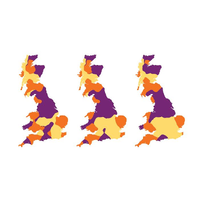
Spatial Evolution of Human Dialects

James Burridge

Phys. Rev. X 7, 031008 (2017) - Published 17 July, 2017

A new model of language evolution assumes that changes in the spatial boundaries between dialects are controlled by a surface tension effect.

Sign In to Your Journals Account

Filter

Filter

Article Lookup

Enter a citation