Highlights

Josephson-Anderson Relation and the Classical D’Alembert Paradox

Gregory L. Eyink

Phys. Rev. X 11, 031054 (2021) - Published 10 September, 2021

A quantum-inspired model explains why objects moving in a fluid experience drag even at high speeds where viscosity should be negligible.

Geometric Control of Universal Hydrodynamic Flow in a Two-Dimensional Electron Fluid

Aydın Cem Keser, Daisy Q. Wang, Oleh Klochan, Derek Y. H. Ho, Olga A. Tkachenko, Vitaly A. Tkachenko, Dimitrie Culcer, Shaffique Adam, Ian Farrer, David A. Ritchie, Oleg P. Sushkov, and Alexander R. Hamilton

Phys. Rev. X 11, 031030 (2021) - Published 6 August, 2021

Electrons flow like a viscous fluid through a 2D channel with perfectly smooth sidewalls, offering a new platform to test solid-state and fluid dynamics theories.

Proposal for a Nanomechanical Qubit

F. Pistolesi, A. N. Cleland, and A. Bachtold

Phys. Rev. X 11, 031027 (2021) - Published 3 August, 2021

A suspended carbon nanotube coupled to a double quantum dot makes a mechanical oscillator that serves as a qubit.

Quantum Photonic Interface for Tin-Vacancy Centers in Diamond

Alison E. Rugar, Shahriar Aghaeimeibodi, Daniel Riedel, Constantin Dory, Haiyu Lu, Patrick J. McQuade, Zhi-Xun Shen, Nicholas A. Melosh, and Jelena Vučković

Phys. Rev. X 11, 031021 (2021) - Published 26 July, 2021

Nanophotonic devices based on tin-vacancy qubits in diamond show promise as building blocks of quantum repeaters, an important step toward the realization of long-range quantum networks.

Fréedericksz-Like Transition in a Biaxial Smectic-A Phase

Claire Meyer, Patrick Davidson, Doru Constantin, Vassili Sergan, Daniel Stoenescu, Anamarija Knežević, Irena Dokli, Andreja Lesac, and Ivan Dozov

Phys. Rev. X 11, 031012 (2021) - Published 16 July, 2021

Researchers have demonstrated a faster way to turn light transmission on and off in a liquid crystal.

Prediction of Toric Code Topological Order from Rydberg Blockade

Ruben Verresen, Mikhail D. Lukin, and Ashvin Vishwanath

Phys. Rev. X 11, 031005 (2021) - Published 8 July, 2021

A lattice of highly excited atoms can exhibit a topological phase, a new theoretical study shows.

Pseudospectrum and Black Hole Quasinormal Mode Instability

José Luis Jaramillo, Rodrigo Panosso Macedo, and Lamis Al Sheikh

Phys. Rev. X 11, 031003 (2021) - Published 6 July, 2021

A new analysis of black hole vibrational spectra identifies which frequencies are stable to perturbations—information pertinent for gravitational-wave analysis and quantum gravity modeling.

Virus-Host Interactions Shape Viral Dispersal Giving Rise to Distinct Classes of Traveling Waves in Spatial Expansions

Michael Hunter, Nikhil Krishnan, Tongfei Liu, Wolfram Möbius, and Diana Fusco

Phys. Rev. X 11, 021066 (2021) - Published 29 June, 2021

Bacteria-infecting viruses provide a controllable platform to study the expansion of a virus in a cell population.

Learning and Avoiding Disorder in Multimode Fibers

Maxime W. Matthès, Yaron Bromberg, Julien de Rosny, and Sébastien M. Popoff

Phys. Rev. X 11, 021060 (2021) - Published 21 June, 2021

A machine-learning approach quickly characterizes an optical fiber, identifying transmission channels that aren’t affected by deformation.

Thermal Metasurfaces: Complete Emission Control by Combining Local and Nonlocal Light-Matter Interactions

Adam C. Overvig, Sander A. Mann, and Andrea Alù

Phys. Rev. X 11, 021050 (2021) - Published 4 June, 2021

Theorists have shown that carefully patterned surfaces can transform the emission from a hot object into a polarized, focused light beam.

Enhancing Associative Memory Recall and Storage Capacity Using Confocal Cavity QED

Brendan P. Marsh, Yudan Guo, Ronen M. Kroeze, Sarang Gopalakrishnan, Surya Ganguli, Jonathan Keeling, and Benjamin L. Lev

Phys. Rev. X 11, 021048 (2021) - Published 2 June, 2021

Merging ideas from neuroscience, machine learning, and quantum technology, researchers propose a new information-storage device.

Quantum-Enhanced Data Classification with a Variational Entangled Sensor Network

Yi Xia, Wei Li, Quntao Zhuang, and Zheshen Zhang

Phys. Rev. X 11, 021047 (2021) - Published 1 June, 2021

Quantum machine-learning techniques speed up the task of classifying data delivered by a small network of quantum sensors.

Quench Dynamics of a Fermi Gas with Strong Nonlocal Interactions

Elmer Guardado-Sanchez, Benjamin M. Spar, Peter Schauss, Ron Belyansky, Jeremy T. Young, Przemyslaw Bienias, Alexey V. Gorshkov, Thomas Iadecola, and Waseem S. Bakr

Phys. Rev. X 11, 021036 (2021) - Published 17 May, 2021

A method that enables long-range interactions between fermions on a lattice allows atomic quantum simulations of exotic quantum many-body phenomena.

Storage and Release of Subradiant Excitations in a Dense Atomic Cloud

Giovanni Ferioli, Antoine Glicenstein, Loic Henriet, Igor Ferrier-Barbut, and Antoine Browaeys

Phys. Rev. X 11, 021031 (2021) - Published 10 May, 2021

Researchers have created subradiant states—in which collective effects prevent excited atoms from decaying—in a dense atomic cloud.

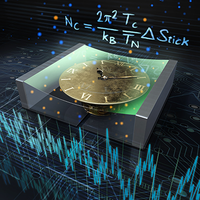
Measuring the Thermodynamic Cost of Timekeeping

A. N. Pearson, Y. Guryanova, P. Erker, E. A. Laird, G. A. D. Briggs, M. Huber, and N. Ares

Phys. Rev. X 11, 021029 (2021) - Published 6 May, 2021

An experiment with a nanoscale clock verifies that a clock’s entropy per tick increases as the clock is made more precise.

Pulsed Ion Microscope to Probe Quantum Gases

C. Veit, N. Zuber, O. A. Herrera-Sancho, V. S. V. Anasuri, T. Schmid, F. Meinert, R. Löw, and T. Pfau

Phys. Rev. X 11, 011036 (2021) - Published 22 February, 2021

Researchers have developed an ion-optics-based quantum microscope that has sufficient resolution to image individual atoms.

Demonstration of Quantum Brachistochrones between Distant States of an Atom

Manolo R. Lam, Natalie Peter, Thorsten Groh, Wolfgang Alt, Carsten Robens, Dieter Meschede, Antonio Negretti, Simone Montangero, Tommaso Calarco, and Andrea Alberti

Phys. Rev. X 11, 011035 (2021) - Published 19 February, 2021

Researchers have transported an atom between two locations in the shortest possible time, an achievement that has implications for quantum technologies.

Cell and Nucleus Shape as an Indicator of Tissue Fluidity in Carcinoma

Steffen Grosser, Jürgen Lippoldt, Linda Oswald, Matthias Merkel, Daniel M. Sussman, Frédéric Renner, Pablo Gottheil, Erik W. Morawetz, Thomas Fuhs, Xiaofan Xie, Steve Pawlizak, Anatol W. Fritsch, Benjamin Wolf, Lars-Christian Horn, Susanne Briest, Bahriye Aktas, M. Lisa Manning, and Josef A. Käs

Phys. Rev. X 11, 011033 (2021) - Published 17 February, 2021

In tightly packed tissues, a cancer cell’s motility is linked to the shape of the cell and of its nucleus.

Hardware-Encoding Grid States in a Nonreciprocal Superconducting Circuit

Martin Rymarz, Stefano Bosco, Alessandro Ciani, and David P. DiVincenzo

Phys. Rev. X 11, 011032 (2021) - Published 17 February, 2021

A newly proposed superconducting circuit architecture employs a synthetic magnetic field to create a qubit that is intrinsically protected from noise.

Maximum Refractive Index of an Atomic Medium

Francesco Andreoli, Michael J. Gullans, Alexander A. High, Antoine Browaeys, and Darrick E. Chang

Phys. Rev. X 11, 011026 (2021) - Published 9 February, 2021

A new theory explains the lack of variation in the refractive indices of atomic gases.

Sign In to Your Journals Account

Filter

Filter

Article Lookup

Enter a citation