Highlights

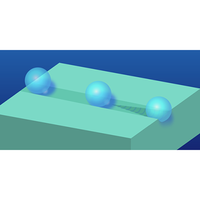
Friction on Ice: How Temperature, Pressure, and Speed Control the Slipperiness of Ice

Rinse W. Liefferink, Feng-Chun Hsia, Bart Weber, and Daniel Bonn

Phys. Rev. X 11, 011025 (2021) - Published 8 February, 2021

A new approach for studying friction on ice helps explain why the ease of sliding depends strongly on temperature, contact pressure, and speed.

Trapping Electrons in a Room-Temperature Microwave Paul Trap

Clemens Matthiesen, Qian Yu, Jinen Guo, Alberto M. Alonso, and Hartmut Häffner

Phys. Rev. X 11, 011019 (2021) - Published 29 January, 2021

Long-time trapping of a single electron could allow the particle to be used as an efficient quantum bit.

Evidence for Dominant Phonon-Electron Scattering in Weyl Semimetal WP2

Gavin B. Osterhoudt, Yaxian Wang, Christina A. C. Garcia, Vincent M. Plisson, Johannes Gooth, Claudia Felser, Prineha Narang, and Kenneth S. Burch

Phys. Rev. X 11, 011017 (2021) - Published 27 January, 2021

Unusual interactions occur between phonons and electrons in the topological semimetal tungsten diphosphide, a finding that could explain some of the material’s strange properties.

Quantum Electrodynamics in a Topological Waveguide

Eunjong Kim, Xueyue Zhang, Vinicius S. Ferreira, Jash Banker, Joseph K. Iverson, Alp Sipahigil, Miguel Bello, Alejandro González-Tudela, Mohammad Mirhosseini, and Oskar Painter

Phys. Rev. X 11, 011015 (2021) - Published 25 January, 2021

A metamaterial waveguide with embedded qubits offers a new platform for probing and controlling topological phenomena.

Superluminal Motion-Assisted Four-Dimensional Light-in-Flight Imaging

Kazuhiro Morimoto, Ming-Lo Wu, Andrei Ardelean, and Edoardo Charbon

Phys. Rev. X 11, 011005 (2021) - Published 8 January, 2021

Using a megapixel high-speed camera, researchers reconstructed the trajectory of a laser pulse in time and 3D space.

Fundamental Thermal Noise Limits for Optical Microcavities

Christopher Panuski, Dirk Englund, and Ryan Hamerly

Phys. Rev. X 10, 041046 (2020) - Published 7 December, 2020

Noise from temperature fluctuations may limit the performance of small optical cavities in quantum computing applications.

Coupled Cluster Theory for Molecular Polaritons: Changing Ground and Excited States

Tor S. Haugland, Enrico Ronca, Eirik F. Kjønstad, Angel Rubio, and Henrik Koch

Phys. Rev. X 10, 041043 (2020) - Published 2 December, 2020

Predicting interactions between molecules and photons is now possible with a new model that combines quantum electrodynamics and a widely used formalism from quantum chemistry.

Public Discourse and Social Network Echo Chambers Driven by Socio-Cognitive Biases

Xin Wang, Antonio D. Sirianni, Shaoting Tang, Zhiming Zheng, and Feng Fu

Phys. Rev. X 10, 041042 (2020) - Published 1 December, 2020

Social media interactions with friends and political campaigns can lead to the emergence of polarized echo chambers of thought.

What Limits the Simulation of Quantum Computers?

Yiqing Zhou, E. Miles Stoudenmire, and Xavier Waintal

Phys. Rev. X 10, 041038 (2020) - Published 23 November, 2020

Classical computers can efficiently simulate the behavior of quantum computers if the quantum computer is imperfect enough.

Modeling COVID-19 Dynamics in Illinois under Nonpharmaceutical Interventions

George N. Wong, Zachary J. Weiner, Alexei V. Tkachenko, Ahmed Elbanna, Sergei Maslov, and Nigel Goldenfeld

Phys. Rev. X 10, 041033 (2020) - Published 16 November, 2020

A new model helps clarify the limits of pandemic predictions, which are notoriously difficult for the near future and impossible for longer timescales.

Observation of a Smooth Polaron-Molecule Transition in a Degenerate Fermi Gas

Gal Ness, Constantine Shkedrov, Yanay Florshaim, Oriana K. Diessel, Jonas von Milczewski, Richard Schmidt, and Yoav Sagi

Phys. Rev. X 10, 041019 (2020) - Published 27 October, 2020

The application of Raman spectroscopy to a Fermi gas reveals that particle aggregates—called polarons—disappear gradually, defying expectation.

Ground-State Properties of the Hydrogen Chain: Dimerization, Insulator-to-Metal Transition, and Magnetic Phases

Mario Motta, Claudio Genovese, Fengjie Ma, Zhi-Hao Cui, Randy Sawaya, Garnet Kin-Lic Chan, Natalia Chepiga, Phillip Helms, Carlos Jiménez-Hoyos, Andrew J. Millis, Ushnish Ray, Enrico Ronca, Hao Shi, Sandro Sorella, Edwin M. Stoudenmire, Steven R. White, and Shiwei Zhang (Simons Collaboration on the Many-Electron Problem)

Phys. Rev. X 10, 031058 (2020) - Published 14 September, 2020

A one-dimensional chain of hydrogen atoms displays a wide variety of many-body effects—suggesting that the chain can be a useful model system for condensed-matter physics.

Robust Encoding of a Qubit in a Molecule

Victor V. Albert, Jacob P. Covey, and John Preskill

Phys. Rev. X 10, 031050 (2020) - Published 1 September, 2020

A new proposal for how to encode quantum information in the rotational states of individual molecules could protect these qubits from losing information as a result of noise.

Microspheres with Atomic-Scale Tolerances Generate Hyperdegeneracy

Jacob Kher-Alden, Shai Maayani, Leopoldo L. Martin, Mark Douvidzon, Lev Deych, and Tal Carmon

Phys. Rev. X 10, 031049 (2020) - Published 31 August, 2020

Tiny oil droplets levitated in optical tweezers can host several hundred light modes with similar energies, a feature that could be exploited for sensing and telecommunications.

Control of Light by Topological Solitons in Soft Chiral Birefringent Media

Andrew J. Hess, Guilhem Poy, Jung-Shen B. Tai, Slobodan Žumer, and Ivan I. Smalyukh

Phys. Rev. X 10, 031042 (2020) - Published 21 August, 2020

Vortexlike patterns of liquid-crystal molecules can interact with light in a manner akin to lenses and might be useful for all-optical information processing.

Tensor-Network Method to Simulate Strongly Interacting Quantum Thermal Machines

Marlon Brenes, Juan José Mendoza-Arenas, Archak Purkayastha, Mark T. Mitchison, Stephen R. Clark, and John Goold

Phys. Rev. X 10, 031040 (2020) - Published 19 August, 2020

A new modeling and computational approach allow for more complete simulations of particle and heat flow through tiny quantum devices.

Far-Field Subwavelength Acoustic Imaging by Deep Learning

Bakhtiyar Orazbayev and Romain Fleury

Phys. Rev. X 10, 031029 (2020) - Published 7 August, 2020

A new acoustic technique involving machine learning could lead to cheaper and faster high-resolution medical imaging.

Dynamics of Many-Body Photon Bound States in Chiral Waveguide QED

Sahand Mahmoodian, Giuseppe Calajó, Darrick E. Chang, Klemens Hammerer, and Anders S. Sørensen

Phys. Rev. X 10, 031011 (2020) - Published 14 July, 2020

A proposed optical waveguide would take a light pulse and break it into sets of strongly correlated photons, which may give a leg up to certain quantum technologies.

Strictly Linear Light Cones in Long-Range Interacting Systems of Arbitrary Dimensions

Tomotaka Kuwahara and Keiji Saito

Phys. Rev. X 10, 031010 (2020) - Published 13 July, 2020

Quantum systems with long-range interactions have a finite speed at which information can propagate, a speed that is determined by the dimensionality of the system.

Hierarchy of Linear Light Cones with Long-Range Interactions

Minh C. Tran, Chi-Fang Chen, Adam Ehrenberg, Andrew Y. Guo, Abhinav Deshpande, Yifan Hong, Zhe-Xuan Gong, Alexey V. Gorshkov, and Andrew Lucas

Phys. Rev. X 10, 031009 (2020) - Published 13 July, 2020

Quantum systems with certain long-range interactions exhibit a hierarchy of limits on information transfer rates—a set of nested “light cones”—that set fundamental restrictions for a range of quantum-based technologies.

Sign In to Your Journals Account

Filter

Filter

Article Lookup

Enter a citation