Highlights

Random-Access Quantum Memory Using Chirped Pulse Phase Encoding

James O’Sullivan, Oscar W. Kennedy, Kamanasish Debnath, Joseph Alexander, Christoph W. Zollitsch, Mantas Šimėnas, Akel Hashim, Christopher N. Thomas, Stafford Withington, Irfan Siddiqi, Klaus Mølmer, and John J. L. Morton

Phys. Rev. X 12, 041014 (2022) - Published 7 November, 2022

A new quantum random-access memory device reads and writes information using a chirped electromagnetic pulse and a superconducting resonator, making it significantly more hardware-efficient than previous devices.

Dense and Hot QCD at Strong Coupling

Tuna Demircik, Christian Ecker, and Matti Järvinen

Phys. Rev. X 12, 041012 (2022) - Published 31 October, 2022

Thermodynamic phases governed by the strong nuclear force have been linked together using multiple theoretical tools.

Narrow Optical Transitions in Erbium-Implanted Silicon Waveguides

Andreas Gritsch, Lorenz Weiss, Johannes Früh, Stephan Rinner, and Andreas Reiserer

Phys. Rev. X 12, 041009 (2022) - Published 25 October, 2022

Improved fabrication methods for qubits made from erbium-doped silicon waveguides give these qubits the key prerequisites for becoming a contender for future quantum computers.

Can We Make Sense of Dissipation without Causality?

L. Gavassino

Phys. Rev. X 12, 041001 (2022) - Published 3 October, 2022

A fluid dynamics theory that violates causality would always generate paradoxical instabilities—a result that could guide the search for a theory for relativistic fluids.

Transverse Electron-Beam Shaping with Light

Marius Constantin Chirita Mihaila, Philipp Weber, Matthias Schneller, Lucas Grandits, Stefan Nimmrichter, and Thomas Juffmann

Phys. Rev. X 12, 031043 (2022) - Published 26 September, 2022

A new method that uses laser light to both generate and shape electron beams could improve the resolution of electron microscopy.

Beyond Conventional Ferromagnetism and Antiferromagnetism: A Phase with Nonrelativistic Spin and Crystal Rotation Symmetry

Libor Šmejkal, Jairo Sinova, and Tomas Jungwirth

Phys. Rev. X 12, 031042 (2022) - Published 23 September, 2022

Magnetic phases are traditionally ferromagnetic or antiferromagnetic. An analysis of spin symmetries reveals a third phase, dubbed altermagnetism, that opens new fronts in magnetism and spintronics research.

Geometry Adaptation of Protrusion and Polarity Dynamics in Confined Cell Migration

David B. Brückner, Matthew Schmitt, Alexandra Fink, Georg Ladurner, Johannes Flommersfeld, Nicolas Arlt, Edouard Hannezo, Joachim O. Rädler, and Chase P. Broedersz

Phys. Rev. X 12, 031041 (2022) - Published 20 September, 2022

Experiments demonstrate that biological cells actively change shape to respond to their surroundings when moving in confined regions.

Driven Disordered Systems Approach to Biological Evolution in Changing Environments

Suman G. Das, Joachim Krug, and Muhittin Mungan

Phys. Rev. X 12, 031040 (2022) - Published 20 September, 2022

A bacterial genome’s evolution under changing drug concentrations displays effects of memory formation and mimics how disordered solids respond to external forces.

Generation of a Single-Cycle Acoustic Pulse: A Scalable Solution for Transport in Single-Electron Circuits

Junliang Wang, Shunsuke Ota, Hermann Edlbauer, Baptiste Jadot, Pierre-André Mortemousque, Aymeric Richard, Yuma Okazaki, Shuji Nakamura, Arne Ludwig, Andreas D. Wieck, Matias Urdampilleta, Tristan Meunier, Tetsuo Kodera, Nobu-Hisa Kaneko, Shintaro Takada, and Christopher Bäuerle

Phys. Rev. X 12, 031035 (2022) - Published 7 September, 2022

Like a surfer riding a wave, a single electron is transported by an acoustic pulse traveling along the surface of a microchip.

Quantifying n-Photon Indistinguishability with a Cyclic Integrated Interferometer

Mathias Pont, Riccardo Albiero, Sarah E. Thomas, Nicolò Spagnolo, Francesco Ceccarelli, Giacomo Corrielli, Alexandre Brieussel, Niccolo Somaschi, Hêlio Huet, Abdelmounaim Harouri, Aristide Lemaître, Isabelle Sagnes, Nadia Belabas, Fabio Sciarrino, Roberto Osellame, Pascale Senellart, and Andrea Crespi

Phys. Rev. X 12, 031033 (2022) - Published 2 September, 2022

A new optical device measures photon indistinguishability—an important property for future light-based quantum computers.

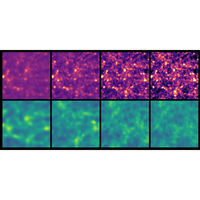
DeepLSS: Breaking Parameter Degeneracies in Large-Scale Structure with Deep-Learning Analysis of Combined Probes

Tomasz Kacprzak and Janis Fluri

Phys. Rev. X 12, 031029 (2022) - Published 19 August, 2022

Cosmological constraints can be improved by applying machine learning to a combination of data from two leading probes of the large-scale structure of the Universe.

Enhancing Spin Coherence in Optically Addressable Molecular Qubits through Host-Matrix Control

S. L. Bayliss, P. Deb, D. W. Laorenza, M. Onizhuk, G. Galli, D. E. Freedman, and D. D. Awschalom

Phys. Rev. X 12, 031028 (2022) - Published 18 August, 2022

The spin state of molecular qubits can be made more stable by changing the chemical environment in which the qubits sit.

Mechanisms for Spontaneous Symmetry Breaking in Developing Visual Cortex

Francesco Fumarola, Bettina Hein, and Kenneth D. Miller

Phys. Rev. X 12, 031024 (2022) - Published 11 August, 2022

Scientists may have answered a longstanding question in biophysics: how the brain learns to recognize features in images before a newborn even opens its eyes.

Generation of High-Resolution Handwritten Digits with an Ion-Trap Quantum Computer

Manuel S. Rudolph, Ntwali Bashige Toussaint, Amara Katabarwa, Sonika Johri, Borja Peropadre, and Alejandro Perdomo-Ortiz

Phys. Rev. X 12, 031010 (2022) - Published 15 July, 2022

A machine-learning algorithm that includes a quantum circuit generates realistic handwritten digits and performs better than its classical counterpart.

Ergodicity Breaking in Area-Restricted Search of Avian Predators

Ohad Vilk, Yotam Orchan, Motti Charter, Nadav Ganot, Sivan Toledo, Ran Nathan, and Michael Assaf

Phys. Rev. X 12, 031005 (2022) - Published 8 July, 2022

Tracking of bird movements shows that the animals don’t spread outward like molecules in a gas, as ecologists often assume.

In situ Tuning of the Electric-Dipole Strength of a Double-Dot Charge Qubit: Charge-Noise Protection and Ultrastrong Coupling

P. Scarlino, J. H. Ungerer, D. J. van Woerkom, M. Mancini, P. Stano, C. Müller, A. J. Landig, J. V. Koski, C. Reichl, W. Wegscheider, T. Ihn, K. Ensslin, and A. Wallraff

Phys. Rev. X 12, 031004 (2022) - Published 7 July, 2022

Two studies improve the status of artificial atoms—called quantum dots—as qubit candidates for quantum technologies.

Sensing of Arbitrary-Frequency Fields Using a Quantum Mixer

Guoqing Wang (王国庆), Yi-Xiang Liu (刘仪襄), Jennifer M. Schloss, Scott T. Alsid, Danielle A. Braje, and Paola Cappellaro

Phys. Rev. X 12, 021061 (2022) - Published 17 June, 2022

Quantum sensors can now detect signals of arbitrary frequencies thanks to a quantum version of frequency mixing—a widely used technique in electronics.

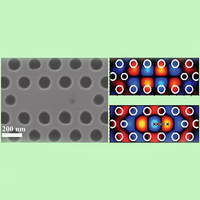
Mode Interference Effect in Optical Emission of Quantum Dots in Photonic Crystal Cavities

A. Lyasota, C. Jarlov, M. Nyman, A. Miranda, M. Calic, B. Dwir, A. Rudra, A. Shevchenko, and E. Kapon

Phys. Rev. X 12, 021042 (2022) - Published 20 May, 2022

A new experiment on the emission spectrum of quantum dots in photonic- crystal microcavities supports a recently proposed theory of cavity quantum electrodynamics.

Quantum-Logic Gate between Two Optical Photons with an Average Efficiency above 40%

Thomas Stolz, Hendrik Hegels, Maximilian Winter, Bianca Röhr, Ya-Fen Hsiao, Lukas Husel, Gerhard Rempe, and Stephan Dürr

Phys. Rev. X 12, 021035 (2022) - Published 11 May, 2022

New schemes based on Rydberg superatoms placed in optical cavities can be used to manipulate single photons with high efficiency.

Intracavity Rydberg Superatom for Optical Quantum Engineering: Coherent Control, Single-Shot Detection, and Optical π Phase Shift

Julien Vaneecloo, Sébastien Garcia, and Alexei Ourjoumtsev

Phys. Rev. X 12, 021034 (2022) - Published 11 May, 2022

New schemes based on Rydberg superatoms placed in optical cavities can be used to manipulate single photons with high efficiency.

Sign In to Your Journals Account

Filter

Filter

Article Lookup

Enter a citation