Highlights

Observation of van der Waals phonons in the single-layer cuprate (Bi,Pb)2(Sr,La)2CuO6+δ

Y. Y. Peng, I. Boukahil, K. Krongchon, Q. Xiao, A. A. Husain, Sangjun Lee, Q. Z. Li, A. Alatas, A. H. Said, H. T. Yan, Y. Ding, L. Zhao, X. J. Zhou, T. P. Devereaux, L. K. Wagner, C. D. Pemmaraju, and P. Abbamonte

Phys. Rev. Materials 8, 024804 (2024) - Published 26 February, 2024

Interlayer van der Waals (vdW) coupling is ubiquitous in two-dimensional materials. The authors explore these interactions in the cuprate (Bi, Pb)2(Sr,La)2CuO6+δ, revealing ultra-low energy phonon modes similar to graphene and transition metal dichalcogenides. Using high-resolution inelastic hard x-ray scattering and first-principles simulations, they reveal vdW phonons from the shear motion of adjacent Bi-O layers. These findings deepen our understanding of the vibrational properties of cuprates and suggest opportunities for the design of novel heterostructures. These results highlight the generic nature of vdW modes in layered materials, including doped copper oxides, and provide insights for future materials design and research.

Tuning of spin-orbit coupling in chiral molecule-incorporated two-dimensional organic-inorganic hybrid perovskite copper halides with ferromagnetic exchange interactions

Kouji Taniguchi, Po-Jung Huang, Hajime Sagayama, Ryoji Kiyanagi, Kazuki Ohishi, Shunsuke Kitou, Yuiga Nakamura, and Hitoshi Miyasaka

Phys. Rev. Materials 8, 024409 (2024) - Published 23 February, 2024

Simultaneous control of noncentrosymmetry and spin-orbit-coupling strength has been demonstrated in a series of chiral molecule-incorporated two-dimensional organic-inorganic hybrid perovskite copper halides (2D-OIHPs) with ferromagnetic exchange interaction. By substituting the halogen from Cl to Br, a systematic change of the magnetic phase diagram from the simple ferromagnetic phase to complicated multiple phases has been observed. This change is due to competition between the ferromagnetic exchange interaction and the Dzyaloshinskii-Moriya interaction. Materials design focusing on the structural flexibility of 2D-OIHP could pave the way to developing new types of nontrivial topological spin systems.

Giant interfacial in-plane magnetic anisotropy in Co/Pt bilayers grown on MgO(110) substrates

Chao Zhou, Jia Xu, and Yizheng Wu

Phys. Rev. Materials 8, 024408 (2024) - Published 21 February, 2024

A material with strong in-plane magnetic anisotropy is crucial for determining the magnetization configuration of magnetic materials and their applications in high-density and high-frequency devices. Here, the authors successfully reported a giant interfacial uniaxial in-plane anisotropy in Co/Pt(110) bilayers, which is five times larger than that in Co/Pt(111), the most popular magnetic thin film with perpendicular magnetic anisotropy. Furthermore, such large interfacial magnetic anisotropy can be enhanced by forming a Pt/Co/Pt sandwich structure. These results enabled the integration of in-plane magnetic anisotropy systems into spintronic devices with increased speed and density.

Scanning SQUID study of ferromagnetism and superconductivity in infinite-layer nickelates

Ruby A. Shi, Bai Yang Wang, Yusuke Iguchi, Motoki Osada, Kyuho Lee, Berit H. Goodge, Lena F. Kourkoutis, Harold Y. Hwang, and Kathryn A. Moler

Phys. Rev. Materials 8, 024802 (2024) - Published 21 February, 2024

This work studied superconductivity and magnetism in infinite-layer nickelate films with scanning SQUID and cross-sectional STEM. The authors found a landscape of superparamagnetism from NiOx nanoparticles that are extrinsic to the superconductivity. They imaged superconducting vortices and determined the penetration depth. They measured the local diamagnetism, finding a consistent value of the penetration depth. The superfluid density exhibits nearly T-linear dependence, suggesting possible d-wave superconductivity. Using scanning SQUID to image the various sources of magnetism in superconducting nickelates paves the way for further studies of vortex dynamics and flux quantization in these recently discovered superconductors.

Electronic structure of nitrogen-doped lutetium hydrides

Adam Denchfield, Hyowon Park, and Russell J. Hemley

Phys. Rev. Materials 8, L021801 (2024) - Published 16 February, 2024

Hydrides at high pressures constitute the only materials to be superconducting above 200 K, and are typically marked by an appreciable hydrogen density of states and van Hove singularities at the Fermi energy. Given the recent interest in nitrogen-doped lutetium hydride, the authors focused on finding the structures which would have electronic properties that could plausibly support high-temperature superconductivity within a narrow pressure range. They have identified a narrow range of stoichiometries Lu8H23−xN with hydrogen-dominant conduction states, and found one structure which exhibits a very large hydrogen density of states with an extremely sharp van Hove singularity, whose properties may therefore change dramatically under pressure.

Quantum oscillations in kagome metals CsTi3Bi5 and RbTi3Bi5

Zackary Rehfuss, Christopher Broyles, David Graf, Yongkang Li, Hengxin Tan, Zhen Zhao, Jiali Liu, Yuhang Zhang, Xiaoli Dong, Haitao Yang, Hongjun Gao, Binghai Yan, and Sheng Ran

Phys. Rev. Materials 8, 024003 (2024) - Published 14 February, 2024

We explore quantum oscillations in the kagome metals CsTi3Bi5 and RbTi3Bi5, using high magnetic fields and low temperatures. We reveal new quantum oscillation frequencies in CsTi3Bi5, showing a complex Fermi surface that matches density functional theory predictions. Interestingly, the Rb compound exhibits notably different results from the Cs compound, despite theoretical expectations of similarity. This work deepens our understanding of the electronic intricacies within kagome lattice systems and spotlights their role as a playground for unearthing novel quantum states. Our findings pave the way for future investigations in the quantum behaviors of kagome metals, offering insights for advanced material development.

Topological diffusive metal in amorphous transition metal monosilicides

Selma Franca and Adolfo G. Grushin

Phys. Rev. Materials 8, L021201 (2024) - Published 14 February, 2024

Transition metal monosilicides RhSi and CoSi have intriguing physical properties such as long Fermi arc surface states and unusual optical responses. These features originate from multifold fermions - higher spin generalizations of Weyl quasiparticles that are protected by crystalline symmetries. Since these materials are prone to intrinsic disorder, the authors theoretically study topological properties of amorphous RhSi and CoSi. Using the spectral localizer, they find that multifold fermions survive disorder strengths that convert the semimetal into a diffusive metal phase. These conclusions are supported by photoemission simulations showing the presence of Fermi arcs in the corresponding disorder range.

Nanoscale dynamics of hydrogen in VO2 studied by μSR

H. Okabe, M. Hiraishi, A. Koda, Y. Matsushita, T. Ohsawa, N. Ohashi, and R. Kadono

Phys. Rev. Materials 8, 024602 (2024) - Published 13 February, 2024

Vanadium dioxide (VO2) is a promising next-generation electronic material for artificial neural networks. Here, the authors use muon spin spectroscopy to provide a microscopic basis for understanding nanoscale hydrogen diffusion in VO2, using muons as a microscopic simulator of dilute hydrogen. This innovation allows the authors to investigate the dynamics of trace hydrogen in nanoscale regions such as thin films, which is very difficult to achieve with conventional methods. This study is expected not only to make a significant contribution to the development of VO2 devices but also to provide a unique method for observing the dynamics of hydrogen at the nanoscale.

Orbital degree of freedom in high entropy oxides

Jiaqiang Yan, Abinash Kumar, Miaofang Chi, Matthew Brahlek, Thomas Z. Ward, and Michael A. McGuire

Phys. Rev. Materials 8, 024404 (2024) - Published 7 February, 2024

Understanding strongly correlated physics of electronic-driven orbital ordering in transition metal compounds has presented many long-standing questions. Utilizing high-entropy oxides have enabled understanding that disorder can unlock an unusual intermixing of orbital and spin in the rare-earth vanadate, RVO3, which shows that the average and variance of ionic radius determine and control unusual properties of the spin and orbital order. The ability to systematically control variance of the local structure in high-quality crystals which hold constant charge and spin is crucial for a deeper understanding and exploring unanswered decades-old question regarding the physics of the Kugel-Khomskii compounds.

Structure and lattice excitations of the copper substituted lead oxyapatite Pb9.06(7)Cu0.94(6)(PO3.92(4))6O0.96(3)

Qiang Zhang, Yingdong Guan, Yongqiang Cheng, Lujin Min, Jong K. Keum, Zhiqiang Mao, and Matthew B. Stone

Phys. Rev. Materials 8, 014605 (2024) - Published 30 January, 2024

There was significant discussion regarding the potential for room-temperature superconductivity in the copper-substituted lead apatite which has come to be known as LK-99. Neutron diffraction and spectroscopy were employed to examine this compound. We did not observe a superconducting resonance, nor did we observe any predicted Cu-induced structural distortion between 5 and 300 K. No magnetic long-range order or magnetic excitations were detected in this temperature range. We have determined a favored substitution site of copper at the Pb1 site. This may provide crucial insights into the absence of structural distortion and superconductivity in LK-99.

Anisotropic anomalous transport in the kagome-based topological antiferromagnetic Mn3Ga epitaxial thin films

M. Raju, Ralph Romero, III, Daisuke Nishio-Hamane, Ryota Uesugi, Mihiro Asakura, Zhenisbek Tagay, Tomoya Higo, N. P. Armitage, Collin Broholm, and Satoru Nakatsuji

Phys. Rev. Materials 8, 014204 (2024) - Published 26 January, 2024

Weyl semimetals based on Mn3X (X=Sn, Ge, Ga) are promising materials for antiferromagnetic (AFM) spintronics. Kagome spin structure formed by the Mn moments coupled to nontrivial band topology produces giant topological effects in these materials. Mn3Ga with the largest Néel temperature among this class of materials, is potentially useful for high-speed device applications. In this work, authors develop AFM epitaxial Mn3Ga films with controlled crystal orientation, accessing different orientation of Kagome planes formed by Mn moments. Detailed investigations through structural, magnetization, magnetoresistance, DC and terahertz electrical transport reveal the anisotropic transport signatures emerging from the nontrivial band topology.

Elucidating the roles of chemistry, compositional complexity, and short-range order in the dislocation energetics of body-centered-cubic concentrated solid solutions

Wenqing Wang, Flynn Walsh, Robert O. Ritchie, and Mark Asta

Phys. Rev. Materials 8, 013608 (2024) - Published 24 January, 2024

In compositionally complex refractory alloys, the formation of chemical short-range order has been calculated to flatten the spatial distribution of dislocation core energies. This study examines the extent to which such “narrowing” effects are unique to many-component systems, or if these results are more generally applicable. The authors computationally investigate how system chemistry, compositional complexity, and the presence of chemical short-range order affect dislocation energy distributions in subsystems of the NbMoTaW alloy. Order-induced narrowing is ultimately found to depend more on chemistry than the number of components.

Surface termination effect of SrTiO3 substrate on ultrathin SrRuO3

Huiyu Wang, Zhen Wang, Zeeshan Ali, Enling Wang, Mohammad Saghayezhian, Jiandong Guo, Yimei Zhu, Jing Tao, and Jiandi Zhang

Phys. Rev. Materials 8, 013605 (2024) - Published 23 January, 2024

A well-defined substrate surface is crucial for the epitaxy of complex materials, especially for revealing intrinsic properties of films in ultrathin limit. Here by atomically precise growth and characterization, the origin for the lateral inhomogeneity of ultrathin SrRuO3 films due to the step effects of SrTiO3 (001) is revealed. Two distinct types of step propagation along the [011] and [01¯1] crystallographic direction is identified, respectively. In particular, the type-II [01¯1] step results in lateral discontinuity of monolayer SrRuO3 and originates from the SrO-terminated regions along the TiO2-terminated step edge, responsible for the distinct electronic and magnetic properties of monolayer SrRuO3.

Vibrations and transitions across barrier of strained nanoribbons at finite temperature

Paul Z. Hanakata, Sourav S. Bhabesh, David Yllanes, David R. Nelson, and Mark J. Bowick

Phys. Rev. Materials 8, 016001 (2024) - Published 9 January, 2024

Thermalized crystalline sheets, such as graphene liberated from a substrate, are driven by height fluctuations. The authors study the nonlinear dynamics of doubly-clamped nanoribbons as prototypical graphene resonators. Such ribbons exhibit a thermalized version of Euler buckling, with both up and down local minima. Treating the ribbon as a Brownian particle confined to a double-well potential, they determine transition rates across the two wells and oscillations inside a given well via molecular dynamics simulations. The dynamical behavior found is very different from Arrhenius behavior. The rate-controlling exponential factor depends only on the geometry, as opposed to the temperature, providing a new pathway for the experimental control of thermalized two-dimensional metamaterials.

Excitation protocols for nonlinear phononics in bismuth and antimony

Anubhab Haldar, Zhengjie Huang, Xuedan Ma, Pierre Darancet, and Sahar Sharifzadeh

Phys. Rev. Materials 8, 015202 (2024) - Published 8 January, 2024

Coherent interactions between electromagnetic waves and extended vibrational degrees of freedom in solids (phonons) enable the stabilization of non-equilibrium states of matter with potentially desirable properties. However, the breakdown of the harmonic approximation in a material experiencing a structural phase transition results in large anharmonic deviations that limit the applicability of standard illumination protocols based on periodic drives. In this study, the authors propose a new illumination protocol that enables amplification of vibrations far into the non-linear regime for broken-symmetry materials.

Electron and hole doping of monolayer WSe2 induced by twisted ferroelectric hexagonal boron nitride

J. Fraunié, R. Jamil, R. Kantelberg, S. Roux, L. Petit, E. Lepleux, L. Pacheco, K. Watanabe, T. Taniguchi, V. Jacques, L. Lombez, M. M. Glazov, B. Lassagne, X. Marie, and C. Robert

Phys. Rev. Materials 7, L121002 (2023) - Published 27 December, 2023

2D ferroelectric materials have attracted strong interest for their potential in future nanoelectronic devices. The recent discovery of 2D ferroelectricity in twisted layers of hexagonal boron nitride has opened the route to its integration into complex hybrid van der Waals heterostructures. Here the authors show that opposite polarizations in ferroelectric domains of a folded hBN layer imprint local n and p doping in a semiconducting WSe2 monolayer. They demonstrate that WSe2 can be used as an optical probe of ferroelectricity in hBN and show that doping can be controlled with the position of the semiconductor with respect to the ferroelectric interface.

Neural-network force field backed nested sampling: Study of the silicon p−T phase diagram

Nico Unglert, Jesús Carrete, Livia B. Pártay, and Georg K. H. Madsen

Phys. Rev. Materials 7, 123804 (2023) - Published 20 December, 2023

Phase diagrams map out the thermodynamically stable conditions for different phases. Their predictive atomistic simulations demands integration of statistical mechanics and quantum mechanics, making computational cost a challenge. Our work successfully combines a neural-network model for silicon’s potential energy with nested-sampling to predict its low-pressure phase diagram accurately. Trained on diverse silicon structures, the model aligns remarkably well with experiments, accurately reproducing the melting line and identifying stable structures. The fusion of neural networks and nested sampling opens the door to not only predict phase diagrams but also assess the accuracy of the underlying exchange-correlation functionals.

Vacancy-tuned magnetism in LaMnxSb2

Tyler J. Slade, Aashish Sapkota, John M. Wilde, Qiang Zhang, Lin-Lin Wang, Saul H. Lapidus, Juan Schmidt, Thomas Heitmann, Sergey L. Bud'ko, and Paul C. Canfield

Phys. Rev. Materials 7, 114203 (2023) - Published 29 November, 2023

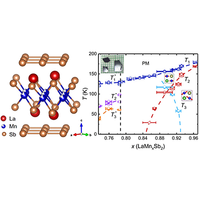
The AMnPn2 (A = Alkali earth, Pn = Sb, Bi) materials are widely explored as candidate magnetic topological semimetals. Replacing A with a rare-earth atom (R) produces a comparably underinvestigated family, RMnxPn2, in which charge balance favors Mn vacancies (x < 1). Here, the authors map out the compositional dependence of the magnetic properties of LaMnxSb2 as a function of the Mn vacancy concentration. They grow single crystals with x = 0.74-0.97 and find that LaMnxSb2 has an exceptionally rich magnetic phase diagram, with six different antiferromagnetic phases and two different crystal structures, depending on T and x. The highly tunable nature of LaMnxSb2 suggests this material may be a good model system for understanding the effects of disorder on magnetic intermetallic compounds.

Tailoring hierarchical nanoporous gold on dual length scales

Lukas Riedel, Jürgen Markmann, Jörg Weissmüller, and Shan Shi

Phys. Rev. Materials 7, 116001 (2023) - Published 15 November, 2023

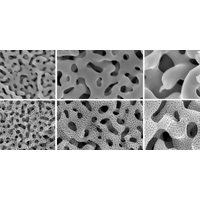
Researchers can fabricate gold foams that feature small and large pores with specific sizes.

Tuning the Curie temperature of a two-dimensional magnet/topological insulator heterostructure to above room temperature by epitaxial growth

Wenyi Zhou, Alexander J. Bishop, Xiyue S. Zhang, Katherine Robinson, Igor Lyalin, Ziling Li, Ryan Bailey-Crandell, Thow Min Jerald Cham, Shuyu Cheng, Yunqiu Kelly Luo, Daniel C. Ralph, David A. Muller, and Roland K. Kawakami

Phys. Rev. Materials 7, 104004 (2023) - Published 23 October, 2023

The heterostructures of 2D magnets and topological insulators are attractive candidates for quantum anomalous hall effect and highly-efficient spin-orbit torque switching. To better study these phenomena, it will be crucial to synthesize epitaxial heterostructures for scalability while maintaining high-quality interfaces to preserve the topological surface states and having the Curie temperature (TC) above room temperature. Here, the authors utilize molecular beam epitaxy to tune the TC in heterostructures of van der Waals (vdW) magnet Fe3GeTe2 and topological insulator Bi2Te3 to above room temperature by varying growth conditions. Electron microscopy reveals the existence of thicker vdW compounds in the FemGenTe2 family, as well as some intercalants in between vdW gaps, which are possible origins for the enhanced TC.

Sign In to Your Journals Account

Filter

Section

Filter

Article Lookup

Enter a citation