Highlights

Canted antiferromagnetism in polar MnSiN2 with high Néel temperature

Linus Kautzsch, Alexandru B. Georgescu, Danilo Puggioni, Greggory Kent, Keith M. Taddei, Aiden Reilly, Ram Seshadri, James M. Rondinelli, and Stephen D. Wilson

Phys. Rev. Materials 7, 104406 (2023) - Published 19 October, 2023

Ternary nitrides are a burgeoning materials class hosting diverse structures, compositions, and properties that make them appealing for various applications. Magnetic nitrogen-rich compounds generally remain underexplored, despite the unique chemical bonding afforded by the N3− ion with open d-shell transition metals. Here, the authors explore the compound MnSiN2 where Mn2+ ions reside on a 3D diamond-like covalent network with strong magnetic superexchange pathways. The compound exhibits a high Néel ordering temperature of TN = 443 K and the precise canted ground state magnetic structure is resolved using a combination of DFT modeling and powder neutron diffraction.

Testing the topological insulator behavior of half-Heusler PdYBi and PtYBi (111) epitaxial thin films

V. Palin, A. Anadón, S. Andrieu, Y. Fagot-Revurat, C. de Melo, J. Ghanbaja, O. Kurnosikov, S. Petit-Watelot, F. Bertran, and J.-C. Rojas-Sánchez

Phys. Rev. Materials 7, 104203 (2023) - Published 10 October, 2023

Materials with high spin-to-charge interconversion efficiency are of high interest for advanced spintronic applications. Previous work has suggested that topological insulators may exhibit higher efficiency than traditionally-used heavy metals. Here, the authors explore the half-Heusler compounds PdYBi and PtYBi and their potential use for spin-to-charge interconversion. Epitaxial thin films of PdYBi and PtYBi are successfully prepared and demonstrated to exhibit nontrivial topology. Characterization of the magnetotransport in a model device shows that these half-Heusler films can outperform platinum in spin-to-charge interconversion.

Probing complex stacking in a layered material via electron-nuclear quadrupolar coupling

Li Cheng, Linpeng Nie, Xuanyu Long, Li Liang, Dan Zhao, Jian Li, Zheng Liu, Tao Wu, Xianhui Chen, Wenhui Duan, and Xiaolong Zou

Phys. Rev. Materials 7, L091001 (2023) - Published 27 September, 2023

The combination of nuclear magnetic resonance with first-principles calculations uncovers the stacking patterns of layers of a quantum material—information that could enable a deeper understanding of the material’s behavior.

Combining electron-phonon and dynamical mean-field theory calculations of correlated materials: Transport in the correlated metal Sr2RuO4

David J. Abramovitch, Jin-Jian Zhou, Jernej Mravlje, Antoine Georges, and Marco Bernardi

Phys. Rev. Materials 7, 093801 (2023) - Published 1 September, 2023

In correlated quantum materials, strong electronic interactions lead to unconventional transport and exotic phases. Dynamical mean field theory (DMFT) calculations can describe the purely electronic dynamics in these materials. Here, the authors integrate into this framework the interactions between electrons and lattice vibrations (phonons). They apply this method to the correlated metal Sr2RuO4, elucidating the respective contributions of electron-electron and electron-phonon scattering to the resistivity and spectral functions. The method presented in this work enables future studies of electron-phonon physics in various classes of correlated materials, including Mott insulators, high-Tc superconductors and strange metals.

Effect of Pt vacancies on magnetotransport of Weyl semimetal candidate GdPtSb epitaxial films

Dongxue Du, Laxman Raju Thoutam, Konrad T. Genser, Chenyu Zhang, Karin M. Rabe, Tamalika Samanta, Taehwan Jung, Bharat Jalan, Paul M. Voyles, and Jason K. Kawasaki

Phys. Rev. Materials 7, 084204 (2023) - Published 25 August, 2023

Bismuth-containing half-Heusler compounds were among the first identified Weyl semimetals. However, it remains a question whether other half-Heuslers also exhibit Weyl physics. Additionally, the impacts of point defects on the transport properties of Weyl semimetals are often overlooked. One experimental signature of Weyl nodes is the chiral anomaly, which involves charge pumping between Weyl nodes in reciprocal space. In this study, the authors demonstrate that naturally occurring Pt vacancies in GdPtxSb epitaxial films complicate the identification of the chiral anomaly through magnetotransport measurements. On the other hand, they observe signatures of the topological Hall effect, indicating the presence of chiral spin textures in real space.

Structural and optoelectronic properties of thin film LaWN3

Rebecca W. Smaha, John S. Mangum, Ian A. Leahy, Julian Calder, Matthew P. Hautzinger, Christopher P. Muzzillo, Craig L. Perkins, Kevin R. Talley, Serena Eley, Prashun Gorai, Sage R. Bauers, and Andriy Zakutayev

Phys. Rev. Materials 7, 084411 (2023) - Published 23 August, 2023

Perovskite and related materials exhibit a staggering array of interesting ground states and functional applications. Among these, nitride perovskites are predicted to possess intriguing physical properties, but they remain underexplored due to the challenges in synthesizing materials without unintentional oxygen incorporation. LaWN3, recently identified as the first fully nitrided perovskite, displays polar symmetry and a large piezoelectric coefficient. However, its predicted polarization switching (common for ferroelectrics) is hindered by a significant leakage current, necessitating a better understanding of its electronic structure and optical properties. This study delves into the structure and optoelectronic properties of thin film LaWN3 in greater detail, employing combinatorial techniques to establish correlations between properties and cation stoichiometry.

Correlated anharmonicity and dynamic disorder control carrier transport in halide perovskites

Maximilian J. Schilcher, David J. Abramovitch, Matthew Z. Mayers, Liang Z. Tan, David R. Reichman, and David A. Egger

Phys. Rev. Materials 7, L081601 (2023) - Published 23 August, 2023

Charge transport characteristics in optoelectronic devices play a crucial role in their efficiency. Research over the past decades has established strategies to alter charge transport behavior through material design. However, when atomic motion becomes complex at elevated, application-relevant temperatures, the established structure-property relations are less predictive. In this work, the authors take a major step to solve this critical problem by quantitatively connecting vibrational anharmonicity and dynamic disorder in model anharmonic semiconductors. It is reported that the materials’ correlated behavior determine carrier mobilities and their temperature dependencies in halide perovskites, establishing these phenomena as knobs to tune key optoelectronic properties of important optoelectronic materials.

Strain-coupling and relaxation dynamics in multicaloric ammonium sulphate (NH4)2SO4

Michael A. Carpenter, Miguel B. Costa, Guillaume F. Nataf, and Xavier Moya

Phys. Rev. Materials 7, 083601 (2023) - Published 11 August, 2023

The properties of materials that lay the groundwork for greenhouse gas-free solid-state cooling are intricately tied to their proximity to a phase transition—a phenomenon that unfolds reversibly in response to an externally applied field. Enter ammonium sulfate, a material that holds the promise of effectiveness and affordability within this remarkable realm. Its allure stems from a structural phase transition occurring at 225 K, which can be driven by changing hydrostatic pressure and electric fields. However, because of a large change in volume, cycling crystals through the transition typically results in mechanical failure. In this work, resonant ultrasound spectroscopy reveals the strain relaxation mechanisms responsible for this failure and a thermal pathway by which it can be avoided.

Control over epitaxy and the role of the InAs/Al interface in hybrid two-dimensional electron gas systems

Erik Cheah, Daniel Z. Haxell, Rüdiger Schott, Peng Zeng, Ekaterina Paysen, Sofieke C. ten Kate, Marco Coraiola, Max Landstetter, Ali B. Zadeh, Achim Trampert, Marilyne Sousa, Heike Riel, Fabrizio Nichele, Werner Wegscheider, and Filip Krizek

Phys. Rev. Materials 7, 073403 (2023) - Published 26 July, 2023

The interface quality in semiconductor/superconductor (SE/SC) platforms plays a crucial role for the superconducting coupling strength. In this work, a novel growth approach to grow grain-boundary-free Al on a lattice-mismatched InAs quantum well is introduced. More specifically, a monocrystalline Al phase is achieved by intentional roughening of the semiconductor surface. This approach can in general be applied to other mismatched material systems where a high degree of crystallinity is essential. Furthermore, the authors investigate the altered interfaces in transport measurements, hoping to shed more light upon the pressing question: “What is the role of the detailed crystallography of the SC for the performance of SE/SC hybrid devices?”

Symmetry-enforced Fermi degeneracy in topological semimetal RhSb3

K. Wang, L. Wang, I-L. Liu, F. Boschini, M. Zonno, M. Michiardi, E. Rotenberg, A. Bostwick, D. Graf, B. J. Ramshaw, A. Damascelli, and J. Paglione

Phys. Rev. Materials 7, 074205 (2023) - Published 26 July, 2023

Following the discovery of topological insulators, new classes of topological materials such as Dirac, Weyl, and “nodal” semimetals have attracted considerable interest. This work reports an experimental exploration of RhSb3, a symmorphic cubic unfilled skutterudite compound that was predicted to host a quasi-linear electronic band dispersion long before the topological revolution. Angle-resolved photoemission spectroscopy, magnetotransport, and quantum oscillation measurements are used to confirm this material family to host a symmetry-enforced Fermi degeneracy, complete with nonzero Berry phase and location of the Fermi energy in the linear regime of the system’s valence band.

Anisotropic magnetism of the Shastry-Sutherland lattice material BaNd2PtO5

Christopher M. Pasco, Binod K. Rai, Matthias Frontzek, Gabriele Sala, Matthew B. Stone, Bryan C. Chakoumakos, V. Ovidiu Garlea, Andrew D. Christianson, and Andrew F. May

Phys. Rev. Materials 7, 074407 (2023) - Published 26 July, 2023

The Shastry-Sutherland (SS) model is one of the few solvable models for emergent properties of frustrated spin systems. However, relatively few materials realize an interacting spin network that is topologically equivalent to the SS model. In this work, researchers have expanded the material space with a foundational study of single crystalline BaNd2PtO5, which contains an effective SS lattice of Nd moments. A complex three-dimensional magnetic structure was observed via neutron single crystal diffraction. This spin structure is associated with a large magnetic anisotropy and a particularly strong sensitivity of the magnetization to the crystal orientation. These results offer an interesting new candidate for studying the physics associated with the SS model and establish a high sensitivity to crystal orientation as a guide when studying related materials.

Hindered segmental dynamics in associative protein hydrogels studied by neutron spin-echo spectroscopy

Ameya Rao, Brian R. Carrick, Helen Yao, and Bradley D. Olsen

Phys. Rev. Materials 7, 075602 (2023) - Published 26 July, 2023

In this study, associative polymer hydrogels formed by well-defined artificial proteins are found to exhibit unexpected submolecular dynamics, including a suppression of segmental diffusion with junction density and self-similar diffusive behavior in gels of different strand lengths and numbers of stickers per chain. These properties are in contrast to conventional polymer gels, demonstrating the rich physics of transient bonds in physically associating systems on molecular-scale dynamics.

Stability and magnetic behavior of exfoliable nanowire one-dimensional materials

Joshua T. Paul, Janet Lu, Sohum Shah, Stephen R. Xie, and Richard G. Hennig

Phys. Rev. Materials 7, 076002 (2023) - Published 26 July, 2023

Researchers have demonstrated a way to sift a database of crystalline compounds for structures that can be separated into useful one-dimensional materials.

Tilt-driven antiferroelectricity in PbZrO3

Konstantin Shapovalov and Massimiliano Stengel

Phys. Rev. Materials 7, L071401 (2023) - Published 12 July, 2023

Though antiferroelectricity in PbZrO3 was discovered over 70 years ago, there is still no consensus on the exact physical mechanism behind its formation. In this study, the authors rationalize the antiferroelectric Pbam state of PbZrO3 as a modulated phase, where polarization and antiphase O6 octahedra tilts are coupled via a trilinear gradient term – the so-called rotopolar coupling. A Landau-like continuum Hamiltonian, with gradient terms calculated directly from first principles, gives an accurate description of the energetics and structure of the Pbam phase. Besides reconciling the existing theories on PbZrO3, this study may facilitate the understanding of other modulated structures in perovskites, including ferrielectric and incommensurate phases.

Structure and equation of state of Bi2Sr2Can−1CunO2n+4+δ from x-ray diffraction to megabar pressures

Alexander C. Mark, Muhtar Ahart, Ravhi Kumar, Changyong Park, Yue Meng, Dmitry Popov, Liangzi Deng, Ching-Wu Chu, Juan Carlos Campuzano, and Russell J. Hemley

Phys. Rev. Materials 7, 064803 (2023) - Published 14 June, 2023

Experiments on a family of cuprate superconductors resolve discrepancies in previous work and elucidate why the critical temperature varies with pressure.

YbV3Sb4 and EuV3Sb4 vanadium-based kagome metals with Yb2+ and Eu2+ zigzag chains

Brenden R. Ortiz, Ganesh Pokharel, Malia Gundayao, Hong Li, Farnaz Kaboudvand, Linus Kautzsch, Suchismita Sarker, Jacob P. C. Ruff, Tom Hogan, Steven J. Gomez Alvarado, Paul M. Sarte, Guang Wu, Tara Braden, Ram Seshadri, Eric S. Toberer, Ilija Zeljkovic, and Stephen D. Wilson

Phys. Rev. Materials 7, 064201 (2023) - Published 7 June, 2023

Motivated in part by the success of the AV3Sb5 kagome superconductors, ongoing efforts to explore new kagome metals have led to the discovery of a range of materials exhibiting unique magnetic and electronic properties. In this study, the authors present novel vanadium-based kagome antimonides that incorporate the chemical flexibility of a rare-earth site, allowing for the intertwining of magnetic and charge degrees of freedom. These new compounds, namely EuV3Sb4 and YbV3Sb4, provide valuable insights into the relatively small LnM3X4 family and open up potential avenues for the realization of additional rare-earth, antimonide-based kagome metals.

Accuracy of DFT computed oxygen-vacancy formation energies and high-throughput search of solar thermochemical water-splitting compounds

Bianca Baldassarri, Jiangang He, Xin Qian, Emanuela Mastronardo, Sean Griesemer, Sossina M. Haile, and Christopher Wolverton

Phys. Rev. Materials 7, 065403 (2023) - Published 7 June, 2023

The computation of the oxygen vacancy formation energy using density functional theory is a critical factor in applications like solar thermochemical hydrogen production. However, when we calculate it using structures that are dynamically unstable, results in artificially reduced values and lack of convergence with cell size. By comparing the calculated values with experimental data, the authors can clearly see the importance of using dynamically stable structures for accurate calculations. This comparison also validates the reliability of density functional theory calculations. Furthermore, using a high-throughput approach, the authors perform such calculations to identify new candidates for solar thermochemical hydrogen production among ABO3 perovskite materials, demonstrating the striong influence of B-site cations on the oxygen vacancy formation energy.

Physical vapor deposition of Yb-doped CsPbCl3 thin films for quantum cutting

Iver J. Cleveland, Minh N. Tran, Suryansh Kabra, Kajini Sandrakumar, Haripriya Kannan, Ayaskanta Sahu, and Eray S. Aydil

Phys. Rev. Materials 7, 065404 (2023) - Published 7 June, 2023

Ytterbium-doped CsPbCl3 emerges as the primary contender for a quantum cutting coating on silicon solar cells, aiming to enhance both their efficiencies and durability. This is accomplished by converting each incident ultraviolet and blue photon with energies greater than 2.5 eV into two 1.25 eV near-infrared red photons. The potential of this approach lies in the possibility of surpassing the Quessier limit, thereby augmenting the efficiencies of silicon solar cells. While thin films produced through colloidal synthesis and nanocrystal dispersions have demonstrated photoluminescence quantum yields nearing 200%, there has been a growing interest in employing physical vapor deposition as a large-area scalable method due to sub-band gap absorption exhibited by colloidal films. In the present study, the authors made an intriguing discovery regarding the significant influence of post-deposition annealing environment and protocols on the near-infrared photoluminescence quantum yields in Yb-doped halide perovskite films that demonstrate the downconversion of ultraviolet and blue light through quantum cutting.

Fast and accurate prediction of material properties with three-body tight-binding model for the periodic table

Kevin F. Garrity and Kamal Choudhary

Phys. Rev. Materials 7, 044603 (2023) - Published 14 April, 2023

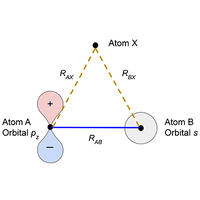
Parametrized tight-binding is a computationally efficient way to calculate a material’s energy and electronic structure, but a lack of well-tested and quantitatively accurate parameter sets limits potential applications. Here, the authors develop a model that uses both two-body and three-body contributions to predict tight-binding Hamiltonians directly from crystal structures. They fit the model to a large database of density functional theory calculations of elemental and binary materials from sixty-four main group and transition metal atoms, using an active learning procedure to generate and test out-of-sample structures. The resulting parameter set enables fast and accurate materials calculations.

Kinetics of formation of a macroscale binary Coulombic material

Sarah Battat, Amit A. Nagarkar, Frans Spaepen, David A. Weitz, and George M. Whitesides

Phys. Rev. Materials 7, L040401 (2023) - Published 13 April, 2023

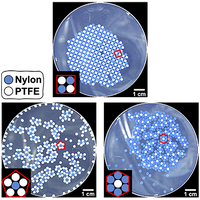
This paper describes the formation kinetics of a two-dimensional, binary Coulombic material. The material is formed by mechanically agitating millimeter-sized nylon and polytetrafluoroethylene (PTFE) beads that tribocharge positively and negatively, respectively. The authors alter the relative number of nylon and PTFE beads, without changing their combined total. They discover a common transient structure that does not depend on the relative ratio of nylon and PTFE beads, reveal a structure transition driven by the minimization of Coulombic energy, and provide insights for the rational design of materials.

Sign In to Your Journals Account

Filter

Section

Filter

Article Lookup

Enter a citation