Highlights

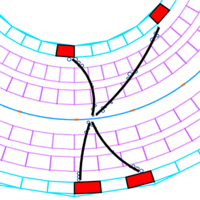
Exposing the QCD Splitting Function with CMS Open Data

Andrew Larkoski, Simone Marzani, Jesse Thaler, Aashish Tripathee, and Wei Xue

Phys. Rev. Lett. 119, 132003 (2017) - Published 26 September, 2017

The first analysis of public data from the CMS experiment at the LHC probes the substructures of jets produced in proton-proton collisions recorded in 2010.

Observation of the Doubly Charmed Baryon Ξcc++

R. Aaij et al. (LHCb Collaboration)

Phys. Rev. Lett. 119, 112001 (2017) - Published 11 September, 2017

High-precision experiments at CERN find a new baryon containing two charm quarks.

QCD Coupling from a Nonperturbative Determination of the Three-Flavor Λ Parameter

Mattia Bruno, Mattia Dalla Brida, Patrick Fritzsch, Tomasz Korzec, Alberto Ramos, Stefan Schaefer, Hubert Simma, Stefan Sint, and Rainer Sommer (ALPHA Collaboration)

Phys. Rev. Lett. 119, 102001 (2017) - Published 8 September, 2017

The magnitude of the strong nuclear force is precisely predicted with lattice QCD. This benchmark value is valuable for high energy particle collision computations.

Determination of the Spin and Parity of the Zc(3900)

M. Ablikim et al. (BESIII Collaboration)

Phys. Rev. Lett. 119, 072001 (2017) - Published 16 August, 2017

An analysis of electron-positron collision data has determined the spin and parity of a particle thought to consist of four quarks.

Proton-Proton Fusion and Tritium β Decay from Lattice Quantum Chromodynamics

Martin J. Savage, Phiala E. Shanahan, Brian C. Tiburzi, Michael L. Wagman, Frank Winter, Silas R. Beane, Emmanuel Chang, Zohreh Davoudi, William Detmold, and Kostas Orginos (NPLQCD Collaboration)

Phys. Rev. Lett. 119, 062002 (2017) - Published 10 August, 2017

Theorists have used lattice-QCD calculations to predict two weak-force-driven reactions—proton fusion and tritium decay.

Search for the Dimuon Decay of the Higgs Boson in pp Collisions at s=13  TeV with the ATLAS Detector

M. Aaboud et al. (ATLAS Collaboration)

Phys. Rev. Lett. 119, 051802 (2017) - Published 4 August, 2017

The ATLAS collaboration has placed an upper limit on the decay rate of Higgs bosons into pairs of muons within a factor of three of the Standard Model prediction.

Search for Neutrinoless Quadruple-β Decay of Nd150 with the NEMO-3 Detector

R. Arnold et al. (NEMO-3 Collaboration)

Phys. Rev. Lett. 119, 041801 (2017) - Published 24 July, 2017

The NEMO collaboration has performed the first experimental search for the rare neutrinoless quadruple beta decay.

Markov Property of the Conformal Field Theory Vacuum and the a Theorem

Horacio Casini, Eduardo Testé, and Gonzalo Torroba

Phys. Rev. Lett. 118, 261602 (2017) - Published 30 June, 2017

Vacuum entanglement entropy is used to prove the irreversibility of renormalization group flows in four or fewer spacetime dimensions.

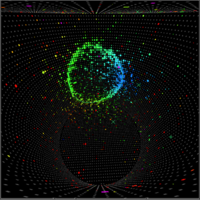
Evolution of the Reactor Antineutrino Flux and Spectrum at Daya Bay

F. P. An et al. (Daya Bay Collaboration)

Phys. Rev. Lett. 118, 251801 (2017) - Published 19 June, 2017

The Daya Bay Collaboration reports that sterile neutrinos probably aren’t behind a puzzling deficit in detected antineutrinos at nuclear reactors.

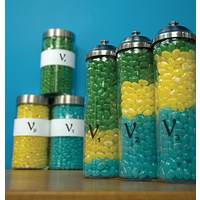
Constraints on Oscillation Parameters from νe Appearance and νμ Disappearance in NOvA

P. Adamson et al. (NOvA Collaboration)

Phys. Rev. Lett. 118, 231801 (2017) - Published 5 June, 2017

Using a muon neutrino source at Fermilab, the NOvA collaboration has measured muon neutrino disappearance and electron neutrino appearance, strengthening constraints on the neutrino CP-violating phase in the inverted-neutrino-mass-hierarchy case.

Dark Matter Search in a Proton Beam Dump with MiniBooNE

A. A. Aguilar-Arevalo et al. (MiniBooNE-DM Collaboration)

Phys. Rev. Lett. 118, 221803 (2017) - Published 31 May, 2017

MiniBooNE’s neutrino detector searches for relatively light dark matter particles generated by Fermilab’s proton beam striking a steel target. The experiment yields a new limit on dark matter couplings for masses between 0.08 and 0.3 GeV.

Measurement of the Bs0→μ+μ− Branching Fraction and Effective Lifetime and Search for B0→μ+μ− Decays

R. Aaij et al. (LHCb Collaboration)

Phys. Rev. Lett. 118, 191801 (2017) - Published 11 May, 2017

The LHCb Collaboration reports the first observation of the Bs0→μ+μ- decay from a single experiment. The result is the the most precise measurement of its branching fraction to date.

Bloch Waves in Minimal Landau Gauge and the Infinite-Volume Limit of Lattice Gauge Theory

Attilio Cucchieri and Tereza Mendes

Phys. Rev. Lett. 118, 192002 (2017) - Published 9 May, 2017

Bloch’s theorem for electrons in crystalline solids is used in numerical simulations of gauge theories to extrapolate simulations on small number of lattice sites to infinite sites, improving the simulation efficiency.

Study of J/ψ Production in Jets

R. Aaij et al. (LHCb Collaboration)

Phys. Rev. Lett. 118, 192001 (2017) - Published 8 May, 2017

A study of J/ψ production in jets reveals the weaknesses of a widely used method of simulating high-energy particle collisions.

Observation of Five New Narrow Ωc0 States Decaying to Ξc+K−

R. Aaij et al. (LHCb Collaboration)

Phys. Rev. Lett. 118, 182001 (2017) - Published 2 May, 2017

The discovery of five new baryonic states at the Large Hadron Collider could shed light on the strong nuclear force.

Combined Analysis of Neutrino and Antineutrino Oscillations at T2K

K. Abe et al. (T2K Collaboration)

Phys. Rev. Lett. 118, 151801 (2017) - Published 10 April, 2017

A pair of long-baseline neutrino oscillation experiments, T2K and NOvA, probe whether μ and τ neutrinos maximally mix, as experiments have heretofore shown. T2K’s data is consistent with maximal mixing, but NOvA’s data disfavors it.

Measurement of the Neutrino Mixing Angle θ23 in NOvA

P. Adamson et al. (NOvA Collaboration)

Phys. Rev. Lett. 118, 151802 (2017) - Published 10 April, 2017

A pair of long-baseline neutrino oscillation experiments, T2K and NOvA, probe whether μ and τ neutrinos maximally mix, as experiments have heretofore shown. T2K’s data is consistent with maximal mixing, but NOvA’s data disfavors it.

Strong Constraints on Self-Interacting Dark Matter with Light Mediators

Torsten Bringmann, Felix Kahlhoefer, Kai Schmidt-Hoberg, and Parampreet Walia

Phys. Rev. Lett. 118, 141802 (2017) - Published 5 April, 2017

Models of dark matter with velocity-dependent self-interactions are strongly constrained or ruled out by data from cosmic microwave background radiation and other detection probes.

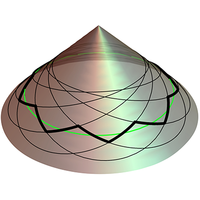
de Sitter Space as a Resonance

Jonathan Maltz and Leonard Susskind

Phys. Rev. Lett. 118, 101602 (2017) - Published 7 March, 2017

de Sitter space is shown to arise as resonance in transition amplitudes in quantum gravity.

Glue Spin and Helicity in the Proton from Lattice QCD

Yi-Bo Yang, Raza Sabbir Sufian, Andrei Alexandru, Terrence Draper, Michael J. Glatzmaier, Keh-Fei Liu, and Yong Zhao (χQCD Collaboration)

Phys. Rev. Lett. 118, 102001 (2017) - Published 6 March, 2017

Computer simulations indicate that about 50% of the proton’s spin comes from the spin of the gluons that bind its quark constituents.

Sign In to Your Journals Account

Filter

Section

Filter

Article Lookup

Enter a citation