Highlights

QCD Axion Dark Matter with a Small Decay Constant

Raymond T. Co, Lawrence J. Hall, and Keisuke Harigaya

Phys. Rev. Lett. 120, 211602 (2018) - Published 23 May, 2018

A proposed new cosmological production mechanism for QCD axion dark matter that involves parametric resonance in field oscillation predicts larger axion masses than the conventional misalignment mechanism.

Final Results of the OPERA Experiment on ντ Appearance in the CNGS Neutrino Beam

N. Agafonova et al. (OPERA Collaboration)

Phys. Rev. Lett. 120, 211801 (2018) - Published 22 May, 2018

The final analysis of data collected by the OPERA experiment improves the precision of measurements of neutrinos oscillating between muon and tau flavors.

New Leading Contribution to Neutrinoless Double-β Decay

Vincenzo Cirigliano, Wouter Dekens, Jordy de Vries, Michael L. Graesser, Emanuele Mereghetti, Saori Pastore, and Ubirajara van Kolck

Phys. Rev. Lett. 120, 202001 (2018) - Published 16 May, 2018

The inclusion of short-range interactions in models of neutrinoless double-beta decay could impact the interpretation of experimental searches for the elusive decay.

Infinite Set of Soft Theorems in Gauge-Gravity Theories as Ward-Takahashi Identities

Yuta Hamada and Gary Shiu

Phys. Rev. Lett. 120, 201601 (2018) - Published 14 May, 2018

Ward-Takahashi identities of large gauge transformations are used to uncover a new infinite set of constraints on the soft behavior of gauge boson and graviton scattering amplitudes.

Dark Matter Interpretation of the Neutron Decay Anomaly

Bartosz Fornal and Benjamín Grinstein

Phys. Rev. Lett. 120, 191801 (2018) - Published 9 May, 2018

The occasional decay of neutrons into dark matter particles could solve a long-standing discrepancy in neutron decay experiments.

Measurement of the Ratio of the B0→D*−τ+ντ and B0→D*−μ+νμ Branching Fractions Using Three-Prong τ-Lepton Decays

R. Aaij et al. (LHCb Collaboration)

Phys. Rev. Lett. 120, 171802 (2018) - Published 25 April, 2018

Measurements of the ratio of tau leptons to muons in semileptonic decays of bottom mesons are just 1.1σ above the Standard Model prediction.

First Measurement of Monoenergetic Muon Neutrino Charged Current Interactions

A. A. Aguilar-Arevalo et al. (MiniBooNE Collaboration)

Phys. Rev. Lett. 120, 141802 (2018) - Published 6 April, 2018

Neutrinos in a beam have a wide range of energies, but a new trick allowed researchers to isolate fixed-energy neutrinos, which can improve the precision in future experiments.

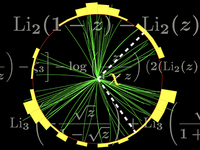
Analytical Computation of Energy-Energy Correlation at Next-to-Leading Order in QCD

Lance J. Dixon, Ming-xing Luo, Vladyslav Shtabovenko, Tong-Zhi Yang, and Hua Xing Zhu

Phys. Rev. Lett. 120, 102001 (2018) - Published 9 March, 2018

The energy-energy correlation between pairs of hadrons separated by a fixed angle is, for the first time, computed analytically at next-to-leading-order.

Measurement of Atmospheric Neutrino Oscillations at 6–56 GeV with IceCube DeepCore

M. G. Aartsen et al. (IceCube Collaboration)

Phys. Rev. Lett. 120, 071801 (2018) - Published 13 February, 2018

The IceCube mission in the ice of Antarctica has measured neutrino oscillations at energies higher than any previous observation.

Search for Dark Photons Produced in 13 TeV pp Collisions

R. Aaij et al. (LHCb Collaboration)

Phys. Rev. Lett. 120, 061801 (2018) - Published 8 February, 2018

A search for dark photons at the LHC comes up empty but puts new constraints on the strength of the hypothetical particles’ coupling to electromagnetic fields.

Observation of Top Quark Production in Proton-Nucleus Collisions

A. M. Sirunyan et al. (CMS Collaboration)

Phys. Rev. Lett. 119, 242001 (2017) - Published 14 December, 2017

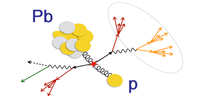
The top quark—previously seen in proton collisions—has now been identified in collisions between protons and lead nuclei.

Magnetic Monopole Mass Bounds from Heavy-Ion Collisions and Neutron Stars

Oliver Gould and Arttu Rajantie

Phys. Rev. Lett. 119, 241601 (2017) - Published 12 December, 2017

A new analysis places some of the tightest bounds yet on the mass that magnetic monopoles should have if they exist.

State-of-the-Art Calculation of the Decay Rate of Electroweak Vacuum in the Standard Model

So Chigusa, Takeo Moroi, and Yutaro Shoji

Phys. Rev. Lett. 119, 211801 (2017) - Published 21 November, 2017

A gauge-invariant calculation of the decay rate of the metastable vacuum removes some theoretical uncertainty in the Universe’s estimated lifetime.

Discovery of the Doubly Charmed Ξcc Baryon Implies a Stable bbu¯d¯ Tetraquark

Marek Karliner and Jonathan L. Rosner

Phys. Rev. Lett. 119, 202001 (2017) - Published 15 November, 2017

A pair of theory papers use the recently discovered double-charmed baryon to predict double-beauty tetraquarks.

Heavy-Quark Symmetry Implies Stable Heavy Tetraquark Mesons QiQjq¯kq¯l

Estia J. Eichten and Chris Quigg

Phys. Rev. Lett. 119, 202002 (2017) - Published 15 November, 2017

A pair of theory papers use the recently discovered double-charmed baryon to predict double-beauty tetraquarks.

Cancellation Mechanism for Dark-Matter–Nucleon Interaction

Christian Gross, Oleg Lebedev, and Takashi Toma

Phys. Rev. Lett. 119, 191801 (2017) - Published 7 November, 2017

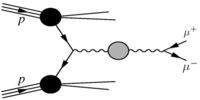
A simple Higgs portal dark matter model could explain why dark matter in the form of weakly interacting massive particles has not yet been directly detected.

Improved Limits for Higgs-Portal Dark Matter from LHC Searches

Martin Hoferichter, Philipp Klos, Javier Menéndez, and Achim Schwenk

Phys. Rev. Lett. 119, 181803 (2017) - Published 31 October, 2017

New theoretical work places more stringent constraints on dark matter properties derived from particle physics experiments.

Upper Bound on Diffusivity

Thomas Hartman, Sean A. Hartnoll, and Raghu Mahajan

Phys. Rev. Lett. 119, 141601 (2017) - Published 2 October, 2017

Quantum mechanical arguments give a hitherto unknown upper limit on the diffusion constant of any local conserved quantity.

Search for Invisible Decays of a Dark Photon Produced in e+e− Collisions at BaBar

J. P. Lees et al. (BaBar Collaboration)

Phys. Rev. Lett. 119, 131804 (2017) - Published 28 September, 2017

The lack of so-called “dark photons” in electron-positron collision data rules out scenarios in which these hypothetical particles explain the muon’s magnetic moment

Single-Electron and Single-Photon Sensitivity with a Silicon Skipper CCD

Javier Tiffenberg, Miguel Sofo-Haro, Alex Drlica-Wagner, Rouven Essig, Yann Guardincerri, Steve Holland, Tomer Volansky, and Tien-Tien Yu

Phys. Rev. Lett. 119, 131802 (2017) - Published 26 September, 2017

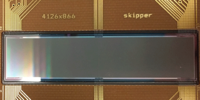
A CCD design relying on multiple charge measurements has achieved a precision that allows the detection of a single electron per pixel.

Sign In to Your Journals Account

Filter

Section

Filter

Article Lookup

Enter a citation