Highlights

Perturbative Confinement in Thermal Yang-Mills Theories Induced by Imaginary Angular Velocity

Shi Chen, Kenji Fukushima, and Yusuke Shimada

Phys. Rev. Lett. 129, 242002 (2022) - Published 8 December, 2022

A mathematical framework where gluons rotate with an imaginary angular velocity provides new insight into the problem of color confinement.

Standard Model Prediction for Paramagnetic Electric Dipole Moments

Yohei Ema, Ting Gao, and Maxim Pospelov

Phys. Rev. Lett. 129, 231801 (2022) - Published 28 November, 2022

CP-violating contributions from the standard-model quark-mixing phase to electric dipole moments are shown to be three orders of magnitude larger than previously thought, possibly putting them in reach of future experiments.

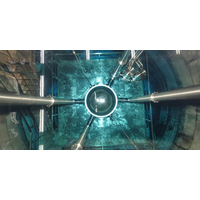
First Search for the Absorption of Fermionic Dark Matter with the PandaX-4T Experiment

Linhui Gu et al. (PandaX Collaboration)

Phys. Rev. Lett. 129, 161803 (2022) - Published 13 October, 2022

Researchers have analyzed the first data from a dark matter direct-detection experiment, searching for a form of dark matter known as fermionic dark matter via its absorption by nuclei.

Search for Light Fermionic Dark Matter Absorption on Electrons in PandaX-4T

Dan Zhang et al. (PandaX Collaboration)

Phys. Rev. Lett. 129, 161804 (2022) - Published 13 October, 2022

Results from two leading dark matter experiments—XENONnT and PandaX-4T—rule out an enigmatic signal detected in 2020 and set new constraints on dark matter particle candidates consisting of light fermions, respectively.

Search for New Physics in Electronic Recoil Data from XENONnT

E. Aprile et al. (XENON Collaboration)

Phys. Rev. Lett. 129, 161805 (2022) - Published 13 October, 2022

Results from two leading dark matter experiments—XENONnT and PandaX-4T—rule out an enigmatic signal detected in 2020 and set new constraints on dark matter particle candidates consisting of light fermions, respectively.

Noninvertible Global Symmetries in the Standard Model

Yichul Choi, Ho Tat Lam, and Shu-Heng Shao

Phys. Rev. Lett. 129, 161601 (2022) - Published 12 October, 2022

The Standard Model contains novel hidden symmetries that cannot be described within the usual context of Lie algebras.

Final Result on the Neutrinoless Double Beta Decay of Se82 with CUPID-0

O. Azzolini et al.

Phys. Rev. Lett. 129, 111801 (2022) - Published 6 September, 2022

The CUPID-0 experiment has demonstrated a new detector technology that targets neutrinoless double beta decay.

Observation of WWW Production in pp Collisions at s=13  TeV with the ATLAS Detector

G. Aad et al. (ATLAS Collaboration)

Phys. Rev. Lett. 129, 061803 (2022) - Published 4 August, 2022

The ATLAS Collaboration has detected triple W-boson production—a rare event that could eventually offer signs of new physics.

Holography in de Sitter Space via Chern-Simons Gauge Theory

Yasuaki Hikida, Tatsuma Nishioka, Tadashi Takayanagi, and Yusuke Taki

Phys. Rev. Lett. 129, 041601 (2022) - Published 18 July, 2022

Theorists have modeled an expanding spacetime—akin to our Universe—by taking inspiration from a string theory framework in which spacetime is emergent.

Chaos in a Many-String Scattering Amplitude

Vladimir Rosenhaus

Phys. Rev. Lett. 129, 031601 (2022) - Published 14 July, 2022

Scattering amplitudes of Bosonic string theory display characteristics of chaotic behavior.

Strong Constraints on Neutrino Nonstandard Interactions from TeV-Scale νμ Disappearance at IceCube

R. Abbasi et al. (IceCube Collaboration)

Phys. Rev. Lett. 129, 011804 (2022) - Published 29 June, 2022

World-leading constraints are placed on nonstandard neutrino interactions using eight years of TeV-scale atmospheric muon neutrino data.

New Constraint on the Local Relic Neutrino Background Overdensity with the First KATRIN Data Runs

M. Aker et al. (KATRIN Collaboration)

Phys. Rev. Lett. 129, 011806 (2022) - Published 29 June, 2022

Using radioactive tritium, scientists improve laboratory constraints on the “overdensity” signal of cosmic relic neutrinos by a factor of 100, an advance that should improve the chances of spotting this elusive particle.

Cerium Ruthenium Low-Energy Antineutrino Measurements for Safeguarding Military Naval Reactors

Bernadette K. Cogswell and Patrick Huber

Phys. Rev. Lett. 128, 241803 (2022) - Published 14 June, 2022

Monitoring the fissile material aboard nuclear-powered submarines is notoriously difficult. Researchers may now have a way to safeguard this weapons-grade substance.

Search for an Excess of Electron Neutrino Interactions in MicroBooNE Using Multiple Final-State Topologies

P. Abratenko et al. (MicroBooNE Collaboration)

Phys. Rev. Lett. 128, 241801 (2022) - Published 13 June, 2022

New neutrino-oscillation data show no sign of an anomalous signal seen in previous studies, but the analyses can’t yet fully rule out its presence.

MicroBooNE and the νe Interpretation of the MiniBooNE Low-Energy Excess

C. A. Argüelles, I. Esteban, M. Hostert, K. J. Kelly, J. Kopp, P. A. N. Machado, I. Martinez-Soler, and Y. F. Perez-Gonzalez

Phys. Rev. Lett. 128, 241802 (2022) - Published 13 June, 2022

New neutrino-oscillation data show no sign of an anomalous signal seen in previous studies, but the analyses can’t yet fully rule out its presence.

Three-Loop Gluon Scattering in QCD and the Gluon Regge Trajectory

Fabrizio Caola, Amlan Chakraborty, Giulio Gambuti, Andreas von Manteuffel, and Lorenzo Tancredi

Phys. Rev. Lett. 128, 212001 (2022) - Published 26 May, 2022

Three-loop corrections to a complicated four-parton scattering amplitude in full QCD will aid precision calculations at hadron colliders.

Tests of Lepton Universality Using B0→KS0ℓ+ℓ− and B+→K*+ℓ+ℓ− Decays

R. Aaij et al. (LHCb Collaboration)

Phys. Rev. Lett. 128, 191802 (2022) - Published 11 May, 2022

Two new B meson decays are observed and used to probe lepton universality, with results fitting the overall picture of a persistent but not yet compelling deviation from the Standard Model of particle physics.

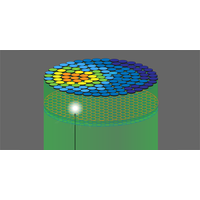
Search for Cosmic-Ray Boosted Sub-GeV Dark Matter at the PandaX-II Experiment

Xiangyi Cui et al. (PandaX-II Collaboration)

Phys. Rev. Lett. 128, 171801 (2022) - Published 27 April, 2022

A large unexplored region of parameter space has been ruled out for hypothetical sub-GeV dark matter which was boosted in energy from collisions with cosmic rays.

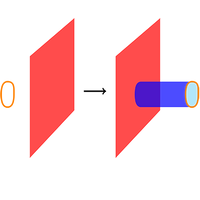
Broadband Solenoidal Haloscope for Terahertz Axion Detection

Jesse Liu, Kristin Dona, Gabe Hoshino, Stefan Knirck, Noah Kurinsky, Matthew Malaker, David W. Miller, Andrew Sonnenschein, Mohamed H. Awida, Peter S. Barry, Karl K. Berggren, Daniel Bowring, Gianpaolo Carosi, Clarence Chang, Aaron Chou, Rakshya Khatiwada, Samantha Lewis, Juliang Li, Sae Woo Nam, Omid Noroozian, and Tony X. Zhou (BREAD Collaboration)

Phys. Rev. Lett. 128, 131801 (2022) - Published 28 March, 2022

A proposed cylindrical metal barrel detector with a parabolic reflector will be able to probe dark matter axions over the broad meV to eV range.

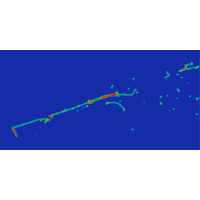
Search for Neutrino-Induced Neutral-Current Δ Radiative Decay in MicroBooNE and a First Test of the MiniBooNE Low Energy Excess under a Single-Photon Hypothesis

P. Abratenko et al. (MicroBooNE Collaboration)

Phys. Rev. Lett. 128, 111801 (2022) - Published 14 March, 2022

The MicroBooNE collaboration rules out a promising standard model explanation for the MiniBooNE low-energy excess: ∆ baryon radiative decay.

Sign In to Your Journals Account

Filter

Section

Filter

Article Lookup

Enter a citation