Highlights

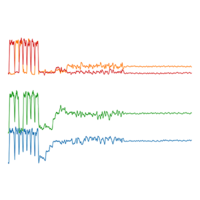
First Directional Measurement of Sub-MeV Solar Neutrinos with Borexino

M. Agostini et al. (Borexino Collaboration)

Phys. Rev. Lett. 128, 091803 (2022) - Published 3 March, 2022

A new measurement method allows researchers to obtain directional information about low-energy solar neutrinos, something that was previously hard to do.

Inverse Renormalization Group in Quantum Field Theory

Dimitrios Bachtis, Gert Aarts, Francesco Di Renzo, and Biagio Lucini

Phys. Rev. Lett. 128, 081603 (2022) - Published 23 February, 2022

Machine learning tools are applied to demonstrate the invertibility of renormalization group transformations for a quantum field theory.

Evidence for a New Structure in the J/ψp and J/ψp¯ Systems in Bs0→J/ψpp¯ Decays

R. Aaij et al. (LHCb Collaboration)

Phys. Rev. Lett. 128, 062001 (2022) - Published 7 February, 2022

Evidence of a new structure in the decay of Bs0→J/ψpp¯ is compatible with a pentaquark state.

Analysis of Neutral B-Meson Decays into Two Muons

R. Aaij et al. (LHCb Collaboration)

Phys. Rev. Lett. 128, 041801 (2022) - Published 25 January, 2022

A new analysis of Large Hadron Collider data measures rare decays of the B meson that behave according to the standard model.

Solving Conformal Field Theories with Artificial Intelligence

Gergely Kántor, Constantinos Papageorgakis, and Vasilis Niarchos

Phys. Rev. Lett. 128, 041601 (2022) - Published 24 January, 2022

Machine learning is shown to provide a road to solving conformal field theories by efficiently exploiting numerical bootstrap methods.

Sliding Naturalness: New Solution to the Strong-CP and Electroweak-Hierarchy Problems

Raffaele Tito D’Agnolo and Daniele Teresi

Phys. Rev. Lett. 128, 021803 (2022) - Published 12 January, 2022

A new model that assumes that a multitude of universes existed when our Universe first formed may explain why the Higgs mass is smaller than traditional models predict.

Dark Matter Search Results from the PandaX-4T Commissioning Run

Yue Meng et al. (PandaX-4T Collaboration)

Phys. Rev. Lett. 127, 261802 (2021) - Published 23 December, 2021

New dark matter results strengthen constraints on axions and WIMPs.

Search for Invisible Axion Dark Matter in the 3.3–4.2  μeV Mass Range

C. Bartram et al. (ADMX Collaboration)

Phys. Rev. Lett. 127, 261803 (2021) - Published 23 December, 2021

New dark matter results strengthen constraints on axions and WIMPs.

New Definition of the Neutrino Floor for Direct Dark Matter Searches

Ciaran A. J. O’Hare

Phys. Rev. Lett. 127, 251802 (2021) - Published 16 December, 2021

A new definition of the “neutrino floor” in dark matter experiments clarifies the challenges ahead in differentiating neutrinos from WIMPs.

Amplitudes and the Riemann Zeta Function

Grant N. Remmen

Phys. Rev. Lett. 127, 241602 (2021) - Published 8 December, 2021

Mathematical properties of a famous number-theory conjecture correspond to the physical scattering properties of a quantum field theory.

Dark Matter from Exponential Growth

Torsten Bringmann, Paul Frederik Depta, Marco Hufnagel, Joshua T. Ruderman, and Kai Schmidt-Hoberg

Phys. Rev. Lett. 127, 191802 (2021) - Published 3 November, 2021

A new model explains the current density of dark matter by proposing that conventional matter converted to dark matter in the early Universe.

Observation of the Mass Difference between Neutral Charm-Meson Eigenstates

R. Aaij et al. (LHCb Collaboration)

Phys. Rev. Lett. 127, 111801 (2021) - Published 7 September, 2021

The observation of neutral D mesons oscillating into their antiparticle partners provides constraints on new heavy particles that can’t be directly produced by high-energy colliders.

Quantum Mechanics of Gravitational Waves

Maulik Parikh, Frank Wilczek, and George Zahariade

Phys. Rev. Lett. 127, 081602 (2021) - Published 19 August, 2021

A theoretical analysis suggests that quantum gravity effects might manifest themselves as detectable random fluctuations in the motion of freely falling bodies.

Where Is String Theory in the Space of Scattering Amplitudes?

Andrea Guerrieri, João Penedones, and Pedro Vieira

Phys. Rev. Lett. 127, 081601 (2021) - Published 18 August, 2021

Scattering-matrix-based techniques are applied for the first time to chart out the space of ultraviolet completions of maximally supersymmetric theories of quantum gravity.

Observation of New Resonances Decaying to J/ψK+ and J/ψϕ

R. Aaij et al. (LHCb Collaboration)

Phys. Rev. Lett. 127, 082001 (2021) - Published 17 August, 2021

LHCb observes four new tetraquarks with two having novel quark content cc̄us̄.

Trapped Electrons and Ions as Particle Detectors

Daniel Carney, Hartmut Häffner, David C. Moore, and Jacob M. Taylor

Phys. Rev. Lett. 127, 061804 (2021) - Published 5 August, 2021

Trapped electrons and ions, already used in important high-precision metrological instruments, could also be used in a new kind of charged particle detector.

Muon g−2 and B Anomalies from Dark Matter

Giorgio Arcadi, Lorenzo Calibbi, Marco Fedele, and Federico Mescia

Phys. Rev. Lett. 127, 061802 (2021) - Published 4 August, 2021

Implications of the recent g-2 results and other flavor anomalies, involving thermal dark matter or leptoquarks

Minimal Explanation of Flavor Anomalies: B-Meson Decays, Muon Magnetic Moment, and the Cabibbo Angle

David Marzocca and Sokratis Trifinopoulos

Phys. Rev. Lett. 127, 061803 (2021) - Published 4 August, 2021

Implications of the recent g-2 results and other flavor anomalies, involving thermal dark matter or leptoquarks

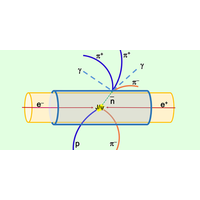
Cornucopia of Antineutrons and Hyperons from a Super J/ψ Factory for Next-Generation Nuclear and Particle Physics High-Precision Experiments

Chang-Zheng Yuan and Marek Karliner

Phys. Rev. Lett. 127, 012003 (2021) - Published 30 June, 2021

Antineutrons and hyperons are challenging to produce and study, but researchers propose a new approach that would generate these particles using existing and planned accelerators.

Scattering Amplitudes and Conservative Binary Dynamics at O(G4)

Zvi Bern, Julio Parra-Martinez, Radu Roiban, Michael S. Ruf, Chia-Hsien Shen, Mikhail P. Solon, and Mao Zeng

Phys. Rev. Lett. 126, 171601 (2021) - Published 26 April, 2021

In a fruitful cross-pollination of ideas, quantum field theory techniques are used to compute hitherto unknown details of gravitational dynamics of inspiraling compact objects.

Sign In to Your Journals Account

Filter

Section

Filter

Article Lookup

Enter a citation