Highlights

Model-Independent Evidence for J/ψp Contributions to Λb0→J/ψpK− Decays

R. Aaij et al. (LHCb Collaboration)

Phys. Rev. Lett. 117, 082002 (2016) - Published 18 August, 2016

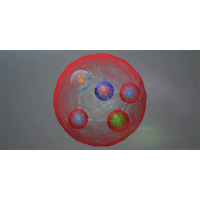
New results from the LHCb experiment confirm the 2015 discovery that quarks can combine into groups of five.

Evidence for Exotic Hadron Contributions to Λb0→J/ψpπ− Decays

R. Aaij et al. (LHCb Collaboration)

Phys. Rev. Lett. 117, 082003 (2016) - Published 18 August, 2016

New results from the LHCb experiment confirm the 2015 discovery that quarks can combine into groups of five.

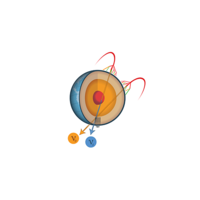
Searches for Sterile Neutrinos with the IceCube Detector

M. G. Aartsen et al. (IceCube Collaboration)

Phys. Rev. Lett. 117, 071801 (2016) - Published 8 August, 2016

A search for sterile neutrinos with the IceCube detector has found no evidence for the hypothetical particles, significantly narrowing the range of masses that a new kind of neutrino could possibly have.

Measurement of the CP Asymmetry in Bs0−B¯s0 Mixing

R. Aaij et al. (LHCb Collaboration)

Phys. Rev. Lett. 117, 061803 (2016) - Published 5 August, 2016

The rate difference between two CP-conjugate decays of bottom-strange mesons shows no sign of deviation from the Standard Model, in contrast to a previous hint.

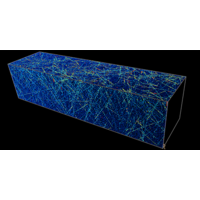
Berry Phase in Lattice QCD

Arata Yamamoto

Phys. Rev. Lett. 117, 052001 (2016) - Published 29 July, 2016

The Berry phase of a single fermion wave function in two spatial dimensions is calculated using lattice field theory.

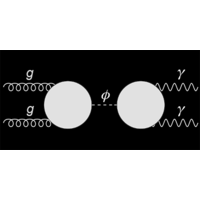
Search for Resonant Production of High-Mass Photon Pairs in Proton-Proton Collisions at s=8 and 13 TeV

V. Khachatryan et al. (CMS Collaboration)

Phys. Rev. Lett. 117, 051802 (2016) - Published 28 July, 2016

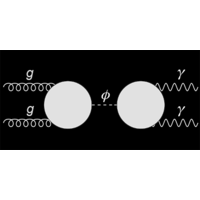
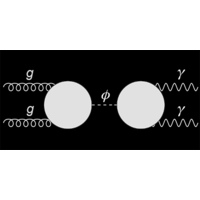
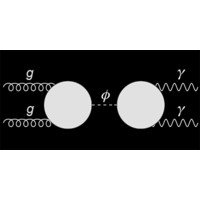
Data from the CMS collaboration contain a modest excess of photon pairs at 750 GeV. If this bump were confirmed it would require the existence of new elementary particles. More data should resolve the issue.

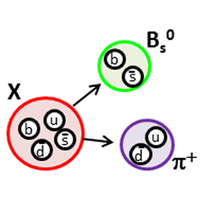
Evidence for a Bs0π± State

V. M. Abazov et al. (D0 Collaboration)

Phys. Rev. Lett. 117, 022003 (2016) - Published 7 July, 2016

The D0 collaboration reports evidence of an exotic four-quark state, which would be the first ever consisting of four different flavors: up, down, strange, and bottom.

Higgs Boson Pair Production in Gluon Fusion at Next-to-Leading Order with Full Top-Quark Mass Dependence

S. Borowka, N. Greiner, G. Heinrich, S. P. Jones, M. Kerner, J. Schlenk, U. Schubert, and T. Zirke

Phys. Rev. Lett. 117, 012001 (2016) - Published 29 June, 2016

The production rate of a pair of Higgs bosons has been calculated with higher precision than before by using the exact value of the top quark mass in the calculation.

Measurement of the Difference of Time-Integrated CP Asymmetries in D0→K−K+ and D0→π−π+ Decays

R. Aaij et al. (LHCb Collaboration)

Phys. Rev. Lett. 116, 191601 (2016) - Published 9 May, 2016

The LHCb collaboration has made the most precise measurement of a time-integrated CP asymmetry in the charm sector to date. The results show no evidence for CP violation in D mesons, in contrast to the group’s previous results.

Reduced Limit on the Permanent Electric Dipole Moment of Hg199

B. Graner, Y. Chen ((陳宜)), E. G. Lindahl, and B. R. Heckel

Phys. Rev. Lett. 116, 161601 (2016) - Published 18 April, 2016

A factor of four improvement on the maximum value for the permanent electric dipole moment of mercury atoms places new limits on a number of CP-violating observables.

First Measurement of Electron Neutrino Appearance in NOvA

P. Adamson et al. (NOvA Collaboration)

Phys. Rev. Lett. 116, 151806 (2016) - Published 13 April, 2016

The first results from the NOvA experiment set new constraints on charge-parity violation in neutrinos and on the ordering of neutrino masses.

Footprints of New Strong Dynamics via Anomaly and the 750 GeV Diphoton

Yuichiro Nakai, Ryosuke Sato, and Kohsaku Tobioka

Phys. Rev. Lett. 116, 151802 (2016) - Published 12 April, 2016

Theorists try to explain data from the LHC that could be hinting at the existence of new particles.

Pseudoscalar Decaying Only via Loops as an Explanation for the 750 GeV Diphoton Excess

Gang Li, Ying-nan Mao, Yi-Lei Tang, Chen Zhang, Yang Zhou, and Shou-hua Zhu

Phys. Rev. Lett. 116, 151803 (2016) - Published 12 April, 2016

Theorists try to explain data from the LHC that could be hinting at the existence of new particles.

750 GeV Diphoton Excess from the Goldstino Superpartner

Christoffer Petersson and Riccardo Torre

Phys. Rev. Lett. 116, 151804 (2016) - Published 12 April, 2016

Theorists try to explain data from the LHC that could be hinting at the existence of new particles.

750 GeV Diphoton Excess May Not Imply a 750 GeV Resonance

Won Sang Cho, Doojin Kim, Kyoungchul Kong, Sung Hak Lim, Konstantin T. Matchev, Jong-Chul Park, and Myeonghun Park

Phys. Rev. Lett. 116, 151805 (2016) - Published 12 April, 2016

Theorists try to explain data from the LHC that could be hinting at the existence of new particles.

Search for Narrow Resonances Decaying to Dijets in Proton-Proton Collisions at s=13  TeV

V. Khachatryan et al. (CMS Collaboration)

Phys. Rev. Lett. 116, 071801 (2016) - Published 18 February, 2016

No signal of new particles has been found by the CMS collaboration from Run 2 of the LHC at 13 TeV. This null result tightens constraints on a variety of models that predict the existence of heavy resonant states that decay into pairs of jets.

Measurement of the Reactor Antineutrino Flux and Spectrum at Daya Bay

F. P. An et al. (Daya Bay Collaboration)

Phys. Rev. Lett. 116, 061801 (2016) - Published 12 February, 2016

The antineutrino spectrum measured at Daya Bay corroborates the so-called reactor antineutrino anomaly — an excess of observed antineutrinos over theoretical expectations.

Analytic Form of the Two-Loop Planar Five-Gluon All-Plus-Helicity Amplitude in QCD

T. Gehrmann, J. M. Henn, and N. A. Lo Presti

Phys. Rev. Lett. 116, 062001 (2016) - Published 8 February, 2016

The complete analytical computation of the amplitude for five-particle scattering at the second perturbative order in quantum chromodynamics is carried out for the first time.

On-Shell Recursion Relations for Effective Field Theories

Clifford Cheung, Karol Kampf, Jiri Novotny, Chia-Hsien Shen, and Jaroslav Trnka

Phys. Rev. Lett. 116, 041601 (2016) - Published 25 January, 2016

A modern technique for computing scattering amplitudes—the key ingredients for predicting what particle physics experiments will observe—has now been extended to cover effective quantum field theories.

Complexified Path Integrals, Exact Saddles, and Supersymmetry

Alireza Behtash, Gerald V. Dunne, Thomas Schäfer, Tin Sulejmanpasic, and Mithat Ünsal

Phys. Rev. Lett. 116, 011601 (2016) - Published 6 January, 2016
The fields and parameters in a path integral should be considered as complex quantities, even though they are real at the Lagrangian level, according to new calculations.

Sign In to Your Journals Account

Filter

Section

Filter

Article Lookup

Enter a citation