Highlights

Magneto-Optical Trapping of Aluminum Monofluoride

J. E. Padilla-Castillo, J. Cai, P. Agarwal, P. Kukreja, R. Thomas, B. G. Sartakov, S. Truppe, G. Meijer, and S. C. Wright

Phys. Rev. Lett. 135, 243401 (2025) - Published 10 December, 2025

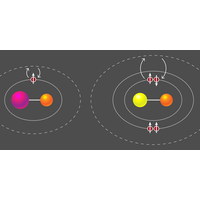
A class of molecules with two valence electrons has been laser cooled and trapped for the first time.

Probing Valence Electron and Hydrogen Dynamics Using Charge-Pair Imaging with Ultrafast Electron Diffraction

Tianyu Wang, Hui Jiang, Ming Zhang, Xiao Zou, Pengfei Zhu, Feng He, Zheng Li, and Dao Xiang

Phys. Rev. Lett. 135, 233002 (2025) - Published 2 December, 2025

Ultrafast electron diffraction can capture the motion of electrons and nuclei during light-induced reactions with high spatial and temporal resolution.

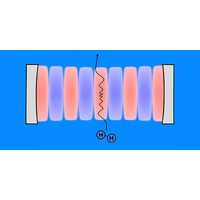
Letokhov-Chebotayev Intracavity Trapping Spectroscopy of H2

Wim Ubachs, Frank M. J. Cozijn, Meissa L. Diouf, Clement Lauzin, Hubert Jóźwiak, and Piotr Wcisło

Phys. Rev. Lett. 135, 223201 (2025) - Published 25 November, 2025

The one-dimensional confinement of molecules in an optical cavity allows researchers to measure a narrow absorption line without the blurring effects of molecular motion.

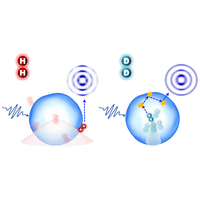
Localization and Delocalization of a Single Molecule in a Helium Nanodroplet

Zhengjun Ye, Haomai Hou, Linqian Zeng, Lianrong Zhou, Zhejun Jiang, Menghang Shi, Chenxu Lu, Shengzhe Pan, Ruolin Gong, Peifen Lu, Hongcheng Ni, Wenbin Zhang, Feng He, and Jian Wu

Phys. Rev. Lett. 135, 213202 (2025) - Published 18 November, 2025

An optical technique reveals the spatial extent of a molecule’s wave function when the molecule is embedded in a tiny helium droplet.

Spectroscopy and Ground-State Transfer of Ultracold Bosonic  K39133Cs Molecules

Krzysztof P. Zamarski, Charly Beulenkamp, Yi Zeng, Manuele Landini, and Hanns-Christoph Nägerl

Phys. Rev. Lett. 135, 203401 (2025) - Published 12 November, 2025

Observation of KCs molecules in their rovibrational ground state establishes a new viable species for ultracold molecule research.

Clock Precision beyond the Standard Quantum Limit at 10−18 Level

Y. A. Yang, Maya Miklos, Yee Ming Tso, Stella Kraus, Joonseok Hur, and Jun Ye

Phys. Rev. Lett. 135, 193202 (2025) - Published 7 November, 2025

An entanglement-enhanced optical clock achieves unprecedented precision of 10−18 with 2dB quantum noise squeezing.

Unraveling Dicke Superradiant Decay with Separable Coherent Spin States

P. Rosario, L. O. R. Solak, A. Cidrim, R. Bachelard, and J. Schachenmayer

Phys. Rev. Lett. 135, 133602 (2025) - Published 23 September, 2025

Scientists have shown that entanglement plays no role in a form of collective light emission called Dicke superradiance, settling a long-standing debate.

Spontaneous Emission Decay and Excitation in Photonic Time Crystals

Jagang Park, Kyungmin Lee, Ruo-Yang Zhang, Hee-Chul Park, Jung-Wan Ryu, Gil Young Cho, Min Yeul Lee, Zhaoqing Zhang, Namkyoo Park, Wonju Jeon, Jonghwa Shin, C. T. Chan, and Bumki Min

Phys. Rev. Lett. 135, 133801 (2025) - Published 22 September, 2025

A material whose dielectric properties vary in time could produce exotic light-emission phenomena in a nearby atom, theorists predict.

Host-Dependent Frequency Offsets in Th229 Nuclear Clockwork

U. C. Perera, H. W. T. Morgan, Eric R. Hudson, and Andrei Derevianko

Phys. Rev. Lett. 135, 123001 (2025) - Published 15 September, 2025

Host-dependent variations of Thorium-229 nuclear clock frequencies in solid-state hosts are predicted using a combination of advanced methods.

Magnifying the Wave Function of Interacting Fermionic Atoms

Sandra Brandstetter, Carl Heintze, Paul Hill, Philipp M. Preiss, Maciej Gałka, and Selim Jochim

Phys. Rev. Lett. 135, 103401 (2025) - Published 2 September, 2025

A new technique allows the imaging of an atomic system in which the interatomic spacing is smaller than the optical-resolution limit.

Finding the Ultranarrow P32→P30 Electric Quadrupole Transition in Ni12+ Ion for an Optical Clock

Charles Cheung, Sergey G. Porsev, Dmytro Filin, Marianna S. Safronova, Malte Wehrheim, Lukas J. Spieß, Shuying Chen, Alexander Wilzewski, José R. Crespo López-Urrutia, and Piet O. Schmidt

Phys. Rev. Lett. 135, 093002 (2025) - Published 28 August, 2025

A novel hybrid approach calculates the frequency of a strongly forbidden clock transition in a highly charged ion.

Self-Injection Locking Dynamics with Raman Actions in Aluminum Nitride Microresonators

Yulei Ding, Yifei Wang, Shunyu Yao, Yanan Guo, Jianchang Yan, Junxi Wang, Changxi Yang, and Chengying Bao

Phys. Rev. Lett. 135, 093801 (2025) - Published 26 August, 2025

Self-injection locking in an aluminum nitride chip enables stimulated Raman lasers and tunable microcombs via nonlinear Kerr effects and Raman scattering.

Imaging Valence Electron Rearrangement in a Chemical Reaction Using Hard X-Ray Scattering

Ian Gabalski et al.

Phys. Rev. Lett. 135, 083001 (2025) - Published 20 August, 2025

Scientists have used ultrashort x-ray pulses to directly observe the motion of electrons driving a chemical reaction.

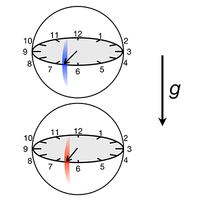
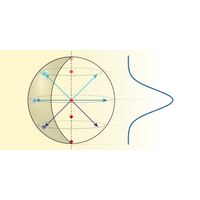
Quantum Delocalization of a Levitated Nanoparticle

M. Rossi, A. Militaru, N. Carlon Zambon, A. Riera-Campeny, O. Romero-Isart, M. Frimmer, and L. Novotny

Phys. Rev. Lett. 135, 083601 (2025) - Published 19 August, 2025

Researchers have expanded the quantum wave function of a levitated nanosphere, a step toward future tests of quantum physics.

Cryogenic Optical Lattice Clock with 1.7×10⁻²⁰ Blackbody Radiation Stark Uncertainty

Youssef S. Hassan, Kyle Beloy, Jacob L. Siegel, Takumi Kobayashi, Eric Swiler, Tanner Grogan, Roger C. Brown, Tristan Rojo, Tobias Bothwell, Benjamin D. Hunt, Adam Halaoui, and Andrew D. Ludlow

Phys. Rev. Lett. 135, 063402 (2025) - Published 5 August, 2025

A new experimental design eliminates the top source of clock uncertainty.

Physical Interpretation of Imaginary Time Delay

Isabella L. Giovannelli and Steven M. Anlage

Phys. Rev. Lett. 135, 043801 (2025) - Published 24 July, 2025

The time delay experienced by a scattered light signal has an imaginary part that was considered unobservable, but researchers have isolated its effect in a frequency shift.

High-Stability Single-Ion Clock with 5.5×10⁻¹⁹ Systematic Uncertainty

Mason C. Marshall, Daniel A. Rodriguez Castillo, Willa J. Arthur-Dworschack, Alexander Aeppli, Kyungtae Kim, Dahyeon Lee, William Warfield, Joost Hinrichs, Nicholas V. Nardelli, Tara M. Fortier, Jun Ye, David R. Leibrandt, and David B. Hume

Phys. Rev. Lett. 135, 033201 (2025) - Published 14 July, 2025

A new trap design with reduced micromotion, more accurate measurements of the ion’s Doppler-cooled temperature and differential polarizability by Doppler cooling light, and improved laser stabilization allows for an atomic clock with the lowest fractional frequency uncertainty of any to date.

Polariton Fluids as Quantum Field Theory Simulators on Tailored Curved Spacetimes

Kévin Falque, Adrià Delhom, Quentin Glorieux, Elisabeth Giacobino, Alberto Bramati, and Maxime J. Jacquet

Phys. Rev. Lett. 135, 023401 (2025) - Published 8 July, 2025

A fluid made of light can simulate a black hole’s boundary, providing insights into the mysterious quantum phenomena that occur at such a boundary.

Saturation of Thermal and Spin Conductances in a Dissipative Superfluid Junction

Meng-Zi Huang, Philipp Fabritius, Jeffrey Mohan, Mohsen Talebi, Simon Wili, and Tilman Esslinger

Phys. Rev. Lett. 134, 253403 (2025) - Published 27 June, 2025

Particle dissipation in a one-dimensional fermionic superfluid junction increases diffusive thermal and spin transport.

Theory of Internal Conversion of the Th229 Nuclear Isomer in Solid-State Hosts

H. W. T. Morgan, H. B. Tran Tan, R. Elwell, A. N. Alexandrova, Eric R. Hudson, and Andrei Derevianko

Phys. Rev. Lett. 134, 253801 (2025) - Published 24 June, 2025
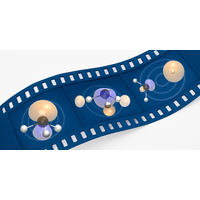
Ab initio relativistic treatment of electron-nuclear interaction provides crucial physical understanding for the development of solid-state nuclear clocks.

Sign In to Your Journals Account

Filter

Section

Filter

Article Lookup

Enter a citation