Highlights

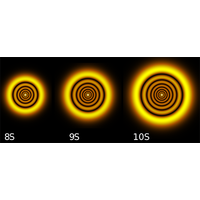
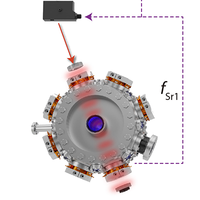
Precision Spectroscopy of 2S-nS Transitions in Atomic Hydrogen: A Determination of the Proton Charge Radius

R. G. Bullis, W. L. Tavis, M. R. Weiss, J. Orellana Cisneros, A. J. Cheeseman, U. D. Jentschura, and D. C. Yost

Phys. Rev. Lett. 136, 123001 (2026) - Published 23 March, 2026

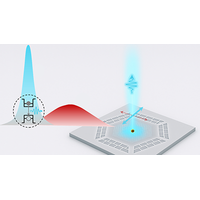
Spectroscopy of atomic hydrogen produces a new high-precision value for the Rydberg constant and the proton charge radius.

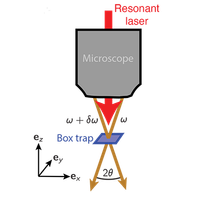
Loss-Tolerant Detection of Squeezed States in the 2  μm Region

K. M. Kwan, T. G. McRae, J. Qin, D. W. Gould, S. S. Y. Chua, J. Junker, R. Iden, V. B. Adya, M. J. Yap, B. J. J. Slagmolen, D. E. McClelland, and R. L. Ward

Phys. Rev. Lett. 136, 123601 (2026) - Published 23 March, 2026

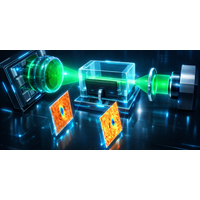
Loss-tolerant detection of squeezed light at 2 µm is accomplished by preamplifying the squeezed quadrature before the detection, mitigating the low detection rate, and increasing observed squeezing from 4 dB to 8 dB.

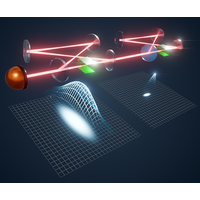
Imaginary Gauge Potentials in a Non-Hermitian Spin-Orbit Coupled Quantum Gas

J. Tao, E. D. Mercado-Gutierrez, M. Zhao, and I. B. Spielman

Phys. Rev. Lett. 136, 113401 (2026) - Published 17 March, 2026

A continuum analog of the Hatano-Nelson model using a homogeneous spin-orbit-coupled Bose-Einstein condensate shows that repulsive interactions enhance self-acceleration while suppressing the non-Hermitian skin effect.

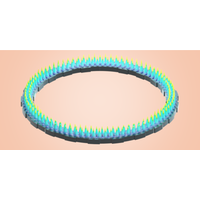
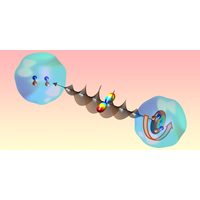
Multimode Single-Ring Photonic Molecule

Jinsheng Lu, Ileana-Cristina Benea-Chelmus, Vincent Ginis, Marcus Ossiander, Danilo Shchepanovich, and Federico Capasso

Phys. Rev. Lett. 136, 103803 (2026) - Published 11 March, 2026

A new ring-shaped resonator for light can do a job that normally requires at least two rings.

Polarized Single-Photon Emission from an Anisotropic Dirac Cavity

Xin-Rui Mao, Bang Wu, Wei-Jie Ji, Shao-Lei Wang, Wang-Zhe Li, Han-Qing Liu, Haiqiao Ni, Zhichuan Niu, and Zhiliang Yuan

Phys. Rev. Lett. 136, 073603 (2026) - Published 18 February, 2026

A novel single-photon source made of a quantum dot embedded in a Dirac cavity provides outstanding performance metrics.

Entanglement-Enhanced Optical Ion Clock

Kai Dietze, Lennart Pelzer, Ludwig Krinner, Fabian Dawel, Johannes Kramer, Nicolas C. H. Spethmann, Timm Kielinski, Klemens Hammerer, Kilian Stahl, Joshua Klose, Sören Dörscher, Christian Lisdat, Erik Benkler, and Piet O. Schmidt

Phys. Rev. Lett. 136, 073601 (2026) - Published 17 February, 2026

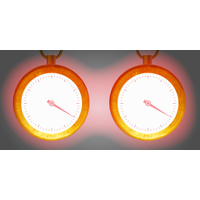
An optical clock based on a pair of calcium ions achieves a given precision more quickly when the ions are entangled.

Observation of Lump Solitons

Ludovica Dieli, Davide Pierangeli, Fabio Baronio, Stefano Trillo, and Claudio Conti

Phys. Rev. Lett. 136, 053804 (2026) - Published 6 February, 2026

Experiments with structured light beams provide the first observation of “lump” solitions, shape-preserving solitary waves in a two-dimensional setting.

High-Power Picosecond Pulsed Kerr Soliton Microcombs

Liu Yang, Keisuke Ogawa, Ryomei Takabayashi, Yuta Mototani, Tatsuki Murakami, Hajime Kumazaki, Yongyong Zhuang, Xiaoyong Wei, and Shun Fujii

Phys. Rev. Lett. 136, 043802 (2026) - Published 26 January, 2026

Strong mode interactions in ultrahigh-Q crystalline microresonators produce a high-power, high-efficiency dissipative Kerr soliton regime revealing new nonlinear dynamics where localized mode crossings act as effective higher-order dispersion.

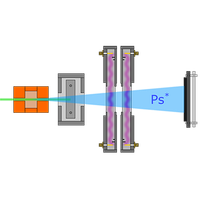
Phase-Variation Ramsey Spectroscopy of the 23S1→23P2 Interval in Positronium

D. M. Newson and D. B. Cassidy

Phys. Rev. Lett. 136, 033001 (2026) - Published 22 January, 2026

The structure of positronium was measured by using the Ramsey separated oscillatory fields method.

Control of Molecular Rotation in Helium Nanodroplets with an Optical Centrifuge

Ian MacPhail-Bartley, Alexander A. Milner, Frank Stienkemeier, and Valery Milner

Phys. Rev. Lett. 136, 033002 (2026) - Published 22 January, 2026

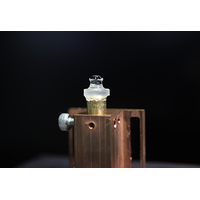
A technique for spinning up molecules in a gas has now been adapted to work with superfluid helium as the host medium.

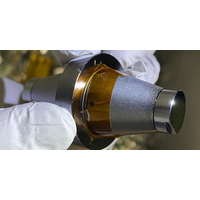
Frequency Stability of 2.5×10⁻¹⁷ from a Si Cavity with AlGaAs Crystalline Mirrors

Dahyeon Lee, Zoey Z. Hu, Ben Lewis, Alexander Aeppli, Kyungtae Kim, Zhibin Yao, Thomas Legero, Daniele Nicolodi, Fritz Riehle, Uwe Sterr, and Jun Ye

Phys. Rev. Lett. 136, 033801 (2026) - Published 20 January, 2026

A crystalline mirror coating significantly reduces fluctuations in the resonant frequency of an optical cavity.

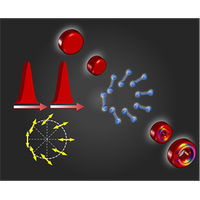
Molecular Alignment Echo for Controlling the Readout Time of Vortex Beams

A. Voisine, P. Béjot, F. Billard, O. Faucher, and E. Hertz

Phys. Rev. Lett. 136, 023202 (2026) - Published 16 January, 2026

Molecular rotational echoes can be selectively retrieved by angular momentum using vortex beams.

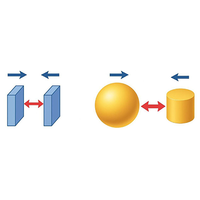
Rigorous Theory of Coupled Resonators

E. A. Muljarov

Phys. Rev. Lett. 136, 023801 (2026) - Published 16 January, 2026

A new theory of coupled resonators based on a rigorous framework for mode coupling reveals that the standard tight-binding picture fundamentally breaks down for open resonators.

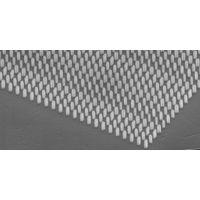
Interference-Induced Entanglement Engineering on a Metasurface

Yajun Gao, Rui Zhong, Xianglin Mao, Hulin Zhang, Yue Jiang, Chenyu Bao, Chuanfeng Li, Ruwen Peng, and Mu Wang

Phys. Rev. Lett. 136, 023601 (2026) - Published 13 January, 2026

Photons passing through a specially engineered wafer emerge entangled and spread among multiple output channels.

Temperature Dependence of p-Wave Contacts in a Harmonically Trapped Fermi Gas

Kenta Nagase, Hikaru Takahashi, Soki Oshima, and Takashi Mukaiyama

Phys. Rev. Lett. 136, 013402 (2026) - Published 8 January, 2026

The temperature dependence of so-called p-wave interactions in an ultracold atomic gas has been measured for the first time.

Extending the Observation Time of Charged Helium Droplets to the Minute Timescale

Matthias Veternik, Tobias Waldhütter, Lutz Schweikhard, Paul Scheier, and Elisabeth Gruber

Phys. Rev. Lett. 136, 013201 (2026) - Published 5 January, 2026

Charged, micron-sized helium droplets can be trapped for minutes in an electrostatic ion beam trap.

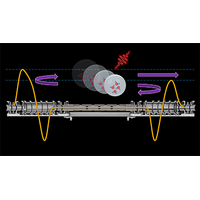
Zero-Dead-Time Strontium Lattice Clock with a Stability at 10−19 Level

Xiao-Yong Liu, Peng Liu, Jie Li, Yu-Chen Zhang, Yuan-Bo Wang, Zhi-Peng Jia, Xiang Zhang, Xian-Qing Zhu, De-Quan Kong, Wen-Lan Song, Guo-Zhen Niu, Yu-Meng Yang, Pei-Jun Feng, Xiang-Pei Liu, Xing-Yang Cui, Ping Xu, Xiao Jiang, Juan Yin, Sheng-Kai Liao, Cheng-Zhi Peng, Han-Ning Dai, Yu-Ao Chen, and Jian-Wei Pan

Phys. Rev. Lett. 135, 263402 (2025) - Published 23 December, 2025

A zero-dead-time optical lattice clock achieves unprecedented stability of 1 part in 1019.

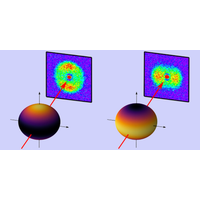
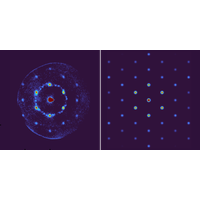
Fast Hydrogen Atom Diffraction through Monocrystalline Graphene

Pierre Guichard, Arnaud Dochain, Raphaël Marion, Pauline de Crombrugghe de Picquendaele, Nicolas Lejeune, Benoît Hackens, Paul-Antoine Hervieux, and Xavier Urbain

Phys. Rev. Lett. 135, 263403 (2025) - Published 23 December, 2025

A fast beam of hydrogen atoms passes through a graphene layer and produces a diffraction pattern, a development that could lead to a new probing technique of surface interactions.

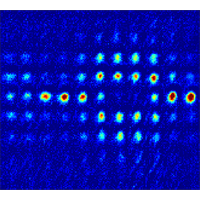
Experimental Observation of Single- and Multisite Matter-Wave Solitons in an Optical Accordion Lattice

Robbie Cruickshank, Francesco Lorenzi, Arthur La Rooij, Ethan F. Kerr, Timon Hilker, Stefan Kuhr, Luca Salasnich, and Elmar Haller

Phys. Rev. Lett. 135, 263404 (2025) - Published 23 December, 2025

The observation of discrete solitons in a Bose-Einstein condensate brings with it the prospect of investigating a general physical phenomenon with the tunability and precision of cold-atom techniques.

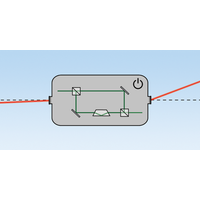
Interferometric Amplification and Suppression of External Beam Shifts

Carlotta Versmold, Jan Dziewior, Florian Huber, Elina Köster, Gregory Reznik, Lev Vaidman, and Harald Weinfurter

Phys. Rev. Lett. 135, 253802 (2025) - Published 17 December, 2025

A quantum trick based on interferometric measurements allows the ultrasensitive detection of the motion of a laser beam.

Sign In to Your Journals Account

Filter

Section

Filter

Article Lookup

Enter a citation