Highlights

Mixing by stirring: Optimizing shapes and strategies

Maximilian F. Eggl and Peter J. Schmid

Phys. Rev. Fluids 7, 073904 (2022) - Published 27 July, 2022

We present a numerical study of enhanced stirrer shapes and temporal velocity protocols for mixing an initially unmixed incompressible binary fluid in a two-dimensional circular container in a non-turbulent but inertial flow regime. A gradient-based and PDE-constrained optimization approach is combined with modern mixing metrics. The largest efficiency enhancement, by a factor of more than two, comes from simultaneously optimizing stirrer shapes and velocity trajectories, leading to counter-intuitive and complex stirring protocols that benefit from vortex generation, interaction, and collisions. Many challenges remain, but opportunities arise for extending this approach to more realistic configurations.

Spirographic motion in a vortex

Sumithra Reddy Yerasi, Rama Govindarajan, and Dario Vincenzi

Phys. Rev. Fluids 7, 074402 (2022) - Published 22 July, 2022

The present study investigates the dynamics of an inertialess rigid dumbbell in a steady two-dimensional vortex. This system goes beyond the point-particle approximation but remains analytically solvable. For any vortex, the dynamics of the dumbbell follows from the existence of a constant of motion that is independent of the form of the vortex. In particular, if the fluid angular velocity decreases with the radial distance, the dumbbell performs spirographic trajectories around the vortex center, the shape of which is highly sensitive to the initial position and orientation of the dumbbell.

Gunwale bobbing

Graham P. Benham, Olivier Devauchelle, Stephen W. Morris, and Jerome A. Neufeld

Phys. Rev. Fluids 7, 074804 (2022) - Published 20 July, 2022

A canoe can be propelled without paddling by forcing it into oscillation by standing on its gunwales and pumping with one’s legs, a technique known as gunwale bobbing. We present the first hydrodynamic model of gunwale bobbing, using theoretical ideas developed for “walking” droplets on a vibrated bath.

Wind-induced changes to shoaling surface gravity wave shape

Thomas Zdyrski and Falk Feddersen

Phys. Rev. Fluids 7, 074802 (2022) - Published 13 July, 2022

Near shore waves are strongly influenced by both wind forcing and wave shoaling, but their combined influence has received little theoretical investigation. In this work, we derive a variable-coefficient Korteweg–de Vries–Burgers equation describing the wave’s evolution and numerically solve for a solitary wave’s evolution. For realistic beach slopes and wind speeds, we show that this wave profile is approximately a superposition of a solitary wave, a shoaling-induced shelf, and a wind-induced dispersive tail.

Hydrodynamics of a twisting, bending, inextensible fiber in Stokes flow

Ondrej Maxian, Brennan Sprinkle, Charles S. Peskin, and Aleksandar Donev

Phys. Rev. Fluids 7, 074101 (2022) - Published 7 July, 2022

In cells large and small, slender filaments are bent and twisted to promote or slow motion. In this paper, we develop a novel spectral method for fluid-immersed filaments with twist elasticity, extending our previous work on filaments with bending elasticity. Our formulation is based on using integrals of the Rotne-Prager-Yamakawa (RPY) kernel to describe the hydrodynamics, coupled with the Bishop frame to treat centerline twist. We apply our method to a spinning clamped fiber, finding a rich stability diagram that involves complex whirling motions.

First coherent structure in elasto-inertial turbulence

Y. Dubief, J. Page, R. R. Kerswell, V. E. Terrapon, and V. Steinberg

Phys. Rev. Fluids 7, 073301 (2022) - Published 1 July, 2022

Elastoinertial turbulence (EIT) is a state of chaos found in wall-bounded flows with polymer additives over a large range of Reynolds numbers. Although the existence of EIT at subcritical Reynolds numbers is proof that complex polymer dynamics drive chaos, the exact mechanism remains poorly understood. The first coherent structure of EIT, shaped like its name, arrowhead, has been identified in two-dimensional channel flows and can be made to become perfectly steady and symmetrical. Its dynamics holds critical clues about the physics that drive or inhibit chaos in EIT flows.

Trapped waves on interfacial hydraulic falls over bottom obstacles

Z. Wang, J. Chai, E. I. Părău, C. Page, and M. Wang

Phys. Rev. Fluids 7, 074801 (2022) - Published 1 July, 2022

Work on the interfacial hydraulic falls of a two-layer stratified flow generated by an obstacle at the bottom is extended. Interfacial hydraulic falls for transcritical flows are calculated numerically by solving the full Euler equations. New steady solutions characterized by a train of waves trapped between two successive obstacles with various geometrical properties, of which the wavelength can be well predicted by the linear dispersion relation, are found.

Bifurcations in droplet collisions

A. Dubey, K. Gustavsson, G. P. Bewley, and B. Mehlig

Phys. Rev. Fluids 7, 064401 (2022) - Published 16 June, 2022

Recent studies show that hydrodynamic interactions qualitatively change the collision rate between droplets settling in a steady straining flow. We explain the dependence of the collision rate on the non-dimensional settling speed by analyzing the bifurcations of the underlying dynamical system.

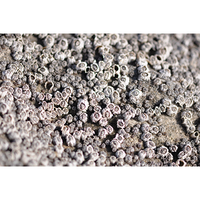
Investigation of rough-wall turbulence over barnacle roughness with increasing solidity using direct numerical simulations

Sotirios Sarakinos and Angela Busse

Phys. Rev. Fluids 7, 064602 (2022) - Published 16 June, 2022

Surface fouling by marine organisms such as barnacles has a major impact on the shipping sector. We use direct numerical simulations to investigate how the fluid dynamical properties of a surface change as it is gradually covered by barnacle colonies. The roughness effect peaks at intermediate coverage when approximately half of the surface is covered by barnacles. We further investigate how the roughness is perceived by the outer part of the flow using the blanketing layer concept and find a linear relationship between the roughness function and the effective slope of the blanketing layer.

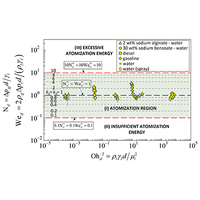
Possible, impossible, and expected diameters and production rates of droplets in aerosols and sprays

Maksim Mezhericher and Howard A. Stone

Phys. Rev. Fluids 7, 063602 (2022) - Published 15 June, 2022

Liquid atomization processes are used in many delivery and coating systems involving pure solvents, solutions, and suspensions. Here we develop a theoretical description of droplet sizes and flow rates in aerosols and sprays, using the first principles of conservation of mass and energy, and employing dimensional and scale analyses. Our study explores the overall range of mean droplet diameters between 0.1-100 μm and Ohnesorge numbers between 0.01-100. We find a reasonable agreement between the theory and experiments, and our theoretical framework contributes to understanding of liquid atomization and can be used for comparison between different spray and aerosol production techniques.

Thermodynamically consistent coarse-graining of polar active fluids

Scott Weady, David B. Stein, and Michael J. Shelley

Phys. Rev. Fluids 7, 063301 (2022) - Published 9 June, 2022

Starting from continuum kinetic theory, we derive a mean-field theory and entropy-based closure model for a polar active fluid. Analysis and simulation show the model closely approximates both the transient and nonequilibrium dynamics of the kinetic theory. Taking advantage of the model’s reduced degrees of freedom, we perform large-scale simulations of turbulent active suspensions in two and three dimensions.

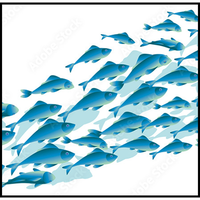
Lateral flow interactions enhance speed and stabilize formations of flapping swimmers

Joel W. Newbolt, Jun Zhang, and Leif Ristroph

Phys. Rev. Fluids 7, L061101 (2022) - Published 6 June, 2022

A swimming fish leaves behind an orderly pattern of vortices, but schools of fish are not ordered into lattice arrangements. Our experiments on robotic hydrofoils show how flapping swimmers can benefit from hydrodynamic interactions and stay in a school even without specific positioning relative to neighbors.

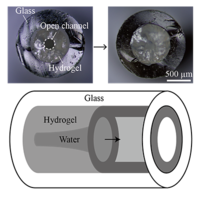
Dynamics of water imbibition through hydrogel-coated capillary tubes

Sooyoung Chang, Kaare H. Jensen, and Wonjung Kim

Phys. Rev. Fluids 7, 064301 (2022) - Published 1 June, 2022

Capillary flow through hydrogel-coated capillary tubes was investigated experimentally and theoretically. The results show how the absorption and swelling of hydrogel regulate capillary flow. Water imbibition through porous hydrogel materials can be understood as analogous to flow through a channel that deforms with water absorption. Therefore, this study provides a better understanding of water absorption through porous hydrogel materials, which are widely used for agricultural substrates, hygienic products, and microfluidic devices.

Entrainment in dry and moist thermals

G. R. Vybhav and S. Ravichandran

Phys. Rev. Fluids 7, 050501 (2022) - Published 17 May, 2022

Entrainment is the process by which ambient fluid is incorporated into the flow and remains poorly understood. In cumulus clouds, entrainment governs the altitude attained by the cloud and the resulting droplet size distribution, which together determine the radiative contribution to the global energy balance. The release of latent heat by the condensation of water vapor drives the flow in cumulus clouds, which often resemble a series of isolated parcels of buoyancy, or thermals. Here, using direct numerical simulation (DNS), we study the effects of condensation heating on the entrainment in a moist thermal in contrast with a dry thermal that has no buoyancy sources.

Synchronized states of hydrodynamically coupled filaments and their stability

Smitha Maretvadakethope, Yongyun Hwang, and Eric E. Keaveny

Phys. Rev. Fluids 7, 053101 (2022) - Published 5 May, 2022

Cilia and flagella are used throughout the natural world to facilitate microscale fluid motion. These active structures often appear in groups and their motion is coordinated. This paper explores the synchronized states of a pair of hydrodynamically coupled filaments and characterizes in detail the recently discovered bistability of two states. This study identifies the unstable edge state that exists between the two basins of attraction and shows how the bifurcations exhibited by the filament system can be recovered using an extension of Adler’s equation for coupled oscillators.

Prediction and manipulation of hydrodynamic rogue waves via nonlinear spectral engineering

Alexey Tikan, Felicien Bonnefoy, Giacomo Roberti, Gennady El, Alexander Tovbis, Guillaume Ducrozet, Annette Cazaubiel, Gaurav Prabhudesai, Guillaume Michel, Francois Copie, Eric Falcon, Stephane Randoux, and Pierre Suret

Phys. Rev. Fluids 7, 054401 (2022) - Published 3 May, 2022

In this work, we realize the mathematically predicted universal mechanism of the local emergence of Peregrine solitons in water tank experiments, with a particular aim to control the point of the soliton occurrence in space-time by employing the inverse scattering transform for the synthesis of the initial data. Using this approach, we are able to engineer a localized wave packet with a prescribed solitonic and radiative content, evolving in a rogue wave at a predicted position from the wave maker.

Flow and mixing induced by single, colinear, and colliding contractile waves in the intestine

Richard J. Amedzrovi Agbesi and Nicolas R. Chevalier

Phys. Rev. Fluids 7, 043101 (2022) - Published 15 April, 2022

The flow of liquid food bolus in different intestinal contraction regimes is studied experimentally, analytically, and numerically. We show that a particle subjected to a peristaltic wave has a nonintuitive propulsion-reflux motion. When multiple waves are generated sequentially, as happens in the gut, reflux is found to be maximized for an inter-wave length corresponding to that observed physiologically in animals, indicating a possible evolutionary bolus absorption optimization. We find that counter-propagating waves generate a high-pressure region from which high-velocity bolus jets emerge. As a result, these waves generate 80 times more mixing than waves going in the same direction.

Effect of wing sweep on a perching maneuver

Dibya Raj Adhikari, George Loubimov, Michael P. Kinzel, and Samik Bhattacharya

Phys. Rev. Fluids 7, 044702 (2022) - Published 15 April, 2022

During landing flights, birds often perform a perching maneuver, which allows them to land smoothly. In this work, we investigated the effect of wing sweep on the evolution of the instantaneous forces and the flow field during the perching maneuver. Our results indicate that swept wing generates higher aerodynamic forces, which is contributed by a stable leading-edge vortex (LEV).

Influence of boundary conditions on rapidly rotating convection and its dynamo action in a plane fluid layer

Patrick Kolhey, Stephan Stellmach, and Daniel Heyner

Phys. Rev. Fluids 7, 043502 (2022) - Published 5 April, 2022

We investigate the influence of thermal, mechanical, and magnetic boundary conditions (BCs) on convective dynamos in a rapidly rotating plane fluid layer using direct numerical simulations. While the velocity BCs largely control whether large-scale flows and fields are generated, the magnetic BCs affect the magnetic field topology. The role of the thermal BCs is of note: For no-slip boundaries, the Nusselt number increases significantly when a fixed heat flux is imposed instead of a given temperature difference. We explain this effect, which applies to both dynamos and nonmagnetic, rotating convection, by an interplay of Ekman pumping and the internal structure of the thermal boundary layer.

Fluid physics of telescoping cardboard boxes

Jolet de Ruiter, Emil Visby Østergaard, Sean Marker, and Kaare H. Jensen

Phys. Rev. Fluids 7, 044101 (2022) - Published 1 April, 2022

Telescoping boxes are widely used to store and transport, e.g., board games, yet knowledge of the physical processes relevant to the end-user experience is currently unavailable. We combine observations on real product packaging with low-Reynolds-number theory and controlled experiments. Three distinct categories of lid motion are identified, controlled by flow in a thin film of air in the gap separating the lid and the base of the box. Finally, the optimal box design that combines the antagonistic criteria of safety and speed is identified.

Sign In to Your Journals Account

Filter

Section

Filter

Article Lookup

Enter a citation