

Selective wave transmission in strongly nonlinear disordered granular chains
João Guilherme Pinto de Freitas, Luis Paulo Silveira Machado, and Surajit Sen
Phys. Rev. E 113, 065426 (2026) - Published 26 June, 2026
João Guilherme Pinto de Freitas, Luis Paulo Silveira Machado, and Surajit Sen
Phys. Rev. E 113, 065426 (2026) - Published 26 June, 2026
Chains of 1000 granules in mutual contact, without precompression, and with random radii that follow a normal distribution are studied numerically. The standard deviation controls the disorder level. The chains are subject to (i) a striker impact and (ii) an actuator that imposes band-limited white-noise motion at one boundary. For striker excitation, a critical separates weak and strong disorder, and the propagation of the median peak momentum exhibits two regimes: (i) for short distances, a -dependent decay, and (ii), at long distances, a universal power law , where denotes the granule position. For actuator excitation, the transfer function reveals a transition from a low-pass response, at , to broadband mechanical noise suppression for higher disorder levels. The narrow passbands at a few hundred hertz that we observe are consistent with the preferred transmission bands in soils reported experimentally in the literature. Thus, simple disordered granular chains provide a minimal model to investigate selective transmission or attenuation in random granular media. The findings are relevant to near-surface site characterization, shallow buried-object detection, and related geophysical applications.
Hang Yu, Lin Deng, Weicheng Fu, Zhigang Zhu, Yisen Wang, and Liang Huang
Phys. Rev. E 113, 065507 (2026) - Published 26 June, 2026
Understanding how vibrational modes relax in low-dimensional materials is central to thermal transport, mechanical coherence control, and the design of high- nanomechanical resonators. Here we investigate the intrinsic relaxation dynamics of armchair carbon nanotubes (CNTs) under single-mode excitation, using molecular dynamics (MD) simulations combined with Floquet stability analysis. By classifying all zone-center modes according to their azimuthal quantum number and inversion parity, we provide a symmetry-based description of the vibrational spectrum at the Brillouin-zone center. MD simulations then reveal the selection rules governing intermodal coupling and the early-time redistribution of vibrational energy, while the theory of bushes of normal modes shows that these rules originate from the residual symmetry of the initially excited mode and the associated invariant modal subspace. Crucially, we find that the actual relaxation of the excited mode is determined not by these selection rules but instead by the presence of multiwave resonances. Both three-wave and degenerate four-wave processes can produce exponential growth of specific daughter modes, triggering a pronounced decay of the excited mode, whereas in the absence of such resonances the excitation remains dynamically stable. By constructing monodromy matrices, we compute Floquet multipliers that accurately predict the rate of these resonance-induced instabilities, yielding relaxation times in quantitative agreement with simulation. These results provide a unified microscopic understanding of intrinsic relaxation in CNTs and suggest practical strategies for selecting vibrational modes with enhanced robustness, which offers deeper insight into designing nanoscale systems in which intermodal coupling plays a functional role.
Riya Baruah, Pedro Portugal, Jun-Zhe Chen (陈俊哲), Joachim Wabnig, and Christian Flindt
Phys. Rev. E 113, 064151 (2026) - Published 25 June, 2026
A central building block of a heat engine is the working fluid, which mediates the conversion of heat into work. In nanoscale heat engines, the working fluid can be a quantum system whose behavior and dynamics are nonclassical. A particularly versatile realization is a quantum resonator, which allows for precise control and coupling to thermal reservoirs, making it an ideal platform for exploring quantum thermodynamic processes. Here, we investigate the thermodynamic properties of a driven quantum resonator whose temperature is controlled by modulating its natural frequency. We evaluate the work performed by the external drive and the resulting heat flow between the resonator and its environment, both within linear response and beyond. To further elucidate these processes, we determine the full distribution of photon exchanges between the resonator and its environment, characterized by its first few cumulants. Our results provide quantitative insights into the interplay between heat, work, and fluctuations, and may help in designing future heat engines.
Xiyao Sun, Yuanyuan Pang, Zhengao Guo, Xiaoming Liang, and Jie Zhou
Phys. Rev. E 113, 064312 (2026) - Published 25 June, 2026
Hypergraphs provide a natural representation of complex systems with higher-order interactions and are commonly interdependent with each other. In this work, based on a bipartite network representation of hypergraphs, we propose a framework of networks of hypergraphs (NOH) to describe the structures among subsystems represented by hypergraphs. An NOH is composed of supernodes and superedges connecting them. A supernode represents the set of node-type vertices or the set of hyperedge-type vertices in the bipartite representation of a hypergraph. Thus, in the NOH, each hypergraph is represented by two supernodes, and the superedge connecting them characterizes the structure of the corresponding hypergraph. We analyze the robustness of NOHs under both quenched and annealed structural configurations. Our findings reveal the combined effects of intrahypergraph and interhypergraph structures on the overall system robustness. Our study provides a unifying framework for understanding the robustness of complex systems with higher-order interactions in which subsystems are intricately coupled.
Lukas M. Bongartz
Phys. Rev. E 113, 065424 (2026) - Published 25 June, 2026
Organic mixed conductors (OMCs) represent a promising class of materials for applications in bioelectronics, physical computing, and thermoelectrics. Rather unparalleled, OMCs feature dynamics spanning multiple length and timescales, involving an intricate coupling between electronic, ionic, and mass transport. These characteristics set them notably apart from traditional semiconductors and hinder the description by conventional semiconductor theory. In this work, we approach the charge carrier modulation of OMCs using statistical mechanics. We discuss OMCs from a thermodynamic perspective and contrast them with established semiconductor materials, highlighting key differences in their collective charge carrier dynamics. This motivates our description of OMCs as a lattice gas, which we analyze within the grand canonical ensemble. The model exhibits a first-order phase transition analogous to a classical vapor–liquid transition, governed by temperature and chemical potential. In doing so, it captures the formation of distinct low- and high-density carrier phases, consistent with recently reported experimental observations. It also illustrates how metastability near the phase boundary can give rise to history-dependent characteristics in device operation, a similarly well-reported effect in OMC transistors. This work is intended as a simple motivation for studying OMCs through the lens of statistical mechanics, offering a more natural description than traditional semiconductor models developed for materials of fundamentally distinct character.
Shravan Pradeep, Emanuela Del Gado, Douglas J. Jerolmack, and Paulo E. Arratia
Phys. Rev. E 113, 061002 (2026) - Published 24 June, 2026
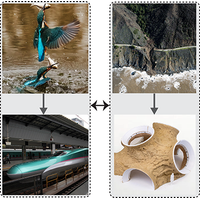
Soils and sediments are soft, amorphous materials with complex microstructures and mechanical properties. They are also building blocks for industrial materials such as concrete. These Earth-mediated materials evolve under prolonged environmental pressures such as mechanical stress, chemical gradients, and biological activity. Here, we introduce geomimicry, a new paradigm for designing sustainable materials by learning from the emergent and adaptive dynamics of Earth-mediated matter. Drawing a parallel to biomimicry, we posit that these geomaterials follow evolutionary design rules, adapting their structure and function in response to persistent natural forces through locally evolved interactions and compositions. Our central argument is that by decoding these rules—primarily through understanding the emergence of novel exotic properties from multiscale interactions between heterogenous components—we can engineer a new class of adaptive, sustainable matter. We propose two complementary approaches here. The top-down approach looks to nature to identify building blocks and map them to functional groups defined by their mechanical (rather than chemical) behaviors, and then examine how environmental training tunes interactions among these groups. The bottom-up approach seeks to leverage and test this framework, building earth materials one component at a time under fluctuating environmental stresses that guide assembly of complex and out-of-equilibrium materials. The goal is to create materials with programed functionalities, such as erosion resistance or self-healing capabilities. Geomimicry offers a pathway to truly design Earth-mediated circular materials, with potential applications ranging from climate-resilient soils and smart agriculture to new insights into planetary terraforming, fundamentally shifting the focus from static compositions to dynamic, evolving systems that are mediated via their environment.
Prakriti Pal Choudhury and Archie F. A. Bott
Phys. Rev. E 113, 065212 (2026) - Published 24 June, 2026
How momentum, energy, and magnetic fields are transported in the presence of macroscopic gradients is a fundamental question in plasma physics. Answering this question is especially challenging for weakly collisional, magnetized plasmas, where macroscopic gradients influence the plasma's microphysical structure. In this paper, we introduce thermodynamic forcing, a new method for systematically modeling how macroscopic gradients in magnetized or unmagnetized plasmas shape the distribution functions of constituent particles. In this method, we propose to apply an anomalous force to those particles inducing the anisotropy that would naturally emerge due to macroscopic gradients in weakly collisional plasmas in which thermal pressure is much larger than magnetic pressure. We implement thermodynamic forcing in particle-in-cell (TF-PIC) simulations using a modified Vay particle pusher and validate it against analytic solutions of the equations of motion. We then carry out a series of simulations of electron-proton plasmas with periodic boundary conditions using TF-PIC. First, we confirm that the properties of two electron-scale kinetic instabilities—one driven by a temperature gradient and the other by bulk-velocity gradient—are consistent with previous results. Then, we demonstrate that in the presence of both macroscopic gradients, heat-flux saturation is mediated by the bulk-velocity-gradient-driven electron firehose instability rather than the temperature-gradient-driven whistler instability. This suggests that saturation mechanisms may differ from our current understanding in the presence of multiple free energy sources. This work enables, for the first time, systematic and self-consistent transport modeling in weakly collisional plasmas, with broad applications in astrophysics, laser-plasma physics, and inertial confinement fusion.
Yang Fu, Yuliang Jin, and Itamar Procaccia
Phys. Rev. E 113, 065509 (2026) - Published 24 June, 2026
Couette geometry refers to two concentric rings in two dimensions (or cylinders) in three dimensions with a medium in between. Typically, the inner and outer rings (or cylinders) rotate at different rates and the response of the medium is studied. Here we study a medium which is a two-dimensional amorphous solid, and we rotate the inner ring quasistatically. As stress accumulates, plastic avalanches can result in shear localization, characterized by adjacent parts of the system rotating in opposite directions, with the maximum shear localized between them. We derive an analytic theory that describes and explains the shear localization, providing a priori predictions for the angle-averaged displacement field associated with the plastic drops and the shear localization.
Ofer Biham, Gilad Hertzberg Rabinovich, and Eytan Katzav
Phys. Rev. E 113, 064145 (2026) - Published 23 June, 2026
We present analytical results for first-passage processes in a deterministic one-dimensional cellular automaton (CA) model of traffic flow. Starting at time from a random initial state with car density , at every time step each car moves one step to the right if the cell on its right is empty, and is stopped if it is occupied by another car. The model, which coincides with CA rule 184 in Wolfram's numbering scheme, exhibits a continuous dynamical phase transition at , between a low-density free-flowing phase and a high-density congested phase. Using the framework of first-passage processes, we derive a closed-form expression for the distribution of first-stopping (FS) times, which is the probability that a randomly selected car will be stopped for the first time at time . We also obtain a closed-form expression for the stopping probability , which is the probability that a randomly selected car will be stopped at time . In the low-density phase of , the probability yields a closed-form expression for the distribution of last-stopping (LS) times, which is the probability that a randomly selected car will be stopped for the last time at time , beyond which it will move freely indefinitely. In this regime, we analyze the relation between the LS time and the number of stopping events which take place up to that time. We present closed-form expressions for the joint distribution , for the two conditional distributions that emanate from it and for the marginal distribution . These results provide insight on the timescales of congestion and relaxation in deterministic traffic flow from the point of view of individual cars. In a broader context, they provide insight on complex relaxation processes that involve many interacting particles, such as the processes that appear in deterministic surface growth.
Pik-Yin Lai (黎璧賢)
Phys. Rev. E 113, 064148 (2026) - Published 23 June, 2026
The fluctuating dynamics of a network about its stable, noise-free steady state are theoretically investigated. Various causes of nonequilibrium dynamics are identified in terms of the properties and symmetry of the network connections and the noise covariance matrices. Several equivalent conditions are derived for the dynamics of the noisy network at equilibrium. In particular, nonequilibrium steady state (NESS) dynamics are analyzed in terms of the steady-state probability current and the drift velocity relative to the effective potential surface. Conventional physical Brownian dynamics for overdamped fluctuating dynamics is analyzed from the perspective of the linearized fluctuating noisy network dynamics. Connection with the network reconstruction from time-series data is discussed. It is demonstrated that the overdamped Brownian dynamics in the physical system is a special case of the general noisy directed network in a NESS. Furthermore, a general fluctuation-dissipation relation is derived for the general nonequilibrium noisy network dynamics. These theoretical results are verified by numerical simulations.
Hwai-Ray Tung and Sean D. Lawley
Phys. Rev. E 113, 064149 (2026) - Published 23 June, 2026
The canonical model of stochastic search tracks a randomly diffusing “searcher” until it finds a “target.” Owing to its many applications across science and engineering, this perennially popular problem has been thoroughly investigated in a variety of models. However, aside from some exactly solvable one-dimensional examples, very little is known if the searcher diffusivity varies in space. For such space-dependent or “heterogeneous” diffusion, one must specify the interpretation of the multiplicative noise, which is termed the Itô-Stratonovich dilemma. In this paper, we investigate how stochastic search with space-dependent diffusivity depends on this interpretation. We obtain general formulas for the probability distribution and all the moments of the stochastic search time and the so-called splitting probabilities assuming that the targets are small or weakly reactive. These asymptotic results are valid for general space-dependent diffusivities in general domains in any space dimension with targets of general shape which may be in the interior or on the boundary of the domain. We illustrate our theory with stochastic simulations. Our analysis predicts that stochastic search can depend strongly and counterintuitively on the multiplicative noise interpretation.
Domingos S. P. Salazar
Phys. Rev. E 113, 064150 (2026) - Published 23 June, 2026
We show that any Petz divergence (where is operator convex) between quantum states admits a universal -mixture representation: the distinguishability of from is obtained as a positive superposition of quadratic contrasts , with non-negative weights determined explicitly from the Stieltjes representation of the generator . This identifies as atomic building blocks for quantum divergences and yields closed-form for canonical choices (relative entropy/Kullback-Leibler, Hellinger/Bures, Rényi). By mapping into a classical Pearson , we leverage the Chapman-Robbins variational representation and obtain a tight and universal quantum thermodynamic uncertainty relation: any divergence is lower bounded by a function of the statistics of quantum observables (mean and variance), reproducing previous results in quantum thermodynamics as applications.
Thierry Njougouo, Timoteo Carletti, and Elio Tuci
Phys. Rev. E 113, 064311 (2026) - Published 23 June, 2026
Understanding how group interactions influence opinion dynamics is fundamental to the study of collective behavior. In this work, we propose and study a model of opinion dynamics on -uniform hypergraphs, where individuals interact through group-based (higher-order) structures rather than simple pairwise connections. Each one of the two opinions A and B is characterized by a quality, and , and agents update their opinions according to a general mechanism that takes into account the weighted fraction of agents supporting either opinion and the pooling error, , a proxy for the information lost during the interaction. Through bifurcation analysis of the mean-field model, we identify two critical thresholds, and , which delimit stability regimes for the consensus states. These analytical predictions are validated through extensive agent-based simulations on both random and scale-free hypergraphs. Moreover, the analytical framework demonstrates that the bifurcation structure and critical thresholds are independent of the underlying topology of the higher-order network, depending solely on the parameters , i.e., the size of the interaction groups, and the quality ratio. Finally, we bring to the fore a nontrivial effect: The large sizes of the interaction groups could drive the system toward the adoption of the worst option.
Shilin Yu, Wenbao Zheng, Chao Zeng, and Wen Deng
Phys. Rev. E 113, 065109 (2026) - Published 23 June, 2026
The oscillatory dynamics of trapped nonwetting fluids in pore constrictions influence multiphase flow and transient fluid mobility in geologic media. Although the small-amplitude linear response is relatively well understood, the mechanism responsible for nonlinear behavior at finite-amplitudes remains unclear. Here we develop a nonlinear pore-scale model for a harmonically excited trapped bubble and validate it against computational fluid dynamics simulations. An asymptotic expansion of the capillary pressure shows that the nonlinearity arises from the spatial variation of pore curvature: higher-order geometric terms produce a softening and asymmetric capillary restoring force. These nonlinear effects manifest as a resonance-frequency downshift and an oscillation-center drift, indicating that the trapped bubble behaves as an asymmetric Duffing-type oscillator. A dimensionless nonlinearity number, , is introduced to quantify the competition between geometric amplification and viscous dissipation in a given pore-fluid system. Our results show that the onset of nonlinear response is determined by a critical , which is near 7.3. This criterion provides a quantitative basis for identifying the onset of nonlinear interfacial mobilization under transient forcing in constricted porous media.
Shaobing Yuan and Salvatore Torquato
Phys. Rev. E 113, 065421 (2026) - Published 23 June, 2026
The time-dependent diffusion spreadability is a powerful dynamical probe of the microstructure of two-phase heterogeneous media across length scales [S. Torquato Phys. Rev. E 104, 054102 (2021)]. The spreadability can be exactly represented as a certain functional of the spectral density , where is the wave vector. Experimentally, it is intimately related to nuclear magnetic resonance (NMR) measurements in fluid-saturated media. The short-, intermediate-, and long-time behavior of the spreadability reflects structural features at small, intermediate, and large length scales, respectively. It has been shown that when the spectral density takes the power-law form as the wave number tends to zero, the normalized excess spreadability [proportional to scales as in the long-time limit , enabling one to determine the infinite-wavelength scaling exponent . An algorithm that allows one to reliably extract the exponent from long-time spreadability data was previously devised [H. Wang and S. Torquato, Phys. Rev. Appl. 17, 034022 (2022)]. In this paper, we further improve this procedure to obtain even more accurately by incorporating higher-order correction terms to the long-time asymptotics and by utilizing analyticity properties of at the origin. We illustrate our procedure by analyzing hyperuniform (), typical nonhyperuniform (), and antihyperuniform () models of two-phase media. In addition, by combining the large- asymptotic expansion of with the small- expansion, we have devised a two-point Padé approximant to accurately approximate for all with just a few parameters. Our findings facilitate the characterization of the microstructure of two-phase media across length scales as obtained from numerical spreadability data or experimental data obtained from NMR relaxation measurements. Our work can also be applied in the inverse design of two-phase microstructures with targeted spreadability behaviors.
Emanuel F. Teixeira, Pablo de Castro, Carine P. Beatrici, Heitor C. M. Fernandes, and Leonardo G. Brunnet
Phys. Rev. E 113, 065422 (2026) - Published 23 June, 2026
Inspired by motile cells in tissue formation, we find that active systems of self-aligning adhesive particles undergo ballistic aggregation through a flocking transition. This kinetic regime emerges when the cluster persistence length grows faster with cluster mass than the intercluster distance does. We also identify and explain distinct noncollective kinetic regimes, including biologically relevant long-lived transients. Our analytical and numerical results offer a framework explaining the broad range of experimentally observed aggregation exponents in cellular systems and reveal physical principles potentially critical for timely tissue organization.
Noah Grodzinski, Michael E. Cates, and Robert L. Jack
Phys. Rev. E 113, 065423 (2026) - Published 23 June, 2026
The accumulation of self-propelled particles on repulsive barriers is a widely observed feature in active matter. Despite being implicated in a broad range of biological processes, from biofilm formation to cytoskeletal movement, wetting of surfaces by active particles remains poorly understood. In this work, we study this active wetting by considering a model comprising an active lattice gas, interacting with a permeable barrier under periodic boundary conditions, for which an exact hydrodynamic description is possible. We consider a hydrodynamic scaling limit that eliminates dynamical noise while retaining microscopic interpretability, enabling a precise characterization of steady states and their transitions. We demonstrate that the accumulation of active particles has remarkable similarities to equilibrium wetting, and that active wetting transitions display all the salient characteristics of the equilibrium critical wetting transition—despite fundamental differences in underlying microscopic dynamics. However, our framework also enables the investigation of subtle but important nonequilibrium effects in active wetting, including a spontaneous ratchet effect which leads to a global steady-state current, departure of the bulk densities from their binodal values, and a modified dynamical transition pathway. Our results provide an intrinsically nonequilibrium framework in which to study active wetting, precisely demonstrating the connection to passive wetting while clarifying the nonequilibrium consequences of activity.
Chengdong Sun, Yi Tao, Zaoqi Duan, Kai Chen, Quan Han, Yajing Kan, Zhonghua Ni, Zhiyong Wei, Yan Zhang, and Yunfei Chen
Phys. Rev. E 113, 065508 (2026) - Published 23 June, 2026
Friction accounts for nearly one-third of global energy consumption. While the coefficient of friction is widely used to quantify energy dissipation in sliding contacts, its strong dependence on sliding velocity limits its effectiveness in predicting instantaneous friction forces and friction-induced vibrations. To overcome this limitation, we present an experimental method based on atomic force microscope (AFM) for determining friction damping coefficients. These coefficients, derived from the torsional and vertical deflection oscillations of the AFM cantilever as it slides over a substrate, remain nearly constant and show minimal sensitivity to sliding velocity or normal load. Once established, they allow for accurate prediction of both time-averaged and instantaneous friction forces. Experimental validation over a broad range of velocities and loads confirms the robustness of this approach, underscoring its potential to advance dynamic friction modeling and vibration mitigation in tribological systems.
Arjun R, Pratyush Prakash Patra, and A. V. Anil Kumar
Phys. Rev. E 113, 064140 (2026) - Published 22 June, 2026
We investigate the interplay between nonreciprocal interactions and chemical-potential imbalance in a two-species nonreciprocal Blume-Capel model. Combining a systematic mean-field bifurcation analysis with large-scale Monte Carlo simulations in two and three dimensions, we map the model's dynamical regimes and transitions. Mean-field theory predicts a rich phase structure—disorder, a time-dependent “swap” (limit-cycle) phase, and static ordered states—separated by Hopf, saddle-node on invariant circle, saddle-node of limit cycles, pitchfork, and saddle-node bifurcations. In two dimensions, Monte Carlo simulations reveal that spiral defects destabilize global swapping and, unless vacancies are strongly favored, destroy long-range order. Crucially, a finite single-ion anisotropy promotes vacancy occupation in the species and suppresses nonreciprocal dynamics, thereby restoring a robust static ordered phase. Finite-size scaling of susceptibility and Binder cumulants places the disorder static transition firmly in the two-dimensional Ising universality class. Moreover, within the static ordered phase, we observe a crossover that sharpens into a line of first-order phase transitions; these two regimes are separated by a critical point, which is analogous to the liquid-gas coexistence curve terminating at a critical point. In three dimensions, simulations largely mirror mean-field expectations, though swap static ordering occurs indirectly via a disordered regime. Our results demonstrate that vacancy energetics provide a simple, experimentally relevant control knob that stabilizes equilibrium-like order in nonreciprocal systems and that defects can generate novel critical behavior.
Mingzhong Lu, Yufeng Song, Qiyuan Shi, Ming Li, and Youjin Deng
Phys. Rev. E 113, 064141 (2026) - Published 22 June, 2026
Rigidity percolation provides an important basis for understanding the onset of mechanical stability in disordered materials. While most studies on the triangular lattice have focused on static properties at fixed bond (site) occupation probabilities, the dynamics of the rigidity transition remain less explored. In this work we formulate a dynamic pebble game algorithm that monitors how rigid clusters emerge and evolve as bonds are added sequentially to an empty lattice, with computational efficiency comparable to the standard static pebble game. We uncover a previously overlooked temporal self-similarity exhibited in multiple quantities, including the cluster-size changes and merged cluster sizes during bond addition, as well as the number of simultaneously merging clusters. We identify large-scale cascade events in which a single bond addition triggers the merger of an extensive number of clusters that scales with system size with inverse correlation-length exponent. Using an event-based ensemble approach, we obtain high-precision estimates of the critical point , the inverse correlation-length exponent , and the fractal dimension , representing substantial improvements over existing values.