Recent Articles

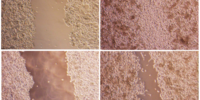
Linking biological and physical aging: Dynamical scaling of multicellular regeneration

Yuting Lou, Jufeng Xia, Wei Tang, and Yu Chen

Phys. Rev. E 96, 062418 (2017) - Published 27 December, 2017

Wound healing experiments suggest that biological aging can be defined in a similar way to physical aging in soft materials like glasses.

Turbulent flow over craters on Mars: Vorticity dynamics reveal aeolian excavation mechanism

William Anderson and Mackenzie Day

Phys. Rev. E 96, 043110 (2017) - Published 27 October, 2017

This paper examines the theory that stratified mounds in craters on Mars are the result of extended exposure to winds. The results from large-eddy simulations confirm this hypothesis, and highlight the relevance of turbulent flows in the particular structure of these formations.

Random matrices and the New York City subway system

Aukosh Jagannath and Thomas Trogdon

Phys. Rev. E 96, 030101(R) (2017) - Published 5 September, 2017

A comparison of the arrival-time statistics of New York City’s subway trains indicates that some train lines may be more efficiently run than others.

Pendular behavior of public transport networks

Mirian M. Izawa, Fernando A. Oliveira, Daniel O. Cajueiro, and Bernardo A. Mello

Phys. Rev. E 96, 012309 (2017) - Published 7 July, 2017

Vulnerabilities in a city’s public transport system are identified through a network analysis that accounts for the number of passengers and vehicles at any given time.

General scaling relations for locomotion in granular media

James Slonaker, D. Carrington Motley, Qiong Zhang, Stephen Townsend, Carmine Senatore, Karl Iagnemma, and Ken Kamrin

Phys. Rev. E 95, 052901 (2017) - Published 10 May, 2017

The authors find scaling relations that describe locomotion in granular media for a wide range of problems. Experimental tests and simulations demonstrate the validity of their simple model for rigid wheels of various shapes. An extension to different gravitational environments provides a model relevant for space exploration.

Fluctuations around mean walking behaviors in diluted pedestrian flows

Alessandro Corbetta, Chung-min Lee, Roberto Benzi, Adrian Muntean, and Federico Toschi

Phys. Rev. E 95, 032316 (2017) - Published 15 March, 2017

Experiments tracking people as they walk down a corridor reveal universal behaviors that, if incorporated into models, could ensure safe flow in large crowds.

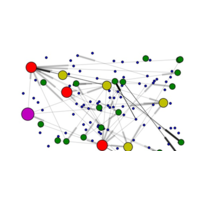
Modeling structure and resilience of the dark network

Manlio De Domenico and Alex Arenas

Phys. Rev. E 95, 022313 (2017) - Published 27 February, 2017

Network theory explains why an unsearchable portion of the Internet used for anonymous exchanges is particularly resistant to failures and attacks.

Quantifying group specificity of animal vocalizations without specific sender information

Heike Vester, Kurt Hammerschmidt, Marc Timme, and Sarah Hallerberg

Phys. Rev. E 93, 022138 (2016) - Published 25 February, 2016

A new spectral analysis method can automatically find differences in the calls of whales from separate groups.

Critical wind speed at which trees break

E. Virot, A. Ponomarenko, É. Dehandschoewercker, D. Quéré, and C. Clanet

Phys. Rev. E 93, 023001 (2016) - Published 2 February, 2016

This paper aims to understand the physics behind the observation that there seems to exist a critical wind speed at which trees are damaged by trunk failure. The authors do so by modeling the trees as fragile rods and by using Hooke’s law and Griffith’s theory of fracture. Interestingly, the critical speed hardly depends on tree characteristics, in agreement with field data collected after storms.

Intellectual interchanges in the history of the massive online open-editing encyclopedia, Wikipedia

Jinhyuk Yun (윤진혁), Sang Hoon Lee (이상훈), and Hawoong Jeong (정하웅)

Phys. Rev. E 93, 012307 (2016) - Published 22 January, 2016

A study of the entire editing history of English Wikipedia shows that the articles cluster into four categories based on how frequently and how aggressively they are edited.

Multifractal to monofractal evolution of the London street network

Roberto Murcio, A. Paolo Masucci, Elsa Arcaute, and Michael Batty

Phys. Rev. E 92, 062130 (2015) - Published 17 December, 2015

An analysis of London’s street network shows how the network has evolved over time from a heterogeneous to homogeneous fractal pattern.

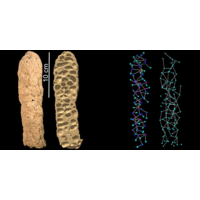
Network-based model of the growth of termite nests

Young-Ho Eom, Andrea Perna, Santo Fortunato, Eric Darrouzet, Guy Theraulaz, and Christian Jost

Phys. Rev. E 92, 062810 (2015) - Published 9 December, 2015

A new model shows how complex termite nests can be built using only local interactions between the insects.

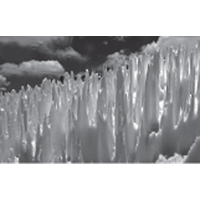
Physical processes causing the formation of penitentes

P. Claudin, H. Jarry, G. Vignoles, M. Plapp, and B. Andreotti

Phys. Rev. E 92, 033015 (2015) - Published 25 September, 2015

Penitentes are thin pinnacles of snow or ice that appear at high altitudes, naturally arranged in closely spaced formations and oriented in the general direction of the sun. The authors focus on the initial stages of their growth by performing a linear stability analysis and show, in their detailed analysis, that as sunlight sublimates the ice, the mixing of vapor above the ice surface controls the typical size of the penitentes.

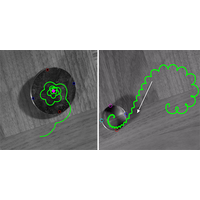
Terminal retrograde turn of rolling rings

Mir Abbas Jalali, Milad S. Sarebangholi, and Mohammad-Reza Alam

Phys. Rev. E 92, 032913 (2015) - Published 22 September, 2015

Wedding rings spinning on a surface can follow surprising boomeranglike trajectories.

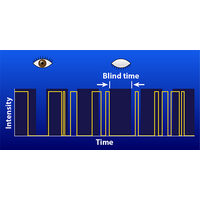
Looking at a blinking quantum emitter through time slots: The effect of blind times

A. L. Shchukina, I. Yu. Eremchev, and A. V. Naumov

Phys. Rev. E 92, 032102 (2015) - Published 1 September, 2015

Regular disruptions to an experiment can increase the uncertainty of a measured quantity, but don’t necessarily change its value.

Cascades in multiplex financial networks with debts of different seniority

Charles D. Brummitt and Teruyoshi Kobayashi

Phys. Rev. E 91, 062813 (2015) - Published 24 June, 2015

A model of a banking network predicts the balance of high- and low-priority debts that ensures financial stability.

Photoactivated biological processes as quantum measurements

A. Imamoglu and K. B. Whaley

Phys. Rev. E 91, 022714 (2015) - Published 24 February, 2015

A new formalism determines whether quantum-mechanical effects are necessary for photoactivated biological processes to occur.

Fluid flow enhances the effectiveness of toxin export by aquatic microorganisms: A first-passage perspective on microvilli and the concentration boundary layer

Nicholas A. Licata and Aaron Clark

Phys. Rev. E 91, 012709 (2015) - Published 26 January, 2015

The authors study the effects of fluid flow on solute transport away from model aquatic microorganisms. They conclude that toxins released from surface protrusions (microvilli) have less impact on their immediate surroundings, like pollutants released from a tall chimney reaching into the wind. They suggest that the length of microvilli evolved to reach through the concentration boundary layer.

General three-state model with biased population replacement: Analytical solution and application to language dynamics

Francesca Colaiori, Claudio Castellano, Christine F. Cuskley, Vittorio Loreto, Martina Pugliese, and Francesca Tria

Phys. Rev. E 91, 012808 (2015) - Published 9 January, 2015

Interaction among speakers of a language may explain why frequently used verbs tend to remain irregular even as language evolves over generations.

Propagation of economic shocks in input-output networks: A cross-country analysis

Martha G. Alatriste Contreras and Giorgio Fagiolo

Phys. Rev. E 90, 062812 (2014) - Published 19 December, 2014

A network analysis finds that the European economies with the most interconnections, like Germany, are the most vulnerable to economic crises in the absence of government intervention.

Sign In to Your Journals Account

Filter

Recent Issues

Vol. 114, Iss. 5
November 2026
Vol. 114, Iss. 4
October 2026
Vol. 114, Iss. 3
September 2026
Vol. 114, Iss. 2
August 2026
Category
Article Type
Section

Filter

Article Lookup

Enter a citation