Recent Articles

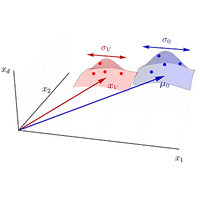
Hyperbolic embedding of brain networks detects regions disrupted by neurodegeneration in Alzheimer's disease

Alice Longhena, Martin Guillemaud, Fabrizio De Vico Fallani, Raffaella Migliaccio, and Mario Chavez

Phys. Rev. E 111, 044402 (2025) - Published 2 April, 2025

Alzheimer’s disease disrupts the brain’s connectivity structure, through processes such as progressive neuronal loss and brain atrophy. In this study, the authors propose a method based on a hyperbolic representation of brain networks to characterize brain regions with connectivity anomalies. They show that the method successfully identifies regions affected by neurodegeneration, opening the door to use it as a biomarker for disease progression.

#BiophysicsSpotlight #Interdisciplinary

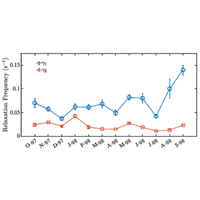
Stochastic model for the turbulent ocean heat flux under Arctic sea ice

S. Toppaladoddi and A. J. Wells

Phys. Rev. E 111, 025101 (2025) - Published 12 February, 2025

Arctic sea ice is one of the most sensitive components of the Earth’s climate system, and it is difficult to predict its evolution because of challenges in modeling the effects of the underlying ocean. The authors develop a simplified stochastic model for the turbulent heat flux from the ocean to the ice that shows good agreement with observational data.

Thermal energy transport in laser-driven high x-ray conversion efficiency metallic silver nanowire foams

M. J. May, G. E. Kemp, J. D. Colvin, R. Benjamin, D. Liedahl, T. Fears, S. Kucheyev, P. L. Poole, K. Widmann, and B. E. Blue

Phys. Rev. E 111, 015201 (2025) - Published 3 January, 2025

Shooting a laser pulse at a porous silver target generates more intense x rays than previous targets, which will help studies of matter in extreme conditions.

Minimal framework for optimizing vaccination protocols targeting highly mutable pathogens

Saeed Mahdisoltani, Pranav Murugan, Arup K. Chakraborty, and Mehran Kardar

Phys. Rev. E 110, 064137 (2024) - Published 19 December, 2024

This paper addresses the problem of designing optimum vaccination protocols that would elicit immune responses against the original and also mutant strains of a virus. The authors find that optimal vaccination protocols could be designed by ensuring that sequentially administered vaccine antigens are not too different at each time point.

Formation of motile cell clusters in heterogeneous model tumors: The role of cell-cell alignment

Quirine J. S. Braat, Cornelis Storm, and Liesbeth M. C. Janssen

Phys. Rev. E 110, 064401 (2024) - Published 3 December, 2024

Collectively migrating clusters of tumor cells can spread cancer more effectively than single cells, yet the mechanisms driving their formation remain unclear. Using a computational model, this study investigates how cell-cell alignment and the presence of nonmotile cells within a densely packed tumor environment impact clustering dynamics. The study offers new insights into the physical drivers of early-stage metastasis.

Point-cloud clustering and tracking algorithm for radar interferometry

Magnus F. Ivarsen, Jean-Pierre St-Maurice, Glenn C. Hussey, Devin R. Huyghebaert, and Megan D. Gillies

Phys. Rev. E 110, 045207 (2024) - Published 22 October, 2024

Applying data mining tools to a rich observational dataset has enabled researchers to track the turbulent plasma clouds that accompany the aurora.

Emergence of social phases in human movement

Yi Zhang, Debasish Sarker, Samantha Mitsven, Lynn Perry, Daniel Messinger, Udo Rudolph, Michael Siller, and Chaoming Song

Phys. Rev. E 110, 044303 (2024) - Published 3 October, 2024

Ultra-wideband radio frequency identification technology was used to collect spatiotemporal data on movements in four different classroom and playground settings. The data explore predominantly low-speed regimes, which may be affected by strong social interactions. Two distinct phases were observed at different speeds: (i) a gas-like phase where individuals move freely and (ii) a liquid-vapor phase where individuals form small social groups, with free-moving individuals entering and exiting these groups.

Fast generation of spectrally shaped disorder

Aaron Shih, Mathias Casiulis, and Stefano Martiniani

Phys. Rev. E 110, 034122 (2024) - Published 13 September, 2024

Systems with correlated disorder can display unusual optical properties, but it is a challenge to design such structures with desired long-range correlations. The authors introduce an efficient algorithm for generating correlated disordered structures with arbitrary spectral properties.

How the zebra got its stripes: Curvature-dependent diffusion orients Turing patterns on three-dimensional surfaces

Michael F. Staddon

Phys. Rev. E 110, 034402 (2024) - Published 3 September, 2024

In nature, the stripes of the patterned fur of zebras go around the direction of highest curvature. By means of a reaction-diffusion model, the author theoretically investigates the coupling between diffusion and surface curvature, showing that local geometry influences the dynamics of pattern formation.

Mass media competition and alternative ordering in social dynamics

O. Alvarez-Llamoza, M. G. Cosenza, J. C. Gonzalez-Avella, M. A. Suarez, K. Tucci, and P. Valverde

Phys. Rev. E 110, 024311 (2024) - Published 22 August, 2024

A mathematical model suggests that social groups can behave in unexpected ways when subjected to competing mass media.

Boosting reservoir computer performance with multiple delays

S. Kamyar Tavakoli and André Longtin

Phys. Rev. E 109, 054203 (2024) - Published 8 May, 2024

Both the predictive power and the memory storage capability of an artificial neural network called a reservoir computer increase when time delays are added into how the network processes signals, according to a new model.

Filamentation of a relativistic proton bunch in plasma

L. Verra et al. (AWAKE Collaboration)

Phys. Rev. E 109, 055203 (2024) - Published 7 May, 2024

When injected into a plasma, a proton bunch triggers oscillatory phenomena which can lead to different instability regimes. The authors present experimental evidence of the appearance of the oblique two-stream instability, generating filamentation in the bunch-plasma system, in accordance with theoretical and numerical predictions.

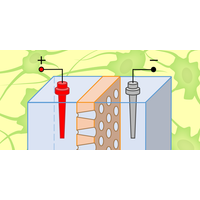
Memristive arrangements of nanofluidic pores

Patricio Ramirez, Sergio Portillo, Javier Cervera, Juan Bisquert, and Salvador Mafe

Phys. Rev. E 109, 044803 (2024) - Published 24 April, 2024

Experiments with membranes offer a path toward scalable neuromorphic computing.

Evidence of scale-free clusters of vegetation in tropical rainforests

Pablo Villegas, Tommaso Gili, Guido Caldarelli, and Andrea Gabrielli

Phys. Rev. E 109, L042402 (2024) - Published 19 April, 2024

The distribution of vegetation clusters in a tropical rainforest shows evidence of scale-invariance, suggesting a system close to a critical state. This observation could help to diagnose the health of rainforests and other ecosystems in the face of environmental change.

Observations and properties of the first laboratory fusion experiment to exceed a target gain of unity

A. Pak et al.

Phys. Rev. E 109, 025203 (2024) - Published 5 February, 2024

The target gain greater than unity achieved in a recent fusion experiment was made possible by using additional laser energy at fixed power and controlling sources of degradation. This resulted in increased compression of the fuel and a high fusion yield corresponding to a novel physical regime. This paper describes the experimental evidence for these critical aspects and new observables.

Design of the first fusion experiment to achieve target energy gain G>1

A. L. Kritcher et al.

Phys. Rev. E 109, 025204 (2024) - Published 5 February, 2024

In 2022, a National Ignition Facility controlled-fusion experiment reached a target gain G>1, with the fusion energy produced exceeding the amount of laser energy required to drive the target. This result was obtained thanks to careful design described in this paper. This design has been shown to be robust and allows a better understanding of the physical conditions necessary to reach ignition.

Quantitative characterization of run-and-tumble statistics in bulk bacterial suspensions

Yongfeng Zhao, Christina Kurzthaler, Nan Zhou, Jana Schwarz-Linek, Clemence Devailly, Jochen Arlt, Jian-Dong Huang, Wilson C. K. Poon, Thomas Franosch, Vincent A. Martinez, and Julien Tailleur

Phys. Rev. E 109, 014612 (2024) - Published 19 January, 2024

A new technique could allow researchers to distinguish the swimming motion of a species of microorganisms without the need to track individuals within a population.

Formation and mechanics of fire ant rafts as an active self-healing membrane

Chung-Hao Chen, Ting-Heng Hsieh, Hong-Yue Huang, Yu-Chuan Cheng, and Tzay-Ming Hong

Phys. Rev. E 109, 014607 (2024) - Published 9 January, 2024

The rate at which a raft made of ants is stretched determines its properties because the ants take time to fix holes.

Impact craters formed by spinning granular projectiles

Douglas D. Carvalho, Nicolao C. Lima, and Erick M. Franklin

Phys. Rev. E 108, 054904 (2023) - Published 22 November, 2023

Numerical simulations reveal that an impact crater’s shape can depend on the impactor’s spin and its degree of cohesion.

Packing spheres in high dimensions with moderate computational effort

Veit Elser

Phys. Rev. E 108, 034117 (2023) - Published 21 September, 2023

An algorithm originally developed for imaging generates useful data for a problem in pure mathematics.

Sign In to Your Journals Account

Filter

Recent Issues

Vol. 114, Iss. 5
November 2026
Vol. 114, Iss. 4
October 2026
Vol. 114, Iss. 3
September 2026
Vol. 114, Iss. 2
August 2026
Category
Article Type
Section

Filter

Article Lookup

Enter a citation