Highlights

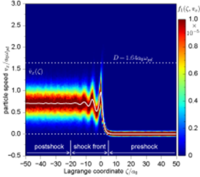
Pressure and energy of compressional shocks in two-dimensional Yukawa systems

Wei Lin, M. S. Murillo, and Yan Feng

Phys. Rev. E 100, 043203 (2019) - Published 11 October, 2019

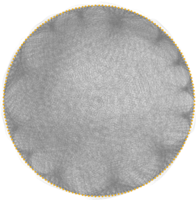
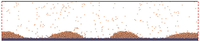
What happens in plasmas after a compressional shock wave? In this paper, the authors perform numerical simulations to investigate the thermodynamic properties of the postshock region in two-dimensional Yukawa systems to mimic shocks in two-dimensional dusty plasmas.

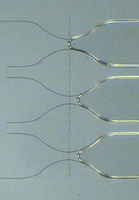
Emergence of an optimal temperature in action-potential propagation through myelinated axons

Xinlin Song, Hengtong Wang, Yong Chen, and Ying-Cheng Lai

Phys. Rev. E 100, 032416 (2019) - Published 30 September, 2019

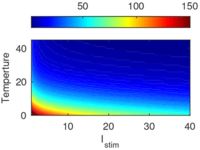
The propagation of an action potential in model neurons is used to study the existence of an optimal temperature for biological function. The authors show that the average propagation time is largely dependent on the resistance of the neuronal membrane, which is subject to two competing effects as temperature changes. From this interplay, an optimal temperature emerges which is in good agreement with previously measured experimental values.

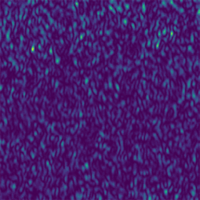
Laser speckle imaging of flowing blood: A numerical study

Kevin van As, Jorne Boterman, Chris R. Kleijn, Sasa Kenjeres, and Nandini Bhattacharya

Phys. Rev. E 100, 033317 (2019) - Published 26 September, 2019

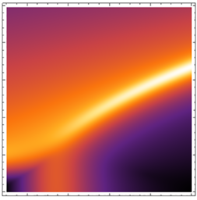
Laser speckle imaging can be used to study dynamic processes in turbid media, such as blood flow embedded in tissue, but it is difficult to obtain quantitative information from this technique. This paper presents a computational model for simulating the imaging process, which will be useful to further develop it as a quantitative tool for biomedical and other applications.

Dynamics of a grain-scale intruder in a two-dimensional granular medium with and without basal friction

Ryan Kozlowski, C. Manuel Carlevaro, Karen E. Daniels, Lou Kondic, Luis A. Pugnaloni, Joshua E. S. Socolar, Hu Zheng, and Robert P. Behringer

Phys. Rev. E 100, 032905 (2019) - Published 25 September, 2019

Experiments on the dynamics of a single grain pushed through a two-dimensional granular material show two distinct flow regimes: an intermittent one where the intruder grain only occasionally gets jammed, and one that exhibits stick-slip dynamics. The authors explore the occurrence of these two regimes as a function of several variables, and find that friction with the base plays a major role.

Parsimonious evolutionary scenario for the origin of allostery and coevolution patterns in proteins

Olivier Rivoire

Phys. Rev. E 100, 032411 (2019) - Published 23 September, 2019

This paper examines a scenario in which the requirement for specificity of ligand binding promotes other common features of proteins, such as sensitivity to long-range effects and adaptation to new pressures. Numerical results from various simple protein models support the proposed evolutionary scenario, independent of interaction details. Experimental tests are suggested.

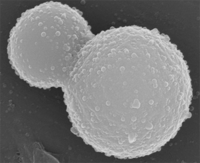
Thermodynamic equilibrium of binary mixtures on curved surfaces

Piermarco Fonda, Melissa Rinaldin, Daniela J. Kraft, and Luca Giomi

Phys. Rev. E 100, 032604 (2019) - Published 6 September, 2019

The phase behavior of a two-dimensional fluid mixture on a closed surface is influenced by the curvature of the surface. In this work, the authors show that such systems, for example multicomponent lipid vesicles, can exhibit unexpected properties.

Clustering and anisotropic correlated percolation in polar flocks

Nikos Kyriakopoulos, Hugues Chaté, and Francesco Ginelli

Phys. Rev. E 100, 022606 (2019) - Published 28 August, 2019

Models of collective motion can show a transition to a phase with orientational order, as well as clustering behavior. This work shows that these two phenomena are independent, and that, in the phase with orientational order, the clustering takes the form of an anisotropic percolation transition.

Haines jumps: Pore scale mechanisms

Zhonghao Sun and J. Carlos Santamarina

Phys. Rev. E 100, 023115 (2019) - Published 27 August, 2019

Sudden changes in pressure and fluid distribution are often observed in porous systems, and this work proposes and tests a physical model to explain this phenomenon. The analysis enables the authors to predict effects of various factors on the occurrence of such jumps, which are termed Haines instabilities.

Design of conditions for self-replication

Sumantra Sarkar and Jeremy L. England

Phys. Rev. E 100, 022414 (2019) - Published 26 August, 2019

The kinetics of a toy chemical model can give rise to simple example of a self-replicating system. The analysis in this work could inspire the creation of micro- or nanodevices able to produce copies of themselves by conversion of materials in their environment.

Molecular simulation of thin liquid films: Thermal fluctuations and instability

Yixin Zhang, James E. Sprittles, and Duncan A. Lockerby

Phys. Rev. E 100, 023108 (2019) - Published 16 August, 2019

This work combines molecular dynamics simulations with analytical techniques to study the effect of thermal fluctuations on the stability of thin liquid films. Results from a stochastic thin-film equation agree well with those from the simulations, but disagree with a deterministic equation. The authors conclude that thermal fluctuations play an important role in the dynamics of thin films at the nanoscale.

Adsorption of interacting self-avoiding trails in two dimensions

N. T. Rodrigues, T. Prellberg, and A. L. Owczarek

Phys. Rev. E 100, 022121 (2019) - Published 15 August, 2019

Lattice trails in two dimensions are a greatly simplified system that can give insight into the complex phase diagram of polymer adsorption on a surface. The authors simulate three different adsorption scenarios in this system, and study the resulting phases and phase boundaries as well as the critical exponents.

Selectivity of the KcsA potassium channel: Analysis and computation

Zilong Song, Xiulei Cao, Tzyy-Leng Horng, and Huaxiong Huang

Phys. Rev. E 100, 022406 (2019) - Published 7 August, 2019

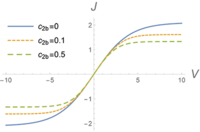
This article reports an analytical and numerical study of the selectivity of potassium channels in cells. The authors consider both divalent and monovalent ions and take into account effects of ion size and solvation energy. Their results for selectivity ratios and current-voltage curves agree well with experimental observations.

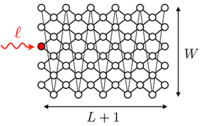
Cyberphysical risks of hacked internet-connected vehicles

Skanda Vivek, David Yanni, Peter J. Yunker, and Jesse L. Silverberg

Phys. Rev. E 100, 012316 (2019) - Published 30 July, 2019

Researchers calculated the number of cars that hackers would have to bring down in order to cripple Manhattan traffic.

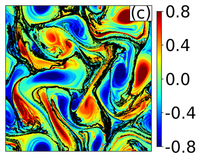
Clustering and energy spectra in two-dimensional dusty gas turbulence

Vikash Pandey, Prasad Perlekar, and Dhrubaditya Mitra

Phys. Rev. E 100, 013114 (2019) - Published 26 July, 2019

This work presents two-dimensional simulations of particles embedded in a turbulent flow. The particles are capable of modifying the flow by interacting with the fluid. The authors study the behavior of this system as the Stokes number and the particle concentration change, and uncover a new scaling behavior that shows a dependence on those two variables.

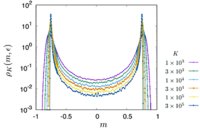
Large deviations in models of growing clusters with symmetry-breaking transitions

Robert L. Jack

Phys. Rev. E 100, 012140 (2019) - Published 25 July, 2019

Nonequilibrium systems are ubiquitous in nature but many of their properties are still poorly understood. In this work, the author provides an insightful look at this problem by examining large-deviation theory for reversible and irreversible models of growth.

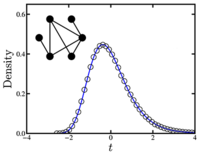
Fitness dependence of the fixation-time distribution for evolutionary dynamics on graphs

David Hathcock and Steven H. Strogatz

Phys. Rev. E 100, 012408 (2019) - Published 25 July, 2019

When an evolutionary mutation takes over an entire population, the time to achieve this is known as the fixation time. The distribution of fixation times is highly skewed, and depends on the fitness advantage of the mutation. The authors of this paper show the full distributions for two exactly solvable cases and discuss extensions with potential implications for evolutionary dynamics.

Wetting boundaries for a ternary high-density-ratio lattice Boltzmann method

Neeru Bala, Marianna Pepona, Ilya Karlin, Halim Kusumaatmaja, and Ciro Semprebon

Phys. Rev. E 100, 013308 (2019) - Published 24 July, 2019

Understanding the flow properties of multicomponent fluid systems is important for many natural phenomena and technological applications. The authors extend a lattice Boltzmann approach to model the wetting of solid boundaries, and critically compare different slip mechanisms. The work opens up a wide range of applications to be studied.

Structure, design, and mechanics of a paper spring

Taiju Yoneda, Daichi Matsumoto, and Hirofumi Wada

Phys. Rev. E 100, 013003 (2019) - Published 16 July, 2019

The paper spring, one of the simplest origamilike structures, is investigated in this experimental and theoretical work. The authors find properties such as a strong coupling between stretch and twist. Try it yourself!

Multiparticle collision dynamics for tensorial nematodynamics

Shubhadeep Mandal and Marco G. Mazza

Phys. Rev. E 99, 063319 (2019) - Published 28 June, 2019

In this work, the authors generalize the particle-based multiparticle collision dynamics method to describe nematic liquid crystals. Their results agree with the existing literature and point the way to tackling topics under current investigation such as swimmers in nematic liquid crystals.

Turbulent lithosphere deformation in the Tibetan Plateau

Xing Jian (简星), Wei Zhang (张巍), Qiang Deng (邓强), and Yongxiang Huang (黄永祥)

Phys. Rev. E 99, 062122 (2019) - Published 21 June, 2019
This paper argues that the deformation of the earth’s crust in the Tibetan plateau exhibits turbulencelike characteristics. The authors find scaling behavior that is similar to that observed in flows in the atmosphere, as well as evidence of intermittency. This suggest that these features may need to be taken into account when analyzing geophysical flows.

Sign In to Your Journals Account

Filter

Section

Filter

Article Lookup

Enter a citation