Highlights

Inconsistency of magnetic-moment conservation with entropy increase in collisionless shocks

Michael Gedalin

Phys. Rev. E 102, 013201 (2020) - Published 1 July, 2020

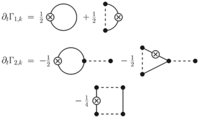
Conservation of the magnetic moment of ions crossing a magnetohydrodynamic shock is often assumed in studies of collisionless shocks. While this approximation may be reasonable in certain cases, this article shows that magnetic moment conservation is inconsistent with the entropy increase which occurs for any combination of initial and final states.

Spatially propagating activation of quorum sensing in Vibrio fischeri and the transition to low population density

Keval Patel, Coralis Rodriguez, Eric V. Stabb, and Stephen J. Hagen

Phys. Rev. E 101, 062421 (2020) - Published 26 June, 2020

Spatially dispersed colonies of bacteria can communicate through the release and detection of signal molecules. In their experiment, the authors monitor biofluorescence induced in cells when the concentration of a molecular signal in a colony reaches a critical threshold. Simulations of a model with growth and diffusion reproduce the experimental data quite well.

Yielding, rigidity, and tensile stress in sheared columns of hexapod granules

Yuchen Zhao, Jonathan Barés, and Joshua E. S. Socolar

Phys. Rev. E 101, 062903 (2020) - Published 23 June, 2020

Dry granular packings of particles with complex shapes can form stiff, free-standing structures like walls or arches. This paper reports on experiments and simulations with six-armed particles under shear, and describes a configuration of highly stressed particles within the packing that is responsible for providing rigidity.

Continuum percolation expressed in terms of density distributions

Fabian Coupette, Andreas Härtel, and Tanja Schilling

Phys. Rev. E 101, 062126 (2020) - Published 17 June, 2020

In a system of interacting particles in thermal equilibrium, the probability that two particles are part of the same cluster can be related to the distribution of nearest neighbors. The authors test their calculation on known analytical results in one dimension and discuss how to extend it to higher dimensions.

Numerical simulation of knotted solutions for Maxwell equations

Antonio M. Valverde, Luis D. Angulo, M. R. Cabello, Salvador G. García, Juan J. Omiste, and Jianshu Luo

Phys. Rev. E 101, 063305 (2020) - Published 8 June, 2020

Hopf solutions of Maxwell’s equations, in which field lines form closed loops with knotted topologies, are relevant to diverse branches of physics. These solutions, often called hopfions, have generally been examined analytically. This paper provides a numerical method which opens up possibilities for exploring complex systems and interactions of hopfions that are not amenable to analytical studies.

Theory of the splay nematic phase: Single versus double splay

Michely P. Rosseto and Jonathan V. Selinger

Phys. Rev. E 101, 052707 (2020) - Published 28 May, 2020

This paper uses numerical and analytical methods to examine the structure and stability of a recently discovered splay nematic phase of liquid crystals. Results show that a double-splay structure, which has a two-dimensional modulation of the director splay, generally has lower free energy than a single-splay structure which is modulated in one dimension. Previous experimental studies, however, found only the single-splay structure. Ways to reconcile the theoretical and experimental results are suggested.

Boids in a loop: Self-propelled particles within a flexible boundary

A. C. Quillen, J. P. Smucker, and A. Peshkov

Phys. Rev. E 101, 052618 (2020) - Published 27 May, 2020

Collective motion is a ubiquitous phenomenon in active physical systems, but it is still poorly understood. In this work, the authors investigate numerically the motion of self-propelled particles inside a flexible boundary, finding a rich variety of behaviors and several boundary shapes such as ovals and shapes with regular or irregular bulges.

Snapping of hinged arches under displacement control: Strength loss and nonreciprocity

Gabriele Librandi, Eleonora Tubaldi, and Katia Bertoldi

Phys. Rev. E 101, 053004 (2020) - Published 20 May, 2020

Arches have always been fascinating for their remarkable mechanical properties. The authors of this paper suggest that arches could even serve as the next generation of mechanical metamaterials by showing numerically and experimentally the rich dynamical behavior of hinged shallow arches, such as snapping between two configurations and suddenly losing strength.

Anisotropic odd viscosity via a time-modulated drive

Anton Souslov, Andrey Gromov, and Vincenzo Vitelli

Phys. Rev. E 101, 052606 (2020) - Published 18 May, 2020

An active fluid composed of spinning rods can be made to display nematic order by periodically varying the spinning rate. The authors study the mechanical properties of such an anisotropic driven fluid, and find anomalous behaviors that are not seen in equilibrium.

Dynamic buckling of an inextensible elastic ring: Linear and nonlinear analyses

Ousmane Kodio, Alain Goriely, and Dominic Vella

Phys. Rev. E 101, 053002 (2020) - Published 13 May, 2020

When external pressure is suddenly applied to an elastic ring, the ring buckles and changes its shape. Such dynamic buckling experiments show a richer variety of shapes than the simpler case of static buckling. A theoretical analysis indicates that inertia plays a role in the selection of the shapes.

Bose-glass phase of a one-dimensional disordered Bose fluid: Metastable states, quantum tunneling, and droplets

Nicolas Dupuis and Romain Daviet

Phys. Rev. E 101, 042139 (2020) - Published 30 April, 2020

The Bose-glass phase of a one-dimensional disordered Bose fluid is studied using the functional renormalization group. The authors go beyond the perturbative approach and uncover similarities with classical disordered systems, and behavior that can be understood within the droplet model of classical spin glasses

Truncated lognormal distributions and scaling in the size of naturally defined population clusters

Álvaro Corral, Frederic Udina, and Elsa Arcaute

Phys. Rev. E 101, 042312 (2020) - Published 30 April, 2020

The population probability distribution of cities can in many cases be roughly described by a power law known as Zipf’s law. The authors introduce a natural definition of cities as population clusters, and show that with this definition a lognormal distribution is a better fit to their data.

Entropy production estimation with optimal current

Tan Van Vu, Van Tuan Vo, and Yoshihiko Hasegawa

Phys. Rev. E 101, 042138 (2020) - Published 29 April, 2020

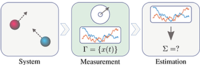
This paper demonstrates a procedure to estimate entropy production in stochastic systems based on the thermodynamic uncertainty relations. It uses an optimal current, which minimizes the relative current fluctuation, and which may be calculated from a single trajectory of system states. The procedure provides the tightest lower bound for entropy production in Markov jump processes and an exact value for overdamped Langevin dynamics.

Trajectory phase transitions in noninteracting spin systems

Loredana M. Vasiloiu, Tom H. E. Oakes, Federico Carollo, and Juan P. Garrahan

Phys. Rev. E 101, 042115 (2020) - Published 15 April, 2020

Nonequilibrium systems can display surprisingly large fluctuations towards ordered behavior. The authors relate these to phase transitions in trajectory space, and present the counterintuitive result that this can happen even in spin systems without interactions.

Multibody interactions and nonlinear consensus dynamics on networked systems

Leonie Neuhäuser, Andrew Mellor, and Renaud Lambiotte

Phys. Rev. E 101, 032310 (2020) - Published 30 March, 2020

Multibody interactions in models for consensus dynamics can reveal higher-order effects that are not captured by two-body models. The three-body consensus models studied in this work show dynamics that can lead to a shift of the average state of the system. This work also demonstrates that nonlinear interactions are necessary for a multibody dynamical system not to be reducible to a two-body system.

Interactions between identical DNA double helices

Chun-Liang Lai, Chuanying Chen, Shu-Ching Ou, Mara Prentiss, and B. Montgomery Pettitt

Phys. Rev. E 101, 032414 (2020) - Published 24 March, 2020

Understanding interactions between DNA molecules in water in the presence of ions is an important issue in biological physics. The authors use molecular dynamics simulations to explain how the free-energy landscape of DNA-DNA interactions depends on the separation and orientation of the DNA molecules, and provide insights into the molecular mechanisms behind the specific interactions between double-stranded DNA molecules in solution.

Cloaking the underlying long-range order of randomly perturbed lattices

Michael A. Klatt, Jaeuk Kim, and Salvatore Torquato

Phys. Rev. E 101, 032118 (2020) - Published 13 March, 2020

When a regular lattice is perturbed, traces of the original lattice usually remain visible as Bragg peaks in the diffraction pattern. The authors of this paper consider uniformly randomized lattices and show that fine-tuned distributions of perturbations can hide the Bragg peaks. Interestingly, as the strength of the perturbations increases, long-range order oscillates and Bragg peaks appear and disappear.

Non-Markovian data-driven modeling of single-cell motility

Bernhard G. Mitterwallner, Christoph Schreiber, Jan O. Daldrop, Joachim O. Rädler, and Roland R. Netz

Phys. Rev. E 101, 032408 (2020) - Published 12 March, 2020

In order to understand the motion of single cells, the authors of this paper measure the trajectories of cancer cells moving on a circular track and analyze them using a generalized Langevin equation. They are able to extract information from the experimental results that can be used in a nonequilibrium model to describe the dynamics of these systems.

Site-bond percolation solution to preventing the propagation of Phytophthora zoospores on plantations

J. E. Ramírez, C. Pajares, M. I. Martínez, R. Rodríguez Fernández, E. Molina-Gayosso, J. Lozada-Lechuga, and A. Fernández Téllez

Phys. Rev. E 101, 032301 (2020) - Published 5 March, 2020

A model for plant-disease spreading could aid in the design of an eco-friendly strategy for stopping the disease with barriers between plants.

Symmetry of membrane protein polyhedra with heterogeneous protein size

Mingyuan Ma, Di Li, Osman Kahraman, and Christoph A. Haselwandter

Phys. Rev. E 101, 022417 (2020) - Published 24 February, 2020

Membrane protein polyhedral nanoparticles (MPPNs) are two-dimensional assemblies of proteins and lipids that form closed lipid bilayer vesicles. This paper describes a minimal molecular model, similar to one used for viral capsids, that successfully predicts MPPNs to be found in regular shapes, such as snub cubes, even if the protein sizes are heterogeneous.

Sign In to Your Journals Account

Filter

Section

Filter

Article Lookup

Enter a citation