Highlights

Non-Hermitian quasilocalization and ring attractor neural networks

Hidenori Tanaka and David R. Nelson

Phys. Rev. E 99, 062406 (2019) - Published 13 June, 2019

Direction-sensitive cells in the brain of a fruit fly were recently discovered to be distributed in a ring geometry. This highlights the interplay between the spatial structure and the randomness of connections in neural networks. The authors draw an analogy between this situation and Anderson localization in quantum systems, and develop a theoretical framework to study neural networks with spatially structured disorder.

Minimal surfaces in porous media: Pore-scale imaging of multiphase flow in an altered-wettability Bentheimer sandstone

Qingyang Lin, Branko Bijeljic, Steffen Berg, Ronny Pini, Martin J. Blunt, and Samuel Krevor

Phys. Rev. E 99, 063105 (2019) - Published 10 June, 2019

High-resolution x-ray imaging is used in combination with measurements of permeability and capillary pressure to study multiphase flow in a porous sample. The authors characterized interfaces between brine and oil in a sandstone sample under a variety of conditions. Similar experimental approaches could be useful for other studies.

Fast determination of coarse-grained cell anisotropy and size in epithelial tissue images using Fourier transform

M. Durande, S. Tlili, T. Homan, B. Guirao, F. Graner, and H. Delanoë-Ayari

Phys. Rev. E 99, 062401 (2019) - Published 4 June, 2019

Analyzing cell morphology usually relies on parsing a number of images with a technique called segmentation. This method has several shortcomings, especially in the case when the images are of low quality or the cells are too numerous. This paper takes a different approach by using a Fourier transform method, which can be used to analyze a wealth of different scenarios, and even to determine whether segmentation is feasible.

Searching for collective behavior in a small brain

Xiaowen Chen, Francesco Randi, Andrew M. Leifer, and William Bialek

Phys. Rev. E 99, 052418 (2019) - Published 30 May, 2019

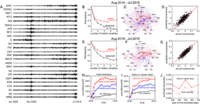
A collection of interacting units can exhibit emergent phenomena that are more than the sum of its parts. In this article, the authors used this idea to describe the activity of the brain.

Statistical mechanics of asymmetric tethered membranes: Spiral and crumpled phases

Tirthankar Banerjee, Niladri Sarkar, John Toner, and Abhik Basu

Phys. Rev. E 99, 053004 (2019) - Published 29 May, 2019

This paper develops a statistical mechanics approach to asymmetric tethered membranes. The asymmetry gives rise to a long-ranged interaction between the mean and Gaussian curvatures, whose strength determines the onset of a new double-spiral phase or a crumpling of the membrane.

Quantitative assessment of the spatial crowding heterogeneity in cellular fluids

Claudia Donth and Matthias Weiss

Phys. Rev. E 99, 052415 (2019) - Published 28 May, 2019

Spatial crowding in fluid compartments of living cells is assessed through image analysis. The authors find that the cytoplasm is more crowded and has greater spatial heterogeneity than the nucleoplasm. These differences persist even during cell division, when the nuclear envelope no longer separates the fluid compartments.

Control-oriented model of dielectrophoresis and electrorotation for arbitrarily shaped objects

Tomáš Michálek, Aude Bolopion, Zdeněk Hurák, and Michaël Gauthier

Phys. Rev. E 99, 053307 (2019) - Published 24 May, 2019

Neutral objects, such as cells and nanoparticles, can move in the presence of an inhomogeneous electric field. Modeling this phenomenon, commonly known as dielectrophoresis, requires several approximations. The authors here propose an efficient method to overcome some of the limitations of an existing technique known as effective multipole method, and validate their method against reference numerical solutions.

Stochastic fluctuations and quasipattern formation in reaction-diffusion systems with anomalous transport

Joseph W. Baron and Tobias Galla

Phys. Rev. E 99, 052124 (2019) - Published 20 May, 2019

This paper extends the study of reaction-diffusion systems with anomalous transport to take into account the intrinsic noise due to a finite number of particles. Starting from an individual-based model, the authors use a generating-functional approach and test it on the formation of patterns in subdiffusive conditions. The results are in good agreement with computer simulations and can be extended to other reacting systems that exhibit anomalous diffusion.

Embryonic lateral inhibition as optical modes: An analytical framework for mesoscopic pattern formation

Jose Negrete, Jr. and Andrew C. Oates

Phys. Rev. E 99, 042417 (2019) - Published 25 April, 2019

Biological systems show a high degree of precision during development and tissue morphogenesis by creating beautiful fine-grained patterns. The authors propose a model that is analytically solvable, able to reproduce the observed phenomenology, and generates testable predictions.

Disruption of microbial communication yields a two-dimensional percolation transition

Kalinga Pavan T. Silva, Tahir I. Yusufaly, Prithiviraj Chellamuthu, and James Q. Boedicker

Phys. Rev. E 99, 042409 (2019) - Published 19 April, 2019

In a model biological system composed of bacteria that exchange signals with each other and bacteria that degrade the signals, the authors find a strong dependence of the communication on the concentration of degrader bacteria. The breakdown of the communication network shows behavior that agrees well with that expected for a percolation transition.

Root growth and force chains in a granular soil

Mahmoud Fakih, Jean-Yves Delenne, Farhang Radjai, and Thierry Fourcaud

Phys. Rev. E 99, 042903 (2019) - Published 15 April, 2019

The growth of plant roots in soil is just one example of the importance of mechanosensing in biology. In this paper the authors study this process and show how the reaction forces depend on the granular properties of soil and the bending stiffness of the root.

Data-driven inference of hidden nodes in networks

Danh-Tai Hoang, Junghyo Jo, and Vipul Periwal

Phys. Rev. E 99, 042114 (2019) - Published 10 April, 2019

Complex systems, for example in biology or social science, can be viewed as networks of interacting nodes whose behavior can only be partially observed. The challenge is to understand the system’s dynamics based on this partial information. This paper presents a method to estimate the network structure based on the limited available data.

Deterministic limit of temporal difference reinforcement learning for stochastic games

Wolfram Barfuss, Jonathan F. Donges, and Jürgen Kurths

Phys. Rev. E 99, 043305 (2019) - Published 10 April, 2019

Reinforcement learning is a way for an artificial intelligence system to learn by trial and error. This paper presents a deterministic limit of such a learning method, in an environment that changes in time. The method is applied to three well-known learning algorithms.

Uplift of an elastic membrane by a viscous flow

Michael Berhanu, Adrien Guérin, Sylvain Courrech du Pont, Fiona Raoult, Rémi Perrier, and Chloé Michaut

Phys. Rev. E 99, 043102 (2019) - Published 4 April, 2019

Pumping a viscous fluid underneath an elastic sheet will cause the sheet to bulge upward. The liquid pressure is balanced by the sheet’s elasticity as well as gravity. The authors’ experiment shows reasonable agreement with two different theories, and may provide a model for the formation of magma intrusions between layers of rock.

Theoretical foundation of detrending methods for fluctuation analysis such as detrended fluctuation analysis and detrending moving average

Marc Höll, Ken Kiyono, and Holger Kantz

Phys. Rev. E 99, 033305 (2019) - Published 28 March, 2019

Nonstationarity in complex systems makes the analysis of time series difficult. In this work, the authors propose a theoretical framework that enables us to understand how detrending methods work under a variety of conditions.

Analog cosmology with two-fluid systems in a strong gradient magnetic field

Zack Fifer, Theo Torres, Sebastian Erne, Anastasios Avgoustidis, Richard J. A. Hill, and Silke Weinfurtner

Phys. Rev. E 99, 031101(R) (2019) - Published 27 March, 2019

Inflation refers to the exponential expansion of the early universe that can explain many of the properties we see today. The authors of this work propose an experimental analog in which the interface between two immiscible, magnetic fluids shows inflationary behavior. The work shows that waves created at the interface could reproduce known solutions of inflationary models, and suggests a variety of other cosmological scenarios that could be simulated.

Elastic interactions between anisotropically contracting circular cells

Roman Golkov and Yair Shokef

Phys. Rev. E 99, 032418 (2019) - Published 26 March, 2019

Cells can mechanically interact with each other through forces on their environment. In this paper, this is modeled using two-dimensional disks on an elastic medium, which they deform with an angle-dependent force. The authors focus their analysis on the interaction energy and are able to show different behaviors depending on the anisotropy of the interactions.

Pattern formation of skin cancers: Effects of cancer proliferation and hydrodynamic interactions

Takuma Hoshino, Ming-Wei Liu, Kuo-An Wu, Hsuan-Yi Chen, Tatsuaki Tsuruyama, and Shigeyuki Komura

Phys. Rev. E 99, 032416 (2019) - Published 21 March, 2019

Skin tumors can exhibit characteristic patterns that may help in diagnosing them. The authors use a phase-separation model with hydrodynamic effects to understand the formation of these patterns. A simulation that includes a growth term and a friction term is able to reproduce some of the clinically observed patterns.

Modeling the formation of double rolls from heterogeneously patterned gels

Oz Oshri, Santidan Biswas, and Anna C. Balazs

Phys. Rev. E 99, 033003 (2019) - Published 14 March, 2019

Inhomogeneous gels can exhibit a change in shape from a two-dimensional to a three-dimensional configuration. In this paper, the authors study the strip-to-roll transition in a so-called bistrip gel, made of two layers of gel with different swelling properties. They are able to extract several properties of the final structure which agree quantitatively with previous experimental results.

Kirigami and the Caspar-Klug construction for viral shells with negative Gauss curvature

Luigi E. Perotti, Kevin Zhang, Joseph Rudnick, and Robijn F. Bruinsma

Phys. Rev. E 99, 022413 (2019) - Published 19 February, 2019

How do some viruses thrive in extreme conditions? They have protein shells, called capsids, that protect their genomes from the outside environment. In this work, the authors explain how viral capsids with regions of negative Gauss curvature are assembled, generalizing the standard Caspar-Klug construction.

Sign In to Your Journals Account

Filter

Section

Filter

Article Lookup

Enter a citation