Highlights

Experiment and model for a Stokes layer in a strongly coupled dusty plasma

Jorge Berumen and J. Goree

Phys. Rev. E 104, 035208 (2021) - Published 30 September, 2021

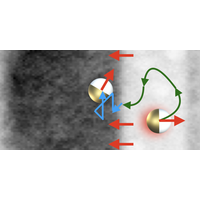
The authors demonstrate that a dusty plasma can sustain a Stokes layer, a moving boundary layer in a viscous fluid caused by an oscillating wall. They apply a two-phase-liquid version of a Maxwell-fluid model to explain their experimental observation.

Spontaneous symmetry breaking and frustrated phases

Heitor Casasola, Carlos A. Hernaski, Pedro R. S. Gomes, and Paula F. Bienzobaz

Phys. Rev. E 104, 034131 (2021) - Published 23 September, 2021

Frustrated spin systems exhibit rich physical properties, and this paper presents an exactly solvable example of a frustrated system of quantum spins on a lattice. The authors analyze several quantum phase transitions, characterize the phases, and discuss the mechanism leading to the phase transitions.

Handy fluctuation-dissipation relation to approach generic noisy systems and chaotic dynamics

M. Baldovin, L. Caprini, and A. Vulpiani

Phys. Rev. E 104, L032101 (2021) - Published 7 September, 2021

Fluctuation-dissipation relations express the response of a system to a small perturbation in terms of properties of the equilibrium system. The authors introduce a formulation of a generalized fluctuation-dissipation relation that is easy to use and does not require prior knowledge of the system’s stationary probability distribution.

Active elasticity drives the formation of periodic beading in damaged axons

Davide Riccobelli

Phys. Rev. E 104, 024417 (2021) - Published 30 August, 2021

Certain diseases can cause axons, the nerve fiber portions of neurons, to form a periodic series of bulges. Evidence suggests that these bulges are caused by the disruption of the axon’s cytoskeleton, and the author describes their formation with a model based on continuum mechanics and nonlinear elasticity.

High-dimensional percolation criticality and hints of mean-field-like caging of the random Lorentz gas

Benoit Charbonneau, Patrick Charbonneau, Yi Hu, and Zhen Yang

Phys. Rev. E 104, 024137 (2021) - Published 27 August, 2021

This work examines theoretical and computational methods for studying the random Lorentz gas, which is considered as a minimal model for transport in disordered media. The authors find an additional intermediate-time dynamical slowdown in some methods. They suggest a modified model that clarifies previous inconsistencies found in the interplay between percolation and glass physics.

Extrusion of chromatin loops by a composite loop extrusion factor

Hao Yan, Ivan Surovtsev, Jessica F. Williams, Mary Lou P. Bailey, Megan C. King, and Simon G. J. Mochrie

Phys. Rev. E 104, 024414 (2021) - Published 23 August, 2021

Chromatin, a structure consisting of DNA and other proteins, can fold and form loops. Experiments show loop formation may be hindered by nucleosomes that surround chromatin in cells. This paper describes a scenario under which loop formation can happen and proposes a mechanism of relocation or removal of nucleosomes that enables this.

Metachronal waves in concentrations of swimming Turbatrix aceti nematodes and an oscillator chain model for their coordinated motions

A. C. Quillen, A. Peshkov, Esteban Wright, and Sonia McGaffigan

Phys. Rev. E 104, 014412 (2021) - Published 29 July, 2021

Nematode worms known as vinegar eels collectively exhibit traveling waves when swimming near the edge of a drop of liquid. The authors analyze this behavior and construct a model based on a chain of interacting oscillators that approximately matches their observations.

Self-organized multistability in the forest fire model

Diego Rybski, Van Butsic, and Jan W. Kantelhardt

Phys. Rev. E 104, L012201 (2021) - Published 29 July, 2021

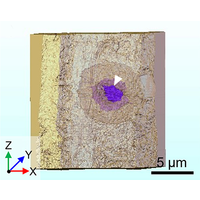
Self-organizing properties, unnoticed for decades, are observed in changes in the density of trees in a forest that can catch fire.

Second-harmonic generation as a minimal model of turbulence

N. Vladimirova, M. Shavit, S. Belan, and G. Falkovich

Phys. Rev. E 104, 014129 (2021) - Published 22 July, 2021

A system of two coupled modes can be a minimal model of a turbulent cascade, when one mode is pumped and the other damped. The authors use entropy and mutual information to study the statistics of this system, and explore the difference between the direct and inverse cascades.

Two-dimensional Brownian motion of anisotropic dimers

Daniel B. Mayer, Erick Sarmiento-Gómez, Manuel A. Escobedo-Sánchez, Juan Pablo Segovia-Gutiérrez, Christina Kurzthaler, Stefan U. Egelhaaf, and Thomas Franosch

Phys. Rev. E 104, 014605 (2021) - Published 16 July, 2021

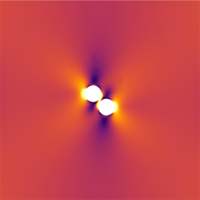
When nonspherical particles perform Brownian motion, the diffusion is anisotropic and there is a coupling between the translational and rotational motion. Here the authors study the diffusion of dimers in two dimensions with both theory and experiment, and find good agreement between the two.

Diffusive wave dynamics beyond the continuum limit

Paul B. Dieterle and Ariel Amir

Phys. Rev. E 104, 014406 (2021) - Published 15 July, 2021

A new model shows that the properties of waves produced in a cell-signaling process strongly depend on whether the cells are considered to be discrete entities or a collective mass.

Node differentiation dynamics along the route to synchronization in complex networks

Christophe Letellier, Irene Sendiña-Nadal, Ludovico Minati, and I. Leyva

Phys. Rev. E 104, 014303 (2021) - Published 2 July, 2021

As a complex network system progresses toward synchronization, the dynamics of individual nodes is of interest. The authors characterize stages in the progression with a complexity measure they have recently introduced. They explore a nonmonotonic relationship found between the complexity of node dynamics and coupling strength and observe that higher and lower degree nodes exhibit different paths toward synchronization.

Generalized Euler-Lotka equation for correlated cell divisions

Simone Pigolotti

Phys. Rev. E 103, L060402 (2021) - Published 30 June, 2021

The author uses techniques from large deviation theory to derive an equation for the growth rate of microbial populations in which cell division times may be correlated. Predictions from this equation agree well with experimental results. For uncorrelated cell division times, it reduces to the standard Euler-Lotka equation.

Optimal sampling of dynamical large deviations via matrix product states

Luke Causer, Mari Carmen Bañuls, and Juan P. Garrahan

Phys. Rev. E 103, 062144 (2021) - Published 28 June, 2021

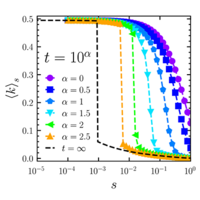
Sampling rare events in stochastic processes is difficult, but there are techniques that make it possible in the framework of large deviations. In this paper, the authors use matrix product states to study rare trajectories for one-dimensional lattice models, perform Monte Carlo simulations of various models, and discuss generalization to higher dimensions.

Monte Carlo simulations in the unconstrained ensemble

Ivan Latella, Alessandro Campa, Lapo Casetti, Pierfrancesco Di Cintio, J. Miguel Rubi, and Stefano Ruffo

Phys. Rev. E 103, L061303 (2021) - Published 21 June, 2021

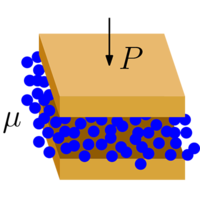
This paper proposes a Monte Carlo scheme to simulate systems that are completely open, meaning systems that can exchange heat, work, and matter with their surroundings. The authors base their approach on the concept of replica energy, and test the method on systems that can reach thermodynamic equilibrium under completely open conditions, including one with long-range interactions.

Thermal noise of a cryocooled silicon cantilever locally heated up to its melting point

Alex Fontana, Richard Pedurand, Vincent Dolique, Ghaouti Hansali, and Ludovic Bellon

Phys. Rev. E 103, 062125 (2021) - Published 15 June, 2021

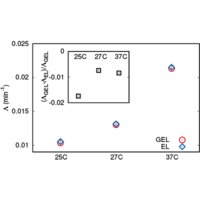
Multiple sources of mechanical dissipation seem to explain why a cantilever subject to an extreme temperature gradient has less thermal noise than theory predicts.

Air spread through a wetted deformable membrane: Implications for the mechanism of soft valves in plants

Jooyoung Park, Jeongeun Ryu, Sung Ho Park, and Sang Joon Lee

Phys. Rev. E 103, 062407 (2021) - Published 15 June, 2021

Coniferous trees regulate the flow of water and air through their cells with a type of valve known as a torus-margo bordered pit. Studying a synthetic system that mimics such a valve, the authors show how air spreads depending on the valve’s properties, and provide insights into the design of efficient valves to control two-phase flows.

Polarization-density patterns of active particles in motility gradients

Sven Auschra, Viktor Holubec, Nicola Andreas Söker, Frank Cichos, and Klaus Kroy

Phys. Rev. E 103, 062601 (2021) - Published 1 June, 2021

A self-propelled particle trapped in a potential well defined by energy availability, has a unique swimming pattern that comes from hidden currents in the fluid in which it swims.

Chaos in the Bose-glass phase of a one-dimensional disordered Bose fluid

Romain Daviet and Nicolas Dupuis

Phys. Rev. E 103, 052136 (2021) - Published 26 May, 2021

In a Bose fluid, disorder can induce a quantum phase transition between a superfluid phase and a localized phase called a Bose glass. Using a renormalization group approach, the authors study a one-dimensional disordered Bose fluid and find that the Bose-glass phase exhibits an extreme sensitivity to any change in the realization of the disorder.

Elastic multipole method for describing deformation of infinite two-dimensional solids with circular inclusions

Siddhartha Sarkar, Matjaž Čebron, Miha Brojan, and Andrej Košmrlj

Phys. Rev. E 103, 053003 (2021) - Published 24 May, 2021

Elastic materials with holes and inclusions can deform in various ways in response to applied external loads. The authors present a theory for such deformations, using an analogy with the concepts of polarization and multipoles in electrostatics. They apply the theory to infinite, two-dimensional solids with circular voids and inclusions, and provide a set of experimental tests.

Sign In to Your Journals Account

Filter

Section

Filter

Article Lookup

Enter a citation