Recent Articles

Heating suppression via two-rate random and quasiperiodic drive protocols

Krishanu Ghosh, Sayan Choudhury, Diptiman Sen, and K. Sengupta

Phys. Rev. B 112, 155142 (2025) - Published 20 October, 2025

Electron correlations in the kagome metals AV3Sb5 (A=K, Rb, Cs)

Feihu Liu, Changxu Liu, Maolin Zeng, and Qiyi Zhao

Phys. Rev. B 112, 155143 (2025) - Published 20 October, 2025

Tuning the magnetic and electronic properties of the double perovskite La2CoIr1−xTixO6

Sromona Nandi, Vineeta Yadav, S. Devi, C. S. Yadav, Bikash Das, Subhadeep Datta, Kapildeb Dolui, and Rudra Sekhar Manna

Phys. Rev. B 112, 155144 (2025) - Published 20 October, 2025

Tuning of electronic properties in highly lattice-mismatched epitaxial SmN

Kevin D. Vallejo, Volodymyr Buturlim, Zach E. Cresswell, Brooke Campbell, Bobby G. Duersch, Brelon J. May, and Krzysztof Gofryk

Phys. Rev. B 112, 155145 (2025) - Published 20 October, 2025

Systematic generation of electron models for second-principles density functional theory methods

Nayara Carral-Sainz, Toraya Fernández-Ruiz, Jorge Íñiguez-González, Javier Junquera, and Pablo García-Fernández

Phys. Rev. B 112, 155146 (2025) - Published 20 October, 2025

Anisotropic optical and electronic properties in layer-engineered HfSe2/SnSe2 van der Waals heterostructures

Saransha Mohanty and Pritam Deb

Phys. Rev. B 112, 155147 (2025) - Published 20 October, 2025

Optical conductivity and band gap in the double-Weyl candidate SrSi2 at ambient pressure

L. Z. Maulana, A. A. Tsirlin, E. Uykur, Y. Saito, M. Dressel, M. Imai, and A. V. Pronin

Phys. Rev. B 112, 155209 (2025) - Published 20 October, 2025

The authors study here the possible double-Weyl state in cubic SrSi2 using optical spectroscopy and ab initio calculations. The free-carrier density, found from optics, decreases with decreasing temperature, consistent with an activation behavior. Experimental interband conductivity juxtaposed with ab initio calculations shows that conventional density functional theory fails to describe the electronic structure of SrSi2 near the Fermi level. A semilocal exchange-correlation potential allows a much better agreement with the experiment, resulting a gapped band structure of SrSi2 with the direct gap of 35–40 meV.

Dispersion of backward-propagating waves in a surface defect on a three-dimensional photonic band-gap crystal

Timon J. Vreman, Melissa J. Goodwin, Lars J. Corbijn van Willenswaard, William L. Barnes, Ad Lagendijk, and Willem L. Vos

Phys. Rev. B 112, 155305 (2025) - Published 20 October, 2025

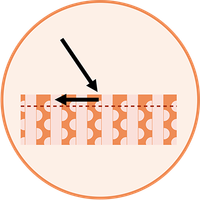
The authors fabricate here a silicon nanostructure to confine light to a thin 2D layer, a layer that acts as a surface defect on a 3D photonic band gap crystal. Confined waves are excited with high efficiency and, remarkably, are found to run in a backward direction (see image), owing to the periodic nature of the surface defect. Reflectivity experiments agree well with supercell calculations and finite-difference time-domain simulations. The author’s results further demonstrate the power of nanomaterials to control light.

Nonlinear transport signatures of hidden symmetry breaking in a Weyl altermagnet

Yufei Zhao, Zhiqiang Mao, and Binghai Yan

Phys. Rev. B 112, 165127 (2025) - Published 20 October, 2025

Stoner transition at finite temperature in a two-dimensional isotropic Fermi liquid

R. David Mayrhofer, Megan Schoenzeit, and Andrey V. Chubukov

Phys. Rev. B 112, 165128 (2025) - Published 20 October, 2025

Beyond fragmented dopant dynamics in quantum spin lattices: Robust localization and non-Gaussian diffusion

Mingru Yang, Sajant Anand, and Kristian Knakkergaard Nielsen

Phys. Rev. B 112, 165129 (2025) - Published 20 October, 2025

Efficient G0W0 and Bethe-Salpeter equation calculations of heterostructures within an all-electron framework

Maximilian Schebek, Ignacio Gonzalez Oliva, and Claudia Draxl

Phys. Rev. B 112, 165130 (2025) - Published 20 October, 2025

Heterostructures composed of different two-dimensional materials offer exciting opportunities for tunable optoelectronic devices, but computing their electronic and optical properties is computationally demanding. Focusing on the LAPW framework, the authors develop here an efficient additive ansatz for the screening that is constructed from the individual contributions to the polarizability. This approach enables high-precision calculations of band structures and optical spectra from from GW and the Bethe-Salpeter equation, respectively, at greatly reduced computational cost, as demonstrated for bilayer WSe2 and pyridine@MoS2.

Large Berry curvature effects induced by extended nodal structures: Rational design strategy and high-throughput materials predictions

Wencheng Wang, Minxue Yang, Wei Chen, Xiangang Wan, and Feng Tang

Phys. Rev. B 112, 165131 (2025) - Published 20 October, 2025

Enhancing band-edge nonradiative recombination lifetimes in I-II2-III-VI4 chalcogenides via orbital-phonon synergy

Xinwei Guo, Wenhan Zhou, Shengli Zhang, and Haibo Zeng

Phys. Rev. B 112, 165203 (2025) - Published 20 October, 2025

Resonant valley-specific exciton-phonon coupling in layered SnS

J. Jadczak, J. Debus, J. Andrzejewski, E. Żuberek, P. Sitarek, J. Olejnik, C.-H. Ho, and L. Bryja

Phys. Rev. B 112, 165308 (2025) - Published 20 October, 2025

The authors demonstrate here that different valleys in anisotropic 2D materials exhibit dramatically different phonon coupling hierarchies. This valley-specific reorganization pushes valleytronics in a new direction by establishing phonon scattering as an intrinsic valley fingerprint, enabling phonon-mediated valley control beyond conventional methods. The work creates connections between valleytronics and phonon physics by showing valley identity is fundamentally encoded in electron-phonon coupling strength, transforming phonons from passive dissipation channels to active players in valley manipulation, opening new pathways for valleytronic technologies.

Leakage at zero temperature from changes in chemical potential in Majorana qubits

M. C. Goffage, A. Alase, M. C. Cassidy, and S. N. Coppersmith

Phys. Rev. B 112, 165424 (2025) - Published 20 October, 2025

Potential role of hole accumulation via photoionization and electron tunneling during laser-assisted field evaporation of insulators with high energy photons

Severin Jakob, Jonathan D. Poplawsky, Anna S. Jelinek, David Mayweg, and Mattias Thuvander

Phys. Rev. B 112, 165425 (2025) - Published 20 October, 2025

Distinct effect of Kondo physics on crystal field splitting in electron and spin spectroscopies

M. Kornjača and R. Flint

Phys. Rev. B 112, L161120 (2025) - Published 20 October, 2025

Structural evolution of ceria-supported Ru cluster catalysts under near-realistic conditions explored via a global structural search algorithm

Meiliang Ma, Yan Wang, Zhiyu Wang, and Zhong-Kang Han

Phys. Rev. B 112, 134102 (2025) - Published 17 October, 2025

Time evolution of the quantum Ising model in two dimensions using tree tensor networks

Wladislaw Krinitsin, Niklas Tausendpfund, Markus Heyl, Matteo Rizzi, and Markus Schmitt

Phys. Rev. B 112, 134310 (2025) - Published 17 October, 2025

Sign In to Your Journals Account

Filter

Recent Issues

Vol. 114, Iss. 24
15 October 2026
Vol. 114, Iss. 23
15 October 2026
Vol. 114, Iss. 22
15 October 2026
Vol. 114, Iss. 21
1 October 2026
Category
Article Type
Section

Filter

Article Lookup

Enter a citation