Browse Issues:

HIGHLIGHTED ARTICLES

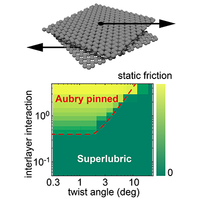
Aubry pinning transition of twisted two-dimensional material bilayers

Jin Wang and Erio Tosatti

Phys. Rev. B 112, 155406 (2025) - Published 9 October, 2025

Bilayers of 2D materials such as graphene are frictionally pinned at perfect alignment but free sliding (“superlubric”) at large twists. Small-twist bilayers, heavily reconstructed, might equally remain superlubric, or turn spontaneously pinned through a so-called Aubry transition. Here, simulation and theory show that small twist graphene and other 2D bilayers remain unpinned even under high loads. A geometric criterion useful for future microscale friction planning–-the width of moiré domain walls larger than four lattice spacings-–characterizes this robust superlubricity.

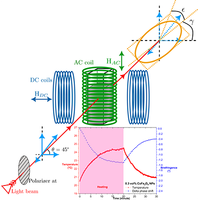
Noninvasive temperature measurement of magnetic hyperthermia investigated through optical properties

Hai Hoang Thi Thanh, Damien Jamon, Chloé Landreau, James Hainsworth, Adriana Morana, Laure Bsawmaii, Emmanuel Marin, Sophie Neveu, Florent Bourquard, Patrick Ganster, Nicolas Moulin, and François Royer

Phys. Rev. B 112, 155107 (2025) - Published 2 October, 2025

The authors report here an in situ method for probing the temperature during hyperthermia experiment, through the real-time monitoring of optical properties of magnetic nanoparticles. A setup allows inducing magnetic hyperthermia using an alternating magnetic field while simultaneously measuring the magneto-induced birefringence and optical absorption. As the temperature increases, the birefringence and absorption of magnetic nanoparticles decrease and vice versa. These findings offer a noninvasive and nondestructive method for probing temperature, and in particular provide a way to measure local temperature.

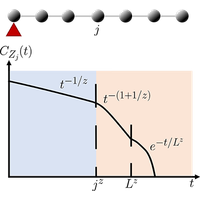
Dynamics in the presence of local symmetry-breaking impurities

Yahui Li, Pablo Sala, Frank Pollmann, Sanjay Moudgalya, and Olexei Motrunich

Phys. Rev. B 112, 155108 (2025) - Published 2 October, 2025

While symmetric systems are ubiquitously studied in physics, imperfections inevitably occur. This work introduces a general framework to study how symmetry-breaking impurities influence the relaxation dynamics of quantum many-body systems. The authors analytically show that the remnants of the original symmetries can persist for long times, leading to slow relaxation in correlation functions with a larger power-law decay exponent or long prethermal plateaus. The methods apply to both conventional symmetries, such as charge conservation, and unconventional ones like Hilbert space fragmentation.

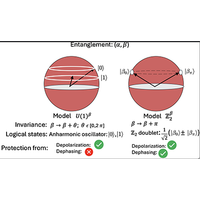
Cross-platform protected qubits from entanglement

Nilotpal Chakraborty, Roderich Moessner, and Benoit Doucot

Phys. Rev. B 112, 155111 (2025) - Published 3 October, 2025

The omnipresence of noise in quantum hardware calls for qubit architectures with a high degree of protection from such noise. The authors present here a qualitatively new construction and general route towards such protection starting from a many-body system of entangled spin-½s – the entanglemon qubit. They present toy models for two different kinds of entanglemon qubits that could possibly be realized across multiple hardware platforms, each with different levels of protection, with the latter protected against both dephasing and depolarization.

Disorder operators in two-dimensional Fermi and non-Fermi liquids through multidimensional bosonization

Kang-Le Cai and Meng Cheng

Phys. Rev. B 112, 155123 (2025) - Published 9 October, 2025

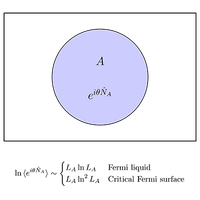
Disorder operators, a class of nonlocal observables, offer insight into the nature of many-body systems by probing symmetry charge fluctuations. Using bosonization, the authors analyze here the scaling of disorder operators in two-dimensional Fermi and non-Fermi liquids. They find that the U(1) charge disorder operator in a Fermi liquid scales as LlnL, and predict an enhanced Lln2L scaling in the non-Fermi-liquid regime, revealing a distinctive signature of non-Fermi-liquid behavior.

Highly anisotropic surface resonance states in the kagome semimetal Ni3In2Se2

Kaiyi Zhai, Xian Du, Cheng Chen, Wujun Shi, Wenxuan Zhao, Yidian Li, Zhongkai Liu, Yangyang Lv, Yulin Chen, and Lexian Yang

Phys. Rev. B 112, 155124 (2025) - Published 9 October, 2025

Shandite kagome materials offer a versatile platform for investigating intriguing quantum phenomena, due to their rich tunability and the synergy of magnetism, topology, and electronic correlations. Here, the authors directly observe surface resonance states on the shandite kagome crystal Ni3In2Se2 using high-resolution angle-resolved photoemission spectroscopy (ARPES). These surface states exhibit massive Dirac-like dispersions with highly anisotropic effective masse, an unusual feature in three-dimensional materials. Surface-confined states with relatively large spin–orbit coupling effects is potentially useful in surface science.

ZN generalizations of three-dimensional stabilizer codes

Chanbeen Lee, Yaozong Hu, Gil Young Cho, and Haruki Watanabe

Phys. Rev. B 112, 155136 (2025) - Published 16 October, 2025

The authors generalize here three-dimensional ℤ2 stabilizer models—the X-cube, toric code, and Haah’s code—to their ℤN counterparts, revealing size-dependent ground-state degeneracy and novel excitations. They demonstrate that the generalized X-cube hosts quasi-fractons that remain immobile under local operations but become mobile via global ones. In the toric code, both closed-loop and open-string excitations emerge, while Haah’s code features new fracton tripole and monopole excitations. These findings uncover unconventional topological orders and broaden the understanding of fracton phases beyond the conventional ℤ2 framework.

Formation of a simple cubic antiferromagnet through charge ordering in a double Dirac material

Tanya Berry, Vincent C. Morano, Thomas Halloran, Xin Zhang, Tyler J. Slade, Aashish Sapkota, Sergey L. Bud'ko, Weiwei Xie, Dominic H. Ryan, Zhijun Xu, Yang Zhao, Jeffrey W. Lynn, Tom Fennell, Paul C. Canfield, Collin L. Broholm, and Tyrel M. McQueen

Phys. Rev. B 112, 155139 (2025) - Published 16 October, 2025

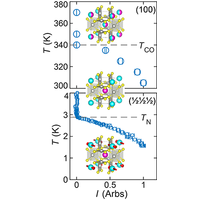
How do charge and magnetic order conspire to reduce symmetry in rare earth magnets? At high-temperatures, the Eu2+ and Eu3+ ions in mixed-valent EuPd3S4 are randomly distributed on a body-centered-cubic lattice. Here, the authors find a charge ordering transition in which each valence occupies one of the two constituent simple cubic sublattices. The Néel transition emerging from this charge ordered state at lower temperatures realizes an important yet uncommon variety of rare-earth antiferromagnetism.

Magnetic-field tunable Möbius and higher-order topological insulators in three-dimensional layered octagonal quasicrystals

Yuxiao Chen, Zhiming Xu, Citian Wang, and Huaqing Huang

Phys. Rev. B 112, 155141 (2025) - Published 20 October, 2025

The authors demonstrate here that layered magnetic quasicrystals with eightfold rotational symmetry can host a series of magnetic field tunable topological phases. By combining canted antiferromagnetic order and octagonal warping effect, they reveal the emergence of a glide symmetry protected Möbius insulator and multiple higher-order topological insulator (HOTI) phases, distinguished by their hinge-mode configurations. Their findings establish quasicrystals as a fertile platform for realizing symmetry-protected topological phenomena beyond periodic lattices, and offer a new route for magnetic control of higher-order topology.

Quantum Griffiths phase in the kagome Kondo lattice CeRh0.9Pd0.1Sn

Nan Tang, Rajesh Tripathi, Yasuyuki Shimura, Toshiro Takabatake, Devashibhai A. Adroja, and Philipp Gegenwart

Phys. Rev. B 112, 155151 (2025) - Published 23 October, 2025

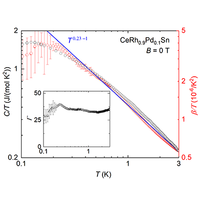
Disorder can reshape quantum criticality. The authors observe here, in the kagome Kondo lattice CeRh0.9Pd0.1Sn, the expected Grüneisen divergence is absent. Instead, weak power-law divergences in thermodynamics (T(λ−1), 0 < λ < 1) signal non-Fermi-liquid behavior consistent with a disorder-driven quantum Griffiths phase rather than a conventional quantum critical point. At low temperatures, a negative thermal expansion develops above ~0.5 T, and the NFL scaling breaks down when antiferromagnetic correlations emerge—highlighting how quenched disorder, frustration, and Kondo physics intertwine to produce exotic metallic states.

Evidence for easy-plane XY ferromagnetism in heavy-fermion quantum-critical CeRh6Ge4

Riku Yamamoto, Sejun Park, Zachary W. Riedel, Phurba Sherpa, Joe D. Thompson, Filip Ronning, Eric D. Bauer, Adam P. Dioguardi, and Michihiro Hirata

Phys. Rev. B 112, 155152 (2025) - Published 23 October, 2025

By employing 73Ge nuclear quadrupole resonance (NQR) and magnetic resonance (NMR) spectroscopy, the authors unveil here the magnetic anisotropy and structure in the heavy-fermion quantum-critical ferromagnet CeRh6Ge4. They identify a uniform ferromagnetic order and a small ordered moment of 0.26 μB/Ce confined within the ab plane with an XY-type easy-plane character. They also find an involved interplay of hybridization and 4f-electron local moment physics, providing new insights towards designing a more realistic theoretical framework to describe the quantum criticality in this compound under pressure.

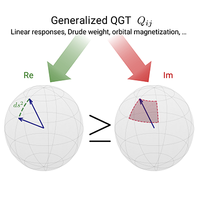
Quantum geometric bounds for observables: Linear responses, Drude weight, and orbital magnetization

Koki Shinada and Naoto Nagaosa

Phys. Rev. B 112, 155158 (2025) - Published 24 October, 2025

The quantum geometric tensor (QGT) provides nontrivial bounds among physical quantities, as exemplified by the metric curvature inequality. How far can this idea be generalized, and what other observables obey such quantum-geometric constraints? The authors show here that generalized QGTs yield new inequalities among all linear responses, the Drude weight, and the orbital magnetization. They further find that this Drude orbital magnetization inequality approaches equality as bands become flatter, which is nearly satisfied in the experimentally observed orbital magnetization of twisted bilayer graphene.

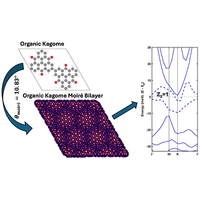
Moiré-induced fragile topology and Chern bands in twisted organic kagome bilayers

Khalid N. Anindya and Hong Guo

Phys. Rev. B 112, 155160 (2025) - Published 27 October, 2025

Twisting two carbonyl-triphenyl kagome layers produces a moiré superlattice with flat bands near the Fermi level and distinct, angle-selective topology. The authors find here a fragile ℤ2 region at 10.83°, identified by non-Abelian Wilson loops, and at 11.46° individual near-Fermi bands carry Chern numbers ±1 while the combined subspace remains neutral. Moiré-induced symmetry breaking generates Haldane-like loop currents and concentrated Berry curvature, establishing a tunable, all-organic platform where chemistry and twist jointly engineer correlated and topological electronic behavior with control.

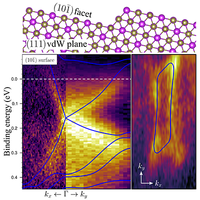
Electronic structure of the Bi2Te3 non-van der Waals surface

Igor A. Shvets, Sergey V. Eremeev, Vladimir A. Golyashov, Niranjan Kumar, Andrey S. Tarasov, Konstantin A. Kokh, and Oleg E. Tereshchenko

Phys. Rev. B 112, 155166 (2025) - Published 29 October, 2025

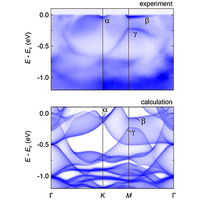
The authors successfully prepare here a high-quality side surface of the layered topological insulator Bi_{2}Te_{3}. Using DFT calculations, they clearly demonstrate the reason behind the significant anisotropy of the Dirac state and its relationship with the projection of the bulk states onto the chosen crystallographic plane. Surface spectrum calculations enable them to determine the orientation of the facets on the prepared side surface, which is found to be (101¯), the spectrum of which aligns perfectly with the ARPES measurements.

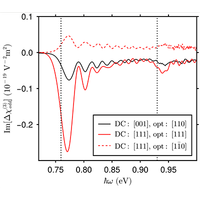
Theory of the two-photon Franz-Keldysh effect and electric-field-induced bichromatic coherent control

J. K. Wahlstrand and J. E. Sipe

Phys. Rev. B 112, 155208 (2025) - Published 17 October, 2025

When a strong electric field is applied to a semiconductor, acceleration of charge carriers modifies the optical absorption spectrum. This phenomenon, the Franz-Keldysh effect, is the basis of photoreflectance spectroscopy and electroabsorption modulators. The authors extend here a theory of the Franz-Keldysh effect and calculate field-induced changes in the two-photon absorption spectrum and a related coherent control process. Results of numerical calculations for gallium arsenide predict a strong polarization dependence and absorption changes that depend on the sign of the field.

Optical conductivity and band gap in the double-Weyl candidate SrSi2 at ambient pressure

L. Z. Maulana, A. A. Tsirlin, E. Uykur, Y. Saito, M. Dressel, M. Imai, and A. V. Pronin

Phys. Rev. B 112, 155209 (2025) - Published 20 October, 2025

The authors study here the possible double-Weyl state in cubic SrSi2 using optical spectroscopy and ab initio calculations. The free-carrier density, found from optics, decreases with decreasing temperature, consistent with an activation behavior. Experimental interband conductivity juxtaposed with ab initio calculations shows that conventional density functional theory fails to describe the electronic structure of SrSi2 near the Fermi level. A semilocal exchange-correlation potential allows a much better agreement with the experiment, resulting a gapped band structure of SrSi2 with the direct gap of 35–40 meV.

Two- and three-photon absorption in silicon for above-band-gap photon energies

Martin Aagaard, Simon Peter Slot Jessen, John Lundsgaard Hansen, Rosana Martinez Turtos, Peter Balling, and Brian Julsgaard

Phys. Rev. B 112, 155210 (2025) - Published 30 October, 2025

Silicon is one of the most well-studied materials, leaving a sense that there are no new surprises to be found. However, here the authors provide new insight into nonlinear optical absorption in silicon at above-bandgap photon energies. They demonstrate that three-photon absorption dominates indirect two-photon absorption for photon energies below the direct two-photon-absorption edge at 1.7 eV, a result at variance with previously held assumptions. The authors provide nonlinear absorption coefficients for photon energies from 1.14–2.07 eV.

Dispersion of backward-propagating waves in a surface defect on a three-dimensional photonic band-gap crystal

Timon J. Vreman, Melissa J. Goodwin, Lars J. Corbijn van Willenswaard, William L. Barnes, Ad Lagendijk, and Willem L. Vos

Phys. Rev. B 112, 155305 (2025) - Published 20 October, 2025

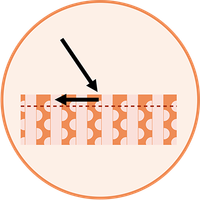
The authors fabricate here a silicon nanostructure to confine light to a thin 2D layer, a layer that acts as a surface defect on a 3D photonic band gap crystal. Confined waves are excited with high efficiency and, remarkably, are found to run in a backward direction (see image), owing to the periodic nature of the surface defect. Reflectivity experiments agree well with supercell calculations and finite-difference time-domain simulations. The author’s results further demonstrate the power of nanomaterials to control light.

ARTICLES

Electronic structure and strongly correlated systems

Quantum Monte Carlo study of artificial triangular graphene quantum dots

E. Bulut Kul, Gökhan Öztarhan, M. N. Çınar, and A. D. Güçlü

Phys. Rev. B 112, 155101 (2025) - Published 1 October, 2025

Low-energy structure and topology of the two-band Hubbard-Kanamori model

Nayara G. Gusmão, Germán Blesio, Armando Aligia, Walber H. Brito, Maria C. O. Aguiar, and Karen Hallberg

Phys. Rev. B 112, 155102 (2025) - Published 1 October, 2025

Ferrimagnetism from quantum fluctuations in Kitaev materials

Niccolò Francini, Pedro M. Cônsoli, and Lukas Janssen

Phys. Rev. B 112, 155103 (2025) - Published 1 October, 2025

Efficient plane-wave approach to generalized Kohn-Sham density functional theory of solids with mixed deterministic and stochastic exchange

Tucker Allen, Barry Y. Li, Tim Duong, Kajsa Williams, and Daniel Neuhauser

Phys. Rev. B 112, 155104 (2025) - Published 1 October, 2025

Enhanced catalytic activity by topological flat bands at the charge neutrality point

Yang Song, Wen-Han Dong, Jie Yang, Ziyuan Liu, Mengxi Liu, Jia Zhu, Shixuan Du, Feng Liu, and Lizhi Zhang

Phys. Rev. B 112, 155105 (2025) - Published 1 October, 2025

Field-induced phase transitions in the Kitaev-Heisenberg model: A sign-problem-free quantum Monte Carlo study and possible application to α−RuCl3

Xuan Zou, Shuo Liu, Wenan Guo, and Hong Yao

Phys. Rev. B 112, 155106 (2025) - Published 1 October, 2025

Noninvasive temperature measurement of magnetic hyperthermia investigated through optical properties

Hai Hoang Thi Thanh, Damien Jamon, Chloé Landreau, James Hainsworth, Adriana Morana, Laure Bsawmaii, Emmanuel Marin, Sophie Neveu, Florent Bourquard, Patrick Ganster, Nicolas Moulin, and François Royer

Phys. Rev. B 112, 155107 (2025) - Published 2 October, 2025

The authors report here an in situ method for probing the temperature during hyperthermia experiment, through the real-time monitoring of optical properties of magnetic nanoparticles. A setup allows inducing magnetic hyperthermia using an alternating magnetic field while simultaneously measuring the magneto-induced birefringence and optical absorption. As the temperature increases, the birefringence and absorption of magnetic nanoparticles decrease and vice versa. These findings offer a noninvasive and nondestructive method for probing temperature, and in particular provide a way to measure local temperature.

Dynamics in the presence of local symmetry-breaking impurities

Yahui Li, Pablo Sala, Frank Pollmann, Sanjay Moudgalya, and Olexei Motrunich

Phys. Rev. B 112, 155108 (2025) - Published 2 October, 2025

While symmetric systems are ubiquitously studied in physics, imperfections inevitably occur. This work introduces a general framework to study how symmetry-breaking impurities influence the relaxation dynamics of quantum many-body systems. The authors analytically show that the remnants of the original symmetries can persist for long times, leading to slow relaxation in correlation functions with a larger power-law decay exponent or long prethermal plateaus. The methods apply to both conventional symmetries, such as charge conservation, and unconventional ones like Hilbert space fragmentation.

Liquid-gas analog multicriticality in a frustrated Ising bilayer

Yuchen Fan

Phys. Rev. B 112, 155109 (2025) - Published 3 October, 2025

Band structure engineering through iridium double perovskite heterostructure design in the presence of strong spin-orbit coupling

Roumita Roy and Sudipta Kanungo

Phys. Rev. B 112, 155110 (2025) - Published 3 October, 2025

Cross-platform protected qubits from entanglement

Nilotpal Chakraborty, Roderich Moessner, and Benoit Doucot

Phys. Rev. B 112, 155111 (2025) - Published 3 October, 2025

The omnipresence of noise in quantum hardware calls for qubit architectures with a high degree of protection from such noise. The authors present here a qualitatively new construction and general route towards such protection starting from a many-body system of entangled spin-½s – the entanglemon qubit. They present toy models for two different kinds of entanglemon qubits that could possibly be realized across multiple hardware platforms, each with different levels of protection, with the latter protected against both dephasing and depolarization.

Singly occupied 4f antiferromagnetic insulators: CePO4 and CeVO4

Hari Paudyal, Yogendra Limbu, Michael E. Flatté, and Durga Paudyal

Phys. Rev. B 112, 155112 (2025) - Published 6 October, 2025

Valence-bond solids, spin liquids, and unconventional criticality in a one-dimensional Kondo insulator

Nai Chao Hu, Rui-Zhen Huang, and Nick Bultinck

Phys. Rev. B 112, 155113 (2025) - Published 6 October, 2025

Efficient pseudomode representation and complexity of quantum impurity models

Julian Thoenniss, Ilya Vilkoviskiy, and Dmitry A. Abanin

Phys. Rev. B 112, 155114 (2025) - Published 7 October, 2025

Scalable tensor network algorithm for quantum impurity problems

Zhijie Sun, Ruofan Chen, Zhenyu Li, and Chu Guo

Phys. Rev. B 112, 155115 (2025) - Published 7 October, 2025

Biaxial charge density wave ground states in quasi-two-dimensional metallic systems with closed isotropic Fermi surfaces

B. Keran, A. M. Kadigrobov, Z. Rukelj, and D. Radić

Phys. Rev. B 112, 155116 (2025) - Published 7 October, 2025

Shot noise signatures of candidate states for the fractional quantum Hall ν=125 state

Goutham Vinjamuri and Ankur Das

Phys. Rev. B 112, 155117 (2025) - Published 7 October, 2025

Pressure-induced insulator-to-metal transition and suppression of magnetism in thiospinel Co1.3Ir1.7S4

Liang-Wen Ji, Peng-Tao Yang, Qing-Xin Dong, Meng-Wei Xie, Yi-Ming Lu, Gen Li, Yi Liu, Si-Qi Wu, Xin Lu, Bo-Sen Wang, Xiao-Hui Yu, Jin-Guang Cheng, and Guang-Han Cao

Phys. Rev. B 112, 155118 (2025) - Published 9 October, 2025

Observation of band splitting and magnetically induced band structure reconstruction in TbTi3Bi4

Yevhen Kushnirenko, Lin-Lin Wang, Xiaoyi Su, Andrew Eaton, P. C. Canfield, Adam Kaminski, Benjamin Schrunk, and Evan O'Leary

Phys. Rev. B 112, 155119 (2025) - Published 8 October, 2025

Many-body critical phase in a quasiperiodic chain and dynamical Widom lines in Fock-space properties

Nilanjan Roy, Subroto Mukerjee, and Sumilan Banerjee

Phys. Rev. B 112, 155120 (2025) - Published 9 October, 2025

Self-learning quantum Monte Carlo: Application to the classical Holstein spin-fermion model

Shaozhi Li

Phys. Rev. B 112, 155121 (2025) - Published 8 October, 2025

Unified simulation framework for correlated driven-dissipative quantum dynamics

Thomas Blommel, Enrico Perfetto, Gianluca Stefanucci, and Vojtěch Vlček

Phys. Rev. B 112, 155122 (2025) - Published 9 October, 2025

Disorder operators in two-dimensional Fermi and non-Fermi liquids through multidimensional bosonization

Kang-Le Cai and Meng Cheng

Phys. Rev. B 112, 155123 (2025) - Published 9 October, 2025

Disorder operators, a class of nonlocal observables, offer insight into the nature of many-body systems by probing symmetry charge fluctuations. Using bosonization, the authors analyze here the scaling of disorder operators in two-dimensional Fermi and non-Fermi liquids. They find that the U(1) charge disorder operator in a Fermi liquid scales as LlnL, and predict an enhanced Lln2L scaling in the non-Fermi-liquid regime, revealing a distinctive signature of non-Fermi-liquid behavior.

Highly anisotropic surface resonance states in the kagome semimetal Ni3In2Se2

Kaiyi Zhai, Xian Du, Cheng Chen, Wujun Shi, Wenxuan Zhao, Yidian Li, Zhongkai Liu, Yangyang Lv, Yulin Chen, and Lexian Yang

Phys. Rev. B 112, 155124 (2025) - Published 9 October, 2025

Shandite kagome materials offer a versatile platform for investigating intriguing quantum phenomena, due to their rich tunability and the synergy of magnetism, topology, and electronic correlations. Here, the authors directly observe surface resonance states on the shandite kagome crystal Ni3In2Se2 using high-resolution angle-resolved photoemission spectroscopy (ARPES). These surface states exhibit massive Dirac-like dispersions with highly anisotropic effective masse, an unusual feature in three-dimensional materials. Surface-confined states with relatively large spin–orbit coupling effects is potentially useful in surface science.

Suppression of the charge fluctuations by nonlocal correlations close to the Mott transition: Insights from the ladder dynamical vertex approximation

Irakli Titvinidze, Julian Stobbe, Marvin Leusch, and Georg Rohringer

Phys. Rev. B 112, 155125 (2025) - Published 10 October, 2025

Coexistent topological and chiral phonons in chiral RhGe: An ab initio study

P. V. Sreenivasa Reddy and Guang-Yu Guo

Phys. Rev. B 112, 155126 (2025) - Published 10 October, 2025

Mixed-configuration approximation for multiorbital systems out of equilibrium

Tommaso Maria Mazzocchi, Daniel Werner, Markus Aichhorn, and Enrico Arrigoni

Phys. Rev. B 112, 155127 (2025) - Published 10 October, 2025

Spin-orbital mixing in the topological ladder of the two-dimensional metal PtTe2

M. Qahosh, M. Masilamani, H. Boban, Xiao Hou, G. Bihlmayer, Y. Mokrousov, W. Karain, J. Minár, F. Reinert, J. Schusser, C. M. Schneider, and L. Plucinski

Phys. Rev. B 112, 155128 (2025) - Published 14 October, 2025

Infinite-temperature spin dynamics in the asymmetric Hatsugai-Kohmoto model

Ádám Bácsi, Doru Sticlet, Cătălin Paşcu Moca, and Balázs Dóra

Phys. Rev. B 112, 155129 (2025) - Published 14 October, 2025

Finding local integrals of motion in quantum lattice models in the thermodynamic limit

J. Pawłowski, J. Herbrych, and M. Mierzejewski

Phys. Rev. B 112, 155130 (2025) - Published 14 October, 2025

Study of the uniform electron gas through parametrized partition functions

Tommaso Morresi, Giovanni Garberoglio, Hongwei Xiong, and Yunuo Xiong

Phys. Rev. B 112, 155131 (2025) - Published 14 October, 2025

Doping-induced quantum anomalous Hall crystals and topological domain walls

Miguel Gonçalves and Shi-Zeng Lin

Phys. Rev. B 112, 155132 (2025) - Published 14 October, 2025

Reinterpretation of chiral anomaly on a lattice

Huan-Wen Wang, Bo Fu, and Shun-Qing Shen

Phys. Rev. B 112, 155133 (2025) - Published 15 October, 2025

Formulation of the orbital magnetic moment in multiorbital tight-binding models: Application to the inverse Faraday effect

Kosuke Tazuke, Takahiro Morimoto, and Sota Kitamura

Phys. Rev. B 112, 155134 (2025) - Published 15 October, 2025

Yang-Lee edge singularity and quantum criticality in non-Hermitian PXP model

Wen-Yi Zhang, Meng-Yun Mao, Qing-Min Hu, Xinzhi Zhao, Gaoyong Sun, and Wen-Long You

Phys. Rev. B 112, 155135 (2025) - Published 15 October, 2025

ZN generalizations of three-dimensional stabilizer codes

Chanbeen Lee, Yaozong Hu, Gil Young Cho, and Haruki Watanabe

Phys. Rev. B 112, 155136 (2025) - Published 16 October, 2025

The authors generalize here three-dimensional ℤ2 stabilizer models—the X-cube, toric code, and Haah’s code—to their ℤN counterparts, revealing size-dependent ground-state degeneracy and novel excitations. They demonstrate that the generalized X-cube hosts quasi-fractons that remain immobile under local operations but become mobile via global ones. In the toric code, both closed-loop and open-string excitations emerge, while Haah’s code features new fracton tripole and monopole excitations. These findings uncover unconventional topological orders and broaden the understanding of fracton phases beyond the conventional ℤ2 framework.

Spin-orbit coupling induced broadening of the spin crossover transition in divalent cobalt probed by Kβ x-ray emission

Michel van Veenendaal, E. H. T. Poldi, and Daniel Haskel

Phys. Rev. B 112, 155137 (2025) - Published 16 October, 2025

Quantum oscillations and transport properties of layered single-crystal SrCu4As2

Sudip Malick, Michał J. Winiarski, Joanna Bławat, Hanna Świątek, John Singleton, and Tomasz Klimczuk

Phys. Rev. B 112, 155138 (2025) - Published 16 October, 2025

Formation of a simple cubic antiferromagnet through charge ordering in a double Dirac material

Tanya Berry, Vincent C. Morano, Thomas Halloran, Xin Zhang, Tyler J. Slade, Aashish Sapkota, Sergey L. Bud'ko, Weiwei Xie, Dominic H. Ryan, Zhijun Xu, Yang Zhao, Jeffrey W. Lynn, Tom Fennell, Paul C. Canfield, Collin L. Broholm, and Tyrel M. McQueen

Phys. Rev. B 112, 155139 (2025) - Published 16 October, 2025

How do charge and magnetic order conspire to reduce symmetry in rare earth magnets? At high-temperatures, the Eu2+ and Eu3+ ions in mixed-valent EuPd3S4 are randomly distributed on a body-centered-cubic lattice. Here, the authors find a charge ordering transition in which each valence occupies one of the two constituent simple cubic sublattices. The Néel transition emerging from this charge ordered state at lower temperatures realizes an important yet uncommon variety of rare-earth antiferromagnetism.

Thermal avalanches in isolated many-body localized systems

Muhammad Sajid, Rozhin Yousefjani, and Abolfazl Bayat

Phys. Rev. B 112, 155140 (2025) - Published 17 October, 2025

Magnetic-field tunable Möbius and higher-order topological insulators in three-dimensional layered octagonal quasicrystals

Yuxiao Chen, Zhiming Xu, Citian Wang, and Huaqing Huang

Phys. Rev. B 112, 155141 (2025) - Published 20 October, 2025

The authors demonstrate here that layered magnetic quasicrystals with eightfold rotational symmetry can host a series of magnetic field tunable topological phases. By combining canted antiferromagnetic order and octagonal warping effect, they reveal the emergence of a glide symmetry protected Möbius insulator and multiple higher-order topological insulator (HOTI) phases, distinguished by their hinge-mode configurations. Their findings establish quasicrystals as a fertile platform for realizing symmetry-protected topological phenomena beyond periodic lattices, and offer a new route for magnetic control of higher-order topology.

Heating suppression via two-rate random and quasiperiodic drive protocols

Krishanu Ghosh, Sayan Choudhury, Diptiman Sen, and K. Sengupta

Phys. Rev. B 112, 155142 (2025) - Published 20 October, 2025

Electron correlations in the kagome metals AV3Sb5 (A=K, Rb, Cs)

Feihu Liu, Changxu Liu, Maolin Zeng, and Qiyi Zhao

Phys. Rev. B 112, 155143 (2025) - Published 20 October, 2025

Tuning the magnetic and electronic properties of the double perovskite La2CoIr1−xTixO6

Sromona Nandi, Vineeta Yadav, S. Devi, C. S. Yadav, Bikash Das, Subhadeep Datta, Kapildeb Dolui, and Rudra Sekhar Manna

Phys. Rev. B 112, 155144 (2025) - Published 20 October, 2025

Tuning of electronic properties in highly lattice-mismatched epitaxial SmN

Kevin D. Vallejo, Volodymyr Buturlim, Zach E. Cresswell, Brooke Campbell, Bobby G. Duersch, Brelon J. May, and Krzysztof Gofryk

Phys. Rev. B 112, 155145 (2025) - Published 20 October, 2025

Systematic generation of electron models for second-principles density functional theory methods

Nayara Carral-Sainz, Toraya Fernández-Ruiz, Jorge Íñiguez-González, Javier Junquera, and Pablo García-Fernández

Phys. Rev. B 112, 155146 (2025) - Published 20 October, 2025

Anisotropic optical and electronic properties in layer-engineered HfSe2/SnSe2 van der Waals heterostructures

Saransha Mohanty and Pritam Deb

Phys. Rev. B 112, 155147 (2025) - Published 20 October, 2025

Low-lying electronic structure of the rare earth based topological nodal line semimetal candidate DySbTe

Nathan Valadez, Iftakhar Bin Elius, Dante James, Peter Radanovich, Tetiana Romanova, Sami Elgalal, Grzegorz Chajewski, Florie Mesple, Ellis Thompson, Keng Tou Chu, Matthew Yankowitz, Andrzej Ptok, Dariusz Kaczorowski, and Madhab Neupane

Phys. Rev. B 112, 155148 (2025) - Published 21 October, 2025

Effects of strain-induced pseudogauge fields on exciton dispersion, transport, and interactions in transition metal dichalcogenide nanoribbons

Shiva Heidari, Shervin Parsi, and Pouyan Ghaemi

Phys. Rev. B 112, 155149 (2025) - Published 21 October, 2025

One-dimensional extended Hubbard model coupled with an optical cavity

Taiga Nakamoto, Kazuaki Takasan, and Naoto Tsuji

Phys. Rev. B 112, 155150 (2025) - Published 22 October, 2025

Quantum Griffiths phase in the kagome Kondo lattice CeRh0.9Pd0.1Sn

Nan Tang, Rajesh Tripathi, Yasuyuki Shimura, Toshiro Takabatake, Devashibhai A. Adroja, and Philipp Gegenwart

Phys. Rev. B 112, 155151 (2025) - Published 23 October, 2025

Disorder can reshape quantum criticality. The authors observe here, in the kagome Kondo lattice CeRh0.9Pd0.1Sn, the expected Grüneisen divergence is absent. Instead, weak power-law divergences in thermodynamics (T(λ−1), 0 < λ < 1) signal non-Fermi-liquid behavior consistent with a disorder-driven quantum Griffiths phase rather than a conventional quantum critical point. At low temperatures, a negative thermal expansion develops above ~0.5 T, and the NFL scaling breaks down when antiferromagnetic correlations emerge—highlighting how quenched disorder, frustration, and Kondo physics intertwine to produce exotic metallic states.

Evidence for easy-plane XY ferromagnetism in heavy-fermion quantum-critical CeRh6Ge4

Riku Yamamoto, Sejun Park, Zachary W. Riedel, Phurba Sherpa, Joe D. Thompson, Filip Ronning, Eric D. Bauer, Adam P. Dioguardi, and Michihiro Hirata

Phys. Rev. B 112, 155152 (2025) - Published 23 October, 2025

By employing 73Ge nuclear quadrupole resonance (NQR) and magnetic resonance (NMR) spectroscopy, the authors unveil here the magnetic anisotropy and structure in the heavy-fermion quantum-critical ferromagnet CeRh6Ge4. They identify a uniform ferromagnetic order and a small ordered moment of 0.26 μB/Ce confined within the ab plane with an XY-type easy-plane character. They also find an involved interplay of hybridization and 4f-electron local moment physics, providing new insights towards designing a more realistic theoretical framework to describe the quantum criticality in this compound under pressure.

Frustration-driven unconventional magnetism in the Mn2+ (S=52) based two-dimensional triangular-lattice antiferromagnet Ba3MnTa2O9

Romario Mondal, Sk. Soyeb Ali, Saikat Nandi, S. Chattopadhyay, S. Gaß, L. T. Corredor, A. U. B. Wolter, V. Kataev, B. Büchner, A. Alfonsov, S. Wurmehl, A. V. Mahajan, S. K. Panda, and T. Dey

Phys. Rev. B 112, 155153 (2025) - Published 23 October, 2025

Range-separated thermal hybrid exchange-correlation density functional for accurate band-gap calculations of warm dense matter

Ammar A. Ellaboudy, Valentin V. Karasiev, Deyan I. Mihaylov, Katerina P. Hilleke, and S. X. Hu

Phys. Rev. B 112, 155154 (2025) - Published 24 October, 2025

Signatures of the Fermi surface reconstruction of a doped Mott insulator in a slab geometry

Gregorio Staffieri and Michele Fabrizio

Phys. Rev. B 112, 155155 (2025) - Published 24 October, 2025

Site-symmetry-driven Fe d-orbital splitting and its influence on optical transitions in SrFe12O19 M-type hexaferrite

Hodam Karnajit Singh, Aditya Kumar Kushwaha, Bheemalingam Chittari, Mukul Gupta, and Pamu Dobbidi

Phys. Rev. B 112, 155156 (2025) - Published 24 October, 2025

Theory of plasmon spectroscopy with the quantum twisting microscope

Nemin Wei, Francisco Guinea, Felix von Oppen, and Leonid I. Glazman

Phys. Rev. B 112, 155157 (2025) - Published 24 October, 2025

Quantum geometric bounds for observables: Linear responses, Drude weight, and orbital magnetization

Koki Shinada and Naoto Nagaosa

Phys. Rev. B 112, 155158 (2025) - Published 24 October, 2025

The quantum geometric tensor (QGT) provides nontrivial bounds among physical quantities, as exemplified by the metric curvature inequality. How far can this idea be generalized, and what other observables obey such quantum-geometric constraints? The authors show here that generalized QGTs yield new inequalities among all linear responses, the Drude weight, and the orbital magnetization. They further find that this Drude orbital magnetization inequality approaches equality as bands become flatter, which is nearly satisfied in the experimentally observed orbital magnetization of twisted bilayer graphene.

Comprehensive study of out-of-equilibrium Kondo effect and Coulomb blockade

Matthieu Jeannin, Yuriel Núñez-Fernández, Thomas Kloss, Olivier Parcollet, and Xavier Waintal

Phys. Rev. B 112, 155159 (2025) - Published 27 October, 2025

Moiré-induced fragile topology and Chern bands in twisted organic kagome bilayers

Khalid N. Anindya and Hong Guo

Phys. Rev. B 112, 155160 (2025) - Published 27 October, 2025

Twisting two carbonyl-triphenyl kagome layers produces a moiré superlattice with flat bands near the Fermi level and distinct, angle-selective topology. The authors find here a fragile ℤ2 region at 10.83°, identified by non-Abelian Wilson loops, and at 11.46° individual near-Fermi bands carry Chern numbers ±1 while the combined subspace remains neutral. Moiré-induced symmetry breaking generates Haldane-like loop currents and concentrated Berry curvature, establishing a tunable, all-organic platform where chemistry and twist jointly engineer correlated and topological electronic behavior with control.

Beyond one-loop calculation: Higher-order effects on Gross-Neveu-Yukawa tensorial criticality

SangEun Han and Igor F. Herbut

Phys. Rev. B 112, 155161 (2025) - Published 27 October, 2025

Efficient optimization of neural network backflow for ab initio quantum chemistry

An-Jun Liu and Bryan K. Clark

Phys. Rev. B 112, 155162 (2025) - Published 27 October, 2025

Seeding neural network quantum states with tensor network states

Ryui Kaneko and Shimpei Goto

Phys. Rev. B 112, 155163 (2025) - Published 27 October, 2025

Pure momentum-shift bulk photovoltaic effect in ferroelectric flat-band Mott insulators

Zhuocheng Lu, Zhihao Gong, Jingshan Qi, Hua Wang, and Kai Chang

Phys. Rev. B 112, 155164 (2025) - Published 28 October, 2025

Tunable dual type-I and type-II Weyl points in the Dirac-Weyl semimetal CaAgBi

Shenghao Huang, Heng Gao, Hongfei Wang, and Wei Ren

Phys. Rev. B 112, 155165 (2025) - Published 29 October, 2025

Electronic structure of the Bi2Te3 non-van der Waals surface

Igor A. Shvets, Sergey V. Eremeev, Vladimir A. Golyashov, Niranjan Kumar, Andrey S. Tarasov, Konstantin A. Kokh, and Oleg E. Tereshchenko

Phys. Rev. B 112, 155166 (2025) - Published 29 October, 2025

The authors successfully prepare here a high-quality side surface of the layered topological insulator Bi_{2}Te_{3}. Using DFT calculations, they clearly demonstrate the reason behind the significant anisotropy of the Dirac state and its relationship with the projection of the bulk states onto the chosen crystallographic plane. Surface spectrum calculations enable them to determine the orientation of the facets on the prepared side surface, which is found to be (101¯), the spectrum of which aligns perfectly with the ARPES measurements.

Hamiltonian parameter inference from resonant inelastic x-ray scattering with active learning

Marton K. Lajer, Xin Dai, Kipton Barros, Matthew R. Carbone, S. Johnston, and M. P. M. Dean

Phys. Rev. B 112, 155167 (2025) - Published 29 October, 2025

Semiconductors I: bulk

Magneto-optical properties of group-IV vacancy centers in diamond upon hydrostatic pressure

Meysam Mohseni, Lukas Razinkovas, Vytautas Žalandauskas, Gergő Thiering, and Adam Gali

Phys. Rev. B 112, 155201 (2025) - Published 1 October, 2025

Comprehensive landscape and simple rules for transition metal Heusler semiconductors

Yubo Zhang, Da Ke, Zirui Dong, and Jun Luo

Phys. Rev. B 112, 155202 (2025) - Published 6 October, 2025

Beryllium as a superior dopant for heavy p-type doping in boron arsenide

Jing Huang and Jun Kang

Phys. Rev. B 112, 155203 (2025) - Published 8 October, 2025

Anomalous suppression of thermal conductivity in SnSe induced by aliovalent doping

Pan Zhang, Fang Lyu, Shiwei Chen, Yong Liu, Ziyu Wang, Zhihong Lu, Rui Xiong, and Shiheng Liang

Phys. Rev. B 112, 155204 (2025) - Published 8 October, 2025

Phonon, infrared, and Raman spectra of LiGa5O8 from density functional perturbation theory

Sarker Md. Sadman and Walter R. L. Lambrecht

Phys. Rev. B 112, 155205 (2025) - Published 14 October, 2025

Cubic BeB2: A metastable p-type conductive material from first principles

Xiao Zhang, Shashi Mishra, Elena R. Margine, and Emmanouil Kioupakis

Phys. Rev. B 112, 155206 (2025) - Published 14 October, 2025

Matrix quantum kinetic treatment of impact ionization in avalanche photodiodes

Sheikh Z. Ahmed, Shafat Shahnewaz, Samiran Ganguly, Joe C. Campbell, and Avik W. Ghosh

Phys. Rev. B 112, 155207 (2025) - Published 15 October, 2025

Theory of the two-photon Franz-Keldysh effect and electric-field-induced bichromatic coherent control

J. K. Wahlstrand and J. E. Sipe

Phys. Rev. B 112, 155208 (2025) - Published 17 October, 2025

When a strong electric field is applied to a semiconductor, acceleration of charge carriers modifies the optical absorption spectrum. This phenomenon, the Franz-Keldysh effect, is the basis of photoreflectance spectroscopy and electroabsorption modulators. The authors extend here a theory of the Franz-Keldysh effect and calculate field-induced changes in the two-photon absorption spectrum and a related coherent control process. Results of numerical calculations for gallium arsenide predict a strong polarization dependence and absorption changes that depend on the sign of the field.

Optical conductivity and band gap in the double-Weyl candidate SrSi2 at ambient pressure

L. Z. Maulana, A. A. Tsirlin, E. Uykur, Y. Saito, M. Dressel, M. Imai, and A. V. Pronin

Phys. Rev. B 112, 155209 (2025) - Published 20 October, 2025

The authors study here the possible double-Weyl state in cubic SrSi2 using optical spectroscopy and ab initio calculations. The free-carrier density, found from optics, decreases with decreasing temperature, consistent with an activation behavior. Experimental interband conductivity juxtaposed with ab initio calculations shows that conventional density functional theory fails to describe the electronic structure of SrSi2 near the Fermi level. A semilocal exchange-correlation potential allows a much better agreement with the experiment, resulting a gapped band structure of SrSi2 with the direct gap of 35–40 meV.

Two- and three-photon absorption in silicon for above-band-gap photon energies

Martin Aagaard, Simon Peter Slot Jessen, John Lundsgaard Hansen, Rosana Martinez Turtos, Peter Balling, and Brian Julsgaard

Phys. Rev. B 112, 155210 (2025) - Published 30 October, 2025

Silicon is one of the most well-studied materials, leaving a sense that there are no new surprises to be found. However, here the authors provide new insight into nonlinear optical absorption in silicon at above-bandgap photon energies. They demonstrate that three-photon absorption dominates indirect two-photon absorption for photon energies below the direct two-photon-absorption edge at 1.7 eV, a result at variance with previously held assumptions. The authors provide nonlinear absorption coefficients for photon energies from 1.14–2.07 eV.

Semiconductors II: surfaces, interfaces, microstructures, and related topics

Electron-phonon coupling in polycrystalline silicon

Wenxiang Liu, Xing Xiang, and Yanguang Zhou

Phys. Rev. B 112, 155301 (2025) - Published 1 October, 2025

Generation of interfacial phonon modes and their contribution to thermal transport across the GaN/ZnO interface

Shuyue Shan, Zhongwei Zhang, Shuang Lu, Sebastian Volz, and Jie Chen

Phys. Rev. B 112, 155302 (2025) - Published 7 October, 2025

Probing fractional quantum Hall effect by photoluminescence

Aamir A. Makki, Mytraya Gattu, and J. K. Jain

Phys. Rev. B 112, 155303 (2025) - Published 14 October, 2025

Bose-Einstein condensation of terahertz photons in an optical microcavity with Landau-quantized electrons

Timofey V. Maximov, Norayr A. Asriyan, Igor L. Kurbakov, and Yurii E. Lozovik

Phys. Rev. B 112, 155304 (2025) - Published 15 October, 2025

Dispersion of backward-propagating waves in a surface defect on a three-dimensional photonic band-gap crystal

Timon J. Vreman, Melissa J. Goodwin, Lars J. Corbijn van Willenswaard, William L. Barnes, Ad Lagendijk, and Willem L. Vos

Phys. Rev. B 112, 155305 (2025) - Published 20 October, 2025

The authors fabricate here a silicon nanostructure to confine light to a thin 2D layer, a layer that acts as a surface defect on a 3D photonic band gap crystal. Confined waves are excited with high efficiency and, remarkably, are found to run in a backward direction (see image), owing to the periodic nature of the surface defect. Reflectivity experiments agree well with supercell calculations and finite-difference time-domain simulations. The author’s results further demonstrate the power of nanomaterials to control light.

Extrinsic geometry and gappable edges in rotationally invariant topological phases

Sounak Sinha and Barry Bradlyn

Phys. Rev. B 112, 155306 (2025) - Published 22 October, 2025

Terahertz carrier dynamics in SrTiO3/LaTiO3 interfacial two-dimensional electron gases

Ahana Bhattacharya, Andri Darmawan, Jeong Woo Han, Frederik Steinkamp, Nicholas S. Bingham, Ryan J. Suess, Stephan Winnerl, Markus E. Gruner, Eric N. Jin, Frederick J. Walker, Charles H. Ahn, Rossitza Pentcheva, and Martin Mittendorff

Phys. Rev. B 112, 155307 (2025) - Published 27 October, 2025

Higher-order bulk photovoltaic effects, quantum geometry, and application to p-wave magnets

Motohiko Ezawa

Phys. Rev. B 112, 155308 (2025) - Published 27 October, 2025

Surface physics, nanoscale physics, low-dimensional systems

Exceptional points in hybrid-plasmonic quasiparticles for ultracompact modulators

Shahab Ramezanpour and Amr Helmy

Phys. Rev. B 112, 155401 (2025) - Published 1 October, 2025

Scattering of a Dirac particle by a Berry phase domain wall

Lassaad Mandhour, Farah Bouhadida, and Frédéric Piéchon

Phys. Rev. B 112, 155402 (2025) - Published 6 October, 2025

Crystallization and oxidation effects on Casimir forces from phase-change Ge2Sb2Te5 thin films

H. Hassanzadeh, Atul, H. Wang, B. J. Kooi, F. Tajik, and G. Palasantzas

Phys. Rev. B 112, 155403 (2025) - Published 6 October, 2025

Impact of surface phonons on the thermal conductivity of triply periodic minimal surface silicon

Peng Bi, Yushen Wan, Yong Yi, and Songhu Bi

Phys. Rev. B 112, 155404 (2025) - Published 7 October, 2025

Ferroelectric enhancement and high-density array design in arsenene/CuInP2S6 heterostructures via interface engineering

Shuaiyu Yi, Xi Wu, and Jia Li

Phys. Rev. B 112, 155405 (2025) - Published 8 October, 2025

Aubry pinning transition of twisted two-dimensional material bilayers

Jin Wang and Erio Tosatti

Phys. Rev. B 112, 155406 (2025) - Published 9 October, 2025

Bilayers of 2D materials such as graphene are frictionally pinned at perfect alignment but free sliding (“superlubric”) at large twists. Small-twist bilayers, heavily reconstructed, might equally remain superlubric, or turn spontaneously pinned through a so-called Aubry transition. Here, simulation and theory show that small twist graphene and other 2D bilayers remain unpinned even under high loads. A geometric criterion useful for future microscale friction planning–-the width of moiré domain walls larger than four lattice spacings-–characterizes this robust superlubricity.

Tunable absorbance and polarization modulation in phosphorene–hexagonal boron nitride heterostructures in the terahertz regime

C. H. Yang, Q. F. Li, Y. Y. Chen, Icaro R. Lavor, and F. M. Peeters

Phys. Rev. B 112, 155408 (2025) - Published 9 October, 2025

Aperiodic dissipation as a mechanism for steady-state localization

Shilpi Roy and Jiangbin Gong

Phys. Rev. B 112, 155409 (2025) - Published 10 October, 2025

Two-terminal transport in biased lattices

Andrey R. Kolovsky

Phys. Rev. B 112, 155410 (2025) - Published 10 October, 2025

Non-Hermitian band topology in twisted bilayer graphene aligned with hexagonal boron nitride

Kamalesh Bera, Debashish Mondal, Arijit Saha, and Debashree Chowdhury

Phys. Rev. B 112, 155411 (2025) - Published 10 October, 2025

Atomic relaxation and flat bands in strain-engineered transition metal dichalcogenide bilayer moiré systems

Sudipta Kundu, Indrajit Maity, Robin Bajaj, H. R. Krishnamurthy, and Manish Jain

Phys. Rev. B 112, 155412 (2025) - Published 14 October, 2025

Photogalvanic effect in hydrodynamic flows of nonreciprocal electron liquids

E. Kirkinis, L. Bonds, A. Levchenko, and A. V. Andreev

Phys. Rev. B 112, 155413 (2025) - Published 14 October, 2025

Effect of metallicity on interlayer frictional potential energy of transition metal dichalcogenides under normal load

Xin-Yu Zhang, Xin-Yu Li, Jia-Bin Liu, Yu-Meng Gao, Chen-Dong Jin, Rui-Ning Wang, Peng-Lai Gong, Xing-Qiang Shi, and Jiang-Long Wang

Phys. Rev. B 112, 155414 (2025) - Published 14 October, 2025

Chiral electronic network within skyrmionic lattice on topological insulator surfaces

Matteo Wilczak, Dmitry K. Efimkin, and Victor Gurarie

Phys. Rev. B 112, 155415 (2025) - Published 14 October, 2025

Spin-driven multiferroics in non–van der Waals Cr2S3

Jinbo Shen, Wanping Shen, Yunchuan Lu, Fang Wang, Xiao Lin, and Yunhao Lu

Phys. Rev. B 112, 155416 (2025) - Published 14 October, 2025

Interplay of magnetic textures with spin-orbit coupled substrates

Zachary Llewellyn, Eric Mascot, Oleg A. Tretiakov, and Stephan Rachel

Phys. Rev. B 112, 155417 (2025) - Published 14 October, 2025

Mexican hat–like valence band dispersion and quantum confinement in rhombohedral ferroelectric α−In2Se3

Geoffroy Kremer, Aymen Mahmoudi, Meryem Bouaziz, Mehrdad Rahimi, François Bertran, Jean-Francois Dayen, Maria Luisa Della Rocca, Marco Pala, Ahmed Naitabdi, Julien Chaste, Fabrice Oehler, and Abdelkarim Ouerghi

Phys. Rev. B 112, 155418 (2025) - Published 14 October, 2025

Skin effect induced anomalous dynamics from charge-fluctuating initial states

Sibo Guo, Shuai Yin, Shi-Xin Zhang, and Zi-Xiang Li

Phys. Rev. B 112, 155419 (2025) - Published 14 October, 2025

Harmonic generation of graphene quantum dots in the Hartree-Fock approximation

Kainan Chang, Ying Song, Yuwei Shan, and Jin Luo Cheng

Phys. Rev. B 112, 155420 (2025) - Published 15 October, 2025

Hallmarks of spin textures for high-harmonic generation in two-dimensional materials

F. Gabriele, C. Ortix, M. Cuoco, and F. Forte

Phys. Rev. B 112, 155421 (2025) - Published 15 October, 2025

Spin currents in Rashba altermagnets: From equilibrium to nonlinear regimes

Priyadarshini Kapri

Phys. Rev. B 112, 155422 (2025) - Published 16 October, 2025

Coexistence of superconductivity and nontrivial band topology in post-transition-metal decorated bilayer kagome borophene MB6 (M=In,Tl)

Yi Wan, Shu-Xiang Qiao, Kai-Yue Jiang, Hao Ding, Ying-Jie Chen, Hong-Yan Lu, and Ping Zhang

Phys. Rev. B 112, 155423 (2025) - Published 17 October, 2025

Quasihorizontal projectile motion of carriers in two-dimensional piezoelectric photocatalyst Janus GeN2-XY monolayers for water splitting

Chu-Chu Liu, Min Tao, Pan Ma, Xiao Shang, Lan-Hai He, Hai-Bin Du, Zhou Chen, and Fu-Chun Liu

Phys. Rev. B 112, 155424 (2025) - Published 17 October, 2025

Discrete spectrum of edge states in a two-dimensional topological insulator

A. I. Milstein and I. S. Terekhov

Phys. Rev. B 112, 155425 (2025) - Published 22 October, 2025

Thermoelectric and anomalous Nernst effect in a CrTeI Janus monolayer

Ajay Partap Singh Rana, Ayushi Jain, and Chandan Bera

Phys. Rev. B 112, 155426 (2025) - Published 23 October, 2025

Unraveling the two-channel thermal transport in bilayer graphene with twist angle engineering and electron-phonon coupling

Xue Cheng, Yukai Han, Guangwu Zhang, Qiye Zheng, Ziman Wang, and Xinyu Wang

Phys. Rev. B 112, 155427 (2025) - Published 23 October, 2025

Observation of tunable two-dimensional electron gas in Sn/Si(111)-23×23−R30∘

Jia-Qi Guan, Yan-Ling Xiong, Rui-Feng Wang, Qun Zhu, Mingqiang Ren, Can-Li Song, Xu-Cun Ma, and Qi-Kun Xue

Phys. Rev. B 112, 155428 (2025) - Published 24 October, 2025

Quantum thermal transistor performance under fixed-temperature baths: A Langevin framework for spectral and noise modeling

Uthpala N. Ekanayake, Sarath D. Gunapala, and Malin Premaratne

Phys. Rev. B 112, 155429 (2025) - Published 24 October, 2025

Giant tunneling electroresistance induced by ferroelectric-antiferroelectric transition in two-dimensional ultrathin perovskite ferroelectric tunnel junctions

Wei Xiao, Shaohui Yu, Jing Zhao, Hua Wen, Chunhua Zhang, Xiang Gao, and Xiaohong Zheng

Phys. Rev. B 112, 155430 (2025) - Published 27 October, 2025

Distinguishing quantum interference in metaconnected molecular systems

Xueling Xu, Moses Adeyemo, Lulu Xiong, Timothy Quainoo, Dangyuan Lei, Di Wu, Jianlong Xia, Zhen-Fei Liu, and Haixing Li

Phys. Rev. B 112, 155431 (2025) - Published 28 October, 2025

Symmetry-broken dielectric metasurfaces for high-Q circular dichroic absorption based on quasibound states in the continuum

Haosen Zhang, Kedi Wu, and Guo Ping Wang

Phys. Rev. B 112, 155432 (2025) - Published 30 October, 2025

Tunable topological valley plasmons in graphene/hexagonal boron nitride moire superlattices

Yueheng Du, Lei Sun, Chao Ding, Zhihua Zhang, Haotian Sun, and Mingwen Zhao

Phys. Rev. B 112, 155433 (2025) - Published 30 October, 2025

Sign In to Your Journals Account

Filter

Filter

Article Lookup

Enter a citation