Highlights

Coherent scattering of exciton polaritons and acoustic phonons in a ZnO single crystal

Wenhui Liu, Wei Xie, Wenping Guo, Dan Xu, Tao Hu, Tianping Ma, Haochen Yuan, Yizheng Wu, Haibin Zhao, Xuechu Shen, and Zhanghai Chen

Phys. Rev. B 89, 201201(R) (2014) - Published 2 May, 2014

A successful sophisticated nonlinear optical experiment that reveals a strong exciton-polariton effect in a technologically important wide band gap semiconductor. Such experiments should help develop acoustic phonon modulated polariton devices.

Topological protection, disorder, and interactions: Survival at the surface of three-dimensional topological superconductors

Matthew S. Foster, Hong-Yi Xie, and Yang-Zhi Chou

Phys. Rev. B 89, 155140 (2014) - Published 30 April, 2014

The authors examine the combined effects of disorder and interactions on the surface states of three-dimensional topological superconductors, and they establish the conditions under which surface states can be robust to both.

Subtle leakage of a Majorana mode into a quantum dot

E. Vernek, P. H. Penteado, A. C. Seridonio, and J. C. Egues

Phys. Rev. B 89, 165314 (2014) - Published 30 April, 2014

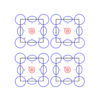
The authors predict a resonance arising in a quantum dot connected to source and drain leads and side-coupled to a Kitaev wire sustaining Majorana end modes. The Majorana bound state in the wire’s end leaks into the dot, generating a resonance pinned to the Fermi level of the leads. This may provide a means to detect Majorana modes.

Switching field distributions with spin transfer torques in perpendicularly magnetized spin-valve nanopillars

D. B. Gopman, D. Bedau, S. Mangin, E. E. Fullerton, J. A. Katine, and A. D. Kent

Phys. Rev. B 89, 134427 (2014) - Published 28 April, 2014

These experiments confirm the extent of applicability of an effective-barrier/temperature model for understanding the thermal stability of a nanopillar’s magnetization under spin-transfer torques.

Superconductivity from repulsion in LiFeAs: Novel s-wave symmetry and potential time-reversal symmetry breaking

F. Ahn, I. Eremin, J. Knolle, V. B. Zabolotnyy, S. V. Borisenko, B. Büchner, and A. V. Chubukov

Phys. Rev. B 89, 144513 (2014) - Published 25 April, 2014

By analyzing the structure of the pairing interaction and superconducting gap in LiFeAs, and by reconciling calculations with experiment, the authors identify the most likely candidate as well as a new state that might exist at low temperatures.

Optical conductivity of a two-dimensional metal at the onset of spin-density-wave order

Andrey V. Chubukov, Dmitrii L. Maslov, and Vladimir I. Yudson

Phys. Rev. B 89, 155126 (2014) - Published 21 April, 2014

Calculations of the zero-temperature optical conductivity of a two-dimensional metal reveal non-Fermi-liquid behavior. The authors detail contributions from “lukewarm” fermions outside the “hot” regions of the Fermi surface.

Relativistic quasiparticle self-consistent electronic structure of hybrid halide perovskite photovoltaic absorbers

Federico Brivio, Keith T. Butler, Aron Walsh, and Mark van Schilfgaarde

Phys. Rev. B 89, 155204 (2014) - Published 21 April, 2014

Challenging quasiparticle self-consistent GW calculations expose the major effects of spin-orbit coupling on the optical spectra of these promising solar-cell materials. Nonparabolic dispersion of valence bands is important to the device behavior of such absorbers.

Spin-directed network model for the surface states of weak three-dimensional Z2 topological insulators

Hideaki Obuse, Shinsei Ryu, Akira Furusaki, and Christopher Mudry

Phys. Rev. B 89, 155315 (2014) - Published 21 April, 2014

The authors construct a network model of helical edge states that describes localization and transport properties on the surface of a weak three-dimensional topological insulator with time-reversal symmetry.

Statistical topological insulators

I. C. Fulga, B. van Heck, J. M. Edge, and A. R. Akhmerov

Phys. Rev. B 89, 155424 (2014) - Published 21 April, 2014

Generalizing earlier results, the authors introduce the concept of a <\italic>statistical topological insulator<-italic> protected by a Z2 invariant, and offer the general derivation of a topological invariant for such a phase.

Real-time electrical detection of coherent spin oscillations

Felix Hoehne, Christian Huck, Martin S. Brandt, and Hans Huebl

Phys. Rev. B 89, 161305(R) (2014) - Published 21 April, 2014

The authors’ method combines pulsed electrically detected magnetic resonance with rf reflectometry measurement techniques, thereby allowing the study of fast spin-dependent transport processes in a broad range of material systems.

Z2 phase diagram of three-dimensional disordered topological insulators via a scattering matrix approach

Björn Sbierski and Piet W. Brouwer

Phys. Rev. B 89, 155311 (2014) - Published 15 April, 2014

Using a scattering-matrix method, the authors compute a phase diagram of weak and strong topological insulators in the mass--disorder plane. Clarification of the issue of a “defeated weak topological insulator phase” is offered.

Breakdown of the electron-spin motion upon reflection at metal-organic or metal-carbon interfaces

F. Djeghloul, P. Dey, A. Hallal, E. Urbain, S. Mahiddine, M. Gruber, D. Spor, M. Alouani, H. Bulou, F. Scheurer, and W. Weber

Phys. Rev. B 89, 134411 (2014) - Published 14 April, 2014

Spin-polarized electron scattering from ferromagnetic metal surfaces with submonolayer coverage by organic molecules shows complete breakdown of the angular spin motion of reflected electrons. This appears to be universal: independent of molecule, surface, electron energy, and other physical parameters.

Lineshape of the singlet-triplet excitations in the dimer system Sr3Cr2O8 to first order in the high-density 1/z expansion

J. Jensen, D. L. Quintero-Castro, A. T. M. N. Islam, K. C. Rule, M. Månsson, and B. Lake

Phys. Rev. B 89, 134407 (2014) - Published 11 April, 2014

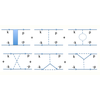
The authors study spin-triplet excitations in the strongly correlated spin-1/2 dimer system Sr3Cr2O8 via inelastic neutron scattering. They find that the thermal broadening of the excitations can be accurately described by going beyond RPA via diagrammatic high-density 1/z expansion.

Search for spontaneous edge currents and vortex imaging in Sr2RuO4 mesostructures

P. J. Curran, S. J. Bending, W. M. Desoky, A. S. Gibbs, S. L. Lee, and A. P. Mackenzie

Phys. Rev. B 89, 144504 (2014) - Published 9 April, 2014

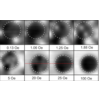
Scanning Hall probe microscopy does not detect the “smoking gun” magnetic signatures of a chiral order parameter at the edges of Sr2RuO4 microstructures, but it does reveal surprising changes in screening and bulk pinning above a threshold field strength.

Optical spin injection in graphene with Rashba spin-orbit interaction

M. Inglot, V. K. Dugaev, E. Ya. Sherman, and J. Barnaś

Phys. Rev. B 89, 155411 (2014) - Published 8 April, 2014

The authors predict efficient optical spin injection in graphene in the presence of a small in-plane magnetic field. For experimentally accessible spin-orbit couplings, they show that a spin injection efficiency of up to 0.20 per absorbed photon should be achievable.

Generalized Langevin equation: An efficient approach to nonequilibrium molecular dynamics of open systems

L. Stella, C. D. Lorenz, and L. Kantorovich

Phys. Rev. B 89, 134303 (2014) - Published 7 April, 2014

The authors present a very general integration scheme for simulating realistic dissipative systems with non-Markovian dynamics and colored noise. The key is a simple, efficient algorithm for the memory kernel.

Superconductivity from weak repulsion in hexagonal lattice systems

Rahul Nandkishore, Ronny Thomale, and Andrey V. Chubukov

Phys. Rev. B 89, 144501 (2014) - Published 7 April, 2014

The authors examine thoroughly the general cases in which superconductivity can arise on a hexagonal lattice with purely repulsive bare interactions, and find superconducting phases with unusual symmetries: f- and chiral d+id-wave.

Sudden reversal in the pressure dependence of Tc in the iron-based superconductor CsFe2As2: A possible link between inelastic scattering and pairing symmetry

F. F. Tafti, J. P. Clancy, M. Lapointe-Major, C. Collignon, S. Faucher, J. A. Sears, A. Juneau-Fecteau, N. Doiron-Leyraud, A. F. Wang, X.-G. Luo, X. H. Chen, S. Desgreniers, Young-June Kim, and Louis Taillefer

Phys. Rev. B 89, 134502 (2014) - Published 4 April, 2014

The authors establish that pressure changes the pairing symmetry in AFe2As2 (A = K, Cs) by tuning the competing inelastic scattering processes that favor different pairing states.

Dissipationless kinetics of one-dimensional interacting fermions

I. V. Protopopov, D. B. Gutman, M. Oldenburg, and A. D. Mirlin

Phys. Rev. B 89, 161104(R) (2014) - Published 4 April, 2014

The authors show that one-dimensional interacting fermions out of equilibrium can be described by a kinetic equation involving effective right- and left-moving quasiparticles.

Disorder and magnetic-field-induced breakdown of helical edge conduction in an inverted electron-hole bilayer

D. I. Pikulin, T. Hyart, Shuo Mi, J. Tworzydło, M. Wimmer, and C. W. J. Beenakker

Phys. Rev. B 89, 161403(R) (2014) - Published 4 April, 2014

The authors investigate how disorder affects the breakdown of the quantum spin Hall effect in a perpendicular magnetic field. They find two characteristic fields, associated with transition to the quantum Hall regime or a quasimetallic regime, respectively.

Sign In to Your Journals Account

Filter

Section

Filter

Article Lookup

Enter a citation