Highlights

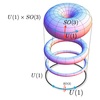
Multiscale and multimodel simulation of Bloch-point dynamics

Christian Andreas, Attila Kákay, and Riccardo Hertel

Phys. Rev. B 89, 134403 (2014) - Published 3 April, 2014

The authors present a new approach to simulating the dynamical properties of point singularities in magnetization (Bloch points) with atomic resolution, by combining micromagnetic and spin-lattice simulations.

Galvanomagnetic and thermogalvanomagnetic transport effects in ferromagnetic fcc CoxPd1−x alloys from first principles

S. Wimmer, D. Ködderitzsch, and H. Ebert

Phys. Rev. B 89, 161101(R) (2014) - Published 2 April, 2014

\textit{Ab initio} calculations of the anisotropic Seebeck and anomalous Nerst effects in Co-Pd alloys give a clearer microscopic view of the thermal effects important in spin caloritronics.

Asymptotic freedom at zero temperature in free-standing crystalline membranes

E. I. Kats and V. V. Lebedev

Phys. Rev. B 89, 125433 (2014) - Published 31 March, 2014

Quantum vibrational fluctuations are large enough to destabilize a freestanding two-dimensional crystalline membrane, such as a graphene sheet. The authors estimate the magnitude of this effect and suggest how to probe it experimentally.

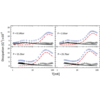
Impact of n-type doping on the carrier dynamics of silicon nanowires studied using optical-pump terahertz-probe spectroscopy

A. Beaudoin, B. Salem, T. Baron, P. Gentile, and D. Morris

Phys. Rev. B 89, 115316 (2014) - Published 25 March, 2014

In thin silicon nanowires n-doped with phosphorus, surface traps induce band bending and one observes strongly diminished photocarrier mobilities and lifetimes, compared to those for bulk samples.

Ballistic spin resonance in multisubband quantum wires

Marco O. Hachiya, Gonzalo Usaj, and J. Carlos Egues

Phys. Rev. B 89, 125310 (2014) - Published 25 March, 2014

A fully quantum calculation of Dyakonov-Perel’ spin relaxation in multisubband quantum wires is used to interpret ballistic spin resonance, and to predict anomalous spin resonances when the external magnetic field is aligned with the effective oscillating spin-orbit field.

Entanglement spectra of interacting fermions in quantum Monte Carlo simulations

Fakher F. Assaad, Thomas C. Lang, and Francesco Parisen Toldin

Phys. Rev. B 89, 125121 (2014) - Published 24 March, 2014

The authors present a detailed method for calculating higher order Renyi entanglement entropies and the entanglement spectrum using auxiliary quantum Monte Carlo. These findings allow the controlled and uncomplicated access to the entanglement properties of correlated fermion systems.

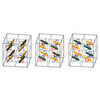
Geometric ferroelectricity in fluoroperovskites

A. C. Garcia-Castro, Nicola A. Spaldin, A. H. Romero, and E. Bousquet

Phys. Rev. B 89, 104107 (2014) - Published 21 March, 2014

The authors analyze the unusual origin of the ferroelectric instability in ABF3 fluoroperovskites using first-principles calculations, and predict that a member of this family, NaMnF3, will become multiferroic under biaxial epitaxial strain.

g-tensor control in bent carbon nanotube quantum dots

R. A. Lai, H. O. H. Churchill, and C. M. Marcus

Phys. Rev. B 89, 121303(R) (2014) - Published 20 March, 2014

An electrostatic field can be used to control the magnitude and direction of the g-tensor for a single or double quantum dot, as proved by tuning via side and back gates the splitting of the Kondo peak in conductance.

Emergent criticality and Friedan scaling in a two-dimensional frustrated Heisenberg antiferromagnet

Peter P. Orth, Premala Chandra, Piers Coleman, and Jörg Schmalian

Phys. Rev. B 89, 094417 (2014) - Published 19 March, 2014

The authors study the phase diagram and transitions of an isotropic Heisenberg spin system on a windmill lattice, and identify at finite temperature an emergent critical phase with algebraic order. This algebraic order is established by both a renormalization-group and an equivalent geometric analysis of the effective low-energy nonlinear sigma model.

Stabilizing spin coherence through environmental entanglement in strongly dissipative quantum systems

Soumya Bera, Serge Florens, Harold U. Baranger, Nicolas Roch, Ahsan Nazir, and Alex W. Chin

Phys. Rev. B 89, 121108(R) (2014) - Published 18 March, 2014

The authors propose an entangled variational coherent-state expansion for the ground state of the Ohmic spin-boson model, and observe a surprisingly dramatic influence of environmental entanglement on qubit coherence.

Optical properties and electronic structure of the nonmetallic metal FeCrAs

A. Akrap, Y. M. Dai, W. Wu, S. R. Julian, and C. C. Homes

Phys. Rev. B 89, 125115 (2014) - Published 17 March, 2014

The temperature-dependent polarized infrared spectrum of single-crystalline FeCrAs shows nonmetallic power-law behavior, due primarily to a scattering rate that rises as temperature falls. This contrasts with the anisotropic metallic character of the material’s optical conductivity at room temperature.

Dissipation signatures of the normal and superfluid phases in torsion pendulum experiments with He3 in aerogel

N. Zhelev, R. G. Bennett, E. N. Smith, J. Pollanen, W. P. Halperin, and J. M. Parpia

Phys. Rev. B 89, 094513 (2014) - Published 13 March, 2014

3He confined in a silica aerogel shows an unexplained dissipation below the critical temperature.

Hall viscosity of hierarchical quantum Hall states

M. Fremling, T. H. Hansson, and J. Suorsa

Phys. Rev. B 89, 125303 (2014) - Published 12 March, 2014

An extensive theoretical and numerical work pushing the study of the Hall viscosity considerably beyond the known regime.

Non-180° polarization rotation of ferroelectric (Bi0.5Na0.5)TiO3 single crystals under electric field

Yuuki Kitanaka, Ken Yanai, Yuji Noguchi, Masaru Miyayama, Yutaka Kagawa, Chikako Moriyoshi, and Yoshihiro Kuroiwa

Phys. Rev. B 89, 104104 (2014) - Published 10 March, 2014

The authors study polarization-switching dynamics in (Bi1/2Na1/2)TiO3 (BNT), a leading Pb-free ferroelectric material. In situ high-energy synchrotron x-ray diffraction shows that switching occurs via non-180° intermediate domain states, and a model to describe the polarization reversal is proposed.

Origin of electronic dimers in the spin-density wave phase of Fe-based superconductors

Maria N. Gastiasoro, P. J. Hirschfeld, and Brian M. Andersen

Phys. Rev. B 89, 100502(R) (2014) - Published 7 March, 2014

This is the first microscopic theory of impurity-induced local spin nematic order in iron-based superconductors that explains the experimentally observed transport anisotropy in their spin-density-wave phase.

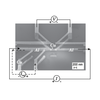
Nonlocal supercurrent in mesoscopic multiterminal SNS Josephson junction in the low-temperature limit

T. E. Golikova, M. J. Wolf, D. Beckmann, I. E. Batov, I. V. Bobkova, A. M. Bobkov, and V. V. Ryazanov

Phys. Rev. B 89, 104507 (2014) - Published 7 March, 2014

The authors experimentally observe the nonlocal supercurrent effect in a multiterminal SNS system excited to a nonequilibrium state.

Inverse spin Hall effect in Ni81Fe19/normal-metal bilayers

M. Obstbaum, M. Härtinger, H. G. Bauer, T. Meier, F. Swientek, C. H. Back, and G. Woltersdorf

Phys. Rev. B 89, 060407(R) (2014) - Published 28 February, 2014

A coplanar waveguide under a bilayer in a preferred geometry yields precise and reliable measurements of the spin Hall angle, as well as the spin diffusion length.

Orbital magnetization of insulating perovskite transition-metal oxides with a net ferromagnetic moment in the ground state

S. A. Nikolaev and I. V. Solovyev

Phys. Rev. B 89, 064428 (2014) - Published 28 February, 2014

Correlation between metal-insulator transitions and structural distortions in high-electron-density SrTiO3 quantum wells

Jack Y. Zhang, Clayton A. Jackson, Ru Chen, Santosh Raghavan, Pouya Moetakef, Leon Balents, and Susanne Stemmer

Phys. Rev. B 89, 075140 (2014) - Published 28 February, 2014

SrTiO3 quantum wells exhibit very different transport behavior when sandwiched between layers of SmTiO3 versus GdTiO3, with structural distortions playing an important role.

All-optical tomography of electron spins in (In,Ga)As quantum dots

S. Varwig, A. René, Sophia E. Economou, A. Greilich, D. R. Yakovlev, D. Reuter, A. D. Wieck, T. L. Reinecke, and M. Bayer

Phys. Rev. B 89, 081310(R) (2014) - Published 28 February, 2014

Electron spin tomography in singly charged quantum dots is demonstrated at the picosecond timescale, which shows promise for investigating qubit entanglement and implementing quantum gates.

Sign In to Your Journals Account

Filter

Section

Filter

Article Lookup

Enter a citation