Highlights

Fast-driving spectroscopy of current-phase relationships of individual Josephson elements

Maxim Tjøtta, Devashish Shah, Kanishk Modi, Marco Valentini, Rubén Seoane Souto, Georgios Katsaros, and Jeroen Danon

Phys. Rev. Applied 26, 044017 (2026) - Published 6 October, 2026

Extracting the current-phase relationship (CPR) of superconducting junctions in a noninvasive manner has proven to be difficult in the lab. The authors present an innovative method that overcomes the main limitations of conventional approaches, allowing the full harmonic content of the CPR to be extracted by subjecting the junction to a high-frequency ac drive. This method is demonstrated experimentally and found to be robust against experimental noise.

High-sensitivity vapor-cell quasi-dc atomic electric field sensor

Amy Damitz, George Burns, and Yuan-Yu Jau

Phys. Rev. Applied 26, 044014 (2026) - Published 6 October, 2026

For electric field (E-field) sensing applications that require high sensitivity with very small sensing volume or high spatial resolution at low frequencies near dc, conventional electronic approaches suffer from low efficiency (due to small antenna size) and higher intrinsic noise. Using a simple vapor cell, innovative technical schemes, and an unexpected phenomenon reminiscent of magnetoresistance, the authors demonstrate a state-of-the-art quasi-dc atomic E-field sensor using “antenna-less” atoms. This approach is expected to enable electronic diagnostics, communication, proximity detection, charge-signature tracing, bioscience and geoscience research, and more.

Optimization of Si/Si-Ge heterostructures for large and robust valley splitting in silicon qubits

Abel Thayil, Lasse Ermoneit, Lars R. Schreiber, Thomas Koprucki, and Markus Kantner

Phys. Rev. Applied 26, 044012 (2026) - Published 5 October, 2026

Silicon spin qubits offer a promising platform for scalable quantum processors, but small and highly variable valley splittings can compromise qubit operation across a device. This work uses constrained variational optimization with epitaxial-growth-motivated constraints to design feasible germanium concentration profiles in Si/Si-Ge quantum wells, to enhance deterministic valley splitting while suppressing variability induced by alloy disorder. The principal result is a “modulated wiggle well”, which provides a large, robust, and electrically tunable valley splitting. The approach provides a systematic route for designing reproducible and epitaxially feasible silicon-qubit devices.

Rate-limited nonradiative recombination at a single point defect revealed by time-resolved cathodoluminescence

Thomas F. K. Weatherley, Gunnar Kusch, Jean-François Carlin, Raphaël Butté, Rachel A. Oliver, and Nicolas Grandjean

Phys. Rev. Applied 26, 044011 (2026) - Published 5 October, 2026

Nonradiative point defects in semiconductors are often a major hurdle for efficiency and reliability in optoelectronics, yet directly probing these defects remains difficult. This study uses time-resolved cathodoluminescence mapping plus a diffusion-recombination model to isolate and quantify carrier dynamics at a single point defect in an (In,Ga)N/GaN quantum well. Recombination at the defect is rate-limited by a 16-ps delay, setting a hard bottleneck on defect activity. This insight predicts that defect-related nonradiative recombination saturates at carrier densities routinely reached in LEDs, revealing a fundamental limit not captured by traditional macroscale recombination models.

Optically induced thermal demagnetization and switching of antiferromagnetic domains in NiO and CoO thin films

Maciej Dąbrowski, Tong Wu, Connor R. J. Sait, Jia Xu, Paul S. Keatley, Yizheng Wu, Robert J. Hicken, and Olena Gomonay

Phys. Rev. Applied 26, 044008 (2026) - Published 2 October, 2026

Antiferromagnets are promising for fast, energy-efficient, high-density memory technologies, but their compensated spins make their domains difficult to image and control optically. The authors use magneto-optical birefringence imaging to show that a Pt capping layer enables ultrafast laser pulses to modify domains in insulating NiO and CoO films. Sweeping the beam generates a thermal gradient that drives domain walls toward colder regions, producing partial switching that can be reversed by changing the sweep direction. These findings provide a path toward optically controlled antiferromagnetic memory devices.

Quantum magnetometer chip based on industrially scalable 4H-SiC technology

P. A. Stuermer, D. Wirtitsch, T. Steidl, R. Wörnle, J. Körber, W. Schustereder, C. Zmoelnig, P. Urlesberger, F. Chiapolino, S. Meinardi, K. Edelmann, M. Kern, J. Anders, S. Krainer, H. Heiss, M. Trupke, and J. Wrachtrup

Phys. Rev. Applied 26, 044002 (2026) - Published 1 October, 2026

SiC-based quantum magnetometry is vital for advanced sensing fields because it offers a path to volume-compatible chips, but it is held back because its sensitivity is lower than other platforms like N-V diamond color centers. This study uses a planar 4H-SiC waveguide platform and wafer-scale fabrication to seamlessly integrate and excite large V2 ensembles. Notably, this streamlined layout achieves a shot-noise limit of 30 nT/√Hz, boosting sensitivity by 2–3 orders of magnitude over that of standard, confocal SiC methods while preserving coherent control.

Self-seeded x-ray free-electron laser with high spectral density and photon energy

Lu Cao, Tianyun Long, Winfried Decking, Marc Guetg, Vitali Kocharyan, Naresh Kujala, Christoph Lechner, Anders Madsen, Theophilos Maltezopoulos, Giovanni Perosa, Weilun Qin, Evgeni Saldin, Matthias Scholz, Svitozar Serkez, Andrei Trebushinin, Jiawei Yan, Shan Liu, and Gianluca Geloni

Phys. Rev. Applied 26, 034071 (2026) - Published 29 September, 2026

Producing narrow-band, high-spectral-density pulses from an x-ray free-electron laser (XFEL) is important for demanding applications at extreme photon energies, such as high-resolution spectroscopy and studies of structural dynamics, but conventional hard-x-ray self-seeding becomes increasingly limited as photon energy increases. This study extends hard-x-ray self-seeding at the European XFEL to 18 keV, and explores second-harmonic-generation self-seeding as a route toward even higher photon energies. Experiments demonstrate coherent amplification of the second harmonic at 15 and 18 keV, while simulations show the potential for narrowband operation at 30 keV.

High-quality single photons from cavity-enhanced biexciton-to-exciton transition

Nils Heinisch, Francesco Salusti, Mark R. Hogg, Timon L. Baltisberger, Malwina A. Marczak, Sascha R. Valentin, Arne Ludwig, Klaus D. Jöns, Richard J. Warburton, and Stefan Schumacher

Phys. Rev. Applied 26, 034068 (2026) - Published 29 September, 2026

Semiconductor quantum dots are excellent deterministic sources of single photons. One of the best routes to generate pure single photons is through the biexciton-exciton cascade, but achieving high Hong-Ou-Mandel visibility (or photon indistinguishability) is fundamentally hindered by the finite ratio of radiative lifetimes of the two excited electronic states in that cascade. This study reduces the biexciton lifetime by selective cavity enhancement, and uses the single photon from the biexciton-to-exciton transition. This approach is a powerful path to achieving excellent single-photon indistinguishability and purity, plus high brightness.

Roles of quadratic and biquadratic couplings in the spin-wave modes of Co−Fe/Ru/Ni−Fe artificial spin ices

Riccardo Fornari, Mohammad Tomal Hossain, Raffaele Silvani, Vinayak Shantaram Bhat, Rawnak Sultana, M. Benjamin Jungfleisch, and Gianluca Gubbiotti

Phys. Rev. Applied 26, 034063 (2026) - Published 25 September, 2026

Artificial spin ices are promising for reconfigurable magnonics and unconventional computing because their magnetic states and spin-wave spectra can be tailored, but available control mechanisms are limited. The authors pattern an exchange-coupled Co-Fe/Ru/Ni-Fe synthetic ferrimagnet into an artificial spin lattice and study its static and dynamic behavior. They show that quadratic and biquadratic interlayer exchange coupling can stabilize orthogonal layer magnetizations, drive hard-axis alignment, and reshape the spin-wave spectrum. This additional degree of freedom may enable field-reconfigurable magnonic crystals, spin-wave filters, and artificial-spin-ice metamaterials.

Experimental signatures of a Z^X^ beam-splitter interaction between Kerr-cat and transmon qubits

Josiah Cochran, Haley M. Cole, Hebah Goderya, Zhuoqun Hao, Yao-Chun Chang, Theo Shaw, Aikaterini Kargioti, and Shyam Shankar

Phys. Rev. Applied 26, 034058 (2026) - Published 24 September, 2026

Fault-tolerant quantum computing depends on ancilla qubits that can extract error syndromes from data qubits, but ancilla errors can propagate back to the data qubits, contaminating the very information they are meant to protect. The Kerr-cat qubit has been proposed as a better ancilla, but a suitable interaction between Kerr-cat and transmon qubits needs to be experimentally verified. This study finds a beam-splitter interaction between a Kerr-cat and a transmon, producing an effective ẐX̂ coupling suitable for parity readout, and confirms expected behavior across different cat sizes and drive strengths.

Convex preoptimization for electromagnetic inverse design

Nathaniel Morrison, Xujia He, Siqi Zhai, and Eric Y. Ma

Phys. Rev. Applied 26, 034051 (2026) - Published 23 September, 2026

Computers can now autonomously design intricate electromagnetic devices for communication, sensing, and quantum technologies, but optimizers routinely get trapped by locally optimal designs that are still far from the best. This work temporarily reshapes the governing physics into a smooth problem that can be solved exactly. The reshaped problem delivers not only a blueprint for the device but also a map of its own uncertainty, showing where to trust the blueprint and where to keep exploring. Across eight distinct photonic and microwave design tasks, this convex preoptimization consistently beats conventional stop-and-restart sweeps while using a fraction of the computing time.

Disorder-independent hole-spin manipulation by hopping

Biel Martinez, Ana Sempere-Sanchis, José C. Abadillo-Uriel, and Yann-Michel Niquet

Phys. Rev. Applied 26, 034045 (2026) - Published 21 September, 2026

Spin manipulation by hopping has emerged as an attractive approach for efficient spin control in arrays of germanium hole-spin qubits. The physical mechanism relies on disorder-induced differences in the axes of spin precession in neighboring quantum dots, though, and thus is ineffective in the absence of disorder. This work proposes electrostatic squeezing of the quantum dots to engineer the spin-precession axis deterministically, which would render spin manipulation independent of any disorder. Remarkably, the protocol remains robust even under moderate disorder, offering a promising pathway for spin manipulation in large, sparse spin-qubit arrays.

Reconfigurable circuit for mode-tunable topological quantum structured light

Pedro Ornelas, Tatjana Kleine, André G. de Oliveira, Carmelo Rosales-Guzmán, Andrew Forbes, and Isaac Nape

Phys. Rev. Applied 26, 034043 (2026) - Published 18 September, 2026

Quantum topological structured light offers a promising route to robust information encoding, but its practical realization is limited by the challenge of generating high-quality states in a reconfigurable manner. The authors demonstrate an interferometric approach that generates high-fidelity topological structured light by mapping spatial-mode entanglement onto hybrid spatial-polarization entangled states, with the interferometer implementing a reconfigurable controlled-unitary operation through programmable spatial modulation. This versatile platform for generating high-quality topological quantum states enables adaptable architectures for photonic quantum information processing.

Direct observation of photon-induced vortices in superconducting films

Takeshi Jodoi, Fuminori Hirayama, Tetsuya Tsuruta, Takahiro Kikuchi, and Daiji Fukuda

Phys. Rev. Applied 26, 034005 (2026) - Published 2 September, 2026

What happens when a photon is absorbed by a superconductor? Although vortex-antivortex pairs have long been suspected to play a central role in superconducting photon detection, their dynamics following photon absorption have eluded direct observation. By monitoring quantized voltage signals generated by photon-induced vortices, the authors reveal their generation statistics and demonstrate photon-number resolution. This work provides a rare microscopic view of photon detection in superconductors, and opens a route toward fast superconducting photon-number-resolving detectors.

Closed-loop dual-channel atomic beam interferometry beyond the half-fringe limit

Wei-Chen Jia (贾伟辰), Yue Xin (辛约), Ke Shen (申可), Zhi-Xin Meng (孟至欣), Xiang-Xiang Lu (路想想), Yi-Cheng Deng (邓意成), Yuan-Xing Liu (刘院省), and Yan-Ying Feng (冯焱颖)

Phys. Rev. Applied 26, 034003 (2026) - Published 1 September, 2026

Atomic interferometers offer extraordinary inertial sensitivity, yet their intrinsically periodic response has long prevented continuous operation over a wide dynamic range. The authors demonstrate a dual-channel closed-loop atomic beam interferometer, enabling simultaneous quantum feedback for rotation and acceleration. By converting periodic matter-wave interference into continuously tracked control parameters, the scheme overcomes the conventional half-fringe limitation while preserving precision. This advance brings practical quantum inertial navigation a significant step closer.

Battery-free wireless quartz-crystal-microbalance sensor operating at a range of 50 m

Motoyuki Hamana, Ambuj Kumar Gautam, Motoharu Haga, Riki Nishihara, Wenlou Yuan, Fumihito Kato, Nobutomo Nakamura, Hiroki Okita, and Hirotsugu Ogi

Phys. Rev. Applied 26, 024067 (2026) - Published 24 August, 2026

Starting from a quartz-crystal microbalance, the authors develop a battery-free wireless sensing technology that enables remote measurements of structural strain and gas concentration over distances exceeding 50 m. The system enhances the electromechanical coupling between an AT-cut quartz resonator (packaged in a slightly pre-bent state) and electromagnetic waves, enabling long-range sensing without onboard power sources or electrical connections. The ability to perform battery-free long-range sensing is promising for smart infrastructure monitoring, with applications in bridges, pipelines, nuclear facilities, and industrial plants.

Electromechanical coupling at tunable band extrema in flexoelectric metamaterials

Kshiteej J. Deshmukh, Ihina Mahajan, Alper Erturk, and Pradeep Sharma

Phys. Rev. Applied 26, 024063 (2026) - Published 24 August, 2026

Stopping and localizing elastic waves can concentrate energy for high-sensitivity sensing and harvesting, but this often requires intricately tuned lattices or symmetry-restricted piezoelectric transducers. This study finds that flexoelectricity—the universal coupling between strain gradients and electric polarization—could be combined with higher-order elasticity to create stable, tunable zero-group-velocity extrema and stationary-inflection modes. Introducing a defect cavity for tighter localization increases both open-circuit voltage and mass responsivity. The resulting self-sensing, electrically reconfigurable resonators could enable compact devices for diverse applications.

Timing jitter induced by stochastic baseline fluctuations in high-count-rate superconducting nanowire single-photon detectors

Dianpeng Wang, You Xiao, Jiamin Xiong, Chenrui Wang, Zhen Wan, Hongxin Xu, Chaomeng Ding, Jia Huang, Lixing You, and Hao Li

Phys. Rev. Applied 26, 024049 (2026) - Published 18 August, 2026

Superconducting nanowire single-photon detectors with high count rates are important for quantum information processing, optical communication, and photon-starved imaging. Their timing performance is limited by excess jitter, though, and the underlying physics is not fully understood. This study identifies stochastic baseline fluctuations caused by the finite memory of ac-coupled readout circuits as an important source of timing jitter at high count rates, and establishes a quantitative framework to predict their impact. Also, under pulsed illumination the timing jitter is found to reach a maximum at about half of the laser’s repetition rate.

Scalable simulation of quantum many-body dynamics with or-represented quantum algebra

Lukas Broers, Rong-Yang Sun, and Seiji Yunoki

Phys. Rev. Applied 26, 024046 (2026) - Published 18 August, 2026

Powerful and efficient numerical techniques have been central to theoretical research on quantum mechanical systems for decades. In the era of quantum advantage demonstrations, it is paramount to develop strong benchmarks that truly represent the classical frontier. This study presents a high-performance parallel implementation and large-scale demonstration of quantum dynamics simulated with OR-represented quantum algebra at a huge scale, retaining over a trillion Pauli strings while maintaining strong scaling behavior, using the supercomputer Fugaku. This algorithm enriches the body of classical high-performance methods and challenges current quantum advantage efforts.

Volatile resistive-switched state in a bulk organic conductor with a sharp metal-insulator transition

Riku Ishii, Ryo Motohashi, Keitaro Tada, Yusuke Suzuki, Takayoshi Kouchi, Hiroshi Oike, Fumitaka Kagawa, Reizo Kato, and Tetsuaki Itou

Phys. Rev. Applied 26, 024041 (2026) - Published 17 August, 2026

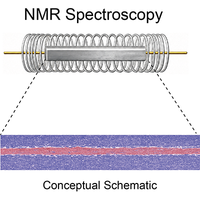
Volatile resistive switching in correlated-electron systems is promising for electronics applications, but the underlying physics remains obscured. Most studies have focused on inorganic thin films on substrates with strong thermal coupling to their surroundings, but here the authors investigate in a bulk organic single crystal with an exceptionally sharp metal-insulator transition. Bulk-sensitive microscopic NMR reveals the coexistence of metallic and insulating regions in the resistive-switched state, while weak thermal coupling to the surroundings allows temperature locking near the transition temperature and an “inverse Ohm’s law”, with voltage inversely proportional to current.

Sign In to Your Journals Account

Filter

Filter

Article Lookup

Enter a citation