Letters

Entanglement complexity in many-body systems from positivity scaling laws

Anna O. Schouten and David A. Mazziotti

Phys. Rev. A 113, L030401 (2026) - Published 5 March, 2026

A positivity scaling law is established: for quantum many-body systems, exactness of p positivity—positivity with respect to all p-body operators—for all system sizes implies that the entanglement complexity grows at most polynomially with p.

Factorization of static perturbation theory for weakly coupled systems using imaginary time

Georg Jansen

Phys. Rev. A 113, L030201 (2026) - Published 3 March, 2026

The author show that a reformulation of Rayleigh-Schrödinger perturbation theory in terms of imaginary time-dependent autocorrelation functions allows to write the energy of interaction between weakly coupled quantum systems with the help of integrals containing products of imaginary time cross correlation functions for the individual systems. Thus an alternative to the standard Casimir-Polder expression for the London dispersion energy is obtained.

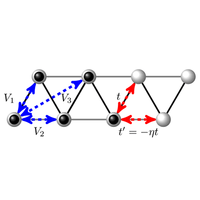
Chiral phases and dynamics of dipoles in triangular optical ladders

Arjo Dasgupta, Mateusz Łącki, Henning Korbmacher, Gustavo A. Domínguez-Castro, Jakub Zakrzewski, and Luis Santos

Phys. Rev. A 113, L031301 (2026) - Published 3 March, 2026

The authors study ground-state phases and dynamics arising from the interplay of frustration and dipolar interactions in models of itinerant bosons and spin models on a triangular optical ladder. They show that experiments with polar molecules provide a highly tunable platform for the quantum simulation of chiral and nematic phases.

Normal-mode-splitting-induced synchronization blockade in coupled quantum van der Pol oscillators

Nissi Thomas and M. Senthilvelan

Phys. Rev. A 113, L020202 (2026) - Published 25 February, 2026

The authors discuss a synchronization blockade in a coupled quantum van der Pol oscillator under the influence of an external drive induced by normal mode splitting. They show that the blockade can be controlled by tuning the coupling strength, enabling control of quantum synchronization through collective mode dynamics.

Towards gravimetry enhancement with squeezed states

Oziel R. de Araujo, Lucas S. Marinho, Jonas F. G. Santos, and Carlos H. S. Vieira

Phys. Rev. A 113, L020401 (2026) - Published 25 February, 2026

This Letter investigates quantum gravimetry with squeezed probe states, emphasizing how the orientation of squeezing in phase space affects estimation precision. The analysis clarifies the conditions under which correlated probes and appropriate measurement choices improve sensitivity across different interaction times.

Unveiling the self-orthogonality at exceptional points in driven PT-symmetric systems

Alexander Fritzsche, Riccardo Sorbello, Ronny Thomale, and Alexander Szameit

Phys. Rev. A 113, L021701 (2026) - Published 24 February, 2026

The authors study Rabi oscillations in a non-Hermitian, periodically driven lattice and show how the self-orthogonality of the eigenstates results in a divergence of the Rabi frequency. Using its PT-symmetric nature, they propose the total power of the system as a global observable, thus offering a framework for the detection of self-orthogonality.

General approximator for strong-field ionization rates

Manoram Agarwal, Armin Scrinzi, and Vladislav S. Yakovlev

Phys. Rev. A 113, L021101 (2026) - Published 20 February, 2026

Sub-optical-cycle dynamics of strong-field ionization can be accurately retrieved from ionization probabilities obtained for a set of few-cycle laser pulses. A general model with a few adjustable parameters reconciles analytical and ab initio approaches.

Comprehensive assessment of Th3+ properties for nuclear clock and fundamental physics applications

A. Chakraborty and B. K. Sahoo

Phys. Rev. A 113, L020801 (2026) - Published 17 February, 2026

The authors utilize relativistic coupled-cluster theory to accurately determine the isotope shifts, differential nuclear charge radii, electric dipole polarizabilities, and quadrupole moments of Th3+. Additionally, the study comprehensively characterizes the nuclear moments for both the ground and isomeric states of 229Th, delivering high-precision data essential for assessing systematic uncertainties in upcoming nuclear clock applications.

Universal analytic solution for the quantum transport of structured matter waves in magnetic optics

N. V. Filina and S. S. Baturin

Phys. Rev. A 113, L021302 (2026) - Published 10 February, 2026

The authors develop an exact analytic framework for the propagation of structured charged matter waves in nonuniform magnetic fields, linking their quantum evolution directly to classical magnetic-optics parameters.

Broadband quantum terahertz wave generation in laser-induced plasmas

Yi-Ben Wang, Zhuang-Wei Ding, Marcelo F. Ciappina, and Xue-Bin Bian

Phys. Rev. A 113, L021501 (2026) - Published 10 February, 2026

A scheme for the generation of broadband quantum terahertz waves is presented. The inherent quantum characteristics of these waves are envisioned to unlock possibilities for harnessing THz pulses in fields such as sensing, imaging, and communication technologies.

Spatiotemporal entanglement of the vacuum

Pravin Kumar Dahal and Kieran Hymas

Phys. Rev. A 113, L020201 (2026) - Published 9 February, 2026

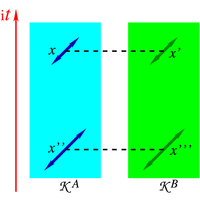
The authors study how the quantum vacuum links different regions of spacetime through entanglement, thereby finding a surprising asymmetry: past–right (future–left) pairing share full, wedge-wide entanglement, while past–left (future–right) pairing show only limited mode-to-mode correlations. Entanglement of the quantum vacuum in these sectors can be harvested and transferred to spatially separated detectors facilitating vacuum-assisted quantum teleportation.

Resonant light scattering by a slab of ultracold atoms

R. Vatré, R. Lopes, J. Beugnon, and F. Gerbier

Phys. Rev. A 113, L021301 (2026) - Published 2 February, 2026

The authors introduce an interferometric technique that measures the phase shift imprinted on a near-resonant laser beam transmitted through a thin slab of ytterbium atoms. This approach provides a sensitive and unambiguous probe of light-matter interactions in quantitative agreement with theoretical predictions, resolving a previously reported experimental discrepancy.

Directionality and quantum backfire in continuous-time quantum walks from delocalized states: Exact results

Jefferson J. Ximenes, Marcelo A. Pires, and José M. Villas-Bôas

Phys. Rev. A 113, L010407 (2026) - Published 29 January, 2026

Exact results for quantum walks demonstrate that combining complex hopping with tunable initial delocalization can lead to counterintuitive results: biased motion from unbiased states and a quantum backfire effect, where increased initial spreading leads to reduced spreading after a crossing time.

Tunable Fujita-Miyazawa-type three-body force in ultracold atoms

Hiroyuki Tajima, Eiji Nakano, and Kei Iida

Phys. Rev. A 113, L011305 (2026) - Published 28 January, 2026

The authors propose to use tabletop ultracold atomic experiments to simulate the Fujita-Miyazawa three-body force, which plays a crucial role in nuclear physics.

Quantum Hall correlations in tilted extended Bose-Hubbard chains

Hrushikesh Sable, Subrata Das, and Vito W. Scarola

Phys. Rev. A 113, L011304 (2026) - Published 27 January, 2026

The authors theoretically demonstrate the characteristics of a bosonic fractional quantum Hall (FQH) state in a one-dimensional extended Bose-Hubbard model subjected to a strong tilt potential. The FQH correlations are revealed through the energy spectra and entanglement properties.

Emergence of distinct relaxation behavior and the quantum regression theorem in the ultrastrong-coupling limit

Sakil Khan and Bijay Kumar Agarwalla

Phys. Rev. A 113, L010203 (2026) - Published 26 January, 2026

For decades, the applicability of the quantum regression theorem (QRT) was believed to require weak coupling and Markovian dynamics. This work shows that the QRT remains valid beyond the weak-coupling limit and, in particular, in the ultrastrong-coupling regime.

Spectrum measurement of quantum channels and application to Hamiltonian parameter estimation

Yuan-De Jin and Wen-Long Ma

Phys. Rev. A 113, L010406 (2026) - Published 26 January, 2026

The authors show that the spectrum of a quantum channel can be measured by tracking the probability of a specific outcome in repeated applications of the same channel. They then construct a class of concatenated channels, each one being a unitary channel on a target quantum system followed by a weak-measurement channel induced by a Ramsey measurement on a probe qubit, which can be utilized for estimating the parameters in the free Hamiltonians generating the unitary channels of the target system.

Investigating roles of triple excitations for high-precision determination of clock properties of alkaline-earth-metal singly charged ions

A. Chakraborty, Vaibhav Katyal, and B. K. Sahoo

Phys. Rev. A 113, L011101 (2026) - Published 23 January, 2026

The authors employ relativistic coupled-cluster theory to calculate the electric dipole polarizabilities, electric quadrupole moments, atomic lifetimes, and hyperfine structure constants of clock states in singly charged calcium, strontium, and barium ions. By incorporating triple excitations, the authors achieve sub-one-percent accuracy across several spectroscopic properties, providing a rigorous comparison with experimental data and previous calculations.

Creating and detecting Weyl bosons with ultracold Fermi atoms

Xiaoyong Zhang and C. A. R. Sá de Melo

Phys. Rev. A 113, L011303 (2026) - Published 23 January, 2026

This work reveals that ultracold fermions, in the presence of spin-orbit coupling and Rabi fields, can host Weyl bosons: massless, helical collective excitations that are the bosonic cousins of Weyl fermions. This research uncovers the topological nature of Weyl bosons and proposes clear experimental signatures for these exotic modes.

Entanglement detection beyond the local bound with coarsely calibrated measurements

Liang-Liang Sun, Yong-Shun Song, and Sixia Yu

Phys. Rev. A 113, L010405 (2026) - Published 20 January, 2026
The authors find that certain local correlations can also certify entanglement, provided that the devices generating them have previously produced nonlocal correlations.

Sign In to Your Journals Account

Filter

Category
Section

Filter

Article Lookup

Enter a citation