Letters

Consistent monitoring of quantum fluctuations

Xiangyu Cao

Phys. Rev. A 114, L010201 (2026) - Published 6 July, 2026

This Letter considers whether fluctuations of extensive quantities in many-body systems can be consistently monitored, namely, whether measurements can be performed without disturbing future outcome distribution. The answer turns out to be “no” in a large class of situations, and the amount of disturbance can be exactly calculated in terms of linear response quantities.

Engineering the geometric optics limit of wave-packet reflection from a planar interface

Sajjad Bashiri, Yahong Chen, and Sergey A. Ponomarenko

Phys. Rev. A 114, L011501 (2026) - Published 6 July, 2026

A phase-space nonseparable light beam can be tuned so that the Goos-Hänchen and Imbert-Fedorov shifts induced by reflection from a simple metal interface vanish at the same incidence angle. This Letter shows how spatial coherence, phase-space twist, and polarization provide practical control knobs for approaching a geometric-optics reflection limit with standard metallic coatings.

Tuning glassy dynamics using programmable disorder in tweezer arrays

K. Mukherjee, G. W. Biedermann, and R. J. Lewis-Swan

Phys. Rev. A 113, L061302 (2026) - Published 26 June, 2026

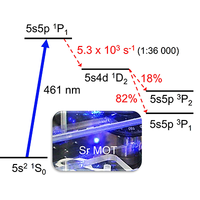
Direct measurement of the 5s5pP11→5s4dD21 decay rate in strontium

Naohiro Okamoto, Takatoshi Aoki, and Yoshio Torii

Phys. Rev. A 113, L060803 (2026) - Published 25 June, 2026

The authors experimentally measure the key transition parameters in neutral strontium directly. The measured branching ratio and decay rate differ substantially from previous theoretical predictions, motivating their reevaluation.

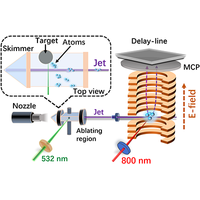
Differential momentum measurement of strong-field double ionization of Mg atoms

Libin Zheng, Linna Zhang, Huipeng Kang, and Xiaojun Liu

Phys. Rev. A 113, L061101 (2026) - Published 24 June, 2026

The authors have developed a time-of-flight spectrometer combining laser ablation with the supersonic molecular beam technique, which enables differential momentum measurement of nonsequential double ionization of Mg in strong laser fields. The experimental result provides direct evidence for the intermediate pathway of double ionization.

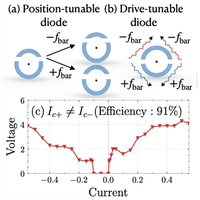
Proposals for realizing a Josephson diode in atomtronic circuits

Nalinikanta Pradhan, Rina Kanamoto, M. Bhattacharya, and Pankaj Kumar Mishra

Phys. Rev. A 113, L061502 (2026) - Published 23 June, 2026

Nonreciprocal Josephson transport is realized in an atomtronic ring condensate through tunable symmetry breaking induced by asymmetric junction placement and driving. The resulting Josephson diode effect achieves efficiencies up to 91%, providing a highly controllable neutral-atom platform for future quantum circuitry and atomtronic devices.

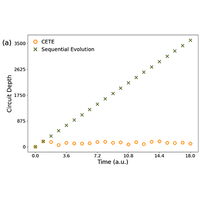
Many-body time evolution from a correlation-efficient quantum algorithm

Michael Rose and David A. Mazziotti

Phys. Rev. A 113, L060406 (2026) - Published 17 June, 2026

The authors introduce the correlation-efficient time-evolution algorithm, which recasts each step of time evolution as a time-independent correlation problem, for simulating quantum many-body dynamics. They demonstrate the approach by simulating the electronic time evolution of the hydrogen molecule and the helium hydride ion.

Beyond qubits: Multilevel quantum sensing for dark matter

Xiaolin Ma, Volodymyr Takhistov, Norikazu Mizuochi, and Ernst David Herbschleb

Phys. Rev. A 113, L060802 (2026) - Published 15 June, 2026

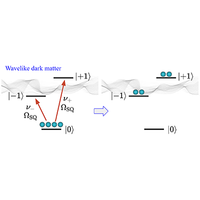
Searching for ultralight dark matter requires detecting extremely weak oscillating fields, where quantum sensing is especially promising. The authors show that spin-1 nitrogen vacancy centers in diamond can harness multilevel quantum states to combine enhanced signal response with common mode noise suppression, improving sensitivity to axion-electron dark matter interactions.

Th:SBO single crystal: A multifunction material for solid-state nuclear optical clocks

Lin Li, Qiaorui Gong, Yuxiang Li, Runzhe Yang, Guoliang Deng, Shanming Li, Peixiong Zhang, Chengchun Zhao, Yin Hang, Longsheng Ma, and Shining Zhu

Phys. Rev. A 113, L060801 (2026) - Published 12 June, 2026

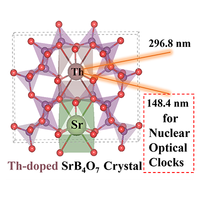
The authors grow thorium-doped strontium tetraborate (Th:SBO) single crystals via the Czochralski method and characterize their structural, electronic, and VUV optical properties. The Th:SBO crystals exhibit high VUV transmittance and are expected to enable a dual-functional platform that integrates nonlinear frequency-doubling with a thorium-doped host.

Non-Gaussian phase transition and cascade of instabilities in the dissipative quantum Rabi model

Mingyu Kang, Yikang Zhang, Kenneth R. Brown, and Thomas Barthel

Phys. Rev. A 113, L061703 (2026) - Published 11 June, 2026

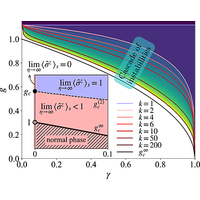
For the open quantum Rabi model, this paper shows that oscillator dephasing, a common decoherence channel, is a relevant perturbation that fundamentally alters the nature of the phase transition and triggers an intriguing cascade of instabilities. The authors also establish a new bridge between driven-dissipative systems and non-Hermitian quantum mechanics, where the Green’s-function dynamics are generated by simple non-Hermitian spin Hamiltonians.

Probe of generic quantum contextuality and nonlocality resources for qubits

Wei Li, Min-Xuan Zhou, Yun-Hao Shi, Z. D. Wang, Heng Fan, and Yan-Kui Bai

Phys. Rev. A 113, L060405 (2026) - Published 8 June, 2026

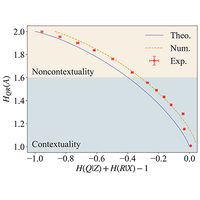
The authors prove that the entropic uncertainty relation with a quantum memory intrinsically connects local preparation contextuality with bipartite entanglement or Bell-CHSH nonlocality, which is captured by two quantitative trade-off relations via a faithful criterion for the contextuality detection. They further verify the theoretical results on solid-state superconducting systems through two independent demonstrations on the Quafu quantum cloud platform.

On-demand single-to-biphoton conversion in an atom-coupled chiral waveguide

Mao-Hua Wang, M. Artoni, G. C. La Rocca, and Jin-Hui Wu

Phys. Rev. A 113, L061702 (2026) - Published 8 June, 2026

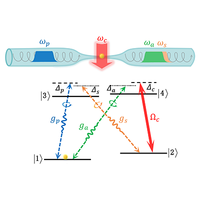
On-demand generation of photon pairs is here achieved through non-standard waveguide QED, where a four-level atom is strongly coupled to a chiral waveguide. Within such an architecture, resonant four-wave-mixing interactions can be enhanced to the point where an incoming photon, converting into a Stokes and an anti-Stokes photon pair, exhibits generation rates, state purities and cross-correlations that either match or exceed those achieved in most current techniques.

Necessity of entanglement for the typicality argument in statistical mechanics

Pedro S. Correia, Gabriel Dias Carvalho, and Thiago R. de Oliveira

Phys. Rev. A 113, L060202 (2026) - Published 5 June, 2026

Is entanglement essential for thermal equilibrium? The authors show that multipartite entanglement controls how rapidly fluctuations are suppressed: increasing entanglement produces exponentially strong typicality in small quantum systems, whereas macroscopic equilibrium emerges even without large-scale entanglement.

Revealing emergent many-body phenomena by analyzing large-scale space-time records of monitored quantum systems

Marcel Cech, Cecilia De Fazio, María Cea, Mari Carmen Bañuls, Igor Lesanovsky, and Federico Carollo

Phys. Rev. A 113, L060201 (2026) - Published 4 June, 2026

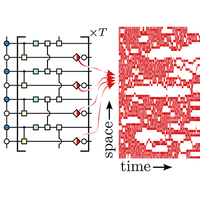
Midcircuit measurements allow the probing of quantum many-body dynamics with spatial and temporal resolution. In this work, the authors discuss how these records can reveal emergent many-body phenomena in space-time.

Exact many-body quantum dynamics in one-dimensional baths via collective spins

Joseph T. Lee, Silvia Cardenas-Lopez, Stuart J. Masson, Rahul Trivedi, and Ana Asenjo-Garcia

Phys. Rev. A 113, L061701 (2026) - Published 4 June, 2026

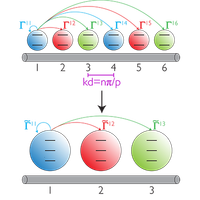
The authors introduce a symmetry-based method that provides an exponential reduction in the simulation complexity for emitters coupled to a one-dimensional electromagnetic bath. Partial permutational symmetry is exploited to group qubits into collective multilevel degrees of freedom, allowing for a study of the superradiant burst scaling, the spin length of the collective system, and the metrological properties of the dark states.

Protecting quantum states via the super-Zeno effect and anticoherence

C. Chryssomalakos, A. G. Flores-Delgado, E. Guzmán-González, and L. Hanotel

Phys. Rev. A 113, L060404 (2026) - Published 3 June, 2026

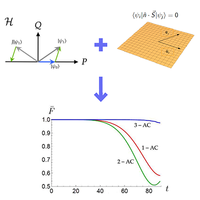
The authors introduce a protocol that combines the quantum super-Zeno effect with spin-anticoherent subspaces to suppress noise arising from spin interactions of polynomial order n in the spin operators. For n=1 a quantum gyroscope is obtained that protects states from unwanted rotations, while a spin-13/2 example achieves average fidelity with short-time scaling 1−F¯∝ t10.

Entanglement-enhanced correlation propagation in the one-dimensional SU(N) Fermi-Hubbard model

Mathias Mikkelsen and Ippei Danshita

Phys. Rev. A 113, L061301 (2026) - Published 3 June, 2026

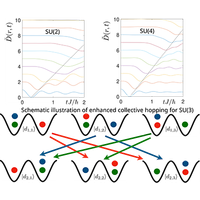
The authors demonstrate enhanced correlation propagation velocity in SU(N) Fermi-Hubbard models for N>2 for entangled initial states based on a simple analytic model of excitations and numeric evidence for N=2,3,4, and 6. This enhancement is bounded by the propagation velocity of the Bose-Hubbard model, which can be reached in the large N limit.

Optimal quantum reservoir learning in proximity to universality

Moein N. Ivaki, Matias Karjula, and Tapio Ala-Nissila

Phys. Rev. A 113, L060401 (2026) - Published 1 June, 2026

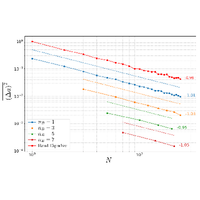
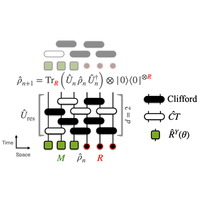
The authors investigate the boundary between classically simulable and computationally complex quantum dynamics within the framework of quantum reservoir computing by introducing a tunable N-qubit random circuit model, where a fraction p of Clifford gates are probabilistically substituted with nonstabilizing conditional-Tˆ gates. They establish a correspondence between the reservoir’s performance on temporal processing tasks and its entanglement-spectrum statistics and long-range nonstabilizer resource content.

Fractal structure of multipartite entanglement in monitored quantum circuits

Vaibhav Sharma and Erich J. Mueller

Phys. Rev. A 113, L060402 (2026) - Published 1 June, 2026

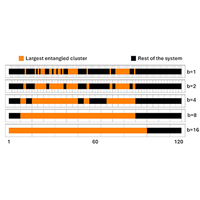
The authors show that quantum entanglement can organize into fractal geometric patterns due to repeated random measurements. They mapped the geometry of clusters of entangled qubits, finding that the largest cluster is riddled with holes at different scales, like the irregular self-repeating structure of coastlines or snowflakes.

Quantum-to-classical transition via single-shot generalized measurements

Zhenyu Xu

Phys. Rev. A 113, L060403 (2026) - Published 1 June, 2026

The author demonstrates that a single round of a generalized measurement is sufficient to eliminate quasiprobability negativity in phase space. From the decoherence perspective, this loss of negativity occurs abruptly at a critical time, which can be shorter than the conventional decoherence time.

Sign In to Your Journals Account

Filter

Category
Section

Filter

Article Lookup

Enter a citation