Browse by Subject

Chiral Photocurrent in Parity-Violating Magnet and Enhanced Response in Topological Antiferromagnet

Hikaru Watanabe and Youichi Yanase

Phys. Rev. X 11, 011001 (2021) - Published 4 January, 2021

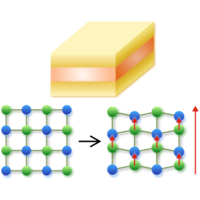
A new classification of photocurrent responses in light of symmetry violations in the presence of magnetic order unveils two new types of photocurrent that can be readily tuned and enhanced by topological electronic structure in solids.

Distinct Quantum Anomalous Hall Ground States Induced by Magnetic Disorders

Chang Liu, Yunbo Ou, Yang Feng, Gaoyuan Jiang, Weixiong Wu, Shaorui Li, Zijia Cheng, Ke He, Xucun Ma, Qikun Xue, and Yayu Wang

Phys. Rev. X 10, 041063 (2020) - Published 30 December, 2020

A study of charge transport in magnetic topological insulators reveals two distinct ground states in the quantum anomalous Hall effect, thus showing rich physics unique to this exotic phase.

Magnetoresistance Scaling and the Origin of H-Linear Resistivity in BaFe2(As1−xPx)2

Nikola Maksimovic, Ian M. Hayes, Vikram Nagarajan, James G. Analytis, Alexei E. Koshelev, John Singleton, Yeonbae Lee, and Thomas Schenkel

Phys. Rev. X 10, 041062 (2020) - Published 29 December, 2020

Unusual changes in electrical resistance in an iron-based superconductor arise from magnetic fluctuations that dissipate the momenta of charge carriers, according to new experimental data and theoretical analysis.

Theory of the Coherence of Topological Lasers

Ivan Amelio and Iacopo Carusotto

Phys. Rev. X 10, 041060 (2020) - Published 24 December, 2020

A new theoretical study shows that recently realized topological lasers offer competitive coherence compared to standard lasers as well as improved resilience to structural defects.

Thermal Hall Effects of Spins and Phonons in Kagome Antiferromagnet Cd-Kapellasite

Masatoshi Akazawa, Masaaki Shimozawa, Shunichiro Kittaka, Toshiro Sakakibara, Ryutaro Okuma, Zenji Hiroi, Hyun-Yong Lee, Naoki Kawashima, Jung Hoon Han, and Minoru Yamashita

Phys. Rev. X 10, 041059 (2020) - Published 23 December, 2020

Close coupling between spins and phonons in a magnetic insulator underlie a thermal version of the Hall effect, insight that sheds light on this novel behavior and could lead to magnetic control of thermal currents.

Fermi Surface Reconstruction without Symmetry Breaking

Snir Gazit, Fakher F. Assaad, and Subir Sachdev

Phys. Rev. X 10, 041057 (2020) - Published 21 December, 2020

A new model shows how electron fractionalization can mediate a change in a material’s Fermi surface without breaking translational symmetry, thus shedding light on recent puzzling experimental observations.

Evidence for Bosonization in a Three-Dimensional Gas of SU(N) Fermions

Bo Song, Yangqian Yan, Chengdong He, Zejian Ren, Qi Zhou, and Gyu-Boong Jo

Phys. Rev. X 10, 041053 (2020) - Published 16 December, 2020

Quantum simulations show that bosonization—bosonlike behavior emerging from an ensemble of fermions—can occur in 3D systems, a hypothesis that until now has been unresolved.

Normal State of Nd1−xSrxNiO2 from Self-Consistent GW+EDMFT

Francesco Petocchi, Viktor Christiansson, Fredrik Nilsson, Ferdi Aryasetiawan, and Philipp Werner

Phys. Rev. X 10, 041047 (2020) - Published 8 December, 2020

New calculations settle a debate about the importance of single-orbital versus multiorbital models in describing the electronic structure of recently discovered nickel oxide superconductors.

Low-Frequency Divergence and Quantum Geometry of the Bulk Photovoltaic Effect in Topological Semimetals

Junyeong Ahn, Guang-Yu Guo, and Naoto Nagaosa

Phys. Rev. X 10, 041041 (2020) - Published 30 November, 2020

High photocurrent generated by terahertz radiation impinging on topological semimetals derives from profound quantum-mechanical properties of these materials.

What Limits the Simulation of Quantum Computers?

Yiqing Zhou, E. Miles Stoudenmire, and Xavier Waintal

Phys. Rev. X 10, 041038 (2020) - Published 23 November, 2020

Classical computers can efficiently simulate the behavior of quantum computers if the quantum computer is imperfect enough.

Oxidation States, Thouless’ Pumps, and Nontrivial Ionic Transport in Nonstoichiometric Electrolytes

Paolo Pegolo, Federico Grasselli, and Stefano Baroni

Phys. Rev. X 10, 041031 (2020) - Published 12 November, 2020

The unusual properties of systems intermediate between normal metals and ionic conductors relate to topological features of the electronic ground state, leading to new insights into anomalous charge transport in electrolytes.

Quantum Electrodynamic Control of Matter: Cavity-Enhanced Ferroelectric Phase Transition

Yuto Ashida, Ataç İmamoğlu, Jérôme Faist, Dieter Jaksch, Andrea Cavalleri, and Eugene Demler

Phys. Rev. X 10, 041027 (2020) - Published 6 November, 2020

A proposed mechanism for controlling the phase of matter harnesses the vacuum quantum fluctuations of light to induce superradiant-type transitions without an external drive source.

Gaussian Process States: A Data-Driven Representation of Quantum Many-Body Physics

Aldo Glielmo, Yannic Rath, Gábor Csányi, Alessandro De Vita, and George H. Booth

Phys. Rev. X 10, 041026 (2020) - Published 5 November, 2020

A new representation of the quantum wave function statistically infers the state based on knowledge of a subset of possible classical configurations, a key step for accurately simulating many-body quantum systems.

Single-Particle Spectral Function Formulated and Calculated by Variational Monte Carlo Method with Application to d-Wave Superconducting State

Maxime Charlebois and Masatoshi Imada

Phys. Rev. X 10, 041023 (2020) - Published 2 November, 2020

New extensions of a common technique for approximating strongly correlated quantum systems provides unprecedented accuracy in describing aspects of electron behavior in a large lattice of interacting electrons.

Critical Theory of Non-Fermi Liquid Fixed Point in Multipolar Kondo Problem

Adarsh S. Patri and Yong Baek Kim

Phys. Rev. X 10, 041021 (2020) - Published 29 October, 2020

A mathematical analysis reveals the existence of a novel type of non-Fermi liquid, an exotic metallic state governed by strong interactions between conduction electrons and a multipolar (ion) impurity.

Dynamical Purification Phase Transition Induced by Quantum Measurements

Michael J. Gullans and David A. Huse

Phys. Rev. X 10, 041020 (2020) - Published 28 October, 2020

The rate at which a many-body quantum system is measured can induce a transition between a state that remembers initial conditions and one that forgets, possibly leading to new types of quantum error-correcting codes.

Boundary-Obstructed Topological High-Tc Superconductivity in Iron Pnictides

Xianxin Wu, Wladimir A. Benalcazar, Yinxiang Li, Ronny Thomale, Chao-Xing Liu, and Jiangping Hu

Phys. Rev. X 10, 041014 (2020) - Published 20 October, 2020

Unconventional pairing of electrons in iron-based superconductors could provide a new class of topological superconductivity, a family of materials highly sought after for realizing robust quantum computation.

How Circular Dichroism in Time- and Angle-Resolved Photoemission Can Be Used to Spectroscopically Detect Transient Topological States in Graphene

Michael Schüler, Umberto De Giovannini, Hannes Hübener, Angel Rubio, Michael A. Sentef, Thomas P. Devereaux, and Philipp Werner

Phys. Rev. X 10, 041013 (2020) - Published 19 October, 2020

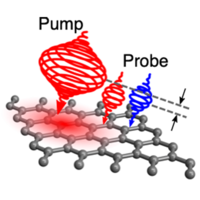
Circularly polarized light could be used to induce and detect topological states in graphene, a long-sought goal for studying the interplay between these two powerful platforms for investigations of quantum effects.

Entanglement between Identical Particles Is a Useful and Consistent Resource

Benjamin Morris, Benjamin Yadin, Matteo Fadel, Tilman Zibold, Philipp Treutlein, and Gerardo Adesso

Phys. Rev. X 10, 041012 (2020) - Published 16 October, 2020

A new theoretical description of identical particle entanglement frames it as a useful quantum resource in frequently encountered real-world experimental settings and not just a mathematical quirk.

Unconventional Superconductivity Induced by Suppressing an Iron-Selenium-Based Mott Insulator CsFe4−xSe4

Jin Si, Guan-Yu Chen, Qing Li, Xiyu Zhu, Huan Yang, and Hai-Hu Wen

Phys. Rev. X 10, 041008 (2020) - Published 12 October, 2020

Under high pressure, the insulating compound CsFe4−xSe4 turns into an unconventional superconductor, suggesting this system is a good one for exploring deviations from traditional Bardeen-Cooper-Schrieffer theory of superconductivity.

Sign In to Your Journals Account

Filter

Subject

Filter

Article Lookup

Enter a citation