Browse by Subject

Perimeter Modes of Nanomechanical Resonators Exhibit Quality Factors Exceeding 109 at Room Temperature

Mohammad J. Bereyhi, Amirali Arabmoheghi, Alberto Beccari, Sergey A. Fedorov, Guanhao Huang, Tobias J. Kippenberg, and Nils J. Engelsen

Phys. Rev. X 12, 021036 (2022) - Published 12 May, 2022

Polygon-shaped mechanical resonators support mechanical modes around their perimeters with very low loss, a promising approach to nanomechanical resonator design for precision force sensing and quantum technologies.

Direct Detection of V-V Atom Dimerization and Rotation Dynamic Pathways upon Ultrafast Photoexcitation in VO2

Junjie Li, Lijun Wu, Shan Yang, Xilian Jin, Wei Wang, Jing Tao, Lynn Boatner, Marcus Babzien, Mikhail Fedurin, Mark Palmer, Weiguo Yin, Olivier Delaire, and Yimei Zhu

Phys. Rev. X 12, 021032 (2022) - Published 9 May, 2022

Megavoltage Ultrafast Electron Diffraction reveals how atoms in vanadium oxide respond to ultrafast laser pulses, a step on the road to materials that can emulate neurons for brain-inspired computing.

Quantum Anomalous Hall Effect from Inverted Charge Transfer Gap

Trithep Devakul and Liang Fu

Phys. Rev. X 12, 021031 (2022) - Published 6 May, 2022

In charge transfer insulators, the lowest energy excitations involve moving a charge from one atom to another. Tuning the energy to do so through zero introduces a quantum anomalous Hall state.

Role of Shift Vector in High-Harmonic Generation from Noncentrosymmetric Topological Insulators under Strong Laser Fields

Chen Qian, Chao Yu, Shicheng Jiang, Tan Zhang, Jiacheng Gao, Shang Shi, Hanqi Pi, Hongming Weng, and Ruifeng Lu

Phys. Rev. X 12, 021030 (2022) - Published 5 May, 2022

In high harmonic generation from certain solids, a vector that measures the shift of the photoexcited electron and hole plays a prominent role in the excitation and recollision mechanism for electrons in strong laser fields.

Chiral Spin Liquid Ground State in YBaCo3FeO7

W. Schweika, M. Valldor, J. D. Reim, and U. K. Rößler

Phys. Rev. X 12, 021029 (2022) - Published 4 May, 2022

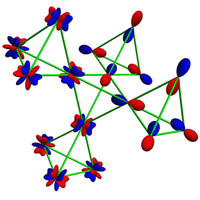
Neutron scattering experiments provide the first observation of a chiral spin liquid, wherein chirality twists the spins to short-range structures that constitute a novel classical ground state.

Evidence of a Phonon Hall Effect in the Kitaev Spin Liquid Candidate α−RuCl3

É. Lefrançois, G. Grissonnanche, J. Baglo, P. Lampen-Kelley, J.-Q. Yan, C. Balz, D. Mandrus, S. E. Nagler, S. Kim, Young-June Kim, N. Doiron-Leyraud, and Louis Taillefer

Phys. Rev. X 12, 021025 (2022) - Published 29 April, 2022

Thermal Hall conductivity measurements attribute heat conduction in one spin liquid candidate to phonons scattering off spins and find no evidence for predicted Majorana fermions.

Quantum Critical Magnetic Excitations in Spin-1/2 and Spin-1 Chain Systems

Y. Xu, L. S. Wang, Y. Y. Huang, J. M. Ni, C. C. Zhao, Y. F. Dai, B. Y. Pan, X. C. Hong, P. Chauhan, S. M. Koohpayeh, N. P. Armitage, and S. Y. Li

Phys. Rev. X 12, 021020 (2022) - Published 26 April, 2022

The thermal conductivity of CoNb2O6 is suppressed around its quantum critical point whereas the specific heat is enhanced, highlighting the role of frustration in determining quantum critical magnetic excitations.

Dimensional Crossover in the Superfluid-Supersolid Quantum Phase Transition

Giulio Biagioni, Nicolò Antolini, Aitor Alaña, Michele Modugno, Andrea Fioretti, Carlo Gabbanini, Luca Tanzi, and Giovanni Modugno

Phys. Rev. X 12, 021019 (2022) - Published 26 April, 2022

The quantum phase transition from superfluid to supersolid resembles ordinary crystallization transitions but with important distinctions that reflect peculiarities of supersolids.

Correlated Insulators, Semimetals, and Superconductivity in Twisted Trilayer Graphene

Maine Christos, Subir Sachdev, and Mathias S. Scheurer

Phys. Rev. X 12, 021018 (2022) - Published 25 April, 2022

A numerical and analytical study of the phase diagram of mirror-symmetric twisted trilayer graphene provides a guide for interpreting experiments on the complex correlated physics observed in this system.

Spin-Group Symmetry in Magnetic Materials with Negligible Spin-Orbit Coupling

Pengfei Liu, Jiayu Li, Jingzhi Han, Xiangang Wan, and Qihang Liu

Phys. Rev. X 12, 021016 (2022) - Published 21 April, 2022

A theoretical analysis of nonrelativistic magnetic materials applies a symmetry description beyond magnetic groups to explore material properties and reveal new topological phases.

Case for a U(1)π Quantum Spin Liquid Ground State in the Dipole-Octupole Pyrochlore Ce2Zr2O7

E. M. Smith, O. Benton, D. R. Yahne, B. Placke, R. Schäfer, J. Gaudet, J. Dudemaine, A. Fitterman, J. Beare, A. R. Wildes, S. Bhattacharya, T. DeLazzer, C. R. C. Buhariwalla, N. P. Butch, R. Movshovich, J. D. Garrett, C. A. Marjerrison, J. P. Clancy, E. Kermarrec, G. M. Luke, A. D. Bianchi, K. A. Ross, and B. D. Gaulin

Phys. Rev. X 12, 021015 (2022) - Published 20 April, 2022

By measuring how Ce3+ spins interact in Ce2Zr2O7, new experimental work lays out a detailed case for a novel quantum spin liquid phase at low temperature in this material.

Roller Coaster in a Flatland: Magnetoresistivity in Eu-Intercalated Graphite

A. L. Chernyshev and O. A. Starykh

Phys. Rev. X 12, 021010 (2022) - Published 14 April, 2022

The resistivity of the graphite compound EuC6 has an unusual highly nonmonotonic dependence on magnetic field. A theoretical study explains this behavior as arising from electrons scattering on magnons.

Hydrodynamic Theory of the Connected Spectral form Factor

Michael Winer and Brian Swingle

Phys. Rev. X 12, 021009 (2022) - Published 13 April, 2022

The spectral form factor is powerful tool for characterizing spectral statistics that relate to big picture properties of a system. A new analysis provides new tools for calculating this quantity.

Very-High-Energy Collective States of Partons in Fractional Quantum Hall Liquids

Ajit C. Balram, Zhao Liu, Andrey Gromov, and Zlatko Papić

Phys. Rev. X 12, 021008 (2022) - Published 12 April, 2022

At very high energies, an exotic state of matter known as a fractional quantum Hall liquid may produce a new type of quasiparticle called a parton, which behaves like a fraction of an electron.

Highly Tunable Magnetic Phases in Transition-Metal Dichalcogenide Fe1/3+δNbS2

Shan Wu, Zhijun Xu, Shannon C. Haley, Sophie F. Weber, Arani Acharya, Eran Maniv, Yiming Qiu, A. A. Aczel, Nicholas S. Settineri, Jeffrey B. Neaton, James G. Analytis, and Robert J. Birgeneau

Phys. Rev. X 12, 021003 (2022) - Published 5 April, 2022

A change in magnetic moment configurations as a function of iron ratio in Fe1/3+δNbS2 underlies its current-induced resistance switching, a key insight for using this and similar materials in future spintronic devices.

Two-Hole Ground State: Dichotomy in Pairing Symmetry

Jing-Yu Zhao, Shuai A. Chen, Hao-Kai Zhang, and Zheng-Yu Weng

Phys. Rev. X 12, 011062 (2022) - Published 31 March, 2022

The charge carriers in high-temperature superconductors pair up, despite a mutual Coulomb repulsion. A new analysis of the two-carrier wave function provides new insights into the pairing mechanism.

Fermionic Monte Carlo Study of a Realistic Model of Twisted Bilayer Graphene

Johannes S. Hofmann, Eslam Khalaf, Ashvin Vishwanath, Erez Berg, and Jong Yeon Lee

Phys. Rev. X 12, 011061 (2022) - Published 30 March, 2022

New realistic models of twisted bilayer graphene avoid a key limitation of other models, allowing for exact simulations of hundreds of electrons over a wide range of temperatures.

Exciton and Phonon Radiative Linewidths in Monolayer Boron Nitride

G. Cassabois, G. Fugallo, C. Elias, P. Valvin, A. Rousseau, B. Gil, A. Summerfield, C. J. Mellor, T. S. Cheng, L. Eaves, C. T. Foxon, P. H. Beton, M. Lazzeri, A. Segura, and S. V. Novikov

Phys. Rev. X 12, 011057 (2022) - Published 24 March, 2022

Experiments provide the first characterization of how optical phonons in a 2D crystal can emit light, which could benefit applications such as midinfrared optoelectronics and thermal management.

Role of Oxygen States in the Low Valence Nickelate La4Ni3O8

Y. Shen, J. Sears, G. Fabbris, J. Li, J. Pelliciari, I. Jarrige, Xi He, I. Božović, M. Mitrano, Junjie Zhang, J. F. Mitchell, A. S. Botana, V. Bisogni, M. R. Norman, S. Johnston, and M. P. M. Dean

Phys. Rev. X 12, 011055 (2022) - Published 22 March, 2022

Nickel and oxygen play equally important roles in the electronic properties of low-valence nickelate superconductors, a finding that could help understanding the superconducting state of these materials.

Hilbert Space Fragmentation and Commutant Algebras

Sanjay Moudgalya and Olexei I. Motrunich

Phys. Rev. X 12, 011050 (2022) - Published 16 March, 2022

A new framework for studying Hilbert space fragmentation—the emergence of disconnected regions in the abstract vector space of quantum physics—may shed light on why some quantum systems fail to thermalize.

Sign In to Your Journals Account

Filter

Subject

Filter

Article Lookup

Enter a citation