Browse by Subject

Hamiltonian Cycles on Ammann-Beenker Tilings

Shobhna Singh, Jerome Lloyd, and Felix Flicker

Phys. Rev. X 14, 031005 (2024) - Published 10 July, 2024

The creation and exploration of incredibly complex mazes on infinitely large irregular structures that describe quasicrystals could lead to efficiency boosts in industrial processes, among many other applications.

Universal Phenomenology at Critical Exceptional Points of Nonequilibrium O(N) Models

Carl Philipp Zelle, Romain Daviet, Achim Rosch, and Sebastian Diehl

Phys. Rev. X 14, 021052 (2024) - Published 26 June, 2024

A field theory to describe systems driven out of thermal equilibrium hints at several unusual behaviors, such as time crystalline order, that could not exist in equilibrium yet can be realized rather simply.

Superconductivity from On-Chip Metallization on 2D Topological Chalcogenides

Yanyu Jia, Guo Yu, Tiancheng Song, Fang Yuan, Ayelet J. Uzan, Yue Tang, Pengjie Wang, Ratnadwip Singha, Michael Onyszczak, Zhaoyi Joy Zheng, Kenji Watanabe, Takashi Taniguchi, Leslie M. Schoop, and Sanfeng Wu

Phys. Rev. X 14, 021051 (2024) - Published 21 June, 2024

A liquid-like spreading of metal atoms on a topological material can generate a superconductor—one that might benefit quantum computing.

Interactions Enable Thouless Pumping in a Nonsliding Lattice

Konrad Viebahn, Anne-Sophie Walter, Eric Bertok, Zijie Zhu, Marius Gächter, Armando A. Aligia, Fabian Heidrich-Meisner, and Tilman Esslinger

Phys. Rev. X 14, 021049 (2024) - Published 20 June, 2024

The quantized transport of particles usually requires sliding two lattices, which is difficult to do precisely. A new method realizes such a “Thouless pump” by instead tuning interparticle interactions.

Coexistence of near-EF Flat Band and Van Hove Singularity in a Two-Phase Superconductor

Xuezhi Chen, Le Wang, Jun Ishizuka, Renjie Zhang, Kosuke Nogaki, Yiwei Cheng, Fazhi Yang, Zhenhua Chen, Fangyuan Zhu, Zhengtai Liu, Jiawei Mei, Youichi Yanase, Baiqing Lv, and Yaobo Huang

Phys. Rev. X 14, 021048 (2024) - Published 20 June, 2024

Measurements of the electronic band structure in CeRh2As2 reveal coexisting features that may provide insight into its unusual, complex phase diagram.

Electrical Breakdown of Excitonic Insulators

Yuelin Shao and Xi Dai

Phys. Rev. X 14, 021047 (2024) - Published 18 June, 2024

The abrupt onset of electrical breakdown could serve as a unique “smoking gun” bit of evidence of elusive excitonic insulator states: insulators that originate from electron-hole pairings.

Experimental Evidence for a Berry Curvature Quadrupole in an Antiferromagnet

Soumya Sankar, Ruizi Liu, Cheng-Ping Zhang, Qi-Fang Li, Caiyun Chen, Xue-Jian Gao, Jiangchang Zheng, Yi-Hsin Lin, Kun Qian, Ruo-Peng Yu, Xu Zhang, Zi Yang Meng, Kam Tuen Law, Qiming Shao, and Berthold Jäck

Phys. Rev. X 14, 021046 (2024) - Published 17 June, 2024

Electric transport measurements on antiferromagnetic FeSn show that an anisotropic Berry curvature distribution can induce a third-order nonlinear anomalous Hall effect.

Direct Observation of Spin Current Oscillation in a Ferromagnet

Mengyao Du, Huiqian Min, Ke Xia, Dazhi Hou, Lei Wang, and Zhiyong Qiu

Phys. Rev. X 14, 021045 (2024) - Published 14 June, 2024

Observations of spin spatial oscillations reveal a previously hidden behavior of spin transport dynamics and identify a new degree of freedom for manipulating spin current, with potential implications for spintronic devices.

SO(5) Deconfined Phase Transition under the Fuzzy-Sphere Microscope: Approximate Conformal Symmetry, Pseudo-Criticality, and Operator Spectrum

Zheng Zhou (周正), Liangdong Hu, W. Zhu, and Yin-Chen He

Phys. Rev. X 14, 021044 (2024) - Published 13 June, 2024

In the study of deconfined quantum critical points, the “fuzzy sphere” can act as a powerful microscope, magnifying and revealing a wealth of crucial information.

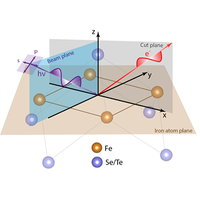
Orbital Ingredients and Persistent Dirac Surface State for the Topological Band Structure in FeTe0.55Se0.45

Y.-F. Li, S.-D. Chen, M. García-Díez, M. I. Iraola, H. Pfau, Y.-L. Zhu, Z.-Q. Mao, T. Chen, M. Yi, P.-C. Dai, J. A. Sobota, M. Hashimoto, M. G. Vergniory, D.-H. Lu, and Z.-X. Shen

Phys. Rev. X 14, 021043 (2024) - Published 11 June, 2024

Angle-resolved photoemission spectroscopy of an iron-based superconductor resolves debates about its electronic structure and confirms the existence of topological superconductivity in this material.

Theory of Correlated Chern Insulators in Twisted Bilayer Graphene

Xiaoyu Wang and Oskar Vafek

Phys. Rev. X 14, 021042 (2024) - Published 10 June, 2024

The first comprehensive theoretical study of the finite magnetic field phase diagram of twisted bilayer graphene provides an in-depth tool kit for analyzing experimental data on Chern insulating states.

Long-Range Entanglement from Measuring Symmetry-Protected Topological Phases

Nathanan Tantivasadakarn, Ryan Thorngren, Ashvin Vishwanath, and Ruben Verresen

Phys. Rev. X 14, 021040 (2024) - Published 7 June, 2024

Measuring certain quantum states with short-range entanglement can give rise to long-range entanglement, an insight with direct practical significance for preparing exotic many-body states in quantum devices.

Testing the Renormalization of the von Klitzing Constant by Cavity Vacuum Fields

Josefine Enkner, Lorenzo Graziotto, Felice Appugliese, Vasil Rokaj, Jie Wang, Michael Ruggenthaler, Christian Reichl, Werner Wegscheider, Angel Rubio, and Jérôme Faist

Phys. Rev. X 14, 021038 (2024) - Published 5 June, 2024

An experiment puts limits on how much quantum vacuum fluctuations can alter the quantized Hall resistance in a 2D electron gas under a magnetic field.

Graph Atomic Cluster Expansion for Semilocal Interactions beyond Equivariant Message Passing

Anton Bochkarev, Yury Lysogorskiy, and Ralf Drautz

Phys. Rev. X 14, 021036 (2024) - Published 3 June, 2024

Machine-learned interatomic potentials (MLIPs) are already a powerful tool for simulating atomic interactions. Including basis functions on graphs makes MLIPs physically and chemically transparent and even more accurate and efficient.

Surface Magnetization in Antiferromagnets: Classification, Example Materials, and Relation to Magnetoelectric Responses

Sophie F. Weber, Andrea Urru, Sayantika Bhowal, Claude Ederer, and Nicola A. Spaldin

Phys. Rev. X 14, 021033 (2024) - Published 28 May, 2024

Group theory and first-principles calculations combine to predict which antiferromagnets have potentially useful net surface magnetization.

Neural Wave Functions for Superfluids

Wan Tong Lou, Halvard Sutterud, Gino Cassella, W. M. C. Foulkes, Johannes Knolle, David Pfau, and James S. Spencer

Phys. Rev. X 14, 021030 (2024) - Published 22 May, 2024

Modifications to the fermionic neural network allow it to tackle studies of a unitary Fermi gas with unrivaled accuracy, suggesting the architecture can also be used to study other strongly correlated systems such as exotic superfluids and superconductors.

Exact Results for a Boundary-Driven Double Spin Chain and Resource-Efficient Remote Entanglement Stabilization

Andrew Lingenfelter, Mingxing Yao, Andrew Pocklington, Yu-Xin Wang (王语馨), Abdullah Irfan, Wolfgang Pfaff, and Aashish A. Clerk

Phys. Rev. X 14, 021028 (2024) - Published 20 May, 2024

Exact solutions for the steady state of two spin-chain models provides an experimentally friendly scheme for efficiently stabilizing large entangled states between remote systems.

Charge-4e and Charge-6e Flux Quantization and Higher Charge Superconductivity in Kagome Superconductor Ring Devices

Jun Ge, Pinyuan Wang, Ying Xing, Qiangwei Yin, Anqi Wang, Jie Shen, Hechang Lei, Ziqiang Wang, and Jian Wang

Phys. Rev. X 14, 021025 (2024) - Published 13 May, 2024

In its superconducting state, an exotic metal harbors charge carriers that appear to have 4 and 6 times the charge of a single electron, suggesting the formation of Cooper-pair “molecules.”

Data-Driven Compression of Electron-Phonon Interactions

Yao Luo, Dhruv Desai, Benjamin K. Chang, Jinsoo Park, and Marco Bernardi

Phys. Rev. X 14, 021023 (2024) - Published 1 May, 2024

Describing electron-phonon interactions from first principles requires matrices with billions of entries. A method to compress the matrices accelerates calculations by 2 orders of magnitude while preserving accuracy.

Unified Treatment of Light Emission by Inelastic Tunneling: Interaction of Electrons and Photons beyond the Gap

Unai Muniain, Ruben Esteban, Javier Aizpurua, and Jean-Jacques Greffet

Phys. Rev. X 14, 021017 (2024) - Published 24 April, 2024

An extended theory of electrical transport illuminates how light is emitted when an electrical current flows through a metal-insulator-metal tunneling junction.

Sign In to Your Journals Account

Filter

Subject

Filter

Article Lookup

Enter a citation