Browse by Subject

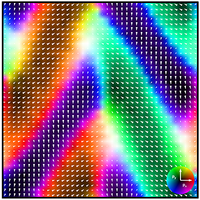
Highly Entangled Stationary States from Strong Symmetries

Yahui Li, Frank Pollmann, Nicholas Read, and Pablo Sala

Phys. Rev. X 15, 011068 (2025) - Published 21 March, 2025

Symmetries in quantum systems protect entanglement from environmental noise, even at high temperatures. Complex symmetries with interdependent constraints help preserve entanglement, aiding robust quantum technologies.

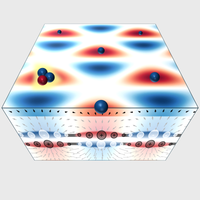
Strong Orbital-Lattice Coupling Induces Glassy Thermal Conductivity in High-Symmetry Single Crystal BaTiS3

Yan Wang, Lin Xie, Haobo Yang, Mingyuan Hu, Xin Qian, Ronggui Yang, and Jiaqing He

Phys. Rev. X 15, 011066 (2025) - Published 20 March, 2025

BaTiS₃ exhibits unique thermal conductivity where its in-plane conductivity behaves like glass, while its out-of-plane conductivity follows crystalline trends.

Theory of Metastable States in Many-Body Quantum Systems

Chao Yin, Federica M. Surace, and Andrew Lucas

Phys. Rev. X 15, 011064 (2025) - Published 19 March, 2025

A new theory of quantum metastability reveals that short-range entangled states exhibit slow thermalization, offering insights into quantum transitions and potential applications in quantum simulators.

Domain-Wall Enhanced Pyroelectricity

Ching-Che Lin, Yihao Hu, Jaegyu Kim, Djamila Lou, Ashwath Bhat, Pravin Kavle, Tae Yeon Kim, Chris Dames, Shi Liu, and Lane W. Martin

Phys. Rev. X 15, 011063 (2025) - Published 18 March, 2025

Experiments and simulations reveal that high-densities of nanotwinned domain walls boost the pyroelectric effect, offering a new approach for energy-harvesting and sensing technologies.

Room-Temperature Magnetoelectric Switching and Magnetoelectric Memory Driven by Gate Voltage

Yang Cheng, Teng Xu, Di Tian, Xing He, Yiqing Dong, Hao Bai, Le Zhao, Haonan Jin, Shilei Zhang, Weibin Li, Manuel Valvidares, Pu Yu, and Wanjun Jiang

Phys. Rev. X 15, 011060 (2025) - Published 14 March, 2025

A demonstration of electric-field-driven magnetization switching in ferrimagnets sets the stage for a low-power, reversible method for magnetoelectric memory.

Noninvertible Symmetry-Protected Topological Order in a Group-Based Cluster State

Christopher Fechisin, Nathanan Tantivasadakarn, and Victor V. Albert

Phys. Rev. X 15, 011058 (2025) - Published 13 March, 2025

A lattice model with noninvertible symmetry belongs to a symmetry-protected topological phase of matter, providing a starting point for investigating the rich physics of topological phases with such symmetries.

Entanglement Witness for Indistinguishable Electrons Using Solid-State Spectroscopy

Tongtong Liu, Luogen Xu, Jiarui Liu, and Yao Wang

Phys. Rev. X 15, 011056 (2025) - Published 12 March, 2025

The use of resonant inelastic x-ray scattering to quantify electron entanglement in quantum materials enables the detection of entanglement in a wide range of materials, advancing quantum technologies.

Topological Hall Effect of Skyrmions from first Principles

Hsiao-Yi Chen, Takuya Nomoto, Max Hirschberger, and Ryotaro Arita

Phys. Rev. X 15, 011054 (2025) - Published 11 March, 2025

A new density functional theory approach to accurately model skyrmions and the topological Hall effect could improve material predictions for energy-efficient data storage and next-generation computing.

Electric-Field Switchable Chirality in Rhombohedral Graphene Chern Insulators Stabilized by Tungsten Diselenide

Jing Ding, Hanxiao Xiang, Jiannan Hua, Wenqiang Zhou, Naitian Liu, Le Zhang, Na Xin, Bing Wu, Kenji Watanabe, Takashi Taniguchi, Zdeněk Sofer, Wei Zhu, and Shuigang Xu

Phys. Rev. X 15, 011052 (2025) - Published 10 March, 2025

Multilayer graphene can host quantum anomalous Hall states with edge currents controllable via an electric field, offering new possibilities for low-power electronics and quantum computing.

Spin Seebeck Effect as a Probe for Majorana Fermions in Kitaev Spin Liquids

Yasuyuki Kato, Joji Nasu, Masahiro Sato, Tsuyoshi Okubo, Takahiro Misawa, and Yukitoshi Motome

Phys. Rev. X 15, 011050 (2025) - Published 5 March, 2025

The spin Seebeck effect in two-dimensional quantum spin liquids enables the creation and control of non-Abelian anyons, potentially offering a new approach for fault-tolerant topological quantum computing.

Confined Trions and Mott-Wigner States in a Purely Electrostatic Moiré Potential

Natasha Kiper, Haydn S. Adlong, Arthur Christianen, Martin Kroner, Kenji Watanabe, Takashi Taniguchi, and Atac İmamoğlu

Phys. Rev. X 15, 011049 (2025) - Published 5 March, 2025

A moiré pattern in bilayer hexagonal boron nitride enhances the role of Coulomb interactions in a transition metal dichalcogenide, revealing strong electron correlations and offering insights into quantum materials and related exotic phenomena.

Optical Absorption Spectroscopy Probes Water Wire and Its Ordering in a Hydrogen-Bond Network

Fujie Tang, Diana Y. Qiu, and Xifan Wu

Phys. Rev. X 15, 011048 (2025) - Published 5 March, 2025

Computational spectroscopy reveals a possible signature of strongly hydrogen-bonded wires in water and ice.

Spin-1/2 Kagome Heisenberg Antiferromagnet: Machine Learning Discovery of the Spinon Pair-Density-Wave Ground State

Tanja Đurić, Jia Hui Chung, Bo Yang, and Pinaki Sengupta

Phys. Rev. X 15, 011047 (2025) - Published 3 March, 2025

A machine-learning–based analysis uncovers novel paired spinon states in the kagome Heisenberg antiferromagnet, offering insights into certain quantum materials and electron pairing in high-temperature superconductors.

Impact of Andreev Bound States within the Leads of a Quantum Dot Josephson Junction

Alberto Bordin, Florian J. Bennebroek Evertsz’, Gorm O. Steffensen, Tom Dvir, Grzegorz P. Mazur, David van Driel, Nick van Loo, Jan Cornelis Wolff, Erik P. A. M. Bakkers, Alfredo Levy Yeyati, and Leo P. Kouwenhoven

Phys. Rev. X 15, 011046 (2025) - Published 3 March, 2025

Andreev bound states in an artificial molecule control the supercurrent in a tunable Josephson junction, offering new insights for enhancing superconducting devices and advancing quantum technologies.

Chern Insulators at Integer and Fractional Filling in Moiré Pentalayer Graphene

Dacen Waters, Anna Okounkova, Ruiheng Su, Boran Zhou, Jiang Yao, Kenji Watanabe, Takashi Taniguchi, Xiaodong Xu, Ya-Hui Zhang, Joshua Folk, and Matthew Yankowitz

Phys. Rev. X 15, 011045 (2025) - Published 27 February, 2025

Electric-field control of topological states in a pentalayer graphene moiré system reveals tunable quantum phases, correlated insulating states, and evidence of fractional charge quasiparticles.

Light-Induced Reorientation Transition in an Antiferromagnetic Semiconductor

Bryan T. Fichera, Baiqing Lv, Karna Morey, Zongqi Shen, Changmin Lee, Elizabeth Donoway, Alex Liebman-Peláez, Anshul Kogar, Takashi Kurumaji, Martin Rodriguez-Vega, Rodrigo Humberto Aguilera del Toro, Mikel Arruabarrena, Batyr Ilyas, Tianchuang Luo, Peter Müller, Aritz Leonardo, Andres Ayuela, Gregory A. Fiete, Joseph G. Checkelsky, Joseph Orenstein, and Nuh Gedik

Phys. Rev. X 15, 011044 (2025) - Published 26 February, 2025

A demonstration of ultrafast optical manipulation of antiferromagnetic order in CaMn2Bi2 reveals a metastable spin state that persists for more than 150 ps, paving the way for advanced spintronic and ultrafast magnetic-device technologies.

Dispersive Dark Excitons in van der Waals Ferromagnet CrI3

W. He, J. Sears, F. Barantani, T. Kim, J. W. Villanova, T. Berlijn, M. Lajer, M. A. McGuire, J. Pelliciari, V. Bisogni, S. Johnston, E. Baldini, M. Mitrano, and M. P. M. Dean

Phys. Rev. X 15, 011042 (2025) - Published 25 February, 2025

Resonant inelastic x-ray scattering reveals elusive “dark excitons” in CrI3. With long lifetimes and unique spin interactions, these controllable quasiparticles offer novel prospects for quantum technologies and optoelectronic devices.

Superballistic Conduction in Hydrodynamic Antidot Graphene Superlattices

Jorge Estrada-Álvarez, Juan Salvador-Sánchez, Ana Pérez-Rodríguez, Carlos Sánchez-Sánchez, Vito Clericò, Daniel Vaquero, Kenji Watanabe, Takashi Taniguchi, Enrique Diez, Francisco Domínguez-Adame, Mario Amado, and Elena Díaz

Phys. Rev. X 15, 011039 (2025) - Published 21 February, 2025

An array of holes in a 2D material enhances an effect that improves the flow of electric currents.

Anomalous Quasielastic Scattering Contribution in the Centrosymmetric Multi-q Helimagnet SrFeO3

Nikita D. Andriushin, Justus Grumbach, Anton A. Kulbakov, Yuliia V. Tymoshenko, Yevhen A. Onykiienko, Reza Firouzmandi, Erjian Cheng, Sergey Granovsky, Yurii Skourski, Jacques Ollivier, Helen C. Walker, Vilmos Kocsis, Bernd Büchner, Bernhard Keimer, Mathias Doerr, Dmytro S. Inosov, and Darren C. Peets

Phys. Rev. X 15, 011038 (2025) - Published 20 February, 2025

SrFeO3, a compound with long-range, helical magnetic order, exhibits unique spin fluctuations that are likely caused by chiral domain walls, making it a valuable material for studying complex magnetic behaviors and spin dynamics.

Sketched Nanoscale KTaO3-Based Superconducting Quantum Interference Device

Muqing Yu, Nicholas Hougland, Qianheng Du, Junyi Yang, Sayanwita Biswas, Ranjani Ramachandran, Dengyu Yang, Anand Bhattacharya, David Pekker, Patrick Irvin, and Jeremy Levy

Phys. Rev. X 15, 011037 (2025) - Published 20 February, 2025

Potassium tantalate enables superconducting weak links with high, tunable inductance, making it a promising material for quantum devices, and its AFM-based nanoscale patterning offers new possibilities for reconfigurable quantum circuits.

Sign In to Your Journals Account

Filter

Subject

Filter

Article Lookup

Enter a citation