Browse by Subject

Quantum Correlations between Single Telecom Photons and a Multimode On-Demand Solid-State Quantum Memory

Alessandro Seri, Andreas Lenhard, Daniel Rieländer, Mustafa Gündoğan, Patrick M. Ledingham, Margherita Mazzera, and Hugues de Riedmatten

Phys. Rev. X 7, 021028 (2017) - Published 24 May, 2017

Crystals with rare-earth ions could lead to quantum repeaters that enable secure quantum communications over long distances.

Optimizing Variational Quantum Algorithms Using Pontryagin’s Minimum Principle

Zhi-Cheng Yang, Armin Rahmani, Alireza Shabani, Hartmut Neven, and Claudio Chamon

Phys. Rev. X 7, 021027 (2017) - Published 18 May, 2017

Variational quantum algorithms (VQAs) mix quantum machines with classical optimizers to solve complex computational problems. A new analysis reveals the optimal method for implementing a VQA, which could lead to improvements in future quantum computing techniques.

Code Properties from Holographic Geometries

Fernando Pastawski and John Preskill

Phys. Rev. X 7, 021022 (2017) - Published 15 May, 2017

Deep theoretical links may exist between how space encodes information and error correcting codes being developed for quantum computers. A new analysis explores these connections further and offers insights into not just error-correction codes but also how we interpret ideas about spacetime.

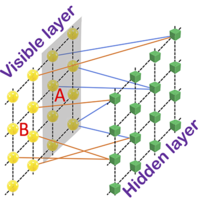
Quantum Entanglement in Neural Network States

Dong-Ling Deng, Xiaopeng Li, and S. Das Sarma

Phys. Rev. X 7, 021021 (2017) - Published 11 May, 2017

Machine learning has recently gained attention as a possible way to understand phase transitions in many-body quantum systems. A new entanglement analysis reveals crucial properties of the data structures that encode quantum states in a neural network, opening new inroads in applying machine learning to quantum many-body physics.

Wannier-Bloch Approach to Localization in High-Harmonics Generation in Solids

Edyta N. Osika, Alexis Chacón, Lisa Ortmann, Noslen Suárez, Jose Antonio Pérez-Hernández, Bartłomiej Szafran, Marcelo F. Ciappina, Fernando Sols, Alexandra S. Landsman, and Maciej Lewenstein

Phys. Rev. X 7, 021017 (2017) - Published 8 May, 2017

High harmonic generation can produce attosecond-long pulses of light, which are a useful probe of physical processes that require extremely high time resolution. A new mathematical analysis shows how electron delocalization contributes to this emission in a solid.

Hot Electrons Regain Coherence in Semiconducting Nanowires

Jonathan Reiner, Abhay Kumar Nayak, Nurit Avraham, Andrew Norris, Binghai Yan, Ion Cosma Fulga, Jung-Hyun Kang, Torsten Karzig, Hadas Shtrikman, and Haim Beidenkopf

Phys. Rev. X 7, 021016 (2017) - Published 5 May, 2017

Understanding the behavior of electrons in semiconducting nanowires is hindered by difficulties in probing these delicate structures. Development of a portable chamber, which keeps the nanowires under ultrahigh vacuum from growth to measurement, allows for the first thorough study of electron phase coherence in a semiconducting nanowire.

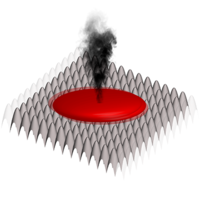
Parametric Instability Rates in Periodically Driven Band Systems

S. Lellouch, M. Bukov, E. Demler, and N. Goldman

Phys. Rev. X 7, 021015 (2017) - Published 5 May, 2017

Driving a quantum liquid—by subjecting it to some external force—can generate exotic phases of matter, but such phases are unstable. A suite of mathematical methods reveals the origins of these instabilities and identifies physical manifestations that can be observed in current experiments.

Critical Properties of the Many-Body Localization Transition

Vedika Khemani, S. P. Lim, D. N. Sheng, and David A. Huse

Phys. Rev. X 7, 021013 (2017) - Published 25 April, 2017

Some quantum systems can enter a many-body localized (MBL) phase, where the particles do not settle into thermal equilibrium but remain stuck in some initial state. A new theoretical analysis explores the transition between MBL and thermal phases and finds that the transition is driven by the growth of a network of quantum entanglement.

Emergent Eigenstate Solution to Quantum Dynamics Far from Equilibrium

Lev Vidmar, Deepak Iyer, and Marcos Rigol

Phys. Rev. X 7, 021012 (2017) - Published 25 April, 2017

Quantum systems that are far from equilibrium can exhibit strange behavior, such as the emergence of coherence in an expanding Bose gas in an optical lattice. A theoretical analysis provides new insight into this phenomenon and a toolkit for understanding a wide range of similar phenomena.

Improving Broadband Displacement Detection with Quantum Correlations

N. S. Kampel, R. W. Peterson, R. Fischer, P.-L. Yu, K. Cicak, R. W. Simmonds, K. W. Lehnert, and C. A. Regal

Phys. Rev. X 7, 021008 (2017) - Published 18 April, 2017

Ultraprecise measurements of displacement and force can run into a limit on precision due to random forces imparted by the photons used for the measurement. An investigation into a technique for modifying the readout of an interferometer to avoid these limits demonstrates sensitivity improvements.

Efficient Quantum Pseudorandomness with Nearly Time-Independent Hamiltonian Dynamics

Yoshifumi Nakata, Christoph Hirche, Masato Koashi, and Andreas Winter

Phys. Rev. X 7, 021006 (2017) - Published 10 April, 2017

Methods for generating quantum pseudorandomness are essential to understanding randomness in many quantum phenomena, but have not been fully explored. A new analysis shows that quantum pseudorandomness can appear spontaneously in certain many-body systems, leading to a prescription for developing quantum circuits that generate pseudorandomness.

Energy as a Detector of Nonlocality of Many-Body Spin Systems

J. Tura, G. De las Cuevas, R. Augusiak, M. Lewenstein, A. Acín, and J. I. Cirac

Phys. Rev. X 7, 021005 (2017) - Published 10 April, 2017

Nonlocal correlations—correlations among atomic particles that cannot be described classically and that are stronger than those accounted for by entanglement—are of fundamental interest to physicists, but remain difficult to characterize in many-body systems. A new theoretical analysis shows that the ground states of spin Hamiltonians in some systems can exhibit nonlocal correlations.

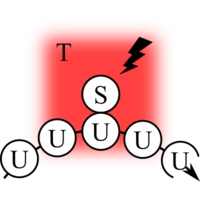
Quantum and Information Thermodynamics: A Unifying Framework Based on Repeated Interactions

Philipp Strasberg, Gernot Schaller, Tobias Brandes, and Massimiliano Esposito

Phys. Rev. X 7, 021003 (2017) - Published 7 April, 2017

Nanomachines are subject to random thermal and quantum fluctuations that are not captured by traditional thermodynamic theory. A new theoretical investigation offers a step toward a unified nanoscale theory by showing how externally prepared systems (e.g., atoms in an optical cavity or DNA bases in an enzyme reaction) that interact with a nanoscopic device can be a source of nonequilbrium free energy.

Intracity Quantum Communication via Thermal Microwave Networks

Ze-Liang Xiang, Mengzhen Zhang, Liang Jiang, and Peter Rabl

Phys. Rev. X 7, 011035 (2017) - Published 27 March, 2017

A new quantum communication protocol is robust in the presence of thermal noise, paving the way for all-microwave quantum networks.

Strong Coupling Cavity QED with Gate-Defined Double Quantum Dots Enabled by a High Impedance Resonator

A. Stockklauser, P. Scarlino, J. V. Koski, S. Gasparinetti, C. K. Andersen, C. Reichl, W. Wegscheider, T. Ihn, K. Ensslin, and A. Wallraff

Phys. Rev. X 7, 011030 (2017) - Published 9 March, 2017

A system combining a quantum dot and a superconducting cavity achieves the strongest light-matter coupling for this type of hybrid system.

Towards Resource Theory of Coherence in Distributed Scenarios

Alexander Streltsov, Swapan Rana, Manabendra Nath Bera, and Maciej Lewenstein

Phys. Rev. X 7, 011024 (2017) - Published 6 March, 2017

Quantum entanglement has typically been the focus of research into quantum technologies, but other phenomena are needed to characterize quantum systems. A theory for manipulating quantum coherence in distributed scenarios is studied, leading to a mathematical characterization of the transformations that quantum states undergo in this process.

Deep Inelastic Scattering on Ultracold Gases

Johannes Hofmann and Wilhelm Zwerger

Phys. Rev. X 7, 011022 (2017) - Published 1 March, 2017

For decades, researchers have debated assumptions used when interpreting scattering experiments that probe the structure of matter at increasingly shorter length scales. A theoretical framework resolves some of these questions and sheds light on the nature of ultracold quantum gases.

Systematic Magnus-Based Approach for Suppressing Leakage and Nonadiabatic Errors in Quantum Dynamics

Hugo Ribeiro, Alexandre Baksic, and Aashish A. Clerk

Phys. Rev. X 7, 011021 (2017) - Published 22 February, 2017

When performing operations in a quantum computer, the system can easily end up in some undesired state. A new technique controls the quantum dynamics to reliably bring a quantum system from some initial state to a final desired state.

Universal Chiral Quasisteady States in Periodically Driven Many-Body Systems

Netanel H. Lindner, Erez Berg, and Mark S. Rudner

Phys. Rev. X 7, 011018 (2017) - Published 17 February, 2017

Quantum effects are usually lost when interacting particles are disturbed by an external force, such as a laser, and heat up. Recent research points to a new class of universal phenomena that emerge from this heating.

Observation of a Dissipative Phase Transition in a One-Dimensional Circuit QED Lattice

Mattias Fitzpatrick, Neereja M. Sundaresan, Andy C. Y. Li, Jens Koch, and Andrew A. Houck

Phys. Rev. X 7, 011016 (2017) - Published 10 February, 2017

Nonequilibrium phase transitions, where the physical properties of a system change suddenly, are of fundamental importance in condensed matter physics but are not well understood. Such phase transitions are now observed in a circuit quantum electrodynamics lattice, paving the way for greater insight into exotic materials.

Sign In to Your Journals Account

Filter

Filter

Article Lookup

Enter a citation