Browse by Subject

Two-Dimensional Quantum-Link Lattice Quantum Electrodynamics at Finite Density

Timo Felser, Pietro Silvi, Mario Collura, and Simone Montangero

Phys. Rev. X 10, 041040 (2020) - Published 25 November, 2020

Using a tree tensor network, a data structure developed to study many-body quantum systems on a lattice, a new analysis provides a tractable description of low-energy behavior of 2D quantum electrodynamics including matter.

What Limits the Simulation of Quantum Computers?

Yiqing Zhou, E. Miles Stoudenmire, and Xavier Waintal

Phys. Rev. X 10, 041038 (2020) - Published 23 November, 2020

Classical computers can efficiently simulate the behavior of quantum computers if the quantum computer is imperfect enough.

Robustness of Noether’s Principle: Maximal Disconnects between Conservation Laws and Symmetries in Quantum Theory

Cristina Cîrstoiu, Kamil Korzekwa, and David Jennings

Phys. Rev. X 10, 041035 (2020) - Published 18 November, 2020

A new analysis explores to what extent Noether’s theorem—relating conservation laws to symmetries—holds in open quantum systems and how it relates to physically impossible processes.

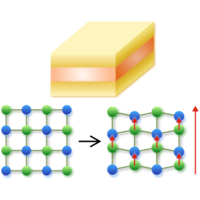
Quantum Electrodynamic Control of Matter: Cavity-Enhanced Ferroelectric Phase Transition

Yuto Ashida, Ataç İmamoğlu, Jérôme Faist, Dieter Jaksch, Andrea Cavalleri, and Eugene Demler

Phys. Rev. X 10, 041027 (2020) - Published 6 November, 2020

A proposed mechanism for controlling the phase of matter harnesses the vacuum quantum fluctuations of light to induce superradiant-type transitions without an external drive source.

Correlation-Picture Approach to Open-Quantum-System Dynamics

S. Alipour, A. T. Rezakhani, A. P. Babu, K. Mølmer, M. Möttönen, and T. Ala-Nissila

Phys. Rev. X 10, 041024 (2020) - Published 3 November, 2020

By relating correlations between a quantum system and its environment to an uncorrelated description of the whole system, a new analytical technique provides a powerful tool for tracking correlations in open quantum system dynamics.

Dynamical Purification Phase Transition Induced by Quantum Measurements

Michael J. Gullans and David A. Huse

Phys. Rev. X 10, 041020 (2020) - Published 28 October, 2020

The rate at which a many-body quantum system is measured can induce a transition between a state that remembers initial conditions and one that forgets, possibly leading to new types of quantum error-correcting codes.

Adiabatic Eigenstate Deformations as a Sensitive Probe for Quantum Chaos

Mohit Pandey, Pieter W. Claeys, David K. Campbell, Anatoli Polkovnikov, and Dries Sels

Phys. Rev. X 10, 041017 (2020) - Published 23 October, 2020

A new probe of quantum chaos is orders of magnitude more sensitive than standard measures and can extract information about the nontrivial dynamics close to nonchaotic regimes.

Entanglement between Identical Particles Is a Useful and Consistent Resource

Benjamin Morris, Benjamin Yadin, Matteo Fadel, Tilman Zibold, Philipp Treutlein, and Gerardo Adesso

Phys. Rev. X 10, 041012 (2020) - Published 16 October, 2020

A new theoretical description of identical particle entanglement frames it as a useful quantum resource in frequently encountered real-world experimental settings and not just a mathematical quirk.

Spin Quintet in a Silicon Double Quantum Dot: Spin Blockade and Relaxation

Theodor Lundberg, Jing Li, Louis Hutin, Benoit Bertrand, David J. Ibberson, Chang-Min Lee, David J. Niegemann, Matias Urdampilleta, Nadia Stelmashenko, Tristan Meunier, Jason W. A. Robinson, Lisa Ibberson, Maud Vinet, Yann-Michel Niquet, and M. Fernando Gonzalez-Zalba

Phys. Rev. X 10, 041010 (2020) - Published 14 October, 2020

A new method for identifying spin arrangements leads to the discovery of a novel spin system—a spin quintet—in a pair of silicon quantum dots, a promising testbed for studying high-spin systems.

Prospects of Forming High-Spin Polar Molecules from Ultracold Atoms

Matthew D. Frye, Simon L. Cornish, and Jeremy M. Hutson

Phys. Rev. X 10, 041005 (2020) - Published 7 October, 2020

A technique for creating high-spin molecules with electric and magnetic dipole moments offers a platform for exploring ultracold dipolar matter and its many potential applications in quantum science.

Quantum Versus Classical Spin Fragmentation in Dipolar Kagome Ice Ho3Mg2Sb3O14

Zhiling Dun, Xiaojian Bai, Joseph A. M. Paddison, Emily Hollingworth, Nicholas P. Butch, Clarina D. Cruz, Matthew B. Stone, Tao Hong, Franz Demmel, Martin Mourigal, and Haidong Zhou

Phys. Rev. X 10, 031069 (2020) - Published 29 September, 2020

Neutron-scattering studies highlight the role of hyperfine interactions in frustrated quantum magnets and exemplify how low-symmetry crystal structures can be used to increase quantum fluctuations and realize a 2D quantum spin ice.

Quantum Backaction Cancellation in the Audio Band

Jonathan Cripe, Torrey Cullen, Yanbei Chen, Paula Heu, David Follman, Garrett D. Cole, and Thomas Corbitt

Phys. Rev. X 10, 031065 (2020) - Published 23 September, 2020

Gravitational-wave detectors are ultimately limited by quantum fluctuations induced by light reflecting off the interferometer mirrors. A new experiment explores one way to remove this quantum backaction and improve detector sensitivity.

Understanding High-Gain Twin-Beam Sources Using Cascaded Stimulated Emission

Gil Triginer, Mihai D. Vidrighin, Nicolás Quesada, Andreas Eckstein, Merritt Moore, W. Steven Kolthammer, J. E. Sipe, and Ian A. Walmsley

Phys. Rev. X 10, 031063 (2020) - Published 21 September, 2020

Experiments and modeling characterize often ignored effects that impact the spectral structure of high-brightness correlated pairs of light beams critical to quantum information and metrology.

Measuring the Intra-Atomic Exchange Energy in Rare-Earth Adatoms

Marina Pivetta, François Patthey, Igor Di Marco, Arya Subramonian, Olle Eriksson, Stefano Rusponi, and Harald Brune

Phys. Rev. X 10, 031054 (2020) - Published 9 September, 2020

The first measurements of exchange energies among electrons within single rare-earth atoms provide a glimpse at the intra-atomic interactions, improving our fundamental understanding of magnetism at the atomic scale.

Quantifying Decoherence in Attosecond Metrology

C. Bourassin-Bouchet, L. Barreau, V. Gruson, J.-F. Hergott, F. Quéré, P. Salières, and T. Ruchon

Phys. Rev. X 10, 031048 (2020) - Published 28 August, 2020

A new analysis shows how to measure the density matrix of an ionized electron to reconstruct its wave packet and identify sources of quantum decoherence.

Rydberg Composites

Andrew L. Hunter, Matthew T. Eiles, Alexander Eisfeld, and Jan M. Rost

Phys. Rev. X 10, 031046 (2020) - Published 26 August, 2020

Filling the wave function of a Rydberg atom with a tunable number of neutral atoms can break the high level of energy degeneracy in these systems in surprising ways.

Tensor-Network Method to Simulate Strongly Interacting Quantum Thermal Machines

Marlon Brenes, Juan José Mendoza-Arenas, Archak Purkayastha, Mark T. Mitchison, Stephen R. Clark, and John Goold

Phys. Rev. X 10, 031040 (2020) - Published 19 August, 2020

A new modeling and computational approach allow for more complete simulations of particle and heat flow through tiny quantum devices.

Undecidability of the Spectral Gap in One Dimension

Johannes Bausch, Toby S. Cubitt, Angelo Lucia, and David Perez-Garcia

Phys. Rev. X 10, 031038 (2020) - Published 17 August, 2020

A new analysis proves that it is not possible for numerical algorithms to determine if a 1D quantum system has a spectral gap, showing that basic properties of even simple systems are, in some instances, impossible to predict.

Imaging Spatiotemporal Hong-Ou-Mandel Interference of Biphoton States of Extremely High Schmidt Number

Fabrice Devaux, Alexis Mosset, Paul-Antoine Moreau, and Eric Lantz

Phys. Rev. X 10, 031031 (2020) - Published 11 August, 2020

For the first time, experiments show 2D spatial as well as temporal interference of pairs of entangled photons with enormous dimensionality, setting the stage for complex quantum information protocols that depend on space and time.

Dynamics of Many-Body Photon Bound States in Chiral Waveguide QED

Sahand Mahmoodian, Giuseppe Calajó, Darrick E. Chang, Klemens Hammerer, and Anders S. Sørensen

Phys. Rev. X 10, 031011 (2020) - Published 14 July, 2020

A proposed optical waveguide would take a light pulse and break it into sets of strongly correlated photons, which may give a leg up to certain quantum technologies.

Sign In to Your Journals Account

Filter

Filter

Article Lookup

Enter a citation