Recent Articles

Subdiffusion and Heat Transport in a Tilted Two-Dimensional Fermi-Hubbard System

Elmer Guardado-Sanchez, Alan Morningstar, Benjamin M. Spar, Peter T. Brown, David A. Huse, and Waseem S. Bakr

Phys. Rev. X 10, 011042 (2020) - Published 21 February, 2020

Experiments show that a particular quantum many-body system thermalizes surprisingly slowly, and a hydrodynamic model of the system reveals a crucial underlying link between the transport of both mass and heat.

Direct Comparison of Many-Body Methods for Realistic Electronic Hamiltonians

Kiel T. Williams, Yuan Yao, Jia Li, Li Chen, Hao Shi, Mario Motta, Chunyao Niu, Ushnish Ray, Sheng Guo, Robert J. Anderson, Junhao Li, Lan Nguyen Tran, Chia-Nan Yeh, Bastien Mussard, Sandeep Sharma, Fabien Bruneval, Mark van Schilfgaarde, George H. Booth, Garnet Kin-Lic Chan, Shiwei Zhang, Emanuel Gull, Dominika Zgid, Andrew Millis, Cyrus J. Umrigar, and Lucas K. Wagner (Simons Collaboration on the Many-Electron Problem)

Phys. Rev. X 10, 011041 (2020) - Published 20 February, 2020

Tests of over 20 techniques for approximating many-body electron systems reveal which approaches are best suited to accurate modeling of these systems.

Accelerating Polaritons with External Electric and Magnetic Fields

T. Chervy, P. Knüppel, H. Abbaspour, M. Lupatini, S. Fält, W. Wegscheider, M. Kroner, and A. Imamoǧlu

Phys. Rev. X 10, 011040 (2020) - Published 19 February, 2020

Combining photons with electronic excitations creates a new kind of quasiparticle that can be manipulated with electric or magnetic fields.

Nonequilibrium Fixed Points of Coupled Ising Models

Jeremy T. Young, Alexey V. Gorshkov, Michael Foss-Feig, and Mohammad F. Maghrebi

Phys. Rev. X 10, 011039 (2020) - Published 19 February, 2020

Exotic nonequilibrium behavior arises near the multicritical points of an open, driven quantum system.

Experimental Demonstration of Quantum Fully Homomorphic Encryption with Application in a Two-Party Secure Protocol

W. K. Tham, Hugo Ferretti, Kent Bonsma-Fisher, Aharon Brodutch, Barry C. Sanders, Aephraim M. Steinberg, and Stacey Jeffery

Phys. Rev. X 10, 011038 (2020) - Published 18 February, 2020

An experimental implementation of fully homomorphic encryption is the first to be unencumbered by limitations that prevented previous approaches from being used in a wide variety of cryptographic applications.

Optimal Renormalization Group Transformation from Information Theory

Patrick M. Lenggenhager, Doruk Efe Gökmen, Zohar Ringel, Sebastian D. Huber, and Maciej Koch-Janusz

Phys. Rev. X 10, 011037 (2020) - Published 14 February, 2020

A new approach to developing real-space renormalization group methods paves the way for using machine learning to derive large-scale behavior of physical systems from microscopic models.

Observation of a Charge-Neutral Muon-Polaron Complex in Antiferromagnetic Cr2O3

M. H. Dehn, J. K. Shenton, S. Holenstein, Q. N. Meier, D. J. Arseneau, D. L. Cortie, B. Hitti, A. C. Y. Fang, W. A. MacFarlane, R. M. L. McFadden, G. D. Morris, Z. Salman, H. Luetkens, N. A. Spaldin, M. Fechner, and R. F. Kiefl

Phys. Rev. X 10, 011036 (2020) - Published 14 February, 2020

Experiments reveal muon-polaron complexes in Cr2O3. Similar entities may exist in many magnetic insulators and semiconductors, where they can be used as proxies to understand the impact of hydrogen impurities.

Nematic State in CeAuSb2

S. Seo, Xiaoyu Wang, S. M. Thomas, M. C. Rahn, D. Carmo, F. Ronning, E. D. Bauer, R. D. dos Reis, M. Janoschek, J. D. Thompson, R. M. Fernandes, and P. F. S. Rosa

Phys. Rev. X 10, 011035 (2020) - Published 13 February, 2020

The discovery of a vestigial nematic electronic phase in CeAuSb2 without superconductivity reveals the complex interplay between this phase and stripe magnetic order and how this interplay relates to high-temperature superconductivity.

Spin-Orbital-Intertwined Nematic State in FeSe

J. Li, B. Lei, D. Zhao, L. P. Nie, D. W. Song, L. X. Zheng, S. J. Li, B. L. Kang, X. G. Luo, T. Wu, and X. H. Chen

Phys. Rev. X 10, 011034 (2020) - Published 13 February, 2020

A new quantum state of matter in an FeSe superconductor arises from the interplay between electron correlation and spin-orbit coupling, cementing this material family as a solid platform for exploring connections between these two fundamental interactions.

From Spinon Band Topology to the Symmetry Quantum Numbers of Monopoles in Dirac Spin Liquids

Xue-Yang Song, Yin-Chen He, Ashvin Vishwanath, and Chong Wang

Phys. Rev. X 10, 011033 (2020) - Published 12 February, 2020

A new analysis reveals symmetry properties of monopoles in Dirac spin liquids, resolving a long-standing problem in the stability of this exotic state.

Spatial Patterns Emerging from a Stochastic Process Near Criticality

Fabio Peruzzo, Mauro Mobilia, and Sandro Azaele

Phys. Rev. X 10, 011032 (2020) - Published 12 February, 2020

Living systems operate near a critical point in their parameter space, which can allow researchers to predict spatial patterns that arise in a population of dynamic individuals.

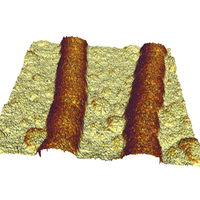
Mapping and Modeling the Nanomechanics of Bare and Protein-Coated Lipid Nanotubes

Guillaume Lamour, Antoine Allard, Juan Pelta, Sid Labdi, Martin Lenz, and Clément Campillo

Phys. Rev. X 10, 011031 (2020) - Published 11 February, 2020

Atomic force microscopy reveals the mechanics and morphology of biological nanotubes found in living cells, establishing a new platform for studying fundamental cellular processes.

Parametric Instabilities of Interacting Bosons in Periodically Driven 1D Optical Lattices

K. Wintersperger, M. Bukov, J. Näger, S. Lellouch, E. Demler, U. Schneider, I. Bloch, N. Goldman, and M. Aidelsburger

Phys. Rev. X 10, 011030 (2020) - Published 11 February, 2020

The appearance of collective modes, known as parametric instabilities, shortly after shaking an ensemble of ultracold bosons signals their importance for the stability of periodically driven bosonic systems.

Direct Measurement of the Impact of Teaching Experimentation in Physics Labs

Emily M. Smith, Martin M. Stein, Cole Walsh, and N. G. Holmes

Phys. Rev. X 10, 011029 (2020) - Published 10 February, 2020

Traditional physics labs can have a negative impact on student learning, whereas nontraditional inquiry-based labs improve performance and engagement while maintaining exam scores.

Rheoacoustic Gels: Tuning Mechanical and Flow Properties of Colloidal Gels with Ultrasonic Vibrations

Thomas Gibaud, Noémie Dagès, Pierre Lidon, Guillaume Jung, L. Christian Ahouré, Michael Sztucki, Arnaud Poulesquen, Nicolas Hengl, Frédéric Pignon, and Sébastien Manneville

Phys. Rev. X 10, 011028 (2020) - Published 10 February, 2020

Ultrasonic vibrations can control the elasticity and yield stress of colloidal gels, providing a way to tune the properties of these materials in real time.

Full-Field Terahertz Imaging at Kilohertz Frame Rates Using Atomic Vapor

Lucy A. Downes, Andrew R. MacKellar, Daniel J. Whiting, Cyril Bourgenot, Charles S. Adams, and Kevin J. Weatherill

Phys. Rev. X 10, 011027 (2020) - Published 7 February, 2020

A new technique produces high-speed videos with terahertz (far infrared) radiation, which could be useful for nondestructive testing.

Erratum: Two-Stage Dynamics of In Vivo Bacteriophage Genome Ejection [Phys. Rev. X 8, 021029 (2018)]

Yi-Ju Chen, David Wu, William Gelbart, Charles M. Knobler, Rob Phillips, and Willem K. Kegel

Phys. Rev. X 10, 019901 (2020) - Published 6 February, 2020

Modular Arithmetic with Nodal Lines: Drumhead Surface States in ZrSiTe

Lukas Muechler, Andreas Topp, Raquel Queiroz, Maxim Krivenkov, Andrei Varykhalov, Jennifer Cano, Christian R. Ast, and Leslie M. Schoop

Phys. Rev. X 10, 011026 (2020) - Published 6 February, 2020

Experiments reveal so-called drumhead surface states in a well-studied family of nodal semimetals, unraveling the complex interplay between different types of surface states in a complex class of materials.

Non-Abelian Symmetries and Disorder: A Broad Nonergodic Regime and Anomalous Thermalization

Ivan V. Protopopov, Rajat K. Panda, Tommaso Parolini, Antonello Scardicchio, Eugene Demler, and Dmitry A. Abanin

Phys. Rev. X 10, 011025 (2020) - Published 5 February, 2020

A mathematical analysis reveals a new class of quantum systems that, because of specific symmetries, fail to reach thermal equilibrium, thus broadening the family of nonthermalizing behaviors.

Similarities and Differences between LaNiO2 and CaCuO2 and Implications for Superconductivity

A. S. Botana and M. R. Norman

Phys. Rev. X 10, 011024 (2020) - Published 4 February, 2020

Calculations of the electronic structure of NdNiO2, recently found to be superconducting, reveal important similarities and differences to cuprates, which may shed light on the origin of cuprate high-temperature superconductivity.

Sign In to Your Journals Account

Filter

Recent Issues

Vol. 16, Iss. 4
October - December 2026
Vol. 16, Iss. 3
July - September 2026
Vol. 16, Iss. 2
April - June 2026
Vol. 16, Iss. 1
January - March 2026
Category
Article Type

Filter

Article Lookup

Enter a citation