Recent Articles

Correlation-Picture Approach to Open-Quantum-System Dynamics

S. Alipour, A. T. Rezakhani, A. P. Babu, K. Mølmer, M. Möttönen, and T. Ala-Nissila

Phys. Rev. X 10, 041024 (2020) - Published 3 November, 2020

By relating correlations between a quantum system and its environment to an uncorrelated description of the whole system, a new analytical technique provides a powerful tool for tracking correlations in open quantum system dynamics.

Single-Particle Spectral Function Formulated and Calculated by Variational Monte Carlo Method with Application to d-Wave Superconducting State

Maxime Charlebois and Masatoshi Imada

Phys. Rev. X 10, 041023 (2020) - Published 2 November, 2020

New extensions of a common technique for approximating strongly correlated quantum systems provides unprecedented accuracy in describing aspects of electron behavior in a large lattice of interacting electrons.

Effective Potential Description of the Interaction between Single Stem Cells and Localized Ligands

Ignacio Bordeu, Clare Garcin, Shukry J. Habib, and Gunnar Pruessner

Phys. Rev. X 10, 041022 (2020) - Published 30 October, 2020

An analysis of cell-ligand interactions from a statistical mechanics perspective shows cells act as effective force-field generators, actively organizing their environment.

Critical Theory of Non-Fermi Liquid Fixed Point in Multipolar Kondo Problem

Adarsh S. Patri and Yong Baek Kim

Phys. Rev. X 10, 041021 (2020) - Published 29 October, 2020

A mathematical analysis reveals the existence of a novel type of non-Fermi liquid, an exotic metallic state governed by strong interactions between conduction electrons and a multipolar (ion) impurity.

Dynamical Purification Phase Transition Induced by Quantum Measurements

Michael J. Gullans and David A. Huse

Phys. Rev. X 10, 041020 (2020) - Published 28 October, 2020

The rate at which a many-body quantum system is measured can induce a transition between a state that remembers initial conditions and one that forgets, possibly leading to new types of quantum error-correcting codes.

Observation of a Smooth Polaron-Molecule Transition in a Degenerate Fermi Gas

Gal Ness, Constantine Shkedrov, Yanay Florshaim, Oriana K. Diessel, Jonas von Milczewski, Richard Schmidt, and Yoav Sagi

Phys. Rev. X 10, 041019 (2020) - Published 27 October, 2020

The application of Raman spectroscopy to a Fermi gas reveals that particle aggregates—called polarons—disappear gradually, defying expectation.

Erratum: Thermal Transport in Crystals as a Kinetic Theory of Relaxons [Phys. Rev. X 6, 041013 (2016)]

Andrea Cepellotti and Nicola Marzari

Phys. Rev. X 10, 049901 (2020) - Published 26 October, 2020

Continuous Symmetries and Approximate Quantum Error Correction

Philippe Faist, Sepehr Nezami, Victor V. Albert, Grant Salton, Fernando Pastawski, Patrick Hayden, and John Preskill

Phys. Rev. X 10, 041018 (2020) - Published 26 October, 2020

A quantum code that is covariant with respect to a continuous symmetry can approximately correct the loss of a “letter” in that code, circumventing earlier no-go theorems in certain regimes.

Adiabatic Eigenstate Deformations as a Sensitive Probe for Quantum Chaos

Mohit Pandey, Pieter W. Claeys, David K. Campbell, Anatoli Polkovnikov, and Dries Sels

Phys. Rev. X 10, 041017 (2020) - Published 23 October, 2020

A new probe of quantum chaos is orders of magnitude more sensitive than standard measures and can extract information about the nontrivial dynamics close to nonchaotic regimes.

Waves, Algebraic Growth, and Clumping in Sedimenting Disk Arrays

Rahul Chajwa, Narayanan Menon, Sriram Ramaswamy, and Rama Govindarajan

Phys. Rev. X 10, 041016 (2020) - Published 22 October, 2020

In a viscous fluid, a line of spheres and a line of small disks settle to the bottom in very different ways, according to new theory and experiments that shed light on natural sedimentation processes.

Physics of High-Charge Electron Beams in Laser-Plasma Wakefields

J. Götzfried, A. Döpp, M. F. Gilljohann, F. M. Foerster, H. Ding, S. Schindler, G. Schilling, A. Buck, L. Veisz, and S. Karsch

Phys. Rev. X 10, 041015 (2020) - Published 21 October, 2020

A new analysis examines how increasing the amount of charge in high-energy wakefield electron accelerators influences the acceleration itself, an essential understanding for next-generation facilities.

Boundary-Obstructed Topological High-Tc Superconductivity in Iron Pnictides

Xianxin Wu, Wladimir A. Benalcazar, Yinxiang Li, Ronny Thomale, Chao-Xing Liu, and Jiangping Hu

Phys. Rev. X 10, 041014 (2020) - Published 20 October, 2020

Unconventional pairing of electrons in iron-based superconductors could provide a new class of topological superconductivity, a family of materials highly sought after for realizing robust quantum computation.

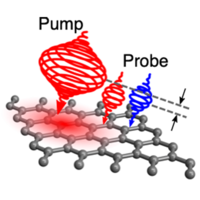
How Circular Dichroism in Time- and Angle-Resolved Photoemission Can Be Used to Spectroscopically Detect Transient Topological States in Graphene

Michael Schüler, Umberto De Giovannini, Hannes Hübener, Angel Rubio, Michael A. Sentef, Thomas P. Devereaux, and Philipp Werner

Phys. Rev. X 10, 041013 (2020) - Published 19 October, 2020

Circularly polarized light could be used to induce and detect topological states in graphene, a long-sought goal for studying the interplay between these two powerful platforms for investigations of quantum effects.

Entanglement between Identical Particles Is a Useful and Consistent Resource

Benjamin Morris, Benjamin Yadin, Matteo Fadel, Tilman Zibold, Philipp Treutlein, and Gerardo Adesso

Phys. Rev. X 10, 041012 (2020) - Published 16 October, 2020

A new theoretical description of identical particle entanglement frames it as a useful quantum resource in frequently encountered real-world experimental settings and not just a mathematical quirk.

Phase-Matching for Generation of Isolated Attosecond XUV and Soft-X-Ray Pulses with Few-Cycle Drivers

J. Schötz, B. Förg, W. Schweinberger, I. Liontos, H. A. Masood, A. M. Kamal, C. Jakubeit, N. G. Kling, T. Paasch-Colberg, S. Biswas, M. Högner, I. Pupeza, M. Alharbi, A. M. Azzeer, and M. F. Kling

Phys. Rev. X 10, 041011 (2020) - Published 15 October, 2020

Fully understanding the phase mismatch in radiating atoms participating in high-harmonic generation is essential for generating attosecond pulses at x-ray energies and beyond.

Spin Quintet in a Silicon Double Quantum Dot: Spin Blockade and Relaxation

Theodor Lundberg, Jing Li, Louis Hutin, Benoit Bertrand, David J. Ibberson, Chang-Min Lee, David J. Niegemann, Matias Urdampilleta, Nadia Stelmashenko, Tristan Meunier, Jason W. A. Robinson, Lisa Ibberson, Maud Vinet, Yann-Michel Niquet, and M. Fernando Gonzalez-Zalba

Phys. Rev. X 10, 041010 (2020) - Published 14 October, 2020

A new method for identifying spin arrangements leads to the discovery of a novel spin system—a spin quintet—in a pair of silicon quantum dots, a promising testbed for studying high-spin systems.

Scalar Active Mixtures: The Nonreciprocal Cahn-Hilliard Model

Suropriya Saha, Jaime Agudo-Canalejo, and Ramin Golestanian

Phys. Rev. X 10, 041009 (2020) - Published 13 October, 2020

Nonreciprocal interactions among different particle species in active matter can lead to large-scale complex oscillatory patterns, according to a new model of such systems.

Unconventional Superconductivity Induced by Suppressing an Iron-Selenium-Based Mott Insulator CsFe4−xSe4

Jin Si, Guan-Yu Chen, Qing Li, Xiyu Zhu, Huan Yang, and Hai-Hu Wen

Phys. Rev. X 10, 041008 (2020) - Published 12 October, 2020

Under high pressure, the insulating compound CsFe4−xSe4 turns into an unconventional superconductor, suggesting this system is a good one for exploring deviations from traditional Bardeen-Cooper-Schrieffer theory of superconductivity.

Robust Topological Order in Fermionic Z2 Gauge Theories: From Aharonov-Bohm Instability to Soliton-Induced Deconfinement

Daniel González-Cuadra, Luca Tagliacozzo, Maciej Lewenstein, and Alejandro Bermudez

Phys. Rev. X 10, 041007 (2020) - Published 9 October, 2020

New methods for producing topological order in a material could do so under more relaxed conditions than is typically required, which could help in the development of fault-tolerant quantum computation.

Broken Symmetries and Kohn’s Theorem in Graphene Cyclotron Resonance

Jordan Pack, B. Jordan Russell, Yashika Kapoor, Jesse Balgley, Jeffrey Ahlers, Takashi Taniguchi, Kenji Watanabe, and Erik A. Henriksen

Phys. Rev. X 10, 041006 (2020) - Published 8 October, 2020

Infrared transmission measurements reveal the collective excitations of correlated electrons in a pristine sample of graphene and the evolution from one underlying electronic ground state to another.

Sign In to Your Journals Account

Filter

Recent Issues

Vol. 16, Iss. 4
October - December 2026
Vol. 16, Iss. 3
July - September 2026
Vol. 16, Iss. 2
April - June 2026
Vol. 16, Iss. 1
January - March 2026
Category
Article Type

Filter

Article Lookup

Enter a citation