Recent Articles

Agile and Versatile Quantum Communication: Signatures and Secrets

Stefan Richter, Matthew Thornton, Imran Khan, Hannah Scott, Kevin Jaksch, Ulrich Vogl, Birgit Stiller, Gerd Leuchs, Christoph Marquardt, and Natalia Korolkova

Phys. Rev. X 11, 011038 (2021) - Published 24 February, 2021

A demonstration of “cryptographic agility” in quantum communications offers a robust way to adapt security protocols in the face of a novel attack.

Density Fluctuations across the Superfluid-Supersolid Phase Transition in a Dipolar Quantum Gas

J. Hertkorn, J.-N. Schmidt, F. Böttcher, M. Guo, M. Schmidt, K. S. H. Ng, S. D. Graham, H. P. Büchler, T. Langen, M. Zwierlein, and T. Pfau

Phys. Rev. X 11, 011037 (2021) - Published 23 February, 2021

Observations of fluctuations in a dipolar quantum gas provide insight into the mechanism underlying the superfluid-to-supersolid phase transition.

Pulsed Ion Microscope to Probe Quantum Gases

C. Veit, N. Zuber, O. A. Herrera-Sancho, V. S. V. Anasuri, T. Schmid, F. Meinert, R. Löw, and T. Pfau

Phys. Rev. X 11, 011036 (2021) - Published 22 February, 2021

Researchers have developed an ion-optics-based quantum microscope that has sufficient resolution to image individual atoms.

Demonstration of Quantum Brachistochrones between Distant States of an Atom

Manolo R. Lam, Natalie Peter, Thorsten Groh, Wolfgang Alt, Carsten Robens, Dieter Meschede, Antonio Negretti, Simone Montangero, Tommaso Calarco, and Andrea Alberti

Phys. Rev. X 11, 011035 (2021) - Published 19 February, 2021

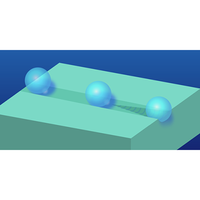
Researchers have transported an atom between two locations in the shortest possible time, an achievement that has implications for quantum technologies.

Vacancy-Induced Low-Energy Density of States in the Kitaev Spin Liquid

Wen-Han Kao, Johannes Knolle, Gábor B. Halász, Roderich Moessner, and Natalia B. Perkins

Phys. Rev. X 11, 011034 (2021) - Published 18 February, 2021

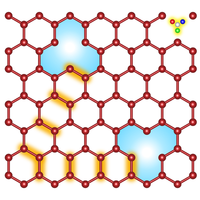
A small concentration of vacancies in the Kitaev model of quantum spin liquids (QSLs) alter its low-energy physics, offering a plausible explanation for recent experimental results on the QSL-hosting compound H3LiIr2O6.

Cell and Nucleus Shape as an Indicator of Tissue Fluidity in Carcinoma

Steffen Grosser, Jürgen Lippoldt, Linda Oswald, Matthias Merkel, Daniel M. Sussman, Frédéric Renner, Pablo Gottheil, Erik W. Morawetz, Thomas Fuhs, Xiaofan Xie, Steve Pawlizak, Anatol W. Fritsch, Benjamin Wolf, Lars-Christian Horn, Susanne Briest, Bahriye Aktas, M. Lisa Manning, and Josef A. Käs

Phys. Rev. X 11, 011033 (2021) - Published 17 February, 2021

In tightly packed tissues, a cancer cell’s motility is linked to the shape of the cell and of its nucleus.

Hardware-Encoding Grid States in a Nonreciprocal Superconducting Circuit

Martin Rymarz, Stefano Bosco, Alessandro Ciani, and David P. DiVincenzo

Phys. Rev. X 11, 011032 (2021) - Published 17 February, 2021

A newly proposed superconducting circuit architecture employs a synthetic magnetic field to create a qubit that is intrinsically protected from noise.

Benchmark for Ab Initio Prediction of Magnetic Structures Based on Cluster-Multipole Theory

M.-T. Huebsch, T. Nomoto, M.-T. Suzuki, and R. Arita

Phys. Rev. X 11, 011031 (2021) - Published 16 February, 2021

State-of-the-art many-body simulations can predict the magnetic ground state of over 100 materials from first principles, pushing the exploration and design of magnetic materials to a new era.

Entanglement Phase Transitions in Measurement-Only Dynamics

Matteo Ippoliti, Michael J. Gullans, Sarang Gopalakrishnan, David A. Huse, and Vedika Khemani

Phys. Rev. X 11, 011030 (2021) - Published 15 February, 2021

Measurements of a quantum system can support distinct entanglement phases and transitions, a counterintuitive result with implications for creating robust, fault-tolerant quantum information devices.

High Temporal and Spectral Resolution of Stimulated X-Ray Raman Signals with Stochastic Free-Electron-Laser Pulses

Stefano M. Cavaletto, Daniel Keefer, and Shaul Mukamel

Phys. Rev. X 11, 011029 (2021) - Published 12 February, 2021

Temporal and spectral resolution of x-ray spectroscopy can be improved by exploiting correlations of existing stochastic x-ray fields, allowing for new investigations of electron and nuclear dynamics in molecules.

Tight Bounds on the Simultaneous Estimation of Incompatible Parameters

Jasminder S. Sidhu, Yingkai Ouyang, Earl T. Campbell, and Pieter Kok

Phys. Rev. X 11, 011028 (2021) - Published 11 February, 2021

New analysis shows how to calculate the fundamental precision bounds of a quantum sensor that measures two signals simultaneously, solving a difficult problem in quantum estimation theory.

High-Fidelity Measurement of a Superconducting Qubit Using an On-Chip Microwave Photon Counter

A. Opremcak, C. H. Liu, C. Wilen, K. Okubo, B. G. Christensen, D. Sank, T. C. White, A. Vainsencher, M. Giustina, A. Megrant, B. Burkett, B. L. T. Plourde, and R. McDermott

Phys. Rev. X 11, 011027 (2021) - Published 10 February, 2021

Fast, high-fidelity measurement of a superconducting qubit with a microwave photon counter offers a strong foundation for error correction in future, robust, large-scale quantum computers.

Maximum Refractive Index of an Atomic Medium

Francesco Andreoli, Michael J. Gullans, Alexander A. High, Antoine Browaeys, and Darrick E. Chang

Phys. Rev. X 11, 011026 (2021) - Published 9 February, 2021

A new theory explains the lack of variation in the refractive indices of atomic gases.

Friction on Ice: How Temperature, Pressure, and Speed Control the Slipperiness of Ice

Rinse W. Liefferink, Feng-Chun Hsia, Bart Weber, and Daniel Bonn

Phys. Rev. X 11, 011025 (2021) - Published 8 February, 2021

A new approach for studying friction on ice helps explain why the ease of sliding depends strongly on temperature, contact pressure, and speed.

Emergent Magnetic Phases in Pressure-Tuned van der Waals Antiferromagnet FePS3

Matthew J. Coak, David M. Jarvis, Hayrullo Hamidov, Andrew R. Wildes, Joseph A. M. Paddison, Cheng Liu, Charles R. S. Haines, Ngoc T. Dang, Sergey E. Kichanov, Boris N. Savenko, Sungmin Lee, Marie Kratochvílová, Stefan Klotz, Thomas C. Hansen, Denis P. Kozlenko, Je-Geun Park, and Siddharth S. Saxena

Phys. Rev. X 11, 011024 (2021) - Published 5 February, 2021

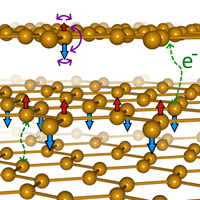
High-pressure neutron studies of so-called magnetic graphene unveil exotic new states and behaviors as the material transitions from an insulator to a metal when compressed.

Fault-Tolerant Gates on Hypergraph Product Codes

Anirudh Krishna and David Poulin

Phys. Rev. X 11, 011023 (2021) - Published 4 February, 2021

One class of quantum error-correcting codes—hypergraph product codes—may offer fault tolerance with low hardware overhead. A new proposal shows how to perform universal quantum gates with these codes.

Correlations in Perturbed Dual-Unitary Circuits: Efficient Path-Integral Formula

Pavel Kos, Bruno Bertini, and Tomaž Prosen

Phys. Rev. X 11, 011022 (2021) - Published 3 February, 2021

Dual-unitary quantum circuits are a class of many-body models that allow for direct computation of useful diagnostics. A new study shows that important features of these models are stable under perturbations.

Bond Directional Anapole Order in a Spin-Orbit Coupled Mott Insulator Sr2(Ir1−xRhx)O4

H. Murayama, K. Ishida, R. Kurihara, T. Ono, Y. Sato, Y. Kasahara, H. Watanabe, Y. Yanase, G. Cao, Y. Mizukami, T. Shibauchi, Y. Matsuda, and S. Kasahara

Phys. Rev. X 11, 011021 (2021) - Published 2 February, 2021

Evidence of an exotic intermediate state—an anapole state—between the liquid and solid phases of electrons in a transition-metal oxide provides the first in-depth look at this long-sought, mysterious phase.

Theory of Trotter Error with Commutator Scaling

Andrew M. Childs, Yuan Su, Minh C. Tran, Nathan Wiebe, and Shuchen Zhu

Phys. Rev. X 11, 011020 (2021) - Published 1 February, 2021

Product formulas offer a powerful, simple approach to quantum simulation. A new theory quantifying their errors puts these algorithms on a rigorous foundation, showcasing their superiority over other methods.

Trapping Electrons in a Room-Temperature Microwave Paul Trap

Clemens Matthiesen, Qian Yu, Jinen Guo, Alberto M. Alonso, and Hartmut Häffner

Phys. Rev. X 11, 011019 (2021) - Published 29 January, 2021

Long-time trapping of a single electron could allow the particle to be used as an efficient quantum bit.

Sign In to Your Journals Account

Filter

Recent Issues

Vol. 16, Iss. 4
October - December 2026
Vol. 16, Iss. 3
July - September 2026
Vol. 16, Iss. 2
April - June 2026
Vol. 16, Iss. 1
January - March 2026
Category
Article Type

Filter

Article Lookup

Enter a citation