Recent Articles

Ultrafast Measurements of Mode-Specific Deformation Potentials of Bi2Te3 and Bi2Se3

Yijing Huang et al.

Phys. Rev. X 13, 041050 (2023) - Published 14 December, 2023

Combining two ultrafast spectroscopy techniques allows for measurements of the electron-phonon coupling in two prototypical topological materials.

Discovery of a Single-Band Mott Insulator in a van der Waals Flat-Band Compound

Shunye Gao et al.

Phys. Rev. X 13, 041049 (2023) - Published 13 December, 2023

The fundamental model for understanding Mott insulators is the single-band Hubbard model. An ideal realization of that model arises in Nb3Cl8, proving a powerful system for exploring Mott physics and other correlated states.

Gravitational-Wave Parameter Inference with the Newman-Penrose Scalar

Juan Calderón Bustillo, Isaac C. F. Wong, Nicolas Sanchis-Gual, Samson H. W. Leong, Alejandro Torres-Forné, Koustav Chandra, José A. Font, Carlos Herdeiro, Eugen Radu, and Tjonnie G. F. Li

Phys. Rev. X 13, 041048 (2023) - Published 12 December, 2023

A new way to compare numerical simulations of gravitational waves with observations removes existing limitations, enabling the study of new astrophysical phenomena.

Republished: Dynamics of Stochastic Integrate-and-Fire Networks

Gabriel Koch Ocker

Phys. Rev. X 13, 041047 (2023) - Published 11 December, 2023

Neural dynamics are typically described by neural field theories derived long ago using simplified neuron models. A new framework incorporates biophysical nonlinearities into these theories.

Theory of Free Fermions under Random Projective Measurements

Igor Poboiko, Paul Pöpperl, Igor V. Gornyi, and Alexander D. Mirlin

Phys. Rev. X 13, 041046 (2023) - Published 8 December, 2023

A new analytic theory of a monitored 1D free-fermion system shows the absence of a measurement-induced entanglement phase transition conjectured in recent studies.

Nonlinear Sigma Models for Monitored Dynamics of Free Fermions

Michele Fava, Lorenzo Piroli, Tobias Swann, Denis Bernard, and Adam Nahum

Phys. Rev. X 13, 041045 (2023) - Published 8 December, 2023

A field-theoretic description of monitored free fermions reveals the entanglement phase diagram of one class of such systems and new universality classes of phase transitions.

Minimum-Action Method for Nonequilibrium Phase Transitions

Ruben Zakine and Eric Vanden-Eijnden

Phys. Rev. X 13, 041044 (2023) - Published 7 December, 2023

A framework for describing phase transitions generalizes the usual statistical mechanics approach to include systems that are out of equilibrium, extending such study to a wide range of applications.

Enhanced Associative Memory, Classification, and Learning with Active Dynamics

Agnish Kumar Behera, Madan Rao, Srikanth Sastry, and Suriyanarayanan Vaikuntanathan

Phys. Rev. X 13, 041043 (2023) - Published 6 December, 2023

Nonequilibrium activity may provide a surprisingly general way to improve the ability of a system to store and retrieve memory.

Measurement-Altered Ising Quantum Criticality

Sara Murciano, Pablo Sala, Yue Liu, Roger S. K. Mong, and Jason Alicea

Phys. Rev. X 13, 041042 (2023) - Published 5 December, 2023

In 1D Ising systems, a protocol for weakly measuring the critical degrees of freedom uncovers a rich interplay between measurements and correlations accessible by both experiment and theory.

Exponential Quantum Speedup in Simulating Coupled Classical Oscillators

Ryan Babbush, Dominic W. Berry, Robin Kothari, Rolando D. Somma, and Nathan Wiebe

Phys. Rev. X 13, 041041 (2023) - Published 4 December, 2023

An algorithm for simulating coupled classical oscillators on a quantum computer offers a new example of quantum advantage, requiring far fewer resources than simulations on a classical computer.

A Postquantum Theory of Classical Gravity?

Jonathan Oppenheim

Phys. Rev. X 13, 041040 (2023) - Published 4 December, 2023

A proposed model unites quantum theory with classical gravity by assuming that states evolve in a probabilistic way, like a game of chance.

GWTC-3: Compact Binary Coalescences Observed by LIGO and Virgo during the Second Part of the Third Observing Run

R. Abbott et al. (LIGO Scientific Collaboration, Virgo Collaboration, and KAGRA Collaboration)

Phys. Rev. X 13, 041039 (2023) - Published 4 December, 2023

The third Gravitational-Wave Transient Catalog contains 90 probable gravitational-wave candidates, including binary black holes, binary neutron stars, and black hole–neutron star binaries across a wide range of masses.

Multiscale Data-Driven Energy Estimation and Generation

Tanguy Marchand, Misaki Ozawa, Giulio Biroli, and Stéphane Mallat

Phys. Rev. X 13, 041038 (2023) - Published 30 November, 2023

A new multiscale approach allows for estimating high-dimensional probability distributions and fast sampling of many-body systems in various domains, from statistical physics to cosmology.

Microwave-Based Quantum Control and Coherence Protection of Tin-Vacancy Spin Qubits in a Strain-Tuned Diamond-Membrane Heterostructure

Xinghan Guo, Alexander M. Stramma, Zixi Li, William G. Roth, Benchen Huang, Yu Jin, Ryan A. Parker, Jesús Arjona Martínez, Noah Shofer, Cathryn P. Michaels, Carola P. Purser, Martin H. Appel, Evgeny M. Alexeev, Tianle Liu, Andrea C. Ferrari, David D. Awschalom, Nazar Delegan, Benjamin Pingault, Giulia Galli, F. Joseph Heremans, Mete Atatüre, and Alexander A. High

Phys. Rev. X 13, 041037 (2023) - Published 29 November, 2023

Strain engineering of diamond provides a way to realize high-performance tin-vacancy spin qubits that avoid many of the trade-offs inherent to optical quantum control techniques.

Superconductivity Studied by Solving Ab Initio Low-Energy Effective Hamiltonians for Carrier Doped CaCuO2, Bi2Sr2CuO6, Bi2Sr2CaCu2O8, and HgBa2CuO4

Michael Thobias Schmid, Jean-Baptiste Morée, Ryui Kaneko, Youhei Yamaji, and Masatoshi Imada

Phys. Rev. X 13, 041036 (2023) - Published 28 November, 2023

A first-principles model accounts for the wide range of critical temperatures (Tc’s) for four materials and suggests a parameter that determines Tc in any high-temperature superconductor.

Midcircuit Operations Using the omg Architecture in Neutral Atom Arrays

Joanna W. Lis, Aruku Senoo, William F. McGrew, Felix Rönchen, Alec Jenkins, and Adam M. Kaufman

Phys. Rev. X 13, 041035 (2023) - Published 22 November, 2023

Three research groups have exploited the nuclear spins of ytterbium-171 to manipulate qubits before they are read out—an approach that could lead to efficient error-correction schemes for trapped-atom computing platforms.

Midcircuit Qubit Measurement and Rearrangement in a Yb171 Atomic Array

M. A. Norcia et al.

Phys. Rev. X 13, 041034 (2023) - Published 22 November, 2023

Three research groups have exploited the nuclear spins of ytterbium-171 to manipulate qubits before they are read out—an approach that could lead to efficient error-correction schemes for trapped-atom computing platforms.

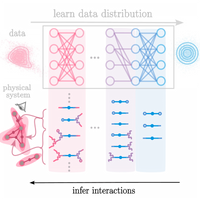
Learning Interacting Theories from Data

Claudia Merger, Alexandre René, Kirsten Fischer, Peter Bouss, Sandra Nestler, David Dahmen, Carsten Honerkamp, and Moritz Helias

Phys. Rev. X 13, 041033 (2023) - Published 20 November, 2023

Models of systems in physics usually start with elementary processes. New work with a neural network shows how models can also be built by observing the system as a whole and deducing the underlying interactions.

Optimal Control of Nonequilibrium Systems through Automatic Differentiation

Megan C. Engel, Jamie A. Smith, and Michael P. Brenner

Phys. Rev. X 13, 041032 (2023) - Published 16 November, 2023

A new approach to computing optimal nonequilibrium controls applicable to complex systems far from equilibrium, providing a tool for expanded studies into optimized nanotechnology and the evolution of biomolecular systems.

Reaching the Yield Point of a Glass During X-Ray Irradiation

Alessandro Martinelli, Federico Caporaletti, Francesco Dallari, Michael Sprung, Fabian Westermeier, Giacomo Baldi, and Giulio Monaco

Phys. Rev. X 13, 041031 (2023) - Published 15 November, 2023

The use of x rays to generate stress sources in a glass reveals how glasses, at the atomic scale, respond elastically to the accumulation of stress before becoming fully plastic.

Sign In to Your Journals Account

Filter

Recent Issues

Vol. 16, Iss. 4
October - December 2026
Vol. 16, Iss. 3
July - September 2026
Vol. 16, Iss. 2
April - June 2026
Vol. 16, Iss. 1
January - March 2026
Category
Article Type

Filter

Article Lookup

Enter a citation