Recent Articles

Electron Doping a Kagome Spin Liquid

Z. A. Kelly, M. J. Gallagher, and T. M. McQueen

Phys. Rev. X 6, 041007 (2016) - Published 13 October, 2016

Researchers have added dopant atoms to a quantum spin liquid in an effort to make it superconduct, but the material upended theory by remaining an insulator.

Flux-Fusion Anomaly Test and Bosonic Topological Crystalline Insulators

Michael Hermele and Xie Chen

Phys. Rev. X 6, 041006 (2016) - Published 13 October, 2016

A stepping stone to experimentally realizing new quantum phases of matter is to determine theoretically which phases are possible as a matter of principle. Researchers have now proposed theories of new topological crystalline insulators in three dimensions.

Versatile van der Waals Density Functional Based on a Meta-Generalized Gradient Approximation

Haowei Peng, Zeng-Hui Yang, John P. Perdew, and Jianwei Sun

Phys. Rev. X 6, 041005 (2016) - Published 12 October, 2016

Van der Waals interactions are ubiquitous in different materials yet not always described properly by current theories. Now, researchers have determined how to accurately and efficiently treat long-range Van der Waals interactions together with other chemical bonds, new findings that are important for studies of layered materials.

Direct Frequency Comb Laser Cooling and Trapping

A. M. Jayich, X. Long, and W. C. Campbell

Phys. Rev. X 6, 041004 (2016) - Published 10 October, 2016

Ensembles of ultracold atoms suffer only minimally from thermal fluctuations and, accordingly, are useful in a variety of fields. A new laser-cooling technique is demonstrated that can be applied to simple, abundant atoms such as hydrogen and carbon.

The Nature and Correction of Diabatic Errors in Anyon Braiding

Christina Knapp, Michael Zaletel, Dong E. Liu, Meng Cheng, Parsa Bonderson, and Chetan Nayak

Phys. Rev. X 6, 041003 (2016) - Published 4 October, 2016

The future of quantum computing hinges on minimizing and correcting computational errors. Researchers investigate errors from the time evolution in systems of exotic quasiparticles, known as anyons, that could provide a well-protected platform for quantum computing.

Generalization of Dielectric-Dependent Hybrid Functionals to Finite Systems

Nicholas P. Brawand, Márton Vörös, Marco Govoni, and Giulia Galli

Phys. Rev. X 6, 041002 (2016) - Published 4 October, 2016

Interactions between light and matter are of fundamental interest in a variety of fields, such as solar-energy conversion. A new, accurate method, based on first principles, is used to predict the absorption and emission properties of a range of organic and inorganic molecules.

Classification of Interacting Topological Floquet Phases in One Dimension

Andrew C. Potter, Takahiro Morimoto, and Ashvin Vishwanath

Phys. Rev. X 6, 041001 (2016) - Published 3 October, 2016

Repeatedly driving a system with electromagnetic pulses can produce dramatically new quantum properties. A theoretical understanding of new types of quantum phases of interacting matter that exist only in the face of periodic driving is presented.

Ultrafast Time-Resolved Hard X-Ray Emission Spectroscopy on a Tabletop

Luis Miaja-Avila, Galen C. O’Neil, Young I. Joe, Bradley K. Alpert, Niels H. Damrauer, William B. Doriese, Steven M. Fatur, Joseph W. Fowler, Gene C. Hilton, Ralph Jimenez, Carl D. Reintsema, Daniel R. Schmidt, Kevin L. Silverman, Daniel S. Swetz, Hideyuki Tatsuno, and Joel N. Ullom

Phys. Rev. X 6, 031047 (2016) - Published 27 September, 2016

Probing electronic states on ultrafast timescales is critical for studies of chemical reactions. A tabletop method for performing time-resolved x-ray emission spectroscopy is presented and tested using a polypyridyl iron complex.

Inverse Funnel Effect of Excitons in Strained Black Phosphorus

Pablo San-Jose, Vincenzo Parente, Francisco Guinea, Rafael Roldán, and Elsa Prada

Phys. Rev. X 6, 031046 (2016) - Published 27 September, 2016

Developing more efficient solar cells has long been a goal of scientists, given the current energy crisis. A theoretical study of black phosphorous, a material useful as an infrared photodetector, shows that it can make a more efficient solar cell in the presence of strain.

Hybrid Quantum-Classical Approach to Correlated Materials

Bela Bauer, Dave Wecker, Andrew J. Millis, Matthew B. Hastings, and Matthias Troyer

Phys. Rev. X 6, 031045 (2016) - Published 21 September, 2016

Quantum computers promise to shed light on many areas of research that have proven too computationally expensive even for current supercomputers. Researchers show how a hybrid quantum-classical approach can be used to simulate strongly correlated materials, such as high-temperature superconductors and transition-metal oxides.

Directly Phase-Modulated Light Source

Z. L. Yuan, B. Fröhlich, M. Lucamarini, G. L. Roberts, J. F. Dynes, and A. J. Shields

Phys. Rev. X 6, 031044 (2016) - Published 20 September, 2016

A compact scheme can directly modulate the phase of a laser without a bulky external modulator.

Particle-Vortex Duality from 3D Bosonization

Andreas Karch and David Tong

Phys. Rev. X 6, 031043 (2016) - Published 19 September, 2016

Bosons and fermions, once thought to be distinct entities, can actually be exchanged via the attachment of flux. This observation is used to relate different theories that have applications in fields as diverse as condensed matter physics and string theory.

Multiple-Stage Structure Transformation of Organic-Inorganic Hybrid Perovskite CH3NH3PbI3

Qiong Chen, Henan Liu, Hui-Seon Kim, Yucheng Liu, Mengjin Yang, Naili Yue, Gang Ren, Kai Zhu, Shengzhong Liu, Nam-Gyu Park, and Yong Zhang

Phys. Rev. X 6, 031042 (2016) - Published 15 September, 2016

The structural stability of solar-cell absorbing materials is critical to ensure efficient solar cells. Experiments show how a hybrid perovskite material can be degraded by visible light much more easily than conventional semiconductors such as silicon.

Implementing and Characterizing Precise Multiqubit Measurements

J. Z. Blumoff, K. Chou, C. Shen, M. Reagor, C. Axline, R. T. Brierley, M. P. Silveri, C. Wang, B. Vlastakis, S. E. Nigg, L. Frunzio, M. H. Devoret, L. Jiang, S. M. Girvin, and R. J. Schoelkopf

Phys. Rev. X 6, 031041 (2016) - Published 14 September, 2016

Multiqubit measurements will play a vital role in quantum information processing. A new experiment constructs complex measurements on three superconducting qubits and develops important tools toward characterizing them.

Destroying Coherence in High-Temperature Superconductors with Current Flow

A. Kaminski, S. Rosenkranz, M. R. Norman, M. Randeria, Z. Z. Li, H. Raffy, and J. C. Campuzano

Phys. Rev. X 6, 031040 (2016) - Published 13 September, 2016

Superconductors carry current without resistance, but excessive current destroys superconductivity. An investigation of this natural “speed limit” gives a better understanding of the properties of copper-oxide-based, high-temperature superconductors.

Universal Fault-Tolerant Gates on Concatenated Stabilizer Codes

Theodore J. Yoder, Ryuji Takagi, and Isaac L. Chuang

Phys. Rev. X 6, 031039 (2016) - Published 13 September, 2016

Error correction is a fundamental aspect of quantum codes. Researchers theoretically show that even 5- and 7-qubit codes can yield universal fault-tolerant computation with relatively low overhead.

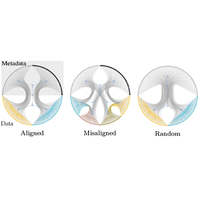
Network Structure, Metadata, and the Prediction of Missing Nodes and Annotations

Darko Hric, Tiago P. Peixoto, and Santo Fortunato

Phys. Rev. X 6, 031038 (2016) - Published 12 September, 2016

Networks are everywhere: social networks, linked neurons in the brain, and maps of traffic patterns. A long-standing goal has been to divide networks into relevant “communities,” and now researchers demonstrate a better method for doing so.

Spatiotemporal Optical Vortices

N. Jhajj, I. Larkin, E. W. Rosenthal, S. Zahedpour, J. K. Wahlstrand, and H. M. Milchberg

Phys. Rev. X 6, 031037 (2016) - Published 9 September, 2016

A newly discovered optical vortex forms a ring around many intense laser pulses but was never noticed before.

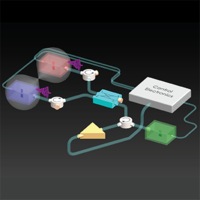
Robust Concurrent Remote Entanglement Between Two Superconducting Qubits

A. Narla, S. Shankar, M. Hatridge, Z. Leghtas, K. M. Sliwa, E. Zalys-Geller, S. O. Mundhada, W. Pfaff, L. Frunzio, R. J. Schoelkopf, and M. H. Devoret

Phys. Rev. X 6, 031036 (2016) - Published 6 September, 2016

Communication that relies on quantum carriers, like single photons, can achieve a level of privacy unattainable by classical communication methods. In a new experiment, single microwave photons are used as carriers of quantum information in a manner robust to loss.

Defect Control of Conventional and Anomalous Electron Transport at Complex Oxide Interfaces

F. Gunkel, Chris Bell, Hisashi Inoue, Bongju Kim, Adrian G. Swartz, Tyler A. Merz, Yasuyuki Hikita, Satoshi Harashima, Hiroki K. Sato, Makoto Minohara, Susanne Hoffmann-Eifert, Regina Dittmann, and Harold Y. Hwang

Phys. Rev. X 6, 031035 (2016) - Published 30 August, 2016

The interfaces between materials are often rich in physical phenomena such as emergent magnetic properties. A new study analyzes the low-temperature properties of the interface between two oxides controlled by cationic defect formation.

Sign In to Your Journals Account

Filter

Recent Issues

Vol. 16, Iss. 4
October - December 2026
Vol. 16, Iss. 3
July - September 2026
Vol. 16, Iss. 2
April - June 2026
Vol. 16, Iss. 1
January - March 2026
Category
Article Type

Filter

Article Lookup

Enter a citation