Recent Articles

Methodology of Resonant Equiangular Composite Quantum Gates

Guang Hao Low, Theodore J. Yoder, and Isaac L. Chuang

Phys. Rev. X 6, 041067 (2016) - Published 28 December, 2016

Extracting weak signals from quantum systems is often a test of quantum control. Classical signal-processing techniques are adapted to allow the systematic and efficient design of composite quantum gates for such tasks.

Elastobuoyant Heavy Spheres: A Unique Way to Study Nonlinear Elasticity

Aditi Chakrabarti, Manoj K. Chaudhury, Serge Mora, and Yves Pomeau

Phys. Rev. X 6, 041066 (2016) - Published 28 December, 2016

Small deformations of most elastic materials follow a well-known law, but understanding of large deformations is lacking. Scientists investigate large strain behavior using a gel deformed by the weight of a heavy bead.

Emergent Hydrodynamics in Integrable Quantum Systems Out of Equilibrium

Olalla A. Castro-Alvaredo, Benjamin Doyon, and Takato Yoshimura

Phys. Rev. X 6, 041065 (2016) - Published 27 December, 2016

A new method for calculating the time-evolving behavior of interacting quantum particles in one dimension can be used to model experiments that were previously beyond description.

Nonequilibrium Thermodynamics of Chemical Reaction Networks: Wisdom from Stochastic Thermodynamics

Riccardo Rao and Massimiliano Esposito

Phys. Rev. X 6, 041064 (2016) - Published 22 December, 2016

Coupled chemical reactions play an integral role in cellular functioning. A thermodynamical theory of chemical networks that process energy and information from their surroundings is presented.

Direct Observation of Sr Vacancies in SrTiO3 by Quantitative Scanning Transmission Electron Microscopy

Honggyu Kim, Jack Y. Zhang, Santosh Raghavan, and Susanne Stemmer

Phys. Rev. X 6, 041063 (2016) - Published 22 December, 2016

Point defects are unavoidable, and they can substantially modulate a material’s electronic, magnetic, and structural properties. Quantitative scanning transmission electron microscopy is used to reveal strontium vacancies in SrTiO3 films.

Spectral Entropies as Information-Theoretic Tools for Complex Network Comparison

Manlio De Domenico and Jacob Biamonte

Phys. Rev. X 6, 041062 (2016) - Published 21 December, 2016

Disorder—known as entropy—is inherent to all systems, natural and manmade. A way of quantifying a complex network’s entropy is proposed.

High-Throughput Computation of Thermal Conductivity of High-Temperature Solid Phases: The Case of Oxide and Fluoride Perovskites

Ambroise van Roekeghem, Jesús Carrete, Corey Oses, Stefano Curtarolo, and Natalio Mingo

Phys. Rev. X 6, 041061 (2016) - Published 21 December, 2016

Manufacturing materials with tailorable characteristics requires a detailed understanding of their properties as a function of temperature. A study of the mechanical stability and thermal conductivity of several hundred oxides and fluorides at temperatures up to 1000 K is presented.

Coupling a Surface Acoustic Wave to an Electron Spin in Diamond via a Dark State

D. Andrew Golter, Thein Oo, Mayra Amezcua, Ignas Lekavicius, Kevin A. Stewart, and Hailin Wang

Phys. Rev. X 6, 041060 (2016) - Published 20 December, 2016

Coupling artificial atoms and acoustic waves may be key in future quantum information processing efforts. An experimental breakthrough in coupling nitrogen vacancy centers strongly to acoustic waves in a way that still preserves their spin coherence is reported.

Intertwined Orders in Heavy-Fermion Superconductor CeCoIn5

Duk Y. Kim, Shi-Zeng Lin, Franziska Weickert, Michel Kenzelmann, Eric D. Bauer, Filip Ronning, J. D. Thompson, and Roman Movshovich

Phys. Rev. X 6, 041059 (2016) - Published 20 December, 2016

A substance with controllable properties is valuable in many industrial applications. Scientists show how one such material—CeCoIn5—exists with three different superconducting and magnetic states intertwined together.

Observation of Weak Collapse in a Bose-Einstein Condensate

Christoph Eigen, Alexander L. Gaunt, Aziza Suleymanzade, Nir Navon, Zoran Hadzibabic, and Robert P. Smith

Phys. Rev. X 6, 041058 (2016) - Published 19 December, 2016

Researchers investigate a nonlinear wave collapse phenomenon that has hitherto evaded experimental detection.

Nonequilibrium Interfacial Tension in Simple and Complex Fluids

Domenico Truzzolillo, Serge Mora, Christelle Dupas, and Luca Cipelletti

Phys. Rev. X 6, 041057 (2016) - Published 19 December, 2016

Scientists investigate the tension characterizing the interface region between miscible fluids and determine when and why they behave as if they were immiscible.

Echoes in Space and Time

Kang Lin, Peifen Lu, Junyang Ma, Xiaochun Gong, Qiying Song, Qinying Ji, Wenbin Zhang, Heping Zeng, Jian Wu, Gabriel Karras, Guillaume Siour, Jean-Michel Hartmann, Olivier Faucher, Erez Gershnabel, Yehiam Prior, and Ilya Sh. Averbukh

Phys. Rev. X 6, 041056 (2016) - Published 16 December, 2016

Echo is a fundamental phenomenon observed in both nature and in scientific techniques such as magnetic resonance imaging. Now, researchers demonstrate new echo phenomena in the orientation of CO2 and N2O molecules excited by femtosecond lasers.

Antiferromagnetic and Orbital Ordering on a Diamond Lattice Near Quantum Criticality

K. W. Plumb, J. R. Morey, J. A. Rodriguez-Rivera, Hui Wu, A. A. Podlesnyak, T. M. McQueen, and C. L. Broholm

Phys. Rev. X 6, 041055 (2016) - Published 16 December, 2016

Spin-orbital interactions are of significant interest in condensed matter physics. Now, researchers show how spin and orbital order coexist in FeSc2S4.

Echo Behavior in Large Populations of Chemical Oscillators

Tianran Chen, Mark R. Tinsley, Edward Ott, and Kenneth Showalter

Phys. Rev. X 6, 041054 (2016) - Published 15 December, 2016

A set of over 1000 tiny, parallel chemical reactions demonstrates the first example of an echo phenomenon in a chemical system.

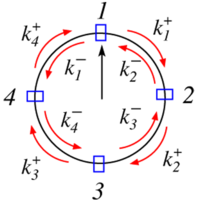
Cost and Precision of Brownian Clocks

Andre C. Barato and Udo Seifert

Phys. Rev. X 6, 041053 (2016) - Published 15 December, 2016

Biomolecular networks capable of counting time can be thought of as “Brownian clocks.” The energy budgets necessary to run two classes of such clocks, assuming some minimal required precision, are theoretically determined.

Quantum Trajectories and Their Statistics for Remotely Entangled Quantum Bits

Areeya Chantasri, Mollie E. Kimchi-Schwartz, Nicolas Roch, Irfan Siddiqi, and Andrew N. Jordan

Phys. Rev. X 6, 041052 (2016) - Published 14 December, 2016

Measurement-induced entanglement is a tenet of quantum mechanics. Researchers experimentally demonstrate entangled quantum trajectories of qubits located in separate superconducting cavities.

Quantum Critical Higgs

Brando Bellazzini, Csaba Csáki, Jay Hubisz, Seung J. Lee, Javi Serra, and John Terning

Phys. Rev. X 6, 041050 (2016) - Published 14 December, 2016

The discovery of the Higgs boson was a substantial leap forward for the particles physics community, yet puzzles still remain. Low-energy theories are proposed consistent with the unexpected low mass of the particle, which would, however, produce new types of deviations in upcoming experimental tests.

Practical Quantum Realization of the Ampere from the Elementary Charge

J. Brun-Picard, S. Djordjevic, D. Leprat, F. Schopfer, and W. Poirier

Phys. Rev. X 6, 041051 (2016) - Published 12 December, 2016

A precision quantum current source has been designed to calibrate currents in terms of the soon-to-be-redefined International System of Units.

Simple Fermionic Model of Deconfined Phases and Phase Transitions

F. F. Assaad and Tarun Grover

Phys. Rev. X 6, 041049 (2016) - Published 12 December, 2016

Quantum Monte Carlo simulations can shed light on exotic quantum phenomena, and now researchers present a model of fermions and Ising spins to conduct such simulations.

Fermi Surface Manipulation by External Magnetic Field Demonstrated for a Prototypical Ferromagnet

E. Młyńczak, M. Eschbach, S. Borek, J. Minár, J. Braun, I. Aguilera, G. Bihlmayer, S. Döring, M. Gehlmann, P. Gospodarič, S. Suga, L. Plucinski, S. Blügel, H. Ebert, and C. M. Schneider

Phys. Rev. X 6, 041048 (2016) - Published 9 December, 2016

The functionality of today’s technology in magnetic hard disks or memories relies on tiny relativistic effects in electron behavior that were previously believed to be too small to be directly observed. Researchers visualize these effects, for the first time, by showing how the electronic structure of iron responds to the direction of a magnetic field.

Sign In to Your Journals Account

Filter

Recent Issues

Vol. 16, Iss. 4
October - December 2026
Vol. 16, Iss. 3
July - September 2026
Vol. 16, Iss. 2
April - June 2026
Vol. 16, Iss. 1
January - March 2026
Category
Article Type

Filter

Article Lookup

Enter a citation