Recent Articles

Coherent Coupling of a Single Molecule to a Scanning Fabry-Perot Microcavity

Daqing Wang, Hrishikesh Kelkar, Diego Martin-Cano, Tobias Utikal, Stephan Götzinger, and Vahid Sandoghdar

Phys. Rev. X 7, 021014 (2017) - Published 26 April, 2017

Efficient interactions between photons and atoms are an essential ingredient for future quantum networks. A new experiment uses an optical resonator to create enhanced coupling between light and a single organic dye molecule.

Critical Properties of the Many-Body Localization Transition

Vedika Khemani, S. P. Lim, D. N. Sheng, and David A. Huse

Phys. Rev. X 7, 021013 (2017) - Published 25 April, 2017

Some quantum systems can enter a many-body localized (MBL) phase, where the particles do not settle into thermal equilibrium but remain stuck in some initial state. A new theoretical analysis explores the transition between MBL and thermal phases and finds that the transition is driven by the growth of a network of quantum entanglement.

Emergent Eigenstate Solution to Quantum Dynamics Far from Equilibrium

Lev Vidmar, Deepak Iyer, and Marcos Rigol

Phys. Rev. X 7, 021012 (2017) - Published 25 April, 2017

Quantum systems that are far from equilibrium can exhibit strange behavior, such as the emergence of coherence in an expanding Bose gas in an optical lattice. A theoretical analysis provides new insight into this phenomenon and a toolkit for understanding a wide range of similar phenomena.

Reply to “Comment on ‘Penetration of Action Potentials During Collision in the Median and Lateral Giant Axons of Invertebrates”’

Tian Wang, Alfredo Gonzalez-Perez, Rima Budvytyte, Andrew D. Jackson, and Thomas Heimburg

Phys. Rev. X 7, 028002 (2017) - Published 24 April, 2017

Comment on “Penetration of Action Potentials During Collision in the Median and Lateral Giant Axons of Invertebrates”

Rune W. Berg, Marius Tving Stauning, Jakob Balslev Sørensen, and Henrik Jahnsen

Phys. Rev. X 7, 028001 (2017) - Published 24 April, 2017

Josephson Radiation from Gapless Andreev Bound States in HgTe-Based Topological Junctions

R. S. Deacon, J. Wiedenmann, E. Bocquillon, F. Domínguez, T. M. Klapwijk, P. Leubner, C. Brüne, E. M. Hankiewicz, S. Tarucha, K. Ishibashi, H. Buhmann, and L. W. Molenkamp

Phys. Rev. X 7, 021011 (2017) - Published 20 April, 2017

Majorana particles, which are their own antiparticles, offer great potential for future quantum computers, but significant experimental challenges hamper proof of their existence and properties. New measurements of electrical supercurrents in an HgTe quantum well provide a way to gain insight into the induced superconductivity required for these experiments.

Exact Critical Exponents for the Antiferromagnetic Quantum Critical Metal in Two Dimensions

Andres Schlief, Peter Lunts, and Sung-Sik Lee

Phys. Rev. X 7, 021010 (2017) - Published 20 April, 2017

Strange metals, which exhibit unusual changes in physical properties such as electrical resistance and heat capacity in response to temperature, are difficult to understand with current theoretical tools. A new analysis provides the exact solution to a theory that describes two-dimensional strange metals that arise as a metal transitions to a magnet.

Magnon Accumulation by Clocked Laser Excitation as Source of Long-Range Spin Waves in Transparent Magnetic Films

M. Jäckl, V. I. Belotelov, I. A. Akimov, I. V. Savochkin, D. R. Yakovlev, A. K. Zvezdin, and M. Bayer

Phys. Rev. X 7, 021009 (2017) - Published 19 April, 2017

Magnetization waves (or spin waves) are an intriguing alternative to charge currents in computation and data processing. A new experiment shows how a series of ultrashort laser pulses can be used to generate spin waves, a method that has many advantages over conventional means.

Improving Broadband Displacement Detection with Quantum Correlations

N. S. Kampel, R. W. Peterson, R. Fischer, P.-L. Yu, K. Cicak, R. W. Simmonds, K. W. Lehnert, and C. A. Regal

Phys. Rev. X 7, 021008 (2017) - Published 18 April, 2017

Ultraprecise measurements of displacement and force can run into a limit on precision due to random forces imparted by the photons used for the measurement. An investigation into a technique for modifying the readout of an interferometer to avoid these limits demonstrates sensitivity improvements.

Entropy Production in Field Theories without Time-Reversal Symmetry: Quantifying the Non-Equilibrium Character of Active Matter

Cesare Nardini, Étienne Fodor, Elsen Tjhung, Frédéric van Wijland, Julien Tailleur, and Michael E. Cates

Phys. Rev. X 7, 021007 (2017) - Published 18 April, 2017

Active matter systems, composed of individual agents that use energy to self-propel, operate far from thermal equilibrium. But markers of nonequilibrium at macroscopic scales are often elusive. A new theoretical analysis shows how to diagnose large-scale breakdowns in time-reversal symmetry, which is a key property of nonequilibrium.

Efficient Quantum Pseudorandomness with Nearly Time-Independent Hamiltonian Dynamics

Yoshifumi Nakata, Christoph Hirche, Masato Koashi, and Andreas Winter

Phys. Rev. X 7, 021006 (2017) - Published 10 April, 2017

Methods for generating quantum pseudorandomness are essential to understanding randomness in many quantum phenomena, but have not been fully explored. A new analysis shows that quantum pseudorandomness can appear spontaneously in certain many-body systems, leading to a prescription for developing quantum circuits that generate pseudorandomness.

Energy as a Detector of Nonlocality of Many-Body Spin Systems

J. Tura, G. De las Cuevas, R. Augusiak, M. Lewenstein, A. Acín, and J. I. Cirac

Phys. Rev. X 7, 021005 (2017) - Published 10 April, 2017

Nonlocal correlations—correlations among atomic particles that cannot be described classically and that are stronger than those accounted for by entanglement—are of fundamental interest to physicists, but remain difficult to characterize in many-body systems. A new theoretical analysis shows that the ground states of spin Hamiltonians in some systems can exhibit nonlocal correlations.

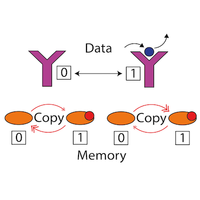
Thermodynamics of Computational Copying in Biochemical Systems

Thomas E. Ouldridge, Christopher C. Govern, and Pieter Rein ten Wolde

Phys. Rev. X 7, 021004 (2017) - Published 7 April, 2017

Both computers and living cells copy information, but doing so comes at a cost of energy. A new theoretical analysis shows that biological systems come close to but do not reach the predicted lower bound on this energy, and that the cost increases as copying becomes more accurate.

Quantum and Information Thermodynamics: A Unifying Framework Based on Repeated Interactions

Philipp Strasberg, Gernot Schaller, Tobias Brandes, and Massimiliano Esposito

Phys. Rev. X 7, 021003 (2017) - Published 7 April, 2017

Nanomachines are subject to random thermal and quantum fluctuations that are not captured by traditional thermodynamic theory. A new theoretical investigation offers a step toward a unified nanoscale theory by showing how externally prepared systems (e.g., atoms in an optical cavity or DNA bases in an enzyme reaction) that interact with a nanoscopic device can be a source of nonequilbrium free energy.

Brownian yet Non-Gaussian Diffusion: From Superstatistics to Subordination of Diffusing Diffusivities

Aleksei V. Chechkin, Flavio Seno, Ralf Metzler, and Igor M. Sokolov

Phys. Rev. X 7, 021002 (2017) - Published 5 April, 2017

Brownian motion—the random movement of microscopic particles in a fluid—usually gives rise to a Gaussian probability of finding a particle at a particular place at a specific time. But in some situations, this probability behaves differently. A new mathematical model shows how to reconcile this behavior with other hallmarks of Brownian motion.

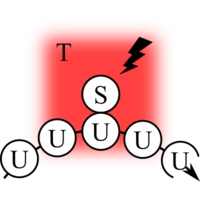
Shape and Symmetry Determine Two-Dimensional Melting Transitions of Hard Regular Polygons

Joshua A. Anderson, James Antonaglia, Jaime A. Millan, Michael Engel, and Sharon C. Glotzer

Phys. Rev. X 7, 021001 (2017) - Published 5 April, 2017

Not much is known about what shapes of molecules lead to an x-atic phase, an exotic phase of two-dimensional matter that shares properties of both fluids and solids. A new set of simulations investigates the behavior of a range of polygon-shaped particles and shows how body symmetry influences these phase transitions.

Publisher’s Note: Synchronization in Dynamical Networks of Locally Coupled Self-Propelled Oscillators [Phys. Rev. X 7, 011028 (2017)]

Demian Levis, Ignacio Pagonabarraga, and Albert Díaz-Guilera

Phys. Rev. X 7, 019904 (2017) - Published 30 March, 2017

Intracity Quantum Communication via Thermal Microwave Networks

Ze-Liang Xiang, Mengzhen Zhang, Liang Jiang, and Peter Rabl

Phys. Rev. X 7, 011035 (2017) - Published 27 March, 2017

A new quantum communication protocol is robust in the presence of thermal noise, paving the way for all-microwave quantum networks.

Signatures of Many-Body Localization in a Controlled Open Quantum System

Henrik P. Lüschen, Pranjal Bordia, Sean S. Hodgman, Michael Schreiber, Saubhik Sarkar, Andrew J. Daley, Mark H. Fischer, Ehud Altman, Immanuel Bloch, and Ulrich Schneider

Phys. Rev. X 7, 011034 (2017) - Published 21 March, 2017

In an isolated many-body localized system, initial quantum correlations can remain local rather than spread throughout the system. But experimental studies of such systems are difficult because of unavoidable interactions with the environment, which ultimately spoil the effect. A new method for controlling a photon bath demonstrates a first step toward understanding the effects of this coupling and extrapolating to fully isolated systems.

Temperature-Controlled Chameleonlike Cloak

Ruiguang Peng, Zongqi Xiao, Qian Zhao, Fuli Zhang, Yonggang Meng, Bo Li, Ji Zhou, Yuancheng Fan, Peng Zhang, Nian-Hai Shen, Thomas Koschny, and Costas M. Soukoulis

Phys. Rev. X 7, 011033 (2017) - Published 21 March, 2017

Practical invisibility cloaks are typically limited to rendering objects invisible to only a very narrow, inflexible range of electromagnetic frequencies. A new prototype cloak, made from SrTiO3 cuboids, demonstrates a simple approach to designing an invisibility cloak whose working frequency can be changed by altering its temperature.

Sign In to Your Journals Account

Filter

Recent Issues

Vol. 16, Iss. 4
October - December 2026
Vol. 16, Iss. 3
July - September 2026
Vol. 16, Iss. 2
April - June 2026
Vol. 16, Iss. 1
January - March 2026
Category
Article Type

Filter

Article Lookup

Enter a citation