Recent Articles

Topological Superconductivity in a Planar Josephson Junction

Falko Pientka, Anna Keselman, Erez Berg, Amir Yacoby, Ady Stern, and Bertrand I. Halperin

Phys. Rev. X 7, 021032 (2017) - Published 30 May, 2017

The search for topological superconductors—superconductors where the bulk accommodates only electron pairs while the surface also allows for motion of single electrons—largely relies on tweaking environmental knobs to create the desired characteristics. A proposed experimental setup uses the phase difference between two superconductors to create a topological phase.

Publisher’s Note: Hot Electrons Regain Coherence in Semiconducting Nanowires [Phys. Rev. X 7, 021016 (2017)]

Jonathan Reiner, Abhay Kumar Nayak, Nurit Avraham, Andrew Norris, Binghai Yan, Ion Cosma Fulga, Jung-Hyun Kang, Torsten Karzig, Hadas Shtrikman, and Haim Beidenkopf

Phys. Rev. X 7, 029902 (2017) - Published 26 May, 2017

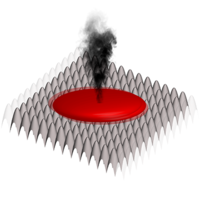
Vortex Reconnections and Rebounds in Trapped Atomic Bose-Einstein Condensates

Simone Serafini, Luca Galantucci, Elena Iseni, Tom Bienaimé, Russell N. Bisset, Carlo F. Barenghi, Franco Dalfovo, Giacomo Lamporesi, and Gabriele Ferrari

Phys. Rev. X 7, 021031 (2017) - Published 25 May, 2017

Understanding interactions between filamentary structures could offer important insights into the dynamics of a wide range of physical systems. A new imaging technique reveals novel vortex filament interactions in a Bose-Einstein condensate (BEC) and helps establish BECs as a powerful laboratory for investigating filament dynamics.

Glassy Spin Dynamics in Geometrically Frustrated Buckled Colloidal Crystals

Di Zhou, Feng Wang, Bo Li, Xiaojie Lou, and Yilong Han

Phys. Rev. X 7, 021030 (2017) - Published 25 May, 2017

Some crystalline materials show indirect evidence of glasslike behavior, which is surprising because a crystal is highly ordered whereas a glass is not. By using colloidal crystals composed of micrometer-sized spheres suspended in water, a new experiment mimics such phenomena and provides a novel way of understanding this behavior.

Poking Holes and Cutting Corners to Achieve Clifford Gates with the Surface Code

Benjamin J. Brown, Katharina Laubscher, Markus S. Kesselring, and James R. Wootton

Phys. Rev. X 7, 021029 (2017) - Published 24 May, 2017

Error correction is essential to the development of practical quantum computers, but a leading method that relies on “surface codes” requires distinct and seemingly incompatible approaches to different computational operations. A new framework unifies these schemes and shows how to combine and compare different codes, an important tool for universal quantum computation.

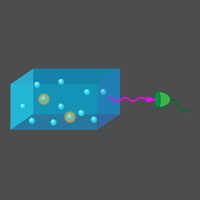
Quantum Correlations between Single Telecom Photons and a Multimode On-Demand Solid-State Quantum Memory

Alessandro Seri, Andreas Lenhard, Daniel Rieländer, Mustafa Gündoğan, Patrick M. Ledingham, Margherita Mazzera, and Hugues de Riedmatten

Phys. Rev. X 7, 021028 (2017) - Published 24 May, 2017

Crystals with rare-earth ions could lead to quantum repeaters that enable secure quantum communications over long distances.

Optimizing Variational Quantum Algorithms Using Pontryagin’s Minimum Principle

Zhi-Cheng Yang, Armin Rahmani, Alireza Shabani, Hartmut Neven, and Claudio Chamon

Phys. Rev. X 7, 021027 (2017) - Published 18 May, 2017

Variational quantum algorithms (VQAs) mix quantum machines with classical optimizers to solve complex computational problems. A new analysis reveals the optimal method for implementing a VQA, which could lead to improvements in future quantum computing techniques.

Excitonic Linewidth Approaching the Homogeneous Limit in MoS2-Based van der Waals Heterostructures

F. Cadiz, E. Courtade, C. Robert, G. Wang, Y. Shen, H. Cai, T. Taniguchi, K. Watanabe, H. Carrere, D. Lagarde, M. Manca, T. Amand, P. Renucci, S. Tongay, X. Marie, and B. Urbaszek

Phys. Rev. X 7, 021026 (2017) - Published 18 May, 2017

Transition-metal dichalcogenides are a class of two-dimensional materials that offer potential for developing flat and flexible transistors and optoelectronics, but their quality is often hindered by traditional methods for depositing these atomically flat materials. An experiment demonstrates a new technique that leads to higher quality crystals and better access to studying their properties.

Prominent Role of Spin-Orbit Coupling in FeSe Revealed by Inelastic Neutron Scattering

Mingwei Ma, Philippe Bourges, Yvan Sidis, Yang Xu, Shiyan Li, Biaoyan Hu, Jiarui Li, Fa Wang, and Yuan Li

Phys. Rev. X 7, 021025 (2017) - Published 18 May, 2017

The ultimate goal of research on iron-based superconductors, which are promising candidates for high-temperature applications, is the development of a robust theory that describes their behavior at the microscopic level. New experiments with FeSe reveal that strong coupling between the spin and orbit of electrons is an essential ingredient to any such theory.

Designing Nanostructures for Phonon Transport via Bayesian Optimization

Shenghong Ju, Takuma Shiga, Lei Feng, Zhufeng Hou, Koji Tsuda, and Junichiro Shiomi

Phys. Rev. X 7, 021024 (2017) - Published 17 May, 2017

Phonon transport—the movement of vibrational wave packets in a solid—in nanostructures is a key element in controlling solid heat conduction, but it remains a complex design challenge. A new framework uses informatics and phonon transport calculations to greatly accelerate the design process and reveals nonintuitive structures that are more effective than their traditional counterparts.

Experimental Realization of a Dirac Monopole through the Decay of an Isolated Monopole

T. Ollikainen, K. Tiurev, A. Blinova, W. Lee, D. S. Hall, and M. Möttönen

Phys. Rev. X 7, 021023 (2017) - Published 17 May, 2017

Magnetic monopoles have been sought for decades but never definitively observed. Recent experiments have created different analogs of monopoles in Bose-Einstein condensates, including quantum-mechanical and Dirac monopoles. Now a new experiment in this system shows how a quantum-mechanical monopole can evolve into a Dirac monopole.

Erratum: Self-Sustained Irregular Activity in an Ensemble of Neural Oscillators [Phys. Rev. X 6, 011015 (2016)]

Ekkehard Ullner and Antonio Politi

Phys. Rev. X 7, 029901 (2017) - Published 15 May, 2017

Code Properties from Holographic Geometries

Fernando Pastawski and John Preskill

Phys. Rev. X 7, 021022 (2017) - Published 15 May, 2017

Deep theoretical links may exist between how space encodes information and error correcting codes being developed for quantum computers. A new analysis explores these connections further and offers insights into not just error-correction codes but also how we interpret ideas about spacetime.

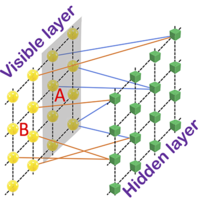
Quantum Entanglement in Neural Network States

Dong-Ling Deng, Xiaopeng Li, and S. Das Sarma

Phys. Rev. X 7, 021021 (2017) - Published 11 May, 2017

Machine learning has recently gained attention as a possible way to understand phase transitions in many-body quantum systems. A new entanglement analysis reveals crucial properties of the data structures that encode quantum states in a neural network, opening new inroads in applying machine learning to quantum many-body physics.

Bistability Versus Metastability in Driven Dissipative Rydberg Gases

F. Letscher, O. Thomas, T. Niederprüm, M. Fleischhauer, and H. Ott

Phys. Rev. X 7, 021020 (2017) - Published 10 May, 2017

When an ensemble of atoms interacts with an environment, it’s possible that two steady states can coexist—a bistable state. A new experiment investigates this possibility in a sample of Rydberg atoms and finds that, in large systems, many excitations exist that are incompatible with a bistable state.

Predicted Realization of Cubic Dirac Fermion in Quasi-One-Dimensional Transition-Metal Monochalcogenides

Qihang Liu and Alex Zunger

Phys. Rev. X 7, 021019 (2017) - Published 9 May, 2017

Cubically dispersed Dirac fermions are proposed exotic quasiparticles that have no analog in the standard model of particle physics, and they have not yet been identified in any compound. A design methodology quickly identifies one group of compounds as an ideal candidate and shows promise for realizing other novel types of fermions.

Efficient Representation of Fully Many-Body Localized Systems Using Tensor Networks

Thorsten B. Wahl, Arijeet Pal, and Steven H. Simon

Phys. Rev. X 7, 021018 (2017) - Published 8 May, 2017

Many-body-localized (MBL) phases are an intriguing state of matter where quantum systems fail to thermalize and retain their initial conditions for an indefinite amount of time. A new proposal for how to mathematically encode the dynamics of large, one-dimensional MBL systems shows an exponential decrease in computational time for analyzing the energy spectrum.

Wannier-Bloch Approach to Localization in High-Harmonics Generation in Solids

Edyta N. Osika, Alexis Chacón, Lisa Ortmann, Noslen Suárez, Jose Antonio Pérez-Hernández, Bartłomiej Szafran, Marcelo F. Ciappina, Fernando Sols, Alexandra S. Landsman, and Maciej Lewenstein

Phys. Rev. X 7, 021017 (2017) - Published 8 May, 2017

High harmonic generation can produce attosecond-long pulses of light, which are a useful probe of physical processes that require extremely high time resolution. A new mathematical analysis shows how electron delocalization contributes to this emission in a solid.

Hot Electrons Regain Coherence in Semiconducting Nanowires

Jonathan Reiner, Abhay Kumar Nayak, Nurit Avraham, Andrew Norris, Binghai Yan, Ion Cosma Fulga, Jung-Hyun Kang, Torsten Karzig, Hadas Shtrikman, and Haim Beidenkopf

Phys. Rev. X 7, 021016 (2017) - Published 5 May, 2017

Understanding the behavior of electrons in semiconducting nanowires is hindered by difficulties in probing these delicate structures. Development of a portable chamber, which keeps the nanowires under ultrahigh vacuum from growth to measurement, allows for the first thorough study of electron phase coherence in a semiconducting nanowire.

Parametric Instability Rates in Periodically Driven Band Systems

S. Lellouch, M. Bukov, E. Demler, and N. Goldman

Phys. Rev. X 7, 021015 (2017) - Published 5 May, 2017

Driving a quantum liquid—by subjecting it to some external force—can generate exotic phases of matter, but such phases are unstable. A suite of mathematical methods reveals the origins of these instabilities and identifies physical manifestations that can be observed in current experiments.

Sign In to Your Journals Account

Filter

Recent Issues

Vol. 16, Iss. 4
October - December 2026
Vol. 16, Iss. 3
July - September 2026
Vol. 16, Iss. 2
April - June 2026
Vol. 16, Iss. 1
January - March 2026
Category
Article Type

Filter

Article Lookup

Enter a citation