Recent Articles

Accelerated Newton-Raphson GRAPE methods for optimal control

David L. Goodwin and Mads Sloth Vinding

Phys. Rev. Research 5, L012042 (2023) - Published 22 March, 2023

Improvements to the optimal control Newton-Raphson GRAPE method for exact Hessian calculations are shown with examples of auxiliary matrix and ESCALADE methods. For an ensemble of two-level systems with realistic MRI conditions, the new accelerated Hessian calculations are between 200 and 600 times faster for auxiliary matrix and ESCALADE, respectively.

Invertible optical nonlinearity in epsilon-near-zero materials

Chentao Li, Xinyu Tian, Guoce Yang, Sukrith U. Dev, Monica S. Allen, Jeffery W. Allen, and Hayk Harutyunyan

Phys. Rev. Research 5, 013198 (2023) - Published 22 March, 2023

Observation of cnoidal wave localization in nonlinear topolectric circuits

Hendrik Hohmann, Tobias Hofmann, Tobias Helbig, Stefan Imhof, Hauke Brand, Lavi K. Upreti, Alexander Stegmaier, Alexander Fritzsche, Tobias Müller, Udo Schwingenschlögl, Ching Hua Lee, Martin Greiter, Laurens W. Molenkamp, Tobias Kießling, and Ronny Thomale

Phys. Rev. Research 5, L012041 (2023) - Published 21 March, 2023

A localized cnoidal state deriving from the interplay of nonlinearity and topology inherent to a Su-Schrieffer-Heeger chain is measured. Subsequently, a theoretical framework combining the nonlinear Korteweg–de Vries equation with topological localization is presented.

Role of genome topology in the stability of viral capsids

James Daniel Farrell, Jure Dobnikar, and Rudolf Podgornik

Phys. Rev. Research 5, L012040 (2023) - Published 21 March, 2023

Stability of RNA viruses is explored in replica exchange molecular dynamics simulations. RNA is modeled as a branched polymer decorated with packaging signals attracted to icosahedral capsid sites. The osmotic pressure evaluated for all unique branched topologies reveals a complex dependence of capsid stability on genome topology and degree of confinement. The model predicts that MS2 bacteriophage should prefer packing RNA with linear topology, which agrees with previously postulated Hamiltonian path hypothesis.

Combined effect of simplicial complexes and interlayer interaction: An example of information-epidemic dynamics on multiplex networks

Xin Chang, Chao-Ran Cai, Chong-Yang Wang, Xu-Sheng Liu, Ji-Qiang Zhang, Kang Jin, and Wen-Li Yang

Phys. Rev. Research 5, 013196 (2023) - Published 21 March, 2023

Nonlinear transport in the presence of a local dissipation

A.-M. Visuri, T. Giamarchi, and C. Kollath

Phys. Rev. Research 5, 013195 (2023) - Published 21 March, 2023

Multidimensional entropic bound: Estimator of entropy production for Langevin dynamics with an arbitrary time-dependent protocol

Sangyun Lee, Dong-Kyum Kim, Jong-Min Park, Won Kyu Kim, Hyunggyu Park, and Jae Sung Lee

Phys. Rev. Research 5, 013194 (2023) - Published 21 March, 2023

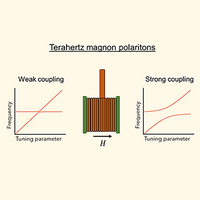
Magnetically tuned continuous transition from weak to strong coupling in terahertz magnon polaritons

Andrey Baydin, Kenji Hayashida, Takuma Makihara, Fuyang Tay, Xiaoxuan Ma, Wei Ren, Guohong Ma, G. Timothy Noe, II, Ikufumi Katayama, Jun Takeda, Hiroyuki Nojiri, Shixun Cao, Motoaki Bamba, and Junichiro Kono

Phys. Rev. Research 5, L012039 (2023) - Published 20 March, 2023

Highly tunable light-matter hybrids, magnon polaritons, have been realized in an orthoferrite crystal driven by terahertz radiation in an external magnetic field. As the magnetic field is swept, a continuous transition from weak to strong coupling via an exceptional point due to a magnetic-field-dependent light-matter coupling strength is observed.

Laser-driven time-limited light-sail acceleration of protons for tumor radiotherapy

Y. F. Li, X. F. Shen, Y. L. Yao, S. Z. Wu, A. Pukhov, and B. Qiao

Phys. Rev. Research 5, L012038 (2023) - Published 20 March, 2023

A laser-driven time-limited light-sail acceleration scheme for proton tumor radiotherapy is proposed and demonstrated with combined three-dimensional particle-in-cell simulations and microdosimetry simulations. It is able to deliver a single-shot spread-out Bragg peak (SOBP) dose up to 1.76 Gy on a nanosecond timescale for shallow-seated tumors and around 0.56 Gy for deep-seated tumors.

Multi-scale projection operator method and coarse-graining of covariant Fokker-Planck theory

Mingnan Ding and Xiangjun Xing

Phys. Rev. Research 5, 013193 (2023) - Published 20 March, 2023

Studies of decoherence in strongly anisotropic spin triangles with toroidal or general noncollinear easy axes

Kilian Irländer and Jürgen Schnack

Phys. Rev. Research 5, 013192 (2023) - Published 20 March, 2023

Using parity-nonconserving spin-spin coupling to measure the Tl nuclear anapole moment in a TlF molecular beam

John W. Blanchard, Dmitry Budker, David DeMille, Mikhail G. Kozlov, and Leonid V. Skripnikov

Phys. Rev. Research 5, 013191 (2023) - Published 20 March, 2023

Preparing valence-bond-solid states on noisy intermediate-scale quantum computers

Bruno Murta, Pedro M. Q. Cruz, and J. Fernández-Rossier

Phys. Rev. Research 5, 013190 (2023) - Published 20 March, 2023

Full counting statistics of interacting lattice gases after an expansion: The role of condensate depletion in many-body coherence

Gaétan Hercé, Jan-Philipp Bureik, Antoine Ténart, Alain Aspect, Alexandre Dareau, and David Clément

Phys. Rev. Research 5, L012037 (2023) - Published 17 March, 2023

The full counting statistics are measured in a gas of interacting bosons, from which the magnitudes g(n)(0) of correlation functions are obtained between up to n = 6 atoms.

Targeting high symmetry in structure predictions by biasing the potential energy surface

Hannes Huber, Martin Sommer-Jörgensen, Moritz Gubler, and Stefan Goedecker

Phys. Rev. Research 5, 013189 (2023) - Published 17 March, 2023

Nonlinear quantum logic with colliding graphene plasmons

Giuseppe Calajó, Philipp K. Jenke, Lee A. Rozema, Philip Walther, Darrick E. Chang, and Joel D. Cox

Phys. Rev. Research 5, 013188 (2023) - Published 17 March, 2023

Generating tensor polarization from shear stress

David Wagner, Nora Weickgenannt, and Enrico Speranza

Phys. Rev. Research 5, 013187 (2023) - Published 17 March, 2023

Quantum critical dynamics in the two-dimensional transverse Ising model

Chisa Hotta, Tempei Yoshida, and Kenji Harada

Phys. Rev. Research 5, 013186 (2023) - Published 17 March, 2023

Joint quantum estimation of loss and nonlinearity in driven-dissipative Kerr resonators

Muhammad Asjad, Berihu Teklu, and Matteo G. A. Paris

Phys. Rev. Research 5, 013185 (2023) - Published 17 March, 2023

Spectroscopic signature of sublattice polarization in the lattice dynamics of an antiferroelectric crystal

E. Constable, L. Bergen, A. Shuvaev, J. Wettstein, L. Weymann, E. Malysheva, A. Pimenov, and M. Guennou

Phys. Rev. Research 5, L012036 (2023) - Published 16 March, 2023
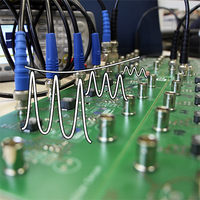
Antiferroelectric systems are identified by an internal sublattice polarization that is typically hidden from experimental probes. An analysis of the far-infrared polar lattice dynamics in the model antiferroelectric francisite reveals a spectroscopic signature that scales with the sublattice polarization.

Sign In to Your Journals Account

Filter

Recent Issues

Vol. 8, Iss. 4
October - December 2026
Vol. 8, Iss. 3
July - September 2026
Vol. 8, Iss. 2
April - June 2026
Vol. 8, Iss. 1
January - March 2026
Category
Article Type

Filter

Article Lookup

Enter a citation